Preview
 Send
Send Share
Share
 Details
 Guide
Guide

 Download
 Similars
 X-Ray
X-Ray Diaporama
 Stats
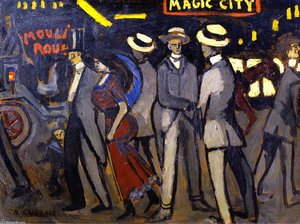
StatsCouples in a Bistro
 1906
1906 50.0 x 79.0 cm
 Read More
Giclée / Art Print
Museum-quality giclée or canvas print with fast production and flexible finish options. ( Buy Hand Made Painting Switch to Digital Image)




































Pick from our preset sizes that match the artwork's original proportions.

Type the width and the height you need, to fit your frame or your wall. A print can only be cut, never made bigger than the picture, so a size with a different shape loses a part of the image. We send you a digital mockup to approve before we print anything. The picture shown on this page does not show the real cut — only the mockup does.
Worldwide Delivery () in 2 weeks instead of standard 4/5 weeks. (15 October)

Free Worldwide Express Shipping

High-Quality Linen Canvas

Full Shipping Insurance

Customs Tax Refund Guarantee

True Color Matching Guarantee

100-Day Return Policy (Defects Only)

100% Money-Back Guarantee

Bulk Discount Offer
 Glass option is only available in size under 110 CM

Couples in a Bistro
Giclée / Art Print
Reproduction Size
-


Total Price
$ 81
The Scene Unfolds
The painting depicts a bustling bistro scene where several couples are engaged in conversation and enjoying their meals. The room is filled with dining tables, chairs, and benches, creating a cozy atmosphere conducive to social gatherings. A potted plant in the background adds a touch of greenery, while a vase on one of the tables likely holds flowers or other decorative items.Artistic Elements
Chabaud's use of color is noteworthy, as he skillfully blends vibrant hues to create a warm and inviting ambiance. The oil on canvas medium allows for rich textures and depth, drawing the viewer into the scene. The artist's attention to detail is evident in the depiction of various objects and the expressions of the individuals.Context and Significance
Auguste Chabaud, a French artist known for his diverse works, including landscapes and abstract pieces, showcases his versatility with Couples in a Bistro. This painting is part of an exhibition at the M Bochum Kunstvermittlung (Germany) museum, which also features other notable works by Chabaud such as Couples in a Bistro, Landscape (abstract), and Graveson Railway Station.Reproduction and Appreciation
For art enthusiasts who wish to bring a piece of Chabaud's work into their own homes, handmade oil painting reproductions are available at OriginalUniqueArt. These high-quality reproductions capture the essence and beauty of the original piece.Conclusion
Couples in a Bistro by Auguste Chabaud is a delightful painting that offers a glimpse into early 20th-century social life. Its vibrant colors, detailed setting, and engaging subjects make it a standout piece in the artist's collection. For those interested in exploring more of Chabaud's works or learning about other artists, David Heinz Gumbel is another notable figure worth discovering.This article provides a comprehensive look at the captivating world of Auguste Chabaud through his painting Couples in a Bistro, highlighting its artistic elements, context, and significance.
Questions & Answers
Who made "Couples in a Bistro", and when?
"Couples in a Bistro" was created by Auguste Chabaud in 1906.
How harmonious are the colors of "Couples in a Bistro" by Auguste Chabaud?
The colors of "Couples in a Bistro" by Auguste Chabaud show a strong color unity harmony. Harmony describes how the colors relate to each other.
Does "Couples in a Bistro" have an augmented reality preview?
"Couples in a Bistro" has an augmented reality preview: the artwork's AR Preview page shows it in your own space on a compatible device.
Artist Biography
Edward Hopper: The Solitude of the American Soul
Edward Hopper (July 22, 1882 – May 15, 1967) remains one of America’s most enduring and enigmatic figures in art. More than just a painter, he was a keen observer of modern life, capturing moments of quiet contemplation, urban isolation, and the subtle dramas unfolding within everyday scenes. Born in Nyack, New York, to a comfortable middle-class family, Hopper's artistic journey began with a supportive upbringing that nurtured his early interest in drawing and painting. His parents, recognizing his talent, encouraged him to pursue his passion, laying the foundation for a career that would ultimately define his legacy.
Hopper’s formal training was initially somewhat fragmented. He briefly attended the Correspondence School of Illustrating in New York City before enrolling at the New York School of Art under the tutelage of William Merritt Chase and Robert Henri. These influential teachers imparted crucial techniques – Chase emphasizing tonal harmony and realistic representation, while Henri championed a more expressive approach rooted in capturing the essence of American life. Hopper’s early work reflected these diverse influences, demonstrating a growing ability to render both meticulous detail and emotional depth.
The 1920s marked a pivotal period for Hopper's artistic development. He began exhibiting his paintings with increasing frequency, gaining recognition within the burgeoning art scene of New York City. This decade witnessed the emergence of his signature style – characterized by stark contrasts of light and shadow, simplified forms, and a deliberate sense of detachment. His subjects often included solitary figures in urban or rural settings, evoking feelings of loneliness, introspection, and a subtle yearning for connection. Key works from this era, such as *Nighthawks* (1942) and *Automat* (1927), became instantly iconic, solidifying his reputation as a master of capturing the mood and atmosphere of modern America.
Thematic Concerns and Artistic Techniques
Hopper’s art is deeply rooted in exploring specific themes that resonated with the anxieties and transformations of early 20th-century America. Central to his work are the tensions between individuals, particularly men and women, often depicted as existing in separate spheres of experience. He frequently portrayed scenes of isolation – a lone diner at night, an empty theater seat, or a couple lost in their own thoughts – reflecting the growing sense of alienation prevalent in rapidly industrializing cities. Furthermore, Hopper explored the conflict between tradition and progress, examining how urbanization was reshaping rural landscapes and altering established social structures.
Technically, Hopper’s style is remarkably consistent yet subtly evolving throughout his career. He mastered the use of light and shadow to create a sense of mood and atmosphere, employing sharp contrasts to heighten the dramatic effect of his compositions. His figures are often rendered with a degree of simplification, focusing on essential forms and gestures rather than intricate detail. He frequently utilized cropped perspectives, drawing the viewer into the scene and inviting them to contemplate the narrative implied by the arrangement of objects and people. Hopper’s meticulous attention to color—often muted and evocative—further enhanced the emotional resonance of his paintings.
Personal Life and Creative Influences
Hopper's personal life profoundly influenced his artistic vision. His marriage to Josephine Nivison in 1923 proved to be a crucial partnership, not only providing him with a loving companion but also serving as a frequent model for many of his paintings. Their shared appreciation for the quiet beauty of New England—particularly Cape Cod—became a recurring subject matter, offering Hopper a sanctuary from the bustle of city life and a source of inspiration for his landscapes. The couple’s modest lifestyle and dedication to their art fostered an environment of intellectual curiosity and artistic exploration.
Beyond his immediate circle, Hopper was deeply influenced by European modernism, particularly the works of Edgar Degas and Édouard Manet. He admired their ability to capture fleeting moments of urban life and convey a sense of psychological depth through simplified forms and expressive brushwork. The influence of these artists is evident in Hopper’s careful observation of composition, his use of light and shadow, and his exploration of the human condition.
Legacy and Critical Reception
Despite initial critical indifference, Edward Hopper achieved widespread recognition during his lifetime, particularly after World War II. His paintings became increasingly popular, adorning galleries, museums, and private collections across America and abroad. Hopper’s work continues to resonate with audiences today due to its timeless exploration of universal themes—loneliness, isolation, and the search for meaning in a rapidly changing world.
Critics have long debated the nature of Hopper's art, with some viewing it as bleak and pessimistic, while others appreciate its subtle beauty and evocative power. However, there is no denying his profound impact on American art—he helped to establish realism as a dominant style in the 20th century and remains one of the most recognizable and beloved figures in the history of American painting.

Auguste Chabaud
1882 - 1955 , France
Quick Facts
- Full Name: George Bellows
- Nationality: American
- Date Of Birth: 1882
- Date Of Death: 1955
- Place Of Birth: Nîmes, France
- Notable Artworks:
- Nude with Hexagonal Quilt
- Woodstock Road, Woodstock
- Jean in a Black Hat
- Artistic Movement Or Style: Realism, Modernism
- Artists Who Influenced This Artist: ['Robert Henri']
- Artists Or Movements Influenced By This Artist: ['Futurism']