- Home

- Print on canvas
- Arturo Souto
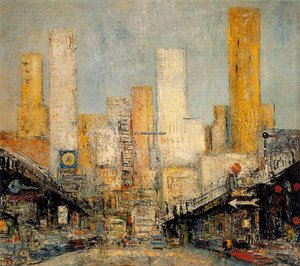
- Dance Class

 Preview
 Buy Painting
 Send
Send Share
Share
 Details

 Download
 Similars
 X-Ray
X-Ray Diaporama
Dance Class
 Expressionism
 1932
1932 51.0 x 66.0 cm
 Read More
Giclée / Art Print
Museum-quality giclée or canvas print with fast production and flexible finish options.




































Pick from our preset sizes that match the artwork's original proportions.

You may enter your own dimensions to fit a specific frame or space. If your selected size does not match the original image's proportions, we will either crop the artwork or extend the image with a mirrored or solid-fill edge. A digital mockup will be sent for your approval before production begins.
Please note that the on-screen preview does not reflect the actual cropping or extension. Only the mockup will accurately show the final composition.
While custom sizes are available, we recommend selecting a dimension from the predefined list to preserve the original proportions.
Worldwide Delivery () in 2 weeks instead of standard 4/5 weeks. (25 July)

Free Worldwide Express Shipping

High-Quality Linen Canvas

Full Shipping Insurance

Customs Tax Refund Guarantee

True Color Matching Guarantee

60-Day Return Policy (Defects Only)

100% Money-Back Guarantee

Bulk Discount Offer
 Glass option is only available in size under 110 CM

Dance Class
Giclée / Art Print
Reproduction Size
-


Total Price
-
Artist Biography
Arturo Souto: A Life Painted in Shadows and Light
Born in Pontevedra, Spain, in 1902, Arturo Souto Feijoo’s life was a tapestry woven with threads of exile, social consciousness, and artistic evolution. His early years were marked by a peripatetic existence due to his father's profession as a jurist, exposing him to the diverse landscapes and cultures of Spain before he settled in Madrid at the age of twenty. It was within the hallowed halls of the Real Academia de Bellas Artes de San Fernando that Souto’s artistic journey truly began, drawing him into the orbit of influential figures like Hipólito Hidalgo de Caviedes, Salvador Dalí, and Carlos Sáenz de Tejada – artists who would collectively shape the burgeoning avant-garde scene in Spain.
Initially, Souto's work reflected a broad range of influences, encompassing elements of Fauvism, Expressionism, and even Magical Realism. However, it was his engagement with social protest themes that truly defined his artistic legacy. He wasn’t interested in grand narratives or idealized representations; instead, he focused on the stark realities of urban life – the poverty, hardship, and struggles faced by ordinary people. These prints, often depicting scenes of street life and working-class communities, were imbued with a powerful sense of empathy and social critique, reflecting his own experiences as an exile and a witness to political turmoil.
The Shadow of War and Exile
The Spanish Civil War cast a long shadow over Souto’s life. A Loyalist by conviction, he found himself deeply conflicted by the conflict, particularly with a brother serving in Franco's ranks. In 1934, he received a prestigious Prix de Rome grant, allowing him to study in Rome and subsequently travel extensively through Paris. However, as the war escalated, he was compelled to flee Spain, embarking on a journey of exile that would take him across Europe, Cuba, and finally, Mexico.
During his time in France, Souto became associated with *Os Novos* (The New Ones), a revolutionary Galician artistic collective led by Rafael Dieste. This group sought to fuse traditional Galician folklore with avant-garde aesthetics, reflecting the spirit of resistance against both fascism and established artistic conventions. His experiences during this period profoundly shaped his artistic vision, imbuing his work with a sense of melancholy, social awareness, and a deep connection to his roots.
A Shift in Style: Mexico and the Return of Form
Following the war, Souto settled in Mexico City in 1942, marking a significant turning point in his artistic development. While retaining his commitment to social commentary, his style underwent a noticeable transformation. The nervous brushstrokes and fragmented compositions characteristic of his earlier work gradually gave way to a more measured and controlled approach. He increasingly focused on themes of women, nudes, and the rich tapestry of Galician folklore – subjects that resonated deeply with his personal history and cultural identity.
This period saw a shift towards greater formal clarity and a refined use of color. Souto’s palette became richer and more nuanced, reflecting a newfound sense of stability and confidence. Despite the challenges of exile, he continued to exhibit his work throughout Mexico, establishing himself as one of the most important Spanish painters working abroad during this era. His final years were marked by a quiet dedication to his craft, culminating in a body of work that stands as a testament to his resilience, artistic integrity, and enduring legacy.
Influences and Artistic Legacy
Souto’s artistic journey was profoundly influenced by a diverse range of sources. The expressive color palettes of Fauvism and the social realism of artists like Rouault resonated with his desire to capture the emotional intensity of human experience. Cubist principles informed his exploration of form and perspective, while the metaphysical art movement – particularly the works of Giorgio de Chirico – contributed to his fascination with dreamlike imagery and psychological depth.
Despite not achieving widespread fame during his lifetime, Arturo Souto’s work has gained increasing recognition in recent decades. His prints, imbued with a potent blend of social critique and emotional resonance, offer a poignant glimpse into the lives of ordinary people and the turbulent history of Spain. His legacy as a socially conscious artist who navigated exile and transformed his style throughout his career continues to inspire artists today. He remains a vital voice in 20th-century art, reminding us of the power of art to bear witness to both suffering and resilience.

Arturo Souto
1902 - 1964 , Spain
Quick Facts
- Artistic Movement Or Style:
- Fauvism
- Cubism
- Metaphysical art
- Artists Or Movements Influenced By This Artist: ['Os Novos']
- Artists Who Influenced This Artist:
- Delacroix
- Rouault
- Goya
- El Greco
- Velásquez
- Date Of Birth: 1902-04-05
- Date Of Death: 1964-07-03
- Full Name: Arturo Souto Feijoo
- Nationality: Spanish
- Notable Artworks:
- Social protest prints
- Galician folklore themes
- Place Of Birth: Pontevedra, Spain