Preview
 Send
Send Share
Share
 Details
 Guide
Guide

 Download
 Similars
 X-Ray
X-Ray Diaporama
 Stats
StatsThe Cloud


 Read More
Hand Made Oil Reproduction
Hand-painted oil on canvas in your size and frame, made to order by our artists. ( Switch to Print Switch to Digital Image)




P118B $10

P118H $10

P118W $10

P438Z $10

P508JH $12

P508YH $12

P805H $10

P805Z $10

P919BZ $10

P919G $10

P919XJ $10

P959ZH $10

P968JZ $12

W106C $8

W218G $10

W218JH $8

W218Y $10

W307PJ $10

W316G $10

W316PJ $8

W316Y $10

W398PJ $8

W4111J $10

W500HY $15

W500JH $15

W692G $12

W849H $8

W940BG $15

W953PJ $8




Pick from our preset sizes that match the artwork's original proportions.

Type the width and the height you need, to fit your frame or your wall. This is hand-painted, so for a size with a different shape the artist can paint a bit more around the picture, or cut a bit — you choose. We send you a digital mockup to approve before the painting starts. The picture shown on this page does not show the real result — only the mockup does.
After order, OriginalUniqueArt.com team will email client for instructions and provide a mockup preview
Worldwide Delivery () in 3/4 weeks instead of standard 5 weeks. (25 October). No compromise on quality.

Free Worldwide Express Shipping

High-Quality Linen Canvas

Full Shipping Insurance

Customs Tax Refund Guarantee

True Color Matching Guarantee

100-Day Return Policy (Defects Only)

100% Money-Back Guarantee

Bulk Discount Offer
 Glass option is only available in size under 110 CM

The Cloud
Reproduction Medium
Reproduction Size
-


Total Price
$ 300
The Ethereal Embrace of "The Cloud"
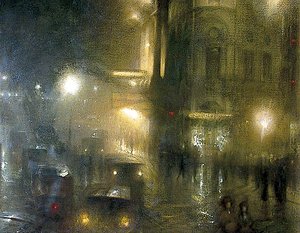
To gaze upon Arthur Hacker's "The Cloud," painted in 1901, is to step through a veil into a realm suspended between dream and waking life. This magnificent oil on canvas does more than merely depict a scene; it captures a moment of profound, almost sacred stillness. The central figure, a nude woman reclining languidly upon her side with one arm gracefully raised, immediately draws the eye. Yet, it is not just the subject's exquisite form that arrests the viewer, but the very atmosphere surrounding her—an atmosphere woven from light, shadow, and suggestion.
Mastery in Light and Form
Hacker’s technique here is nothing short of masterful. His characteristic use of soft colors and delicate brushstrokes allows the paint to seem almost weightless, mirroring the subject's own ethereal quality. The white paint covering the woman’s body enhances this sense of luminescence, making her appear as if she were sculpted from moonlight itself. This luminosity plays against the deeper tones of the background, where two partially obscured figures drift like memories caught in smoke or cloud vapor. These secondary elements add a crucial layer of depth and narrative mystery, suggesting that the central figure is not alone, but enveloped by an unseen communion.
Symbolism and Emotional Resonance
The title itself, "The Cloud," hints at the painting's core symbolism: transcendence. The cloud motif has always represented the intangible—the divine, the fleeting nature of existence, or a state of elevated consciousness. The woman’s pose, with her gaze directed upward, suggests contemplation, yearning, or perhaps an ascent toward something sublime. For the modern collector or designer, this piece offers more than mere decoration; it is an emotional anchor, a visual meditation on vulnerability and spiritual grace that can transform any space into a sanctuary.
A Touch of Art History for Your Collection
As a work from the turn of the 20th century, "The Cloud" sits at a fascinating intersection in art history. While Hacker was deeply influenced by academic traditions—a foundation evident in his careful rendering of anatomy and composition—the painting breathes with an Impressionistic softness that speaks to the burgeoning modern sensibility. Owning a high-quality reproduction from OriginalUniqueArt.com allows you to bring this piece of art history into your contemporary life. It is an opportunity to possess not just paint on canvas, but a tangible echo of Arthur Hacker’s enduring skill and vision.
Questions & Answers
Why is the copyright status of "The Cloud" what it is?
"The Cloud" by Arthur Hacker is in the public domain - its copyright has expired. Copyright terms are measured from the artist's death, and Arthur Hacker died in 1919.
What is the recommended print size for "The Cloud" by Arthur Hacker?
"The Cloud" is recommended at a medium print size. Other sizes are available with the same proportions.
What space is suggested for "The Cloud" by Arthur Hacker?
A reproduction of "The Cloud" fits well in a lounge.
Artist Biography
Early Life and Academic Foundations
Arthur Hacker, born in St Pancras, London, on September 25th, 1858, emerged from a family steeped in artistic tradition. His father, Edward Hacker, was a respected line engraver specializing in animal and sporting prints—a profession that undoubtedly instilled in young Arthur an early appreciation for meticulous detail and technical skill. This foundation proved crucial as Hacker embarked on his formal art education at the Royal Academy Schools between 1876 and 1880. However, seeking broader horizons, he continued his studies at the prestigious Atelier Bonnat in Paris, a move that would profoundly shape his artistic trajectory. The influence of French academic painting became immediately apparent, providing Hacker with a rigorous framework for composition, anatomy, and color theory. He debuted at the Royal Academy Summer Exhibition in 1878, signaling the beginning of his public career.A Synthesis of Styles: Religious Scenes and Portraiture
Hacker’s artistic output was remarkably diverse, yet consistently characterized by a refined elegance and a deep sensitivity to light and atmosphere. While he gained recognition for painting religious scenes—works imbued with a quiet spirituality and emotional depth—he also excelled in portraiture. His travels through Spain and North Africa left an indelible mark on his palette and subject matter, introducing exotic elements and vibrant color schemes into his work. He twice exhibited at the Royal Academy, in 1878 and 1910, demonstrating a sustained commitment to the established art world. In 1910, Hacker was elected an Academician—a testament to his growing reputation and mastery of the craft. This period saw him balancing grand religious compositions with increasingly sought-after portrait commissions, capturing the likenesses of prominent politicians, army officers, clergy, and figures from the artistic community.Navigating Victorian Tastes: Genre Painting and Symbolism
As the Victorian era transitioned into the Edwardian period, Hacker adeptly navigated shifting aesthetic preferences. The demand for literary and historical subjects waned, prompting him to diversify his repertoire. He revisited rustic and domestic genre scenes, showcasing a natural versatility that allowed him to adapt to changing tastes. During the Boer War, he contributed works reflecting the bittersweet nature of conflict—subtle symbolic explorations rather than explicit depictions of battle. His painting *The Cloister of the Bell*, for example, exemplifies this period, featuring an ethereal woman within a serene landscape, evoking a sense of contemplation and tranquility. He also demonstrated a fascination with Pre-Raphaelite values, attempting to revive their aesthetic in his own unique style.Major Works and Lasting Legacy
Hacker’s oeuvre includes several notable paintings that continue to captivate audiences today. *The Annunciation* at the Tate Britain is a prime example of his religious artistry—a delicate rendering of a pivotal biblical moment. *Pelagia and Philammon*, housed in Liverpool's Walker Art Gallery, showcases his skill in depicting classical narratives with emotional nuance. Other significant works include *The Children’s Prayer* (1888) at the Atkinson Museum, Southport, and *The Temptation of Sir Percival* in Leeds City Art Gallery. In 1902, Hacker built a new house called Hall Ingle in Checkendon, Oxfordshire, commissioning architect Maxwell Ayrton and personally overseeing the decorations—a testament to his holistic artistic vision. He died on November 12th, 1919, in Kensington, London, and is buried in Brookwood Cemetery, Surrey.Historical Significance and Modern Appreciation
Arthur Hacker occupies a unique position within British art history. He successfully bridged the gap between French academic training and Victorian sensibilities, creating works that were both technically accomplished and emotionally resonant. His ability to adapt to changing tastes while maintaining his distinctive style ensured his continued success throughout his career. While perhaps not as widely celebrated as some of his contemporaries, Hacker’s paintings are increasingly recognized for their beauty, sophistication, and insightful portrayal of the human condition. Today, his works can be found in prominent public collections and private galleries, offering a glimpse into a fascinating era of artistic innovation and refinement. His legacy endures through the captivating scenes he created—a testament to his skill as a painter and his enduring contribution to British art.
Arthur Hacker
1858 - 1919 , United Kingdom
Quick Facts
- Full Name: Arthur Hacker
- Nationality: British
- Date Of Birth: 1858
- Date Of Death: 1919
- Place Of Birth: London, United Kingdom
- Notable Artworks:
- The Cloister of the Bell
- A Woodcutter and his daughter
- A Morning Walk
- The Annunciation
- Artistic Movement Or Style: Victorian, Classical painting
- Artists Who Influenced This Artist: ['Léon Bonnat']
Related Articles

The Enduring Legacy of Oil on Canvas: Technique, History & Aesthetic Impact
Explore the rich history & techniques of oil painting – from Renaissance masters to Impressionism. Discover pigments, layering methods, and why this timeless medium endures. Expert insights for artists & art enthusiasts.

The Enduring Allure of the Nude: A Historical & Artistic Exploration of the Human Form
Explore the captivating history of nude art! Discover iconic paintings & artists from classical to modern eras. Uncover symbolism, techniques & find museum-quality reproductions at OriginalUniqueArt.

Mastering Perfection: A Definitive Guide to the Elegance and Precision of Academic Classicism
Explore the rigorous beauty of Academic Classicism. Discover the principles of order, precision, and historical reverence that define this timeless art movement through an expert guide to its enduring legacy and technical mastery.

The Enduring Power of Painting: A Historical & Contemporary Exploration of Form and Emotion
Explore the rich history & enduring techniques of oil painting with OriginalUniqueArt. Discover masterpieces, learn about art collecting, and find authentic handmade reproductions crafted by skilled artists.

Oil on Canvas: A Historical & Technical Exploration of a Timeless Artistic Medium
Explore the rich history & enduring techniques of oil painting on canvas. Discover the science behind its longevity, conservation practices, and contemporary relevance. Expert insights for art enthusiasts.