

 Preview
 Send
Send Share
Share
 Details
 Guide
Guide

 Download
 Similars
 X-Ray
X-Ray Diaporama
 Q&A
Q&A Stats
StatsTriptych (detail) (10)
 Acrylic On Canvas
- WallArt
- Italian Renaissance
 1446
1446 339.0 x 200.0 cm
 Gallerie dell'Accademia di Venezia
 Read More
Giclée / Art Print
Museum-quality giclée or canvas print with fast production and flexible finish options. ( Buy Hand Made Painting Switch to Digital Image)




P118B $10

P118H $10

P118W $10

P438Z $10

P508JH $12

P508YH $12

P805H $10

P805Z $10

P919BZ $10

P919G $10

P919XJ $10

P959ZH $10

P968JZ $12

W106C $8

W218G $10

W218JH $8

W218Y $10

W307PJ $10

W316G $10

W316PJ $8

W316Y $10

W398PJ $8

W4111J $10

W500HY $15

W500JH $15

W692G $12

W849H $8

W940BG $15

W953PJ $8




Pick from our preset sizes that match the artwork's original proportions.

Type the width and the height you need, to fit your frame or your wall. A print can only be cut, never made bigger than the picture, so a size with a different shape loses a part of the image. We send you a digital mockup to approve before we print anything. The picture shown on this page does not show the real cut — only the mockup does.
Worldwide Delivery () in 2 weeks instead of standard 4/5 weeks. (30 October)

Free Worldwide Express Shipping

High-Quality Linen Canvas

Full Shipping Insurance

Customs Tax Refund Guarantee

True Color Matching Guarantee

100-Day Return Policy (Defects Only)

100% Money-Back Guarantee

Bulk Discount Offer
 Glass option is only available in size under 110 CM

Triptych (detail) (10)
Giclée / Art Print
Reproduction Size
-


Total Price
$ 81
A Vision of Faith Illuminated: Exploring Antonio Vivarini’s Triptych
The year is 1446. Murano, Venice – a crucible of artistic innovation and religious fervor – births Fra Angelico’s masterpiece, “Triptych (detail).” This monumental artwork transcends mere visual representation; it embodies the spiritual essence of its time, capturing the profound devotion felt by the Dominican Order and offering a glimpse into their idealized vision of paradise. Examining this triptych reveals not only masterful technique but also layers of symbolism that continue to captivate audiences centuries later.- Subject Matter: The central panel depicts Saint Ambrose and Saint Augustine, revered figures representing wisdom and piety within Christian theology. Their serene postures convey a palpable sense of contemplation, mirroring the contemplative life of monastic devotion.
- Style: Vivarini’s style aligns with the Florentine Gothic tradition, characterized by its delicate ornamentation and luminous coloration. The artist skillfully employs geometric forms to create depth and perspective, reflecting the humanist ideals prevalent during the Renaissance.
- Technique: Executed in tempera on wood panel, Vivarini utilizes a glazing technique—applying thin layers of translucent pigment over opaque undercoats—to achieve unparalleled brilliance and luminosity. This meticulous process ensures that every brushstroke radiates with ethereal light, enhancing the spiritual atmosphere of the artwork.
Questions & Answers
When was "Triptych (detail) (10)" made?
"Triptych (detail) (10)" dates from 1446. The date places the work within Antonio Vivarini's career and its era.
How is the color composition of "Triptych (detail) (10)" by Antonio Vivarini built?
The color analysis of "Triptych (detail) (10)" by Antonio Vivarini records a statement contrast and a strong color unity harmony.
How do medium and movement combine in "Triptych (detail) (10)"?
"Triptych (detail) (10)" by Antonio Vivarini combines the acrylic on canvas technique with the Italian Renaissance style. Technique and movement describe the making and the style of the work.
Artist Biography
A Legacy of Light and Glass
In the shimmering atmosphere of the mid-15th century, amidst the legendary glassworks of Murano, Antonio Vivarini emerged as a pivotal figure in the Venetian artistic landscape. As a member of a distinguished family of painters descended from Murano glassworkers, his very identity was intertwined with the luminous and translucent traditions of his home. Working primarily within the Republic of Venice, Vivarini occupied a unique historical space, bridging the transition between the ornate elegance of the late Gothic period and the burgeoning humanism of the early Renaissance.
His artistic journey began under the guidance of Andrea da Murano, a training that instilled in him a profound respect for precision and detail. The influence of Gentile da Fabriano is also clearly discernible in his compositions, lending his work a sense of rhythmic vitality and a delicate, decorative grace. This fusion of styles allowed Vivarini to create works that were both spiritually profound and visually opulent, capturing the religious fervor of an era through a lens of exquisite craftsmanship.
The Mastery of Sacred Narrative
Vivarini’s oeuvre is characterized by a deep devotion to sacred themes, often utilizing the triptych format to guide the faithful through complex theological journeys. His ability to transform wood and pigment into windows of divine vision is perhaps most evident in his monumental altarpieances. In these works, he masterfully orchestrated sacra conversazione, arranging holy figures in a way that suggests both a celestial hierarchy and an intimate, communal experience of faith.
His technique often employed vibrant pigments and precise linework, hallmarks of the Murano school, which lent his figures a sense of architectural grandeur. Whether depicting the tender intimacy of the Virgin Mary cradling the infant Jesus or the crowded, harmonious assembly of the Adoration of the Magi, Vivarini possessed a rare ability to imbue his subjects with a soft, luminous glow. This mastery of light served to elevate the earthly scenes into the realm of the divine, making the spiritual palpable to the viewer.
A Dynasty of Venetian Art
Beyond his individual achievements, Antonio Vivarini stands as the progenitor of a significant painting dynasty that would shape Venetian art for generations. His influence extended through his family members, including:
- Bartolomeo Vivarini, his younger brother, who continued the family's prominence in the Venetian Renaissance.
- Alvise Vivarini, his son, who emerged as a leading figure in the Venetian school before the era of Giovanni Bellini.
The historical significance of Antonio Vivarini lies not only in his personal stylistic contributions but in his role as a foundational pillar for the subsequent generations of the Vivarini family. By blending the decorative traditions of the Gothic style with the emerging structural clarity of the Renaissance, he helped establish a visual language that would define the Republic of Venice's artistic identity during one of its most culturally fertile epochs.

Antonio Vivarini
1440 - 1480 , Italy
Quick Facts
- Artistic Movement Or Style: Early Renaissance-late Gothic
- Artists Or Movements Influenced By This Artist:
- Alvise Vivarini
- Bartolomeo Vivarini
- Artists Who Influenced This Artist:
- Andrea da Murano
- Gentile da Fabriano
- Full Name: Antonio Vivarini
- Notable Artworks:
- Triptych
- Adoration of the Magi
- Place Of Birth: Murano, Italy
- Date Of Birth: 1440
- Date Of Death: 1480
Related Articles

25 Masterpieces by Giotto di Bondone: The Father of Renaissance Art
Explore 25 iconic Giotto masterpieces that birthed the Renaissance. Discover museum-quality art on OriginalUniqueArt.com.

25 Divine Masterpieces by Fra Angelico: The Painter of Heaven
Explore 25 divine Fra Angelico masterpieces of the Early Renaissance. Discover museum-quality art on OriginalUniqueArt.com.
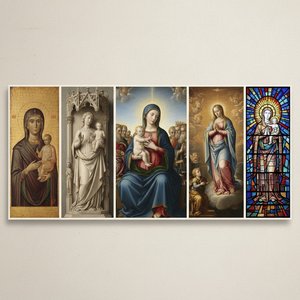
Divine Grace: A Journey Through the Most Iconic Depictions of the Virgin Mary in Art History
Embark on a profound journey through art history with our exploration of the most iconic depictions of the Virgin Mary. Discover the divine grace, symbolism, and masterful techniques found in Renaissance masterpieces and sacred iconography.

Divine Grace: An Art Historian's Journey Through Iconic Masterpieces of the Virgin Mary
Explore the profound beauty of Marian iconography through an art historian's lens. Discover iconic masterpieces by Raphael and Renaissance masters, celebrating the divine grace and timeless elegance of the Virgin Mary in classical fine art.
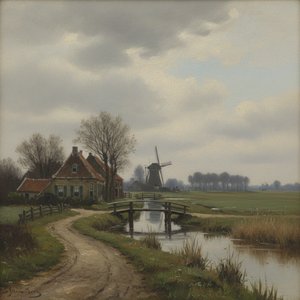
Jacob Henricus Maris: A Master of Dutch Atmospheric Realism & the Intimate Landscape
Explore the captivating world of Jacob Henricus Maris, a leading figure of the Dutch Hague School. Discover his atmospheric landscapes, signature brushstrokes & lasting influence on 19th-century art. Learn more at OriginalUniqueArt.


