Preview
 Send
Send Share
Share
 Details

 Download
 Similars
 X-Ray
X-Ray Diaporama
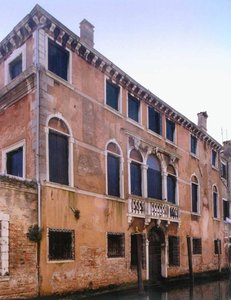
Ca' Tron Façade


 Read More
Giclée / Art Print
Museum-quality giclée or canvas print with fast production and flexible finish options. ( Switch to hand made Painting Switch to Image)




































Pick from our preset sizes that match the artwork's original proportions.

You may enter your own dimensions to fit a specific frame or space. If your selected size does not match the original image's proportions, we will either crop the artwork or extend the image with a mirrored or solid-fill edge. A digital mockup will be sent for your approval before production begins.
Please note that the on-screen preview does not reflect the actual cropping or extension. Only the mockup will accurately show the final composition.
While custom sizes are available, we recommend selecting a dimension from the predefined list to preserve the original proportions.
Worldwide Delivery () in 2 weeks instead of standard 4/5 weeks. (9 August)

Free Worldwide Express Shipping

High-Quality Linen Canvas

Full Shipping Insurance

Customs Tax Refund Guarantee

True Color Matching Guarantee

60-Day Return Policy (Defects Only)

100% Money-Back Guarantee

Bulk Discount Offer
 Glass option is only available in size under 110 CM

Ca' Tron Façade
Giclée / Art Print
Reproduction Size
-


Total Price
$ 81
Artist Biography
Antonio Gaspari: Architect of Venetian Grandeur
Antonio Gaspari (1660-after 1730), a name often whispered in the shadowed halls of Venice’s architectural history, was more than just a builder; he was a meticulous craftsman and a vital link between the Baroque dynamism of Longhena and the evolving tastes of his era. Born into a family deeply rooted in Venetian artistry – his father, Domenico Gaspari, was himself a respected architect – Antonio inherited not only technical skill but also an appreciation for the city’s unique character and its rich artistic traditions. His early training under Baldassarre Longhena, Venice's most celebrated architect of the mid-17th century, provided him with a foundational understanding of classical principles blended seamlessly with Baroque exuberance. However, Gaspari quickly distinguished himself through his own distinctive style – one characterized by a refined elegance, masterful detailing, and an acute sensitivity to light and space. Gaspari’s career unfolded primarily in Venice, though he also undertook significant projects in the surrounding Veneto region. He wasn't merely a restorer; he was a creator, responsible for both ambitious new commissions and crucial renovations of existing structures. His most celebrated achievement is undoubtedly the Santa Maria della Salute (Holy Mary of the Peace), a monumental church that dominates the Venetian skyline. Begun in 1637 and completed after Longhena’s death, Gaspari skillfully integrated the unfinished plans into a cohesive whole, transforming a seemingly daunting challenge into a breathtaking testament to Baroque grandeur. The church's soaring dome, intricate façade adorned with statues, and expansive interior – all bathed in ethereal light – represent the culmination of his architectural vision. Beyond this iconic masterpiece, he left an indelible mark on Venice through projects like the Palazzo Barbaro a San Vidal, where he dramatically expanded the existing palazzo, and the Ca’ Zenobio degli Armeni, showcasing his ability to seamlessly blend new construction with historical context.Early Influences and Artistic Development
Gaspari's artistic journey was shaped by several key influences. Longhena’s emphasis on classical proportions and harmonious design provided a crucial framework for his work. However, Gaspari wasn’t simply a follower; he possessed a remarkable ability to infuse these principles with the dramatic flair characteristic of the Baroque period. He studied not only architectural treatises but also the works of contemporary artists – painters like Giovanni Battista Tiepolo, whose vibrant color palettes and dynamic compositions profoundly impacted Gaspari's approach to interior design and façade decoration. The influence of Venetian painting is particularly evident in his use of light and shadow, creating a sense of depth and drama within his buildings. Furthermore, he was deeply connected to the artistic circles of Venice, engaging with sculptors, painters, and other artisans, fostering a collaborative environment that enriched his creative process.Key Architectural Achievements
While Santa Maria della Salute stands as his most recognized work, Gaspari’s portfolio is remarkably diverse. The Palazzo Michiel dalle Colonne, a stunning restoration of an existing palazzo, demonstrates his skill in preserving and enhancing historical structures while adapting them to contemporary needs. His work on the Ca' Tron Façade – a project that involved meticulously reconstructing a damaged façade – showcases his mastery of traditional Venetian building techniques and his commitment to architectural preservation. Less frequently discussed but equally significant are projects like the Palazzo Barbaro, where he expanded an existing noble residence, and the Palazzetto Zane, a beautiful example of Venetian Baroque architecture demonstrating his ability to create elegant residential spaces. These diverse commissions reveal a versatile architect capable of adapting his style to various contexts and client demands.Legacy and Historical Significance
Antonio Gaspari’s legacy extends far beyond the buildings he created. He played a crucial role in shaping the architectural landscape of Venice during a period of immense social, political, and artistic change. His work exemplifies the city's enduring commitment to beauty, innovation, and tradition. He wasn’t merely an architect; he was a custodian of Venetian heritage, skillfully blending classical ideals with Baroque exuberance. Gaspari’s meticulous attention to detail, his profound understanding of light and space, and his ability to create buildings that are both visually stunning and functionally elegant have ensured his place as one of Venice's most important architects. His influence can still be felt today in the city’s magnificent palaces, churches, and public spaces – a testament to the enduring power of his vision. His work continues to inspire awe and admiration, solidifying his position as a pivotal figure in Venetian architectural history.
antonio gaspari
1660 - 1749
Quick Facts
- Artistic Movement Or Style: Late-Baroque
- Artists Or Movements Influenced By This Artist: ['Venetian architecture']
- Artists Who Influenced This Artist: ['Longhena']
- Date Of Birth: 1660
- Date Of Death: 1749
- Full Name: Antonio Gaspari
- Nationality: Italian
- Notable Artworks:
- Santa Maria della Salute
- Ca' Zenobio Façade
- Palazzo Barbaro Façade
- Place Of Birth: Venice, Italy