

 Send
Send Share
Share
 Details
 Guide
Guide

 Download
 Similars
 Diaporama
 Stats
StatsOrpheus


 Read More
Giclée / Art Print
Museum-quality giclée or canvas print with fast production and flexible finish options. ( Buy Hand Made Painting Switch to Digital Image)




































Pick from our preset sizes that match the artwork's original proportions.

Type the width and the height you need, to fit your frame or your wall. A print can only be cut, never made bigger than the picture, so a size with a different shape loses a part of the image. We send you a digital mockup to approve before we print anything. The picture shown on this page does not show the real cut — only the mockup does.
Worldwide Delivery () in 2 weeks instead of standard 4/5 weeks. (24 October)

Free Worldwide Express Shipping

High-Quality Linen Canvas

Full Shipping Insurance

Customs Tax Refund Guarantee

True Color Matching Guarantee

100-Day Return Policy (Defects Only)

100% Money-Back Guarantee

Bulk Discount Offer
 Glass option is only available in size under 110 CM

Orpheus
Giclée / Art Print
Reproduction Size
-


Total Price
$ 81
A Symphony in Marble: Unveiling Antonio Canova’s Orpheus
Antonio Canova's "Orpheus," completed in 1776, isn’t merely a sculpture; it’s an immersive experience. This monumental work, originally intended for the garden of Villa Falier at Asolo, transports us to a realm where myth and emotion converge with breathtaking artistry. The piece captures the legendary musician's poignant descent into the underworld to retrieve his lost love, Eurydice, a narrative steeped in grief, longing, and ultimately, the enduring power of music.
Canova’s genius lies not just in replicating the classical form but in imbuing it with an astonishing depth of feeling. The figure of Orpheus is rendered with a remarkable dynamism—one arm raised as if conducting an invisible orchestra, his body leaning forward with a palpable sense of urgency and despair. The subtle shifts in musculature, the delicate curve of his lips, and the anguished expression on his face all speak to the profound sorrow he carries within him. The sculpture’s placement within a rocky base subtly grounds this ethereal figure, anchoring it to the earthly realm from which he's venturing into the shadowy depths.
Neoclassical Mastery: Technique and Materials
Crafted entirely from Carrara marble—a material renowned for its purity and luminosity—"Orpheus" exemplifies Canova’s unparalleled technical skill. The surface is polished to a breathtaking sheen, reflecting light in a way that highlights the intricate details of the drapery and the musculature of the body. Note the masterful rendering of folds and creases in the fabric, suggesting both movement and weight. Canova's technique demonstrates an almost obsessive attention to detail; every line, every shadow, contributes to the sculpture’s overall sense of realism and emotional intensity. The use of contrasting textures—the smooth, polished marble against the rougher texture of the base—further enhances the visual impact.
The work's scale is also significant – a monumental piece designed to command attention and evoke contemplation. Canova’s decision to create such a large-scale sculpture speaks to his ambition and his desire to capture not just a likeness but an entire emotional state. The sheer size of the figure invites viewers to step closer, to lose themselves in its details, and to feel the weight of Orpheus's sorrow.
Mythic Resonance: Symbolism and Interpretation
Beyond the literal depiction of the myth, “Orpheus” is rich with symbolic meaning. The raised arm, often interpreted as a gesture of pleading or lamentation, underscores Orpheus’s desperate attempt to sway Hades and Eurydice back to him. The laurel wreath, a symbol of victory and honor, subtly juxtaposes the tragedy of his loss with the enduring power of his music—a testament to his artistic legacy. The setting itself – a rocky outcrop reminiscent of the underworld – reinforces the sculpture’s themes of death, mourning, and the journey beyond earthly boundaries.
The story of Orpheus and Eurydice has resonated throughout Western art and literature for centuries, serving as a potent metaphor for love, loss, and the transformative power of creativity. Canova's "Orpheus" captures this enduring resonance with remarkable sensitivity and skill, offering viewers a timeless meditation on the human condition.
A Legacy in Stone: Context and Influence
Created during the height of the Neoclassical period (late 18th century), “Orpheus” reflects the movement’s emphasis on classical ideals—harmony, balance, and idealized beauty. Canova was a leading figure in this artistic revival, drawing inspiration from ancient Greek and Roman sculpture while imbuing his work with a distinctly modern sensibility. His ability to capture human emotion with such precision and grace cemented his reputation as one of the greatest sculptors of all time.
Today, Canova’s “Orpheus” continues to captivate audiences worldwide. Reproductions offer an accessible way to experience this masterpiece, bringing its profound beauty and emotional depth into homes and galleries. It stands as a powerful reminder of the enduring legacy of classical mythology and the transformative power of art.
Questions & Answers
How light is "Orpheus" overall?
Overall, "Orpheus" is recorded as shadow. Perceived brightness describes how light or dark the work appears.
What atmosphere would a reproduction of "Orpheus" by Antonio Canova bring to a room?
With its calm mood, "Orpheus" is suggested for a living room.
What medium is "Orpheus" by Antonio Canova executed in?
Antonio Canova used the marble technique for "Orpheus". The technique defines the material nature of the original work.
Artist Biography
Antonio Canova: A Life in Marble
- Born: Possagno, Italy (1757)
- Died: 1822
Antonio Canova stands as a towering figure in the history of Western art, widely regarded as the preeminent Neoclassical sculptor. His mastery of marble carving and his ability to infuse classical forms with profound emotion secured his place among the greatest artists of all time. Born in Possagno, Italy, to Pietro Canova, a stonemason, Canova’s early life was shaped by the artistic environment surrounding him.
Early Life and Training
- Family Background: His father's profession provided an initial exposure to stone carving, and his grandfather, Pasino Canova, a sculptor specializing in altars and low reliefs, played a crucial role in nurturing his talent.
- Early Artistic Development: Even before the age of ten, Canova demonstrated remarkable skill, creating small marble shrines that showcased his innate ability. He apprenticed under Giuseppe Bernardi ('Torretto') and Giovanni Ferrari, further honing his skills.
- Academy Studies: His studies at the Accademia di Belle Arti di Venezia yielded numerous prizes, solidifying his reputation as a promising young artist. A workshop within a monastery provided him with space to develop his craft.
- Early Commissions: Early commissions like the statues of Orpheus and Eurydice for Senator Giovanni Falier (1775-1777) demonstrated an emerging Rococo style, foreshadowing his later Neoclassical refinement.
The Rise to Prominence and Neoclassical Style
- Defining Neoclassicism: Canova’s work is characterized by its elegant forms, idealized figures, and a return to the aesthetic principles of ancient Greece and Rome. He skillfully avoided the melodrama of Baroque art while resisting the coldness often associated with earlier attempts at classical revival.
- Key Works & Recognition: Sculptures like Cupid and Psyche (c. 1787-1793), Penitent Magdalene, and Hercules and Lichas established his reputation throughout Europe. His work was highly sought after by royalty and nobility.
- Promoting His Reputation: Canova strategically promoted his career through the publication of engravings of his works and the creation of marble versions of plaster casts, ensuring widespread dissemination of his art.
- International Acclaim: Commissions from across Europe, including a statue of Theseus and the Minotaur for Girolamo Zulian (Venetian ambassador to Rome), cemented his status as one of the most celebrated artists in Europe.
Major Works and Legacy
- Notable Sculptures: Beyond those already mentioned, Canova’s significant works include Venus Italica, La Musa Polyhymnia, The Three Graces Dancing, and his poignant depiction of Eurydice.
- Monumental Commissions: He received prestigious commissions for tombs, most notably the elaborate Tomb of Pope Clement XIII in St. Peter's Basilica, Rome – a testament to his skill in both sculpture and architectural design.
- Gipsoteca Antonio Canova: The Gipsoteca Antonio Canova museum houses the most significant collection of his works, providing invaluable insight into his creative process and artistic evolution.
- Influence on Subsequent Generations: Canova’s influence extended far beyond his lifetime, shaping the course of Neoclassical sculpture and inspiring generations of artists with his technical mastery and expressive power.
Historical Significance
- Embodiment of Neoclassicism: Antonio Canova became synonymous with the Neoclassical movement, embodying its ideals of order, clarity, and a return to classical antiquity.
- Court Sculptor & Diplomat: His position as court sculptor to numerous European rulers gave him considerable political influence and allowed him to shape artistic tastes across the continent.
- Technical Innovation: Canova’s unparalleled skill in carving marble pushed the boundaries of what was considered possible, setting a new standard for sculptural excellence.
- Enduring Artistic Legacy: His sculptures continue to captivate audiences worldwide, solidifying his place as one of the most important and influential artists in history.

Antonio Canova
1757 - 1822 , Italy
Quick Facts
- Full Name: Antonio Canova
- Nationality: Italian
- Date Of Birth: 1757
- Date Of Death: 1822
- Place Of Birth: Possagno, Italy
- Notable Artworks:
- Cupid and Psyche
- Penitent Magdalene
- Hercules and Lichas
- Theseus and the Minotaur
- The Three Graces Dancing
- Eurydice
- Venere Italica
- Artistic Movement Or Style: Neoclassicism
- Artists Who Influenced This Artist: ['Late Baroque sculptors']
- Artists Or Movements Influenced By This Artist: ['Later Neoclassical artists']
Related Articles

Bronze Sculptures That Defined Art History | OriginalUniqueArt
Journey through art history with our Top 10 bronze sculptures! Explore masterpieces by Rodin, Michelangelo & more. Discover stories behind iconic statues and find museum-quality reproductions for your home decor at OriginalUniqueArt.com.

The Enduring Form: Exploring Themes & Techniques in Sculpture Across Historical Periods
Explore the rich history of sculpture from ancient masterpieces to contemporary innovations. Discover key techniques, influential artists & investment potential for discerning art collectors.
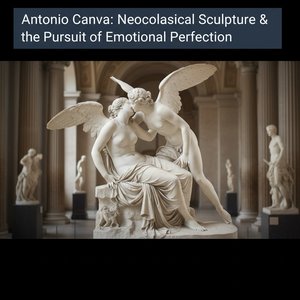
Antonio Canova: Neoclassical Sculpture & the Pursuit of Emotional Perfection
Explore the life & art of Antonio Canova, the greatest Neoclassical sculptor. Discover his masterpieces, innovative techniques, and lasting influence on fine art collecting. Expert insights for discerning investors.

The Enduring Allure of Marble in Art History: From Classical Sculpture to Modern Abstraction
Explore the captivating history of marble sculpture from ancient Greece to modern art. Discover renowned artists like Canova & Michelangelo, carving techniques, and investment insights at OriginalUniqueArt.
Timeless Elegance: A Complete Guide to the Sublime Beauty and Artistry of Marble Sculpture
Discover the sublime beauty of marble art through an expert exploration of Renaissance and Neoclassical masterpieces. From the delicate textures of Carpeaux to the grandeur of Sansovino, immerse yourself in a guide to timeless elegance and sculptural perfection.


