
 Preview
 Send
Send Share
Share
 Details

 Download
 Similars
 X-Ray
X-Ray Diaporama
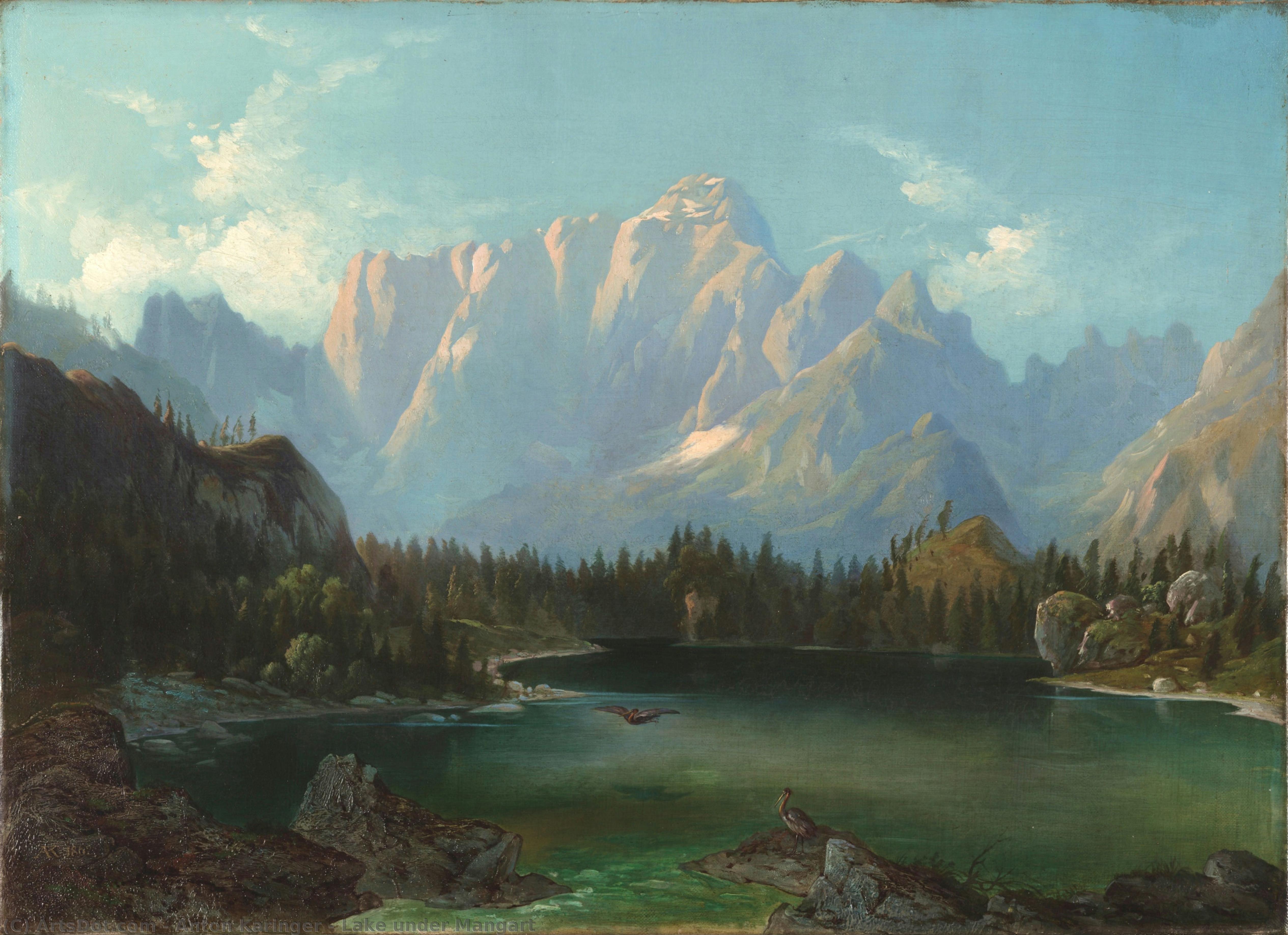
Lake under Mangart
 1826
1826 61.0 x 44.0 cm
 National Museum of Slovenia
 Read More
Giclée / Art Print
Museum-quality giclée or canvas print with fast production and flexible finish options. ( Switch to hand made Painting Switch to Image)




































Pick from our preset sizes that match the artwork's original proportions.

You may enter your own dimensions to fit a specific frame or space. If your selected size does not match the original image's proportions, we will either crop the artwork or extend the image with a mirrored or solid-fill edge. A digital mockup will be sent for your approval before production begins.
Please note that the on-screen preview does not reflect the actual cropping or extension. Only the mockup will accurately show the final composition.
While custom sizes are available, we recommend selecting a dimension from the predefined list to preserve the original proportions.
Worldwide Delivery () in 2 weeks instead of standard 4/5 weeks. (11 August)

Free Worldwide Express Shipping

High-Quality Linen Canvas

Full Shipping Insurance

Customs Tax Refund Guarantee

True Color Matching Guarantee

60-Day Return Policy (Defects Only)

100% Money-Back Guarantee

Bulk Discount Offer
 Glass option is only available in size under 110 CM

Lake under Mangart
Giclée / Art Print
Reproduction Size
-


Total Price
$ 81
Artist Biography
The Painter of Triglav: The Soul of the Slovenian Landscape
Anton Karinger (1829–1870) remains an evocative figure in the annals of 19th-century European art, a painter and poet whose brushstrokes captured the very heartbeat of his homeland. Born in Ljubljana, Karinger’s artistic identity was forged at the intersection of diverse cultural currents. While his roots were deeply embedded in the Slovenian landscape, his creative vision was significantly shaped by the sophisticated artistic atmosphere of Vienna. This unique blend allowed him to approach the rugged, untamed beauty of the Alps and the Adriatic coast with a refined sensibility, blending the meticulous precision of the Viennese Biedermeier tradition with the sweeping emotionality of Romanticism.
His formative years were marked by an early immersion in formal training under the guidance of Franz Steinfeld in Vienna. From this mentorship, Karinger inherited a profound respect for psychological realism and understated elegance, yet he found his true calling not in the intimate portraiture of the city, but in the vast, atmospheric expanses of the natural world. His work became a bridge between the observed reality of the terrain and the spiritual awe inspired by its grandeur. Through his eyes, the mountains were not merely geological formations but living, breathing entities that embodied national resilience and identity.
A Vision of Majesty and National Identity
Karinger’s most enduring legacy lies in his ability to transform landscape painting into a vessel for cultural symbolism. He is perhaps best remembered as the painter of Mount Triglav, Slovenia's highest peak. In masterpieces such as View of Mt. Triglav from Bohinj, he moved beyond mere topographical documentation. Instead, he utilized light, shadow, and atmospheric haze to evoke a sense of the sublime. By capturing the shifting moods of the mountains—the way mist clings to granite crags or how sunlight pierces through heavy clouds—he created images that resonated deeply with the Carinthian Slovene people, turning these vistas into enduring emblems of national pride.
His technical mastery was particularly evident in his dedication to plein air studies. By working directly within the elements, Karinger achieved a palpable sense of texture and depth. His landscapes often feature a sophisticated interplay of light that suggests the fleeting nature of time, a hallmark of the Romantic spirit. Whether depicting the serene waters of Lake under Mangart or the coastal vistas of the Adriatic, his compositions possess a rhythmic harmony that guides the viewer through the rugged terrain, inviting a contemplative emotional response.
Artistic Legacy and Lasting Significance
The breadth of Karinger’s oeuvre extends beyond the alpine heights to include evocative seascapes and intimate regional views. His ability to navigate between the monumental and the minute—from the sweeping vistas of Ljubljana from the Ižica to more delicate depictions of local life—demonstrates a versatile talent that captured the multifaceted essence of his era. His works are not merely relics of the 19th century; they are foundational pieces of Slovenian art history, many of which are preserved in the prestigious National Gallery of Slovenia.
Even today, Karinger’s influence persists through the enduring power of his imagery. He succeeded in a rare feat: creating art that is simultaneously technically rigorous and deeply poetic. His life, though tragically short, left behind a visual vocabulary that continues to define how the beauty of the Slovenian landscape is perceived. Through his meticulous observation and romantic heart, Anton Karinger ensured that the majesty of Triglav would forever be etched into the collective memory of the world.

Anton Karinger
1829 - 1870 , Slovenia
Quick Facts
- Artistic Movement Or Style: Biedermeier
- Artists Or Movements Influenced By This Artist: ['Romanticism']
- Artists Who Influenced This Artist: ['Steinfeld']
- Date Of Birth: 1829
- Date Of Death: 1870
- Full Name: Anton Karinger
- Nationality: Slovene
- Notable Artworks:
- View of Mt. Triglav from Bohinj
- Ljubljana from the Ižica
- Place Of Birth: Ljubljana, Slovenia



