- Home

- Print on canvas
- antiphon painter
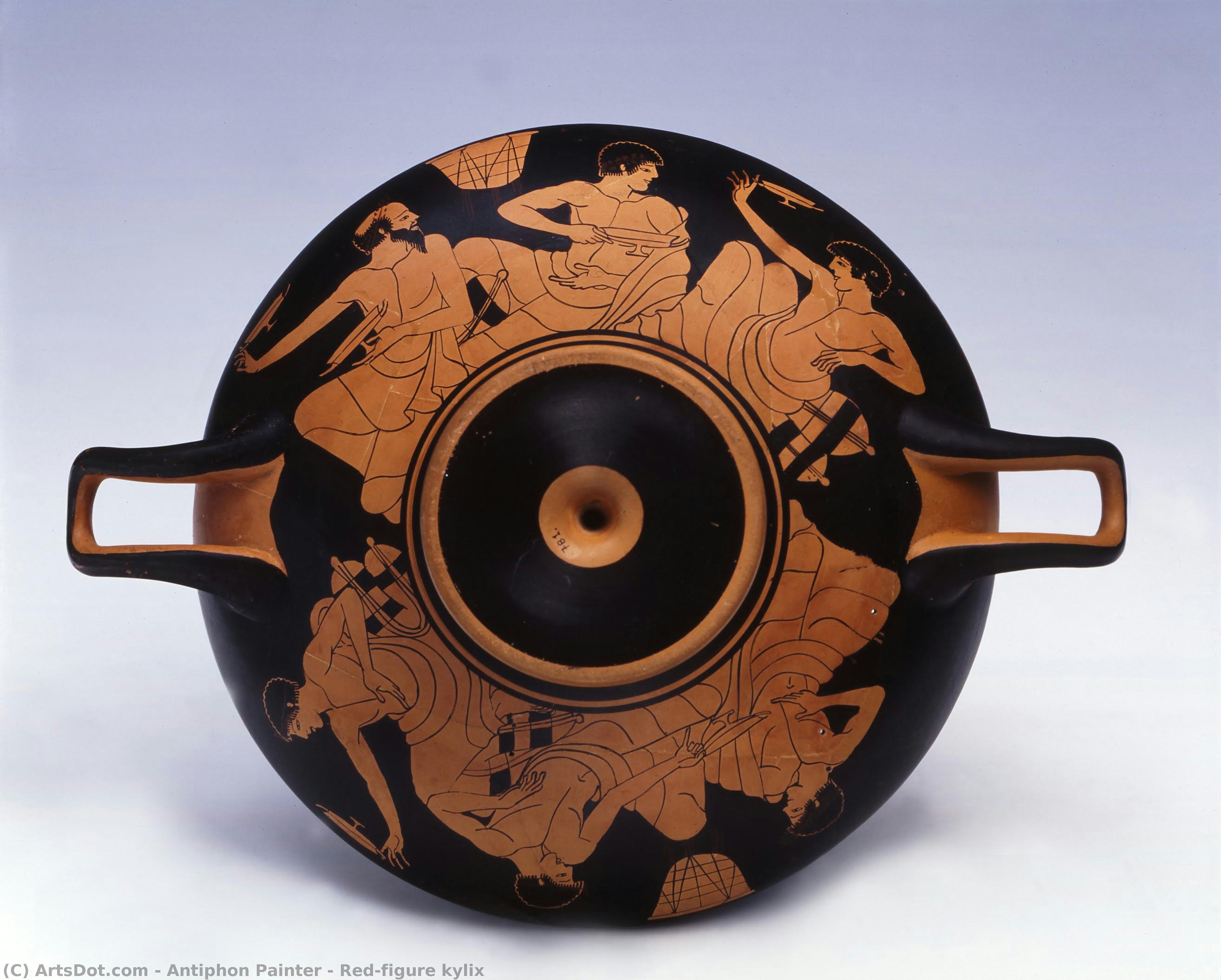
- Red-figure kylix
 Buy Painting
 Send
Send Share
Share
 Details

 Download
 Similars
 X-Ray
X-Ray Diaporama
Red-figure kylix

 Read More
Giclée / Art Print
Museum-quality giclée or canvas print with fast production and flexible finish options.




































Pick from our preset sizes that match the artwork's original proportions.

You may enter your own dimensions to fit a specific frame or space. If your selected size does not match the original image's proportions, we will either crop the artwork or extend the image with a mirrored or solid-fill edge. A digital mockup will be sent for your approval before production begins.
Please note that the on-screen preview does not reflect the actual cropping or extension. Only the mockup will accurately show the final composition.
While custom sizes are available, we recommend selecting a dimension from the predefined list to preserve the original proportions.
Worldwide Delivery () in 2 weeks instead of standard 4/5 weeks. (22 July)

Free Worldwide Express Shipping

High-Quality Linen Canvas

Full Shipping Insurance

Customs Tax Refund Guarantee

True Color Matching Guarantee

60-Day Return Policy (Defects Only)

100% Money-Back Guarantee

Bulk Discount Offer
 Glass option is only available in size under 110 CM

Red-figure kylix
Giclée / Art Print
Reproduction Size
-


Total Price
-
Collectible Description
Artist Biography
A Glimpse into the World of Athenian Youth: The Antiphon Painter
The early 5th century BC in Athens was a period of burgeoning artistic innovation, and among its most captivating figures stands the artist known as the Antiphon Painter. Unlike many of his contemporaries whose identities remain shrouded in mystery, we know this vase-painter’s name—or rather, his *notname*—thanks to a double inscription reading “Antiphon kalos” (“Antiphon is beautiful”) found on a dinos stand unearthed near Pomarico in southern Italy. This seemingly simple dedication offers a tantalizing connection to the world of aristocratic Athenian youth, a world that became the defining subject matter of his prolific oeuvre. The Antiphon Painter wasn’t simply depicting scenes; he was capturing an ethos, a lifestyle, and perhaps even celebrating individuals within it. He flourished around 490-470 BCE, a time still resonating with the recent victories against Persia at Marathon and Salamis—a period of renewed confidence and cultural blossoming.Formative Years and Artistic Lineage
The Antiphon Painter did not emerge from artistic isolation. He honed his skills within the esteemed workshop of Euphronios and Onesimos, two giants of red-figure vase painting. This apprenticeship was crucial in shaping his technical prowess and aesthetic sensibilities. He worked alongside other painters like the Kalmarer Painter, absorbing the prevailing styles and pushing the boundaries of the medium. The influence of Euphronios is particularly evident in the early works of Antiphon, characterized by dynamic compositions, anatomical precision, and a keen eye for detail. However, Antiphon quickly developed his own distinct voice, moving away from the dramatic narratives favored by Euphronios towards more intimate and genre-focused scenes. He wasn’t merely imitating; he was building upon a legacy while forging a new path.Themes and Techniques: A Celebration of Athenian Life
The Antiphon Painter's work is remarkable for its consistent focus on the lives of aristocratic Athenian youths. His canvases—primarily kylikes, or drinking cups—are filled with athletes engaged in training exercises, symposia brimming with convivial conversation and music, *komos* processions celebrating Dionysus, and scenes of horsemanship. Women, particularly Hetairai (high-class courtesans), appear less frequently than their male counterparts, but when they do, they are often depicted with a captivating grace and individuality. He rarely ventured into grand mythological narratives, preferring instead to portray the everyday experiences of his patrons. Technically, Antiphon was a master of red-figure painting, employing precise linework and subtle shading to create depth and volume. He is particularly celebrated for his *eye-cups*, a specialized form where intricate scenes are painted around the interior of the cup, visible only when tilted. These eye-cups represent the pinnacle of his technical skill, demanding exceptional control and artistry. His compositions often feature carefully arranged groups of figures, creating a sense of dynamic movement and lively interaction. The use of incised details to render musculature, drapery, and facial expressions further enhances the realism and emotional impact of his scenes.Legacy and Historical Significance
Approximately one hundred drinking vessels attributed to the Antiphon Painter have survived, providing a rich and detailed glimpse into Athenian society during the early Classical period. His work is not merely aesthetically pleasing; it’s a valuable historical document, offering insights into aristocratic customs, social interactions, and the values of the time. He was among the last artists to create eye-cups, marking a transition in vase painting techniques and subject matter. While his name may be known only through an inscription on a single vessel, his artistic legacy endures. The Antiphon Painter’s ability to capture the spirit of Athenian youth—their athleticism, their camaraderie, their pursuit of beauty—continues to resonate with viewers today, offering a timeless window into a vibrant and fascinating world. His work stands as a testament to the power of art to not only reflect but also celebrate the lives and ideals of a bygone era.
antiphon painter
Greece
Quick Facts
- Artistic Movement Or Style: Red-figure vase painting
- Artists Who Influenced This Artist:
- Euphronios
- Onesimos
- Date Of Birth: 495 BC
- Date Of Death: 480 BC
- Full Name: Antiphon Painter
- Nationality: Greek
- Notable Artworks:
- Dinos stand (Berlin F 2325)
- Eye-cups
- Kylikes
- Place Of Birth: Athens, Greece

