Preview
 Send
Send Share
Share
 Details
 Guide
Guide

 Download
 Similars
 X-Ray
X-Ray Diaporama
 Stats
StatsThe Fertile Crescent
 Mixed Media
- WallArt
- Neo-Expressionism
 2009
2009- Contemporary
 762.0 x 330.0 cm
 Albertina Klosterneuburg
 Read More
Giclée / Art Print
Museum-quality giclée or canvas print with fast production and flexible finish options. ( Buy Hand Made Painting Switch to Digital Image)




































Pick from our preset sizes that match the artwork's original proportions.

You may enter your own dimensions to fit a specific frame or space. If your selected size does not match the original image's proportions, we will either crop the artwork or extend the image with a mirrored or solid-fill edge. A digital mockup will be sent for your approval before production begins.
Please note that the on-screen preview does not reflect the actual cropping or extension. Only the mockup will accurately show the final composition.
While custom sizes are available, we recommend selecting a dimension from the predefined list to preserve the original proportions.
Worldwide Delivery () in 2 weeks instead of standard 4/5 weeks. (26 September)

Free Worldwide Express Shipping

High-Quality Linen Canvas

Full Shipping Insurance

Customs Tax Refund Guarantee

True Color Matching Guarantee

100-Day Return Policy (Defects Only)

100% Money-Back Guarantee

Bulk Discount Offer
 Glass option is only available in size under 110 CM

The Fertile Crescent
Giclée / Art Print
Reproduction Size
-


Total Price
$ 81
A Monumental Vision of Life and Architecture
In the vast, sweeping expanse of Anselm Kiefer’s The Fertile Crescent, viewers are invited into a world where the boundaries between architecture, humanity, and nature dissolve into a singular, breathtaking vision. Spanning an incredible 762 x 330 cm, this mixed-media masterpiece commands the space it inhabits, acting less like a mere painting and more like a window into a sprawling, mythic landscape. The composition is anchored by a formidable structure, a building of stone and brick that rises with a sense of ancient permanence. Its many windows serve as eyes looking out onto a world in motion, capturing a moment where the stillness of masonry meets the frantic energy of life.
The scene is far from desolate; instead, it pulses with a quiet, communal vitality. Figures are scattered throughout the composition—some seated in contemplative repose, others standing in what feels like the hushed murmur of conversation. This human presence provides a vital scale to the monumental architecture, grounding the epic proportions of the work in a relatable, earthly reality. Interwoven with these human elements is an abundance of birds, fluttering across ledges and soaring through the air, their movement adding a layer of kinetic grace that breathes life into the heavy, textured surfaces of the piece.
The Alchemy of Texture and Symbolism
To encounter a work by Kiefer is to engage with the very substance of history. As a titan of Neo-Expressionism, Kiefer is renowned for his visceral use of unconventional materials, and The Fertile Crescent is no exception. The artist employs a rich, tactile language where the grit of the medium mirrors the weight of the subject matter. His technique often involves layering elements that evoke the passage of time—ash, clay, and organic matter—creating a surface that feels as though it has been weathered by centuries of wind and rain. This heavy texture does more than provide visual interest; it serves as a metaphor for the layers of memory and the enduring scars of the past.
The title itself, referencing the historical cradle of civilization, suggests a profound symbolic depth. By placing birds, people, and stone within this "fertile" context, Kiefer explores themes of rebirth, continuity, and the cyclical nature of existence. The architecture represents the structures of civilization—both physical and social—while the wildlife and human figures represent the persistent pulse of life that survives even amidst the ruins of history. For the collector or interior designer, this piece offers a profound intellectual depth, providing a focal point that invites endless contemplation and serves as a powerful conversation starter in any sophisticated setting.
An Atmospheric Masterpiece for Modern Interiors
For those seeking to curate an environment of distinction, The Fertile Crescent offers an unparalleled emotional impact. The painting possesses a unique ability to transform a room, casting a shadow of epic storytelling and atmospheric grandeur. Its scale allows it to function as a transformative element in large-scale architectural spaces, such as grand foyers, galleries, or expansive living areas, where its complex interplay of light and shadow can be fully appreciated.
Whether viewed through the lens of art history or as a centerpiece of contemporary decor, the work resonates with a sense of awe. It captures the tension between the permanent and the ephemeral, the heavy and the light, the stone and the wing. Owning a high-quality reproduction of such a monumental work allows one to bring the profound, haunting beauty of Kiefer’s universe into the private sphere, offering a daily encounter with the sublime power of human creativity and the enduring spirit of life itself.
Artist Biography
The Weight of Memory: The Art of Anselm Kiefer
Anselm Kiefer stands as one of the most profound and distinctive voices within Neo-Expressionism, an artistic movement that emerged in the late 1970s and early 1980s as a powerful reaction against the austerity of Minimalism and Conceptual Art. Born in Donaueschingen, Germany, in 1945, Kiefer’s very existence is inextricably linked to the aftermath of World War II. His oeuvre transcends mere representation; it is an immersive, visceral exploration of German history—particularly its profound trauma—expressed through monumental canvases and sculptures that demand a physical confrontation from the viewer. His artistic journey began with rigorous studies under Peter Dreher and Horst Antes at the Hochschule für Gestaltung Weinheim-Basel, where he established a foundation for his famously experimental approach to artmaking.
The soul of Kiefer’s work is deeply rooted in the literary shadows of the past, most notably through the haunting poetry of Paul Celan. The fragmented language and preoccupation with loss found in Celan's verse profoundly impacted Kiefer’s thematic concerns, specifically regarding the Holocaust and its lingering, often silent, effects on German collective memory. Through his art, Kiefer seeks to give form to this silence, exploring themes of absence, destruction, and the heavy burden of historical legacy. His work does not merely depict history; it attempts to excavate it from the layers of time and debris.
Materiality and the Alchemy of Destruction
What truly distinguishes Kiefer from his contemporaries is his deliberate and masterful use of materials that carry immense symbolic weight. He treats the canvas not as a flat surface, but as a site of geological and historical transformation. By incorporating unconventional elements such as ash, straw, clay, lead, and shellac, he creates works that feel less like paintings and much more like artifacts recovered from a scorched earth. Each material serves a narrative purpose:
- Ash: Derived from burned forests, ash acts as a poignant reminder of ecological devastation and the literal and metaphorical destruction wrought by war.
- Straw: This element introduces a sense of fragility, representing the vulnerability of human life against the overwhelming forces of nature and history.
- Lead: A heavy, somber medium that provides a sense of permanence and the crushing weight of the past.
Kiefer’s technique is characterized by an intense, thick impasto layering. He applies paint in multiple, dense coats to create textured surfaces that resemble scorched earth or ancient geological formations. This tactile approach is not merely decorative; it actively engages the viewer, forcing them to confront the sheer physicality of his process. The scale of his canvases often mirrors the monumental scale of the historical events he addresses, creating an environment where the viewer is swallowed by the texture and gravity of the work.
Legacy and Historical Significance
As his career progressed, Kiefer’s international recognition grew through works that challenged the boundaries between painting, sculpture, and installation. His ability to weave together myth, alchemy, and historical catastrophe has secured his place as a titan of contemporary art. Whether he is depicting the brooding shadows of Roman emperors or the desolate landscapes of post-war Europe, his work remains a continuous dialogue with the concept of time itself. Through his mastery of texture and symbolism, Anselm Kiefer has created a visual language capable of articulating the most difficult aspects of human history, ensuring that the scars of the past are never truly erased, but rather transformed into profound works of enduring significance.

Anselm Kiefer
1945 - , Germany
Quick Facts
- Artistic Movement Or Style: Neo-Expressionism
- Artists Or Movements Influenced By This Artist: ['Kabbalah']
- Artists Who Influenced This Artist:
- Paul Celan
- Peter Dreher
- Horst Antes
- Date Of Birth: March 8, 1945
- Date Of Death: Living
- Full Name: Anselm Kiefer
- Nationality: German
- Notable Artworks:
- Nero paints
- Böhmen liegt am Meer
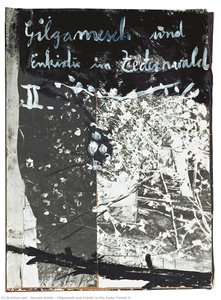
- Gilgamesh and Enkidu in the Cedar Forest II
- Place Of Birth: Donaueschingen, Germany
Related Articles
Basquiat & Raw Pop: The Unfiltered Energy of Neo-Expressionism and the Legacy of Urban Rebellion
Explore the raw energy of Jean-Michel Basquiat and Neo-Expressionism. Discover how urban rebellion redefined modern art through a lens of luxury, identity, and profound emotional intensity for the discerning collector.
Mixed Media Magic: How to Layer Texture and Street Style for High-Impact Art
Master the art of high-impact decor with our trend forecast on mixed media. Discover how to layer street style textures and dimensional elements to create a bold, urban aesthetic for your modern space. Elevate your collection with professional insights into contemporary art trends.

Mixed Media Art for Hospitality: A Professional Guide to Texture, Layering, and High-Impact Interior Design
Elevate hospitality interiors with professional mixed media art. Our guide explores texture, layering, and durability for hotel designers and procurement managers seeking high-impact, custom-commissioned artworks that define luxury guest experiences.

Beyond the Brush: An Expert Guide to Mastering Mixed Media Art Techniques and Materiality
Elevate your artistic practice with our expert guide to mastering mixed media art. Discover professional techniques for layering, material integration, and creating structural depth to transform your creative vision into sophisticated, multi-dimensional masterpieces.

The Magic of Collage: How to Layer Texture and Story into Your Home Decor
Elevate your interiors with the magic of collage. Discover expert tips on layering texture, 3D elements, and personal narratives through mixed media art to create a soulful, sophisticated home decor experience.