Preview
 Send
Send Share
Share
 Details
 Guide
Guide

 Download
 Similars
 X-Ray
X-Ray Diaporama
 Stats
StatsThe Slav Epic


 Read More
Hand Made Oil Reproduction
Hand-painted oil on canvas in your size and frame, made to order by our artists. ( Switch to Print Switch to Digital Image)




P118B $10

P118H $10

P118W $10

P438Z $10

P508JH $12

P508YH $12

P805H $10

P805Z $10

P919BZ $10

P919G $10

P919XJ $10

P959ZH $10

P968JZ $12

W106C $8

W218G $10

W218JH $8

W218Y $10

W307PJ $10

W316G $10

W316PJ $8

W316Y $10

W398PJ $8

W4111J $10

W500HY $15

W500JH $15

W692G $12

W849H $8

W940BG $15

W953PJ $8




Pick from our preset sizes that match the artwork's original proportions.

Type the width and the height you need, to fit your frame or your wall. This is hand-painted, so for a size with a different shape the artist can paint a bit more around the picture, or cut a bit — you choose. We send you a digital mockup to approve before the painting starts. The picture shown on this page does not show the real result — only the mockup does.
After order, OriginalUniqueArt.com team will email client for instructions and provide a mockup preview
Worldwide Delivery () in 3/4 weeks instead of standard 5 weeks. (23 October). No compromise on quality.

Free Worldwide Express Shipping

High-Quality Linen Canvas

Full Shipping Insurance

Customs Tax Refund Guarantee

True Color Matching Guarantee

100-Day Return Policy (Defects Only)

100% Money-Back Guarantee

Bulk Discount Offer
 Glass option is only available in size under 110 CM

The Slav Epic
Reproduction Medium
Reproduction Size
-


Total Price
$ 300
The Slav Epic: A Monument to Slavic Identity
Alphonse Mucha’s *The Slav Epic* stands as one of the most ambitious and visually arresting projects of the Art Nouveau era. Completed between 1912 and 1926, this monumental cycle of twenty paintings isn't merely a collection of historical scenes; it’s a profound statement about Slavic identity, spirituality, and the enduring power of myth. Commissioned by the Czech government as a celebration of Czechoslovakia’s newly gained independence, Mucha poured his heart and soul into creating an epic that would resonate with the Slavic people across vast geographical distances – a testament to their shared heritage and cultural resilience.
The sheer scale of *The Slav Epic* is immediately striking. Each canvas measures over six by eight meters (approximately 20 x 26 feet), demanding attention and immersing the viewer in Mucha’s meticulously crafted world. This monumental format was deliberate, intended to evoke a sense of grandeur and importance, reflecting the significance he placed on portraying the Slavic narrative with unparalleled depth and detail. The paintings are not simply decorative; they were conceived as a powerful visual chronicle, designed to inspire pride and unity within the Slavic nations.
A Symphony of Art Nouveau Style
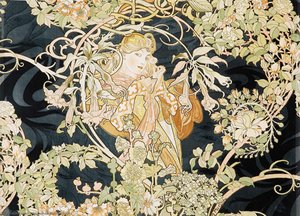
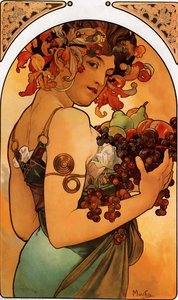
Muchas distinctive style is immediately recognizable – a hallmark of his Art Nouveau period. Flowing lines dominate every composition, creating an almost liquid quality that seems to animate the figures and landscapes. Organic forms are prevalent, drawing inspiration from nature—floral motifs intertwine with human forms, reflecting a deep connection to the natural world. The use of color is particularly masterful; rich, saturated hues – deep blues, vibrant reds, earthy greens, and shimmering golds – create an atmosphere of both solemnity and opulence. This careful orchestration of color isn’t just aesthetically pleasing; it serves to heighten the emotional impact of each scene.
The figures themselves are idealized representations of Slavic people, often depicted in flowing robes that emphasize movement and grace. Mucha's women – frequently adorned with elaborate headdresses and jewelry – embody a sense of timeless beauty and spiritual power. He skillfully employs techniques like sfumato (the blurring of edges) to create a soft, atmospheric effect, further enhancing the dreamlike quality of his work. The artist’s meticulous attention to detail, from the texture of fabrics to the expressions on the figures' faces, elevates these paintings beyond mere illustrations and transforms them into powerful works of art.
Symbolism and Narrative
Each of the twenty canvases tells a specific story from Slavic history and mythology. The cycle is divided roughly in half, with ten panels depicting events from Czech history and the other ten exploring broader Slavic narratives. Notable scenes include “The Bulgarian Tsar Simeon,” where the young ruler welcomes Methodius and Cyril to his kingdom, symbolizing the spread of Christianity among the Slavs; and “The Apotheosis of the Slavs,” a triumphant finale depicting the Slavic people’s ultimate victory and their arrival in their homeland.
Beyond the literal narratives, *The Slav Epic* is rich in symbolism. Recurring motifs – such as the wheat stalk (representing fertility and abundance) and the stylized depiction of the sun – carry deeper meanings related to Slavic spirituality and worldview. Mucha’s work reflects a deep engagement with Slavonic mythology, incorporating elements from ancient legends and folklore into his compositions. The paintings are not simply historical records; they are carefully constructed allegories designed to evoke a sense of national pride and cultural identity.
A Legacy of Artistic Vision
Alphonse Mucha’s *The Slav Epic* remains a testament to the artist's extraordinary vision and technical skill. It is a monumental achievement that transcends its historical context, continuing to captivate viewers with its beauty, power, and profound message. Reproductions of this iconic artwork offer an unparalleled opportunity to experience the full impact of Mucha’s genius – a chance to own a piece of art history that celebrates the enduring spirit of the Slavic people.
Questions & Answers
Where does "The Slav Epic" sit within Alphonse Mucha's body of work?
"The Slav Epic" belongs to Alphonse Mucha's Art Nouveau work, whose recorded themes include renoir, moreau influences, slavic mythology themes, czech nationalism reflects, monumental project ambition, muchas signature style.
How much light do the colors of "The Slav Epic" appear to reflect?
"The Slav Epic" by Alphonse Mucha has a bright balance luminance. Luminance describes how much light the colors appear to reflect.
Who sells hand-painted copies of "The Slav Epic" by Alphonse Mucha?
"The Slav Epic" is available as a hand-painted oil reproduction on linen canvas. The order can be placed on its Hand-Painted Reproduction page, with a choice of sizes.
Artist Biography
Early Life and Education
- Born: July 15, 1860, in Ivanačice, Moravia (now part of the Czech Republic)
- Showed artistic talent from a young age.
- Studied at the Academy of Fine Arts in Prague but became disillusioned with traditional approaches.
- Moved to Paris in 1887 to pursue his own style.
Artistic Style and Notable Works
- Known for distinctive Art Nouveau style characterized by flowing lines, organic forms, and a sense of movement.
- Influenced by artists like Pierre-Auguste Renoir and Gustave Moreau.
- Notable Works:
- The Slavonic Uprising - Showcases blending traditional Czech motifs with modern Art Nouveau elements.
- Salon des Cent
- Paintings inspired by works like The Daughters of Tespio by Gustave Moreau, and La Ribambelle des Gobelins by Piero Dorazio.
- Illustrations based on Young Farmers Breaking Flax by Sir Hubert von Herkomer.
- Frequently featured idealized women in flowing robes surrounded by lush flowers.
Career Highlights and Major Commissions
- Sarah Bernhardt Collaboration: Created posters and designs for the actress Sarah Bernhardt, starting with the poster for Gismonda (1894), which launched his career.
- Universal Exhibition in Paris (1900): His Art Nouveau style gained international recognition at this exhibition. He decorated the Bosnia and Herzegovina Pavilion and collaborated on the Austrian Pavilion.
- Charles Richard Crane Patronage: Received support from Charles Richard Crane, which enabled him to create the monumental series The Slav Epic (1912-30).
- Post-Independence Czechoslovakia: Designed postage stamps, banknotes, and government documents for newly independent Czechoslovakia.
Influences and Legacy
- Influenced by Czech artistic traditions and modern European art movements.
- His unique style paved the way for future generations of artists in Art Nouveau and Secessionism.
- Inspired other artists like Eva Prokopcová.
- Legacy extends beyond his artwork to influence design and aesthetics.
Later Life and Death
- Married Maruska (Marie/Maria) Chytilová in 1906.
- Visited the United States from 1906-1910, where their daughter Jaroslava was born.
- Died on July 14, 1939, in Prague, Czechoslovakia.

Alphonse Mucha
1860 - 1939 , Czech Republic
Quick Facts
- Full Name: Alphonse Maria Mucha
- Nationality: Czech
- Date Of Birth: 1860
- Date Of Death: 1939
- Place Of Birth: Brno, Czech Republic
- Notable Artworks:
- Slavic Uprising
- Salon des Cent
- The Daughters of Tespio
- La Ribambelle des Gobelins
- Young Farmers Breaking Flax
- Artistic Movement Or Style: Art Nouveau
- Artists Who Influenced This Artist:
- Pierre-Auguste Renoir
- Gustave Moreau
- Dante Gabriel Rossetti
- Artists Or Movements Influenced By This Artist: ['Eva Prokopcová']