Preview
 Send
Send Share
Share
 Details
 Guide
Guide

 Download
 Similars
 X-Ray
X-Ray Diaporama
 Q&A
Q&A Stats
StatsMonaco, Monte-Carlo

 Read More
Giclée / Art Print
Museum-quality giclée or canvas print with fast production and flexible finish options. ( Buy Hand Made Painting Switch to Digital Image)




P118B $10

P118H $10

P118W $10

P438Z $10

P508JH $12

P508YH $12

P805H $10

P805Z $10

P919BZ $10

P919G $10

P919XJ $10

P959ZH $10

P968JZ $12

W106C $8

W218G $10

W218JH $8

W218Y $10

W307PJ $10

W316G $10

W316PJ $8

W316Y $10

W398PJ $8

W4111J $10

W500HY $15

W500JH $15

W692G $12

W849H $8

W940BG $15

W953PJ $8




Pick from our preset sizes that match the artwork's original proportions.

Type the width and the height you need, to fit your frame or your wall. A print can only be cut, never made bigger than the picture, so a size with a different shape loses a part of the image. We send you a digital mockup to approve before we print anything. The picture shown on this page does not show the real cut — only the mockup does.
Worldwide Delivery () in 2 weeks instead of standard 4/5 weeks. (1 November)

Free Worldwide Express Shipping

High-Quality Linen Canvas

Full Shipping Insurance

Customs Tax Refund Guarantee

True Color Matching Guarantee

100-Day Return Policy (Defects Only)

100% Money-Back Guarantee

Bulk Discount Offer
 Glass option is only available in size under 110 CM

Monaco, Monte-Carlo
Giclée / Art Print
Reproduction Size
-


Total Price
$ 81
Monaco Monte Carlo: An Ode to Elegance and Ornamentation
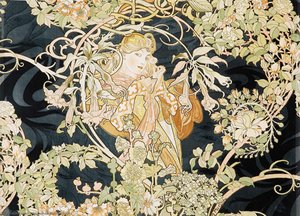
The artwork, “Monaco Monte Carlo,” created in 1897 by Alphonse Maria Mucha, stands as a quintessential emblem of Art Nouveau—a movement that sought to liberate art from academic constraints and embrace the beauty of organic forms inspired by nature. More than just a promotional poster for Monaco’s opulent casino district, it's a meticulously crafted visual poem celebrating luxury, leisure, and the idealized feminine spirit. Mucha’s signature style is immediately recognizable: flowing curvilinear lines dominate the composition, intertwining seamlessly with stylized floral arrangements that burst forth from the central figure’s drapery—a deliberate echo of the natural world and its fecundity.- Style & Influences: Mucha's Art Nouveau aesthetic draws heavily from influences like Pierre-Auguste Renoir and Gustave Moreau, artists who similarly explored themes of mythology and symbolism through decorative painting. However, Mucha distinguishes himself with a singular vision—one that prioritizes graceful movement and sensual beauty above all else.
- Composition & Technique: The poster employs a vertical orientation, maximizing visual impact while maintaining compositional balance. Lithography was the printing technique chosen, ensuring exceptional clarity and tonal gradation – crucial for capturing the shimmering gold leaf accents strategically applied to highlight key floral elements and contribute to the overall ethereal luminescence of the scene.
- Symbolism & Narrative: At its core lies an allegorical representation of femininity—a reclining woman adorned in flowing robes embodies elegance, serenity, and aristocratic grace. Surrounding her are stylized flowers—primarily lilies and roses—representing purity, devotion, and prosperity – motifs commonly found throughout Art Nouveau art.
- Historical Context: Monaco’s burgeoning reputation as a glamorous destination for European aristocracy fueled Mucha's artistic ambition. The poster reflects the broader cultural fascination with exotic locales and idealized beauty during the Belle Époque, capturing the spirit of an era defined by optimism and artistic experimentation.
- Floral Arrangement: The lilies and roses dominate the floral arrangement, meticulously rendered in shades of ivory and blush pink. Their petals are depicted with astonishing realism—a testament to Mucha’s meticulous observation of botanical specimens.
- Line Quality: Mucha achieves this mesmerizing effect through careful consideration of line quality—employing subtle variations in thickness and curvature to create depth and texture without resorting to traditional perspective techniques.
- Atmospheric Perspective: Mucha skillfully employs atmospheric perspective—reducing color saturation and tonal gradation in distant floral elements—to create a convincing illusion of depth.
- Sensual Appeal: Mucha's meticulous attention to detail—particularly in the depiction of drapery folds and floral textures—appeals to the senses—creating a visually stimulating experience that lingers long after viewing.
Questions & Answers
Are the colors of "Monaco, Monte-Carlo" by Alphonse Mucha vivid or muted?
"Monaco, Monte-Carlo" by Alphonse Mucha is recorded with a balanced soft saturation and a balanced intensity.
Is "Monaco, Monte-Carlo" a famous Art Nouveau artwork?
"Monaco, Monte-Carlo" is recorded as recognized among the Art Nouveau works in the catalog.
What aliases or alternate names does Alphonse Mucha have?
Other names recorded for Alphonse Mucha, creator of "Monaco, Monte-Carlo", include Alfons Mucha, Alphonse Maria Mucha.
Artist Biography
Early Life and Education
- Born: July 15, 1860, in Ivanačice, Moravia (now part of the Czech Republic)
- Showed artistic talent from a young age.
- Studied at the Academy of Fine Arts in Prague but became disillusioned with traditional approaches.
- Moved to Paris in 1887 to pursue his own style.
Artistic Style and Notable Works
- Known for distinctive Art Nouveau style characterized by flowing lines, organic forms, and a sense of movement.
- Influenced by artists like Pierre-Auguste Renoir and Gustave Moreau.
- Notable Works:
- The Slavonic Uprising - Showcases blending traditional Czech motifs with modern Art Nouveau elements.
- Salon des Cent
- Paintings inspired by works like The Daughters of Tespio by Gustave Moreau, and La Ribambelle des Gobelins by Piero Dorazio.
- Illustrations based on Young Farmers Breaking Flax by Sir Hubert von Herkomer.
- Frequently featured idealized women in flowing robes surrounded by lush flowers.
Career Highlights and Major Commissions
- Sarah Bernhardt Collaboration: Created posters and designs for the actress Sarah Bernhardt, starting with the poster for Gismonda (1894), which launched his career.
- Universal Exhibition in Paris (1900): His Art Nouveau style gained international recognition at this exhibition. He decorated the Bosnia and Herzegovina Pavilion and collaborated on the Austrian Pavilion.
- Charles Richard Crane Patronage: Received support from Charles Richard Crane, which enabled him to create the monumental series The Slav Epic (1912-30).
- Post-Independence Czechoslovakia: Designed postage stamps, banknotes, and government documents for newly independent Czechoslovakia.
Influences and Legacy
- Influenced by Czech artistic traditions and modern European art movements.
- His unique style paved the way for future generations of artists in Art Nouveau and Secessionism.
- Inspired other artists like Eva Prokopcová.
- Legacy extends beyond his artwork to influence design and aesthetics.
Later Life and Death
- Married Maruska (Marie/Maria) Chytilová in 1906.
- Visited the United States from 1906-1910, where their daughter Jaroslava was born.
- Died on July 14, 1939, in Prague, Czechoslovakia.

Alphonse Mucha
1860 - 1939 , Czech Republic
Quick Facts
- Full Name: Alphonse Maria Mucha
- Nationality: Czech
- Date Of Birth: 1860
- Date Of Death: 1939
- Place Of Birth: Brno, Czech Republic
- Notable Artworks:
- Slavic Uprising
- Salon des Cent
- The Daughters of Tespio
- La Ribambelle des Gobelins
- Young Farmers Breaking Flax
- Artistic Movement Or Style: Art Nouveau
- Artists Who Influenced This Artist:
- Pierre-Auguste Renoir
- Gustave Moreau
- Dante Gabriel Rossetti
- Artists Or Movements Influenced By This Artist: ['Eva Prokopcová']
Related Articles
OriginalUniqueArt.com F.A.Q.: Premium Art Poster Prints – Vivid Colors & Versatile Sizing
Discover OriginalUniqueArt.com's premium art poster prints. Featuring 12-color archival pigments for vivid color fidelity and versatile sizing for bespoke decor. Expertly crafted museum-quality reproductions designed for discerning collectors and professional decorators.