Preview
 Send
Send Share
Share
 Details

 Download
 Similars
 X-Ray
X-Ray Diaporama
 Stats
StatsDance

 Read More
Giclée / Art Print
Museum-quality giclée or canvas print with fast production and flexible finish options. ( Buy Hand Made Painting Switch to Digital Image)




































Pick from our preset sizes that match the artwork's original proportions.

You may enter your own dimensions to fit a specific frame or space. If your selected size does not match the original image's proportions, we will either crop the artwork or extend the image with a mirrored or solid-fill edge. A digital mockup will be sent for your approval before production begins.
Please note that the on-screen preview does not reflect the actual cropping or extension. Only the mockup will accurately show the final composition.
While custom sizes are available, we recommend selecting a dimension from the predefined list to preserve the original proportions.
Worldwide Delivery () in 2 weeks instead of standard 4/5 weeks. (14 September)

Free Worldwide Express Shipping

High-Quality Linen Canvas

Full Shipping Insurance

Customs Tax Refund Guarantee

True Color Matching Guarantee

100-Day Return Policy (Defects Only)

100% Money-Back Guarantee

Bulk Discount Offer
 Glass option is only available in size under 110 CM

Dance
Giclée / Art Print
Reproduction Size
-


Total Price
$ 81
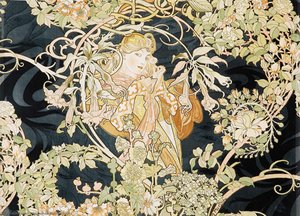
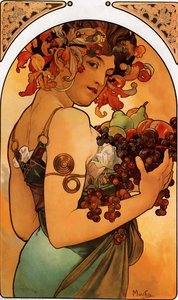
A Dance Amongst Floral Echoes: Exploring Alphonse Mucha’s “The Slavonic Uprising”
Alphonse Maria Mucha stands as an undisputed icon of Art Nouveau, a movement that sought to transcend the rigid formalism of Victorian aesthetics and embrace organic beauty inspired by nature. His canvases pulsate with fluidity, adorned with intricate floral motifs and stylized figures—a visual language that continues to captivate audiences today. “The Slavonic Uprising,” completed in 1897, exemplifies Mucha’s mastery of this distinctive style and offers a profound glimpse into the artistic currents shaping late nineteenth-century Bohemia.Stylistic Flourishes: The Art Nouveau Aesthetic Embodied
Mucha's approach to painting wasn’t merely decorative; it was fundamentally expressive. He rejected academic conventions, prioritizing instead a dynamic interplay between line and color—elements that coalesce to convey emotion and movement. “The Slavonic Uprising” showcases this brilliantly. Thick, curving lines dominate the composition, delineating the female figure at its center and swirling around her like ribbons of silk. These lines aren’t simply outlines; they embody the spirit of rebellion and aspiration inherent in the uprising itself—a visual metaphor for the yearning for freedom that characterized Slavic nationalism during the period. The color palette is dominated by muted golds and creams, punctuated by splashes of crimson and violet—colors traditionally associated with courage and passion.Technique and Material: Lithograph Precision
The artwork’s remarkable detail and tonal subtlety are achieved through a masterful application of lithographic printing techniques. Mucha collaborated closely with printer Josef Králík to produce this stunning poster, ensuring that every nuance of his artistic vision was faithfully reproduced. Lithography allowed for the creation of multiple prints from a single stone etching—a process favored by Art Nouveau artists who valued both aesthetic beauty and accessibility. The resulting image possesses an ethereal quality, capturing the luminescence of candlelight and conveying a sense of timeless elegance. Careful consideration was given to paper selection; a textured stock was chosen to enhance the visual impact and contribute to the artwork’s tactile appeal.Historical Context: Nationalism and Artistic Innovation
“The Slavonic Uprising” emerged during a pivotal moment in Czech history—the Slavonic Uprising of 1897, an attempt to overthrow Austro-Hungarian rule and establish an independent Czechoslovak state. Mucha skillfully blended nationalist symbolism with the stylistic conventions of Art Nouveau, creating a visual manifesto for the movement’s ideals. The central figure represents idealized femininity—a symbol of Slavic virtue and resilience—while the surrounding floral elements evoke the rich cultural heritage of Bohemia. This juxtaposition underscores Mucha's belief that art could serve as a vehicle for social commentary and political engagement.Symbolic Resonance: Flowing Lines, Radiant Color
Beyond its historical significance, “The Slavonic Uprising” resonates with deeper symbolic meanings. The flowing lines represent the unstoppable force of aspiration and the transformative power of change—themes central to both Art Nouveau philosophy and Slavic nationalist sentiment. Similarly, the radiant color palette conveys optimism and vitality—affirming the belief that beauty could inspire courage and fortitude. Mucha’s deliberate use of visual metaphors elevates the artwork from mere decoration to a profound meditation on identity, freedom, and artistic expression.Emotional Impact: Elegance and Yearning
Ultimately, “The Slavonic Uprising” succeeds in evoking a powerful emotional response—one characterized by elegance, yearning, and an undeniable sense of wonder. The viewer is drawn into Mucha’s meticulously crafted world, where beauty reigns supreme and movement embodies the spirit of rebellion. It remains a testament to Mucha's artistic genius and a captivating exemplar of Art Nouveau’s enduring legacy.Artist Biography
Early Life and Education
- Born: July 15, 1860, in Ivanačice, Moravia (now part of the Czech Republic)
- Showed artistic talent from a young age.
- Studied at the Academy of Fine Arts in Prague but became disillusioned with traditional approaches.
- Moved to Paris in 1887 to pursue his own style.
Artistic Style and Notable Works
- Known for distinctive Art Nouveau style characterized by flowing lines, organic forms, and a sense of movement.
- Influenced by artists like Pierre-Auguste Renoir and Gustave Moreau.
- Notable Works:
- The Slavonic Uprising - Showcases blending traditional Czech motifs with modern Art Nouveau elements.
- Salon des Cent
- Paintings inspired by works like The Daughters of Tespio by Gustave Moreau, and La Ribambelle des Gobelins by Piero Dorazio.
- Illustrations based on Young Farmers Breaking Flax by Sir Hubert von Herkomer.
- Frequently featured idealized women in flowing robes surrounded by lush flowers.
Career Highlights and Major Commissions
- Sarah Bernhardt Collaboration: Created posters and designs for the actress Sarah Bernhardt, starting with the poster for Gismonda (1894), which launched his career.
- Universal Exhibition in Paris (1900): His Art Nouveau style gained international recognition at this exhibition. He decorated the Bosnia and Herzegovina Pavilion and collaborated on the Austrian Pavilion.
- Charles Richard Crane Patronage: Received support from Charles Richard Crane, which enabled him to create the monumental series The Slav Epic (1912-30).
- Post-Independence Czechoslovakia: Designed postage stamps, banknotes, and government documents for newly independent Czechoslovakia.
Influences and Legacy
- Influenced by Czech artistic traditions and modern European art movements.
- His unique style paved the way for future generations of artists in Art Nouveau and Secessionism.
- Inspired other artists like Eva Prokopcová.
- Legacy extends beyond his artwork to influence design and aesthetics.
Later Life and Death
- Married Maruska (Marie/Maria) Chytilová in 1906.
- Visited the United States from 1906-1910, where their daughter Jaroslava was born.
- Died on July 14, 1939, in Prague, Czechoslovakia.

Alphonse Mucha
1860 - 1939 , Czech Republic
Quick Facts
- Artistic Movement Or Style: Art Nouveau
- Artists Or Movements Influenced By This Artist: ['Eva Prokopcová']
- Artists Who Influenced This Artist:
- Pierre-Auguste Renoir
- Gustave Moreau
- Dante Gabriel Rossetti
- Date Of Birth: July 15, 1860
- Date Of Death: 1939
- Full Name: Alphonse Maria Mucha
- Nationality: Czech
- Notable Artworks:
- Slavic Uprising
- Salon des Cent
- The Daughters of Tespio
- La Ribambelle des Gobelins
- Young Farmers Breaking Flax
- Place Of Birth: Brno, Czech Republic
Related Articles
The Elegance of Art Nouveau: Embracing Nature's Fluid Beauty and the Belle Époque Spirit
Discover the enchanting world of Art Nouveau. Explore the organic beauty, flowing lines, and Belle Époque elegance that defined an era of unparalleled craftsmanship and natural inspiration.

The Enduring Power of Illustration: A Historical Survey of Narrative Art & Visual Storytelling
Explore the rich history of illustration! From ancient cave paintings to Art Nouveau masterpieces, discover how visual storytelling has shaped culture. Expert insights & stunning examples.
Alphonse Mucha: A Comprehensive Exploration of Art Nouveau's Master of Decorative Symbolism
Explore the life & art of Alphonse Mucha, master of Art Nouveau! Discover his iconic posters, stunning illustrations, and the monumental Slav Epic. A comprehensive guide for collectors & enthusiasts.
Edmund Dulac: A Master of Golden Age Illustration – Exploring Myth, Symbolism & Art Nouveau Legacy
Explore the captivating world of Edmund Dulac, a master of Golden Age illustration! Discover his enchanting fairy tales, Art Nouveau style, and lasting influence on art & design. Learn about *The Rubaiyat* and more.
Kay Rasmus Nielsen: A Golden Age Illustrator's Enchanting Legacy of Symbolism & Narrative
Explore the captivating world of Kay Rasmus Nielsen, a celebrated Golden Age illustrator renowned for his Art Nouveau fairy tale art & Disney contributions. Discover his unique style, enduring legacy, and how to collect his enchanting works.