

 Send
Send Share
Share
 Details
 Guide
Guide

 Download
 Similars
 Diaporama
 Q&A
Q&A Stats
StatsEve


 Read More
Giclée / Art Print
Museum-quality giclée or canvas print with fast production and flexible finish options. ( Buy Hand Made Painting Switch to Digital Image)




































Pick from our preset sizes that match the artwork's original proportions.

Type the width and the height you need, to fit your frame or your wall. A print can only be cut, never made bigger than the picture, so a size with a different shape loses a part of the image. We send you a digital mockup to approve before we print anything. The picture shown on this page does not show the real cut — only the mockup does.
Worldwide Delivery () in 2 weeks instead of standard 4/5 weeks. (29 October)

Free Worldwide Express Shipping

High-Quality Linen Canvas

Full Shipping Insurance

Customs Tax Refund Guarantee

True Color Matching Guarantee

100-Day Return Policy (Defects Only)

100% Money-Back Guarantee

Bulk Discount Offer
 Glass option is only available in size under 110 CM

Eve
Giclée / Art Print
Reproduction Size
-


Total Price
$ 81
A Glimpse into Baroque Grandeur
The painting "Eve," by the Spanish Baroque master Alonso Cano, stands as a profound testament to the artistic fervor of its era—a moment captured in meticulous detail and imbued with an undeniable sense of opulent beauty. Executed in 1666, this artwork transcends mere visual representation; it embodies the very spirit of the Baroque movement’s fascination with dramatic emotion and idealized form. As one gazes upon the work, there is a palpable sense of being transported to a period where art served as a bridge between the earthly and the divine, capturing a serene yet powerful presence that continues to resonate with viewers centuries later.
Cano’s artistic style is firmly rooted in the Baroque tradition, prioritizing the masterful manipulation of light and shadow, known as chiaroscuro, to heighten emotional impact and sculpt form. In "Eve," this technique is utilized brilliantly to emphasize the subject's serene expression, subtly illuminating her delicately styled hair and headdress. This careful consideration of illumination mirrors a broader preoccupation with conveying spiritual depth through visual means, creating an atmosphere that feels both intimate and monumental. The artist's meticulous attention to detail—evident in every brushstroke—underscores a commitment to capturing not just a physical likeness, but the very essence of inner feeling.
Historical Resonance and Spiritual Depth
The historical context of "Eve" is deeply intertwined with the religious fervor of Spain during the 17th century. Created during a time when art was often commissioned to glorify the divine, the work reflects the grandeur associated with institutions like the Granada Cathedral. Cano, a true polymath of the Spanish Golden Age, brought a unique structural understanding to his visual works, likely informed by his training in architecture. This allows "Eve" to possess a certain compositional stability and presence that commands the space it inhabits.
For the collector or the interior designer, this piece offers more than just aesthetic appeal; it provides a window into a lost world of spiritual contemplation and classical beauty. The interplay of light and shadow makes it an ideal centerpiece for spaces that value dramatic texture and historical depth. Whether viewed as a study in Baroque technique or as a soulful portrait of a foundational figure, "Eve" remains a captivating masterpiece that invites the observer to linger on its luminous surfaces and contemplate the profound elegance of the human form.
Questions & Answers
What does the 1666 date of "Eve" correspond to in Alonzo Cano's career?
Given its 1666 date, "Eve" falls in Alonzo Cano's Mature Period.
Is Alonzo Cano, creator of "Eve", known under other names?
Other names recorded for Alonzo Cano, creator of "Eve", include Alonso Cano.
Toward which tone does "Eve" lean?
"Eve" leans toward an amber to saffron tone.
Artist Biography
A Renaissance Man of Granada
Alonso Cano Almansa stands as a singular figure in the Spanish Golden Age, a true polymath whose creative spirit refused to be confined to a single medium. Born in Granada, Spain, he was a rare talent who mastered the distinct disciplines of painting, sculpture, and architecture with equal fervor. His artistic journey began under the guidance of his father, Miguel Cano, from whom he inherited the foundational principles of architecture. This structural understanding would later inform the spatial depth and monumental presence found in his visual works.
His education was a tapestry of the finest influences available in the Spanish art world. In the realm of painting, he refined his brushwork within the academy of Juan del Castillo and studied under Francisco Pacheco, the esteemed teacher of Velázquez. This lineage connected him directly to the heart of the Baroque movement, infusing his canvases with a sense of dramatic tension and spiritual luminosity. Simultaneously, his sculptural prowess was forged under the tutelage of Juan Martínez Montañés, allowing him to breathe life into stone and wood with a profound sense of anatomical grace and emotional resonance.
The Mastery of Form and Spirit
Cano’s body of work is characterized by an extraordinary ability to capture the divine within the human form. As a sculptor, he achieved lasting renown through pieces such as the Madonna and Child in the church of Lebrija and his colossal, commanding figures of San Pedro and San Pablo. These works demonstrate a mastery of scale and a capacity to evoke deep religious devotion through physical presence.
In his paintings, Cano utilized the dramatic techniques of the Baroque era to create moments of intense spiritual encounter. His compositions often feature:
- The interplay of light and shadow, where unseen light sources illuminate sacred figures, such as in his depiction of St John the Evangelist on Pathmos.
- Emotional intimacy, seen in works like Noli me Tangere, where the tension between divine grace and human yearning is palpable.
- The weight of sacrifice, captured through the somber and dramatic tableau of The Dead Christ Supported by an Angel.
Legacy and Royal Recognition
The significance of Alonso Cano’s talent was recognized at the highest levels of the Spanish court. His prestige led to his appointment as the first royal architect and a painter to Philip IV. His influence even extended to the education of the next generation, serving as an instructor to the prince, Balthasar Charles. This proximity to power allowed him to leave an indelible mark on the architectural landscape of Spain; notably, he served as the chief architect of the Granada Cathedral, designing its magnificent façade which was eventually erected following his passing.
Beyond his official titles, Cano’s legacy is preserved in the very fabric of Andalusian culture. His ability to weave together the structural rigor of architecture, the tactile emotion of sculpture, and the luminous storytelling of painting ensures his place as one of the most versatile and essential masters of the Spanish Baroque.

Alonzo Cano
1601 - 1667 , Spain
Quick Facts
- Artistic Movement Or Style: Baroque
- Artists Who Influenced This Artist:
- Miguel Cano
- Juan del Castillo
- Francisco Pacheco
- Juan Martínez Montañés
- Full Name: Alonso Cano Almansa
- Nationality: Spanish
- Notable Artworks:
- St John the Evangelist on Pathmos
- The Dead Christ Supported by an Angel
- Noli me Tangere
- The Crucifixion
- Madonna and Child
- Place Of Birth: Granada, Spain
- Date Of Birth: 1601
- Date Of Death: 1667
Related Articles

Decoding Baroque Grandeur: A Guide to the Drama and Emotion of 17th-Century Art
Explore the breathtaking drama of 17th-century Baroque art. Our expert guide decodes the use of chiaroscuro, emotional intensity, and historical grandeur to help you appreciate and curate timeless masterpieces for your collection.

The Golden Age Reforged: Dramatic Realism & Religious Zeal in Spanish Baroque Art
Explore the dramatic world of Spanish Baroque art! Discover masters like Zurbarán & the powerful influence of religious zeal on painting techniques – a guide for collectors and enthusiasts.

Baroque Classicism: The Grandeur of Order and Drama in 17th-Century Art History
Explore the profound elegance of Baroque Classicism. Discover how 17th-century masters synthesized dramatic emotion with classical order through the lens of the Counter-Reformation and the works of legends like Carlo Maratta and Andrea Sacchi.
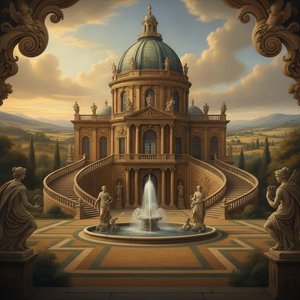
Baroque Classicism: Reconciling Drama & Order in 17th-Century Art
Explore the captivating world of Baroque Classicism! Discover its history, key artists like Caravaggio & Rubens, and defining characteristics. Expert insights & high-quality reproductions at OriginalUniqueArt.

The Dramatic Flourish: Exploring the Baroque Movement's Enduring Legacy in Art History
Explore the dramatic world of Baroque art! Discover iconic artists like Caravaggio & Rubens, defining techniques, and its lasting impact on art history. Expert insights for collectors & enthusiasts at OriginalUniqueArt.


