Preview
 Send
Send Share
Share
 Details
 Guide
Guide

 Download
 Similars
 X-Ray
X-Ray Diaporama
 Q&A
Q&A Stats
StatsGeorge III (1738–1820)
 Oil On Canvas
- WallArt
- Neoclassicism
 214.0 x 150.0 cm
 The Royal Hospital Chelsea
 Read More
Giclée / Art Print
Museum-quality giclée or canvas print with fast production and flexible finish options. ( Buy Hand Made Painting Switch to Digital Image)




P118B $10

P118H $10

P118W $10

P438Z $10

P508JH $12

P508YH $12

P805H $10

P805Z $10

P919BZ $10

P919G $10

P919XJ $10

P959ZH $10

P968JZ $12

W106C $8

W218G $10

W218JH $8

W218Y $10

W307PJ $10

W316G $10

W316PJ $8

W316Y $10

W398PJ $8

W4111J $10

W500HY $15

W500JH $15

W692G $12

W849H $8

W940BG $15

W953PJ $8




Pick from our preset sizes that match the artwork's original proportions.

Type the width and the height you need, to fit your frame or your wall. A print can only be cut, never made bigger than the picture, so a size with a different shape loses a part of the image. We send you a digital mockup to approve before we print anything. The picture shown on this page does not show the real cut — only the mockup does.
Worldwide Delivery () in 2 weeks instead of standard 4/5 weeks. (29 October)

Free Worldwide Express Shipping

High-Quality Linen Canvas

Full Shipping Insurance

Customs Tax Refund Guarantee

True Color Matching Guarantee

100-Day Return Policy (Defects Only)

100% Money-Back Guarantee

Bulk Discount Offer
 Glass option is only available in size under 110 CM

George III (1738–1820)
Giclée / Art Print
Reproduction Size
-


Total Price
$ 81
A Regal Portrait: Allan Ramsay’s George III
Allan Ramsay's portrait of King George III, completed around 1761-2, is more than just a likeness; it’s a carefully constructed embodiment of power, authority, and the nascent complexities of the British monarchy. This masterful work, rendered in oil on canvas, transcends mere representation to become a window into the era's political climate and artistic sensibilities – specifically, the rise of Neoclassicism within portraiture. The painting immediately commands attention with its dramatic lighting, a key element that draws the viewer’s eye directly to the King’s face, imbuing him with an almost palpable sense of presence.
Ramsay, a leading figure in 18th-century Scottish art, expertly employs linear perspective to create a sense of depth and spatial arrangement. The throne, rendered as a robust square, anchors the composition while the draped fabric behind George III flows into a dark, indistinct background – a deliberate choice that serves to highlight the subject’s importance and elevate his status. The use of geometric shapes—squares for the throne, rectangles for the robes—contrasts with the more organic curves of the King's face, suggesting a balance between rigid formality and human warmth.
A Study in Neoclassical Detail
Examining the brushwork reveals Ramsay’s meticulous technique. Layered glazes build up color depth and luminosity, particularly noticeable in the rich textures of the royal robes – a testament to his ability to capture the sheen of velvet and the weight of heavy fabrics. The artist skillfully renders skin tones with subtle variations, avoiding overly smooth surfaces; instead, he introduces a slight roughness that lends a sense of realism and immediacy. The careful attention to detail extends to the rendering of the King’s attire: the intricate embroidery, the gleaming gold accents, and the precise folds of his garments all speak to the immense wealth and power associated with the monarchy.
The painting's palette is restrained yet sophisticated, dominated by deep reds, blues, and browns – colors traditionally linked with royalty and authority. The lighting, originating from a strong left-hand source, casts dramatic shadows that sculpt George III’s features, emphasizing his brow, cheekbones, and the solemnity of his expression. This chiaroscuro effect not only adds visual interest but also contributes to the overall sense of gravitas and dignity.
Symbolism and Historical Context
George III reigned from 1760 until his death in 1820, a period marked by significant political and military upheaval. The portrait itself is deeply symbolic, reflecting the King’s role as head of state during a time of considerable change. The crown, prominently displayed, represents sovereignty and divine right – concepts that were increasingly challenged during George III's reign. The robes, rich in color and ornamentation, symbolize his wealth and status, while the scepter and orb further reinforce his authority.
Ramsay’s work was commissioned during a pivotal moment in British history—the early years of George III’s rule. The King's reign coincided with the Seven Years’ War and the subsequent American Revolution, events that profoundly shaped the course of British history. The portrait, therefore, can be interpreted as an attempt to project an image of stability and strength at a time of considerable uncertainty. It is also important to note that this particular painting was one of many commissioned by the King, reflecting his desire to solidify his position and assert his authority.
A Legacy of Elegance
Allan Ramsay’s portrait of George III stands as a remarkable achievement of Neoclassical portraiture. It is a testament to the artist's technical skill, his understanding of symbolism, and his ability to capture the essence of a historical figure. Reproductions of this iconic image continue to resonate with viewers today, offering a glimpse into the grandeur and complexities of 18th-century Britain. The painting’s enduring appeal lies not only in its aesthetic beauty but also in its ability to evoke a sense of history, power, and timeless elegance.
Questions & Answers
How strong are the colors of "George III (1738–1820)"?
The color of "George III (1738–1820)" is subtle color in saturation and monochromatic in intensity.
What mood and emotion come together in "George III (1738–1820)"?
The recorded mood of "George III (1738–1820)" by Allen Ramsay is elegant, and its emotional tone is nostalgic.
How harmonious are the colors of "George III (1738–1820)" by Allen Ramsay?
The color harmony of "George III (1738–1820)" is recorded as strong color unity.
Artist Biography
Allan Ramsay: A Life of Elegance and Artistry
Early Life and Training
Born in Edinburgh, Scotland on October 13, 1713, Allan Ramsay emerged as a prominent Scottish portrait-painter whose work captured the elegance and refinement of his era. His artistic journey began at the age of twenty when he travelled to London for studies under the Swedish painter Hans Hysing, followed by instruction at the St. Martin's Lane Academy. This foundational training provided him with a solid base in technique and composition.
Italian Influences & Artistic Development
Ramsay’s artistic development took a significant turn with his travels to Rome and Naples, where he spent three years (1736-1738) working under the tutelage of Francesco Solimena and Imperiali (Francesco Fernandi). These Italian masters profoundly influenced his style, fostering a greater understanding of classical principles and enhancing his skills in capturing likeness and character. He absorbed the prevailing Rococo aesthetic while also developing an appreciation for Neoclassical ideals.
A Flourishing Career & Notable Works
Upon returning to Britain in 1738, Ramsay quickly established a successful career as a portraitist. His ability to portray his subjects with both accuracy and grace soon garnered him a distinguished clientele. Some of his most notable works include:
- Queen Charlotte (1744-1818) with her two eldest sons (Royal Collection, London): A regal depiction showcasing the Queen’s maternal presence.
- Mary Degg, Lady Robert Manners (Scottish National Gallery, Edinburgh): An elegant portrait demonstrating Ramsay's skill in capturing aristocratic beauty.
- Head of Duncan Forbes of Culloden: This early work brought him to the attention of the Duke of Argyll and was later featured on Royal Bank of Scotland banknotes.
Royal Appointment & Peak Achievement
A pivotal moment in Ramsay’s career arrived in 1761 with his appointment as Principal Painter in Ordinary to George III. This prestigious position cemented his status among the art elite and ensured a steady stream of commissions from the royal family and high society. He became *the* portraitist of the Georgian era.
Later Life & Legacy
Ramsay’s later life saw a shift towards literary pursuits, reflecting his broad intellectual interests. However, personal tragedies – an accidental dislocation of his right arm and the passing of his second wife in 1782 – impacted his health and productivity. He died in 1784.
Despite these challenges, Ramsay left behind a lasting legacy as one of Scotland’s most celebrated portrait painters. As Samuel Johnson noted, “I love Ramsay. You will not find a man in whose conversation there is more instruction, more information, and more elegance, than in Ramsay's.” His works continue to be admired for their technical skill, refined aesthetic, and insightful portrayals of 18th-century society.
Historical Significance
Allan Ramsay’s contribution extends beyond his artistic talent. He played a crucial role in shaping the visual culture of Scotland during a period of significant social and political change. His portraits provide valuable insights into the lives, fashions, and values of the Scottish nobility and gentry. His works can be found at locations such as Ayr Town Hall, and the Scottish National Portrait Gallery.
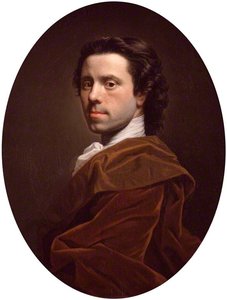
Allen Ramsay
1713 - 1784 , United Kingdom
Quick Facts
- Name: Allan Ramsay
- Movement:
- Rococo
- Neoclassical
- Birth Date: 1713-10-13
- Death Date: 1784
- Birth Place: Edinburgh, United Kingdom
- Nationality: Scottish
- Date Of Birth: 1713
- Date Of Death: 1784
- Influenced By:
- Hans Hysing
- Francesco Solimena
- Imperiali (Francesco Fernandi)
- Notable Works:
- Queen Charlotte with her two eldest sons
- Mary Degg, Lady Robert Manners
- Head of Duncan Forbes of Culloden
- Place Of Birth: Edinburgh, United Kingdom
Related Articles

Allen Ramsay: Portraiture, Patronage & Shaping Georgian Identity
Explore the life & work of Allen Ramsay, pivotal portraitist to George III. Discover his Rococo style, influence on Georgian society, and lasting legacy in British art history. Learn about his key works & patronage.

Georges Seurat's Masterpieces: 25 Paintings That Defined Pointillism | OriginalUniqueArt
Explore 25 iconic Georges Seurat paintings & discover the brilliance of Pointillism. From 'La Grande Jatte' to his harbor scenes, delve into art history with OriginalUniqueArt.com. Find museum-quality reproductions for your home decor. Explore the full collection online!

Neoclassical Portraiture: The Timeless Elegance of Order, Grace, and Academic Mastery
Explore the refined world of Neoclassical portraiture. Discover the mastery of line, light, and order through an expert exploration of academic art history, from Jacques-Louis David to Jean-Antoine Houdon. Immerse yourself in the timeless elegance of classical realism.

Georges Braque's Masterpieces: 25 Paintings That Defined Cubism & Modern Art | OriginalUniqueArt
Explore 25 iconic Georges Braque paintings that revolutionized Cubism & modern art. Discover the stories behind his masterpieces, from Fauvism to Analytical Cubism. Find museum-quality reproductions & elevate your home decor with OriginalUniqueArt.com.

Majesty on Canvas: A Definitive Guide to Iconic Royal Portraits Through Art History
Explore the profound history of royal portraiture. From Baroque grandeur to Victorian elegance, discover how master artists captured power and lineage on canvas through the timeless medium of oil painting.