Preview
 Send
Send Share
Share
 Details
 Guide
Guide

 Download
 Similars
 X-Ray
X-Ray Diaporama
 Stats
StatsCaptain Thomas Wallace
 Oil On Canvas
- WallArt
- Rococo
 1750
1750 75.0 x 62.0 cm
 The National Trust For Scotland
 Read More
Hand Made Oil Reproduction
Hand-painted oil on canvas in your size and frame, made to order by our artists. ( Switch to Print Switch to Digital Image)




P118B $10

P118H $10

P118W $10

P438Z $10

P508JH $12

P508YH $12

P805H $10

P805Z $10

P919BZ $10

P919G $10

P919XJ $10

P959ZH $10

P968JZ $12

W106C $8

W218G $10

W218JH $8

W218Y $10

W307PJ $10

W316G $10

W316PJ $8

W316Y $10

W398PJ $8

W4111J $10

W500HY $15

W500JH $15

W692G $12

W849H $8

W940BG $15

W953PJ $8




Pick from our preset sizes that match the artwork's original proportions.

Type the width and the height you need, to fit your frame or your wall. This is hand-painted, so for a size with a different shape the artist can paint a bit more around the picture, or cut a bit — you choose. We send you a digital mockup to approve before the painting starts. The picture shown on this page does not show the real result — only the mockup does.
After order, OriginalUniqueArt.com team will email client for instructions and provide a mockup preview
Worldwide Delivery () in 3/4 weeks instead of standard 5 weeks. (28 October). No compromise on quality.

Free Worldwide Express Shipping

High-Quality Linen Canvas

Full Shipping Insurance

Customs Tax Refund Guarantee

True Color Matching Guarantee

100-Day Return Policy (Defects Only)

100% Money-Back Guarantee

Bulk Discount Offer
 Glass option is only available in size under 110 CM

Captain Thomas Wallace
Reproduction Medium
Reproduction Size
-


Total Price
$ 300
A Glimpse into Georgian Grandeur: The Portrait of Captain Thomas Wallace
To stand before this portrait is to step directly into the vibrant, powdered world of the mid-eighteenth century. Captain Thomas Wallace is more than just a likeness; it is a carefully constructed tableau of status, duty, and refined masculinity from the Georgian era. The subject commands attention in his striking red coat, trimmed with vivid blue accents—garments that speak volumes about his station within society, suggesting a life lived between the parade ground and the drawing-room. His wig, meticulously styled, anchors him firmly in the period's aesthetic conventions, while the overall presentation exudes an air of confident authority.
The Artistry of Allan Ramsay: Technique and Vision
The hand that captured this vision belongs to Allan Ramsay, an artist whose career spanned a golden age of portraiture. Ramsay possessed a remarkable ability to imbue his sitters with palpable character, moving beyond mere physical representation to capture the very essence of their being. Observe the masterful handling of light across the subject's face; it is rendered with a delicate touch that suggests both academic training and profound personal observation. The background, intentionally kept soft and indistinct, serves a crucial artistic function: it strips away distraction, forcing the viewer’s entire focus onto the compelling narrative held within Wallace’s gaze. This technical skill—the ability to isolate and elevate the subject through masterful composition—is what makes this piece so enduringly powerful.
Historical Echoes and Social Symbolism
Painted around 1750, this portrait is a fascinating artifact of social history. The military attire, combined with the fashionable wig and cape, speaks to a time when public presentation was paramount. In an era where one's profession and social standing were inextricably linked to one's appearance, Wallace’s clothing acts as a visual résumé. The richness of the red coat, historically associated with military regiments, grounds the portrait in tangible reality, while the overall elegance hints at the burgeoning wealth and structured formality of the British gentleman class during that period.
Bringing Eighteenth-Century Elegance Home
For the discerning collector or designer seeking to infuse a space with historical depth and undeniable artistry, this reproduction offers an unparalleled connection to the past. Imagine this piece gracing a library wall or adorning a formal reception room; it does not merely decorate—it narrates. The deep tones of the fabric juxtaposed against the soft luminosity of the skin create a visual drama that complements both opulent and classically styled interiors. Owning a reproduction allows one to partake in the elegance, the narrative weight, and the sheer technical brilliance of Allan Ramsay’s finest work, making it a timeless centerpiece for any connoisseur's collection.
Questions & Answers
What does "Captain Thomas Wallace" share with the rest of Allen Ramsay's output?
"Captain Thomas Wallace" belongs to Allen Ramsay's Rococo work, whose recorded themes include italian rococo influence on portraiture, formal depiction of gentry life, study of character and likeness.
How is the mood of "Captain Thomas Wallace" by Allen Ramsay described?
"Captain Thomas Wallace" has a classic atmosphere.
What size and orientation are recommended for a print of "Captain Thomas Wallace" by Allen Ramsay?
For "Captain Thomas Wallace", the recommended print setup is a medium size and a portrait orientation.
Artist Biography
Allan Ramsay: A Life of Elegance and Artistry
Early Life and Training
Born in Edinburgh, Scotland on October 13, 1713, Allan Ramsay emerged as a prominent Scottish portrait-painter whose work captured the elegance and refinement of his era. His artistic journey began at the age of twenty when he travelled to London for studies under the Swedish painter Hans Hysing, followed by instruction at the St. Martin's Lane Academy. This foundational training provided him with a solid base in technique and composition.
Italian Influences & Artistic Development
Ramsay’s artistic development took a significant turn with his travels to Rome and Naples, where he spent three years (1736-1738) working under the tutelage of Francesco Solimena and Imperiali (Francesco Fernandi). These Italian masters profoundly influenced his style, fostering a greater understanding of classical principles and enhancing his skills in capturing likeness and character. He absorbed the prevailing Rococo aesthetic while also developing an appreciation for Neoclassical ideals.
A Flourishing Career & Notable Works
Upon returning to Britain in 1738, Ramsay quickly established a successful career as a portraitist. His ability to portray his subjects with both accuracy and grace soon garnered him a distinguished clientele. Some of his most notable works include:
- Queen Charlotte (1744-1818) with her two eldest sons (Royal Collection, London): A regal depiction showcasing the Queen’s maternal presence.
- Mary Degg, Lady Robert Manners (Scottish National Gallery, Edinburgh): An elegant portrait demonstrating Ramsay's skill in capturing aristocratic beauty.
- Head of Duncan Forbes of Culloden: This early work brought him to the attention of the Duke of Argyll and was later featured on Royal Bank of Scotland banknotes.
Royal Appointment & Peak Achievement
A pivotal moment in Ramsay’s career arrived in 1761 with his appointment as Principal Painter in Ordinary to George III. This prestigious position cemented his status among the art elite and ensured a steady stream of commissions from the royal family and high society. He became *the* portraitist of the Georgian era.
Later Life & Legacy
Ramsay’s later life saw a shift towards literary pursuits, reflecting his broad intellectual interests. However, personal tragedies – an accidental dislocation of his right arm and the passing of his second wife in 1782 – impacted his health and productivity. He died in 1784.
Despite these challenges, Ramsay left behind a lasting legacy as one of Scotland’s most celebrated portrait painters. As Samuel Johnson noted, “I love Ramsay. You will not find a man in whose conversation there is more instruction, more information, and more elegance, than in Ramsay's.” His works continue to be admired for their technical skill, refined aesthetic, and insightful portrayals of 18th-century society.
Historical Significance
Allan Ramsay’s contribution extends beyond his artistic talent. He played a crucial role in shaping the visual culture of Scotland during a period of significant social and political change. His portraits provide valuable insights into the lives, fashions, and values of the Scottish nobility and gentry. His works can be found at locations such as Ayr Town Hall, and the Scottish National Portrait Gallery.
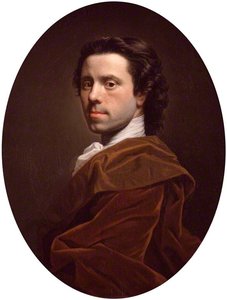
Allen Ramsay
1713 - 1784 , United Kingdom
Quick Facts
- Name: Allan Ramsay
- Movement:
- Rococo
- Neoclassical
- Birth Date: 1713-10-13
- Death Date: 1784
- Birth Place: Edinburgh, United Kingdom
- Nationality: Scottish
- Date Of Birth: 1713
- Date Of Death: 1784
- Influenced By:
- Hans Hysing
- Francesco Solimena
- Imperiali (Francesco Fernandi)
- Notable Works:
- Queen Charlotte with her two eldest sons
- Mary Degg, Lady Robert Manners
- Head of Duncan Forbes of Culloden
- Place Of Birth: Edinburgh, United Kingdom
Related Articles

Elevating Workspace Aesthetics: Top 5 Art Styles for Contemporary Offices
Elevate your office aesthetic with OriginalUniqueArt.com's expert guide to the top 5 art styles for contemporary workspaces. Boost productivity & inspire creativity – discover the perfect look today!

18th Century Masters: 10 Artworks That Define an Era | OriginalUniqueArt
Journey through 18th century art! Explore 10 iconic paintings – from Rococo elegance to Neoclassical grandeur. Discover Fragonard, David & more. Find museum-quality reproductions and elevate your home decor on OriginalUniqueArt.com.

The Allure of Elegance in Art: A Historical & Aesthetic Exploration of Refinement & Grace
Explore the exquisite world of Rococo art! Discover its history, masters (Watteau, Boucher & more), and defining elegance. Expert insights for collectors seeking museum-quality reproductions & custom portraits.

Rococo's Radiant Legacy: 10 Masterpieces for Your Home |
Indulge in the elegance of Rococo! Explore 10 masterpieces by Fragonard, Boucher & Watteau. Discover the stories behind these iconic paintings and bring timeless art to your home with museum-quality reproductions from .

The Rococo Aesthetic: Opulence, Rebellion & the Pursuit of Pleasure in 18th-Century Art
Explore the opulent world of Rococo art! Discover its origins, key artists like Watteau & Boucher, and lasting influence on design. Expert insights for collectors & enthusiasts.