Preview
 Send
Send Share
Share
 Details
 Guide
Guide

 Download
 Similars
 X-Ray
X-Ray Diaporama
 Q&A
Q&A Stats
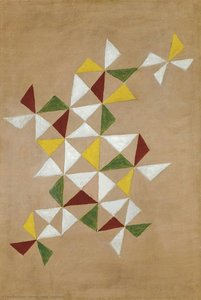
StatsConcrete composition

- 35.0 x 73.0 cm

 Read More
The artwork displayed on this page is protected by copyright law, which means we cannot legally create or sell an identical reproduction. This protection is enforced under international agreements such as the Berne Convention and by national laws, including those outlined by the U.S. Copyright Law - Title 17.
This method fully complies with copyright regulations because it does not involve copying or duplicating the protected artwork. Instead, it is a creative reinterpretation - a new painting that is influenced by the original but not identical to it.
Giclée / Art Print
Museum-quality giclée or canvas print with fast production and flexible finish options. ( Buy Hand Made Painting Switch to Digital Image)




































Pick from our preset sizes that match the artwork's original proportions.

Type the width and the height you need, to fit your frame or your wall. A print can only be cut, never made bigger than the picture, so a size with a different shape loses a part of the image. We send you a digital mockup to approve before we print anything. The picture shown on this page does not show the real cut — only the mockup does.
Worldwide Delivery () in 2 weeks instead of standard 4/5 weeks. (5 November)

Free Worldwide Express Shipping

High-Quality Linen Canvas

Full Shipping Insurance

Customs Tax Refund Guarantee

True Color Matching Guarantee

100-Day Return Policy (Defects Only)

100% Money-Back Guarantee

Bulk Discount Offer
 Glass option is only available in size under 110 CM

Concrete composition
Giclée / Art Print
Reproduction Size
-


Total Price
$ 81
Artist Biography
The Soul of Geometry: The Life and Legacy of Alfredo Volpi
To wander through the canvases of Alfredo Volpi is to embark on a journey through the very heart of Brazilian identity, where the boundaries between high modernism and popular tradition dissolve into a vibrant dance of color. Born in Lucca, Italy, in 1896, Volpi’s life was defined by a profound migration—not just across oceans, but across artistic disciplines. Arriving in São Paulo as a young child, he grew up within the rhythmic pulse of a burgeoning metropolis, an environment that would later provide the architectural and cultural seeds for his most iconic works. Before he ever picked up a brush to claim his place in the annals of fine art, Volpi worked as a decorative painter, a vocation that instilled in him a deep respect for texture, surface, and the tactile beauty of craftsmanship.
His early years were marked by a self-taught tenacity, an unyielding pursuit of mastery that bypassed formal academies in favor of direct observation. Initially, his palette was rooted in the naturalistic; he captured the sweeping landscapes and the everyday street life of São Paulo with an eye for atmospheric truth. Influenced by the emotional weight of Expressionism and the light-drenched nuances of Impressionism, his early oil paintings breathed with the vitality of the Brazilian suburbs. Yet, even in these formative works, a restless spirit was visible—a desire to strip away the superfluous and find the structural essence beneath the skin of reality.
A Revolution of Form and Tempera
The mid-1930s signaled a seismic shift in Volpi’s creative trajectory, as he began to move away from representational landscapes toward the rigorous, analytical beauty of geometric abstraction. This was not merely a change in subject, but a complete reimagining of the canvas as a plane of pure interaction. Drawing inspiration from Constructivist principles and the starker geometries of artists like Kazimir Malevich, Volpi began to reduce the world to its fundamental components: squares, rectangles, and triangles. However, unlike the cold, mechanical precision often found in European abstraction, Volpi’s geometry remained deeply human and warm.
Central to this evolution was his mastery of tempera. By transitioning from oil to this more delicate medium, he achieved a luminous, diaphanous quality that allowed light to permeate thin, transparent layers of pigment. This technique gave his work a unique textural richness, where the movement of the brushstroke remained visible—a subtle reminder of the artist's hand within the abstract form. His compositions began to feature the "historical façades" and the rhythmic "bandeirinhas" (small flags) that would become his signature. These elements were not merely shapes; they were echoes of Brazilian vernacular architecture and popular festivities, transformed into a sophisticated language of pattern and rhythm.
The Intersection of Modernity and Tradition
What truly elevates Volpi above his contemporaries was his ability to bridge the gap between the avant-garde and the folk. While he engaged with the intellectual rigor of the Concretist movement in the 1950s, he never abandoned the "popular" soul of his subjects. His work exists in a beautiful tension:
- The Architectural Motif: He transformed the simple windows, doors, and walls of colonial-style houses into complex studies of space and planarity.
- The Festive Spirit: Through his famous series of flags, he captured the joy of Brazilian street celebrations, turning ephemeral decorations into permanent geometric icons.
- The Synthesis of Color: His use of color was never purely decorative; it served to define volume and create a sense of depth even as he flattened the pictorial plane.
As a pioneer of Brazilian Geometric Abstraction, Alfredo Volpi left behind a legacy that continues to resonate in the halls of museums like MASP and Centro Pecci. He proved that abstraction did not have to be an escape from reality, but could instead be a deeper way of seeing it. Through his eyes, the simple geometry of a flag or a window became a profound meditation on balance, light, and the enduring spirit of a culture. His life remains a testament to the power of the self-taught artist to reshape the visual landscape of a nation.

Alfredo Volpi
1896 - 1988 , Italy
Quick Facts
- Full Name: Alfredo Volpi
- Nationality: Brazilian
- Date Of Birth: 1896
- Date Of Death: 1988
- Place Of Birth: Lucca, Italy
- Notable Artworks:
- Mogi das Cruzes
- Seaside
- Frescoes for the chapel of Our Lady of Fatima
- Artistic Movement Or Style: Brazilian Modernism
- Artists Who Influenced This Artist: ['Ernesto de Flori']
- Artists Or Movements Influenced By This Artist: ['Expressionist artists']