

 Send
Send Share
Share
 Details
 Guide
Guide

 Download
 Similars
 Diaporama
 Stats
StatsThe Terminal
 Gelatin Silver Print
- Photo
- Pictorialist Photography
 1893
1893- 19th Century
 25.0 x 33.0 cm
 Amon Carter Museum of American Art
 Read More
Purchase a high-resolution, enhanced digital image, far superior to the online preview.
Each file is meticulously prepared by our in-house specialists using advanced tools and expert manual retouching. We ensure every image has exceptional clarity, precise color accuracy, and fine detail.
The final file is delivered via email within 72 hours, optimized for immediate use in professional, editorial, and print environments. This is the same quality trusted by top-tier design studios, publishers, and galleries.
Digital Image
Download a high-resolution file for personal display, printing, and creative projects. ( Switch to Print Buy Hand Made Painting)
Included in Every Digital Image Order
Expert Digital Delivery, Guaranteed
When you choose OriginalUniqueArt.com, you're not just getting an image - you're receiving a professionally enhanced digital artwork, crafted with precision and backed by a satisfaction guarantee. Here's everything that comes with your order, automatically:

Fast Email Delivery
Your high-resolution digital image file will be emailed to you within 72 hours of ordering - ready for immediate use.

AI-Enhanced Digital File
Your artwork is professionally optimized using advanced AI tools and manual editing, ensuring maximum detail, clarity, and color accuracy.

Free Lifetime Re-Delivery
Accidentally deleted or lost your file? No worries - we'll resend it to you anytime, free of charge.

No Import Fees - Ever
Enjoy your artwork instantly with zero customs, duties, or delivery fees - digital downloads are always tax-free.

Color Accuracy Guarantee
We ensure your digital image reflects the original colors as closely as possible using professional tools and color management.

100-Day Satisfaction Guarantee
If you're not satisfied with your digital image, we'll revise it or refund 100% within 100 days - no questions asked.

100% Money-Back Guarantee
Not satisfied? Get a full refund within 100 days of receiving your digital file - no questions asked.

Bulk Order Discounts
Buy 3 images, save 10% - Buy 5, save 15% - Buy 10+, save 20%. Great for creative projects, galleries, and agencies.
A Moment Frozen in Monochrome
The photograph, titled The Terminal by Alfred Stieglitz, presents a stark and evocative scene of urban life in the late 19th century. It is a black and white image capturing a horse-drawn carriage navigating a snowy street. The composition is centered around the powerful presence of the horse and its driver, with surrounding elements contributing to a sense of bustling activity and transition. The placement of the horse on the right side creates a dynamic diagonal line across the frame, leading into the background, while buildings flank both sides of the street to establish a sense of urban enclosure.
The image is entirely monochromatic, relying solely on shades of gray to convey form, texture, and depth. There is a subtle tonal range from deep blacks in shadows to bright whites where light reflects off the snow. Strong vertical lines are present in the buildings and street lamps, contrasting with the diagonal line created by the carriage’s movement. Geometric shapes dominate the architecture through rectangular windows and square building blocks, while organic shapes are found in the forms of the horses, figures, and snowdrifts.
Texture and Light in the Urban Winter
The photograph excels at capturing texture, from the rough surface of the snowy ground to the detailed fur of the horse and the fabric of the driver’s clothing. The building facades appear smooth in contrast to the granular appearance of the snow. The lighting appears diffused, likely from an overcast day, with soft and gradual shadows that contribute to a sense of quietness despite the activity depicted. Light reflects off the snow, creating highlights throughout the scene.
The medium is a silver gelatin print on photographic paper. Through this technique, the artist captures an everyday scene of a horse-drawn carriage navigating a snowy city street, documenting a moment in time during a period of transition from horse-powered transportation to motorized vehicles. The depth of the image is created through overlapping elements, such as buildings receding into the background and variations in tonal values.
Questions & Answers
What mood does "The Terminal" by Alfred Stieglitz express within Pictorialist Photography?
"The Terminal" carries a nostalgic emotional tone within the Pictorialist Photography movement.
How can I get a print of "The Terminal" by Alfred Stieglitz?
To get a print of "The Terminal" by Alfred Stieglitz, simply order it on its Fine Art Print page: a fine art print on cotton canvas or archival canvas paper.
How do I preview a reproduction of "The Terminal" by Alfred Stieglitz?
The Preview page of "The Terminal" lets you preview the artwork before ordering.
Artist Biography
A Pioneer of Vision: The Life and Legacy of Alfred Stieglitz
Alfred Stieglitz, born in Hoboken, New Jersey, on January 1, 1864, was more than just a photographer; he was a revolutionary force who single-handedly elevated photography from a skilled craft to a recognized fine art. His journey began not with a camera in hand, but with an intellectual upbringing fostered by his German-Jewish immigrant family. Early education at the Charlier Institute and City College of New York provided a foundation, yet it was his studies in Berlin that ignited his artistic passion. There, under the tutelage of Hermann Wilhelm Vogel, Stieglitz discovered the captivating potential hidden within photographic processes – a revelation that would define his life’s work. He purchased his first camera and began to document the European countryside, quickly developing an aesthetic sensibility rooted in what became known as Pictorialism. This movement sought to mimic the expressive qualities of painting and drawing through manipulated printing techniques, soft focus, and evocative compositions. However, Stieglitz would eventually transcend these limitations, forging a path toward a uniquely photographic vision.Championing Modern Art and the American Voice
Upon his return to New York in 1890, Stieglitz embarked on a mission to legitimize photography as an art form. He became a prolific writer, publishing articles that passionately argued for its artistic merit, and founded the Camera Club of New York’s journal, *Camera Notes*. Dissatisfaction with the club's conservative outlook led him to establish the Photo-Secession in 1902, a group dedicated to promoting photographic artistry. This culminated in the opening of “291” – a gallery at 291 Fifth Avenue that became a crucible for modern art in America. It wasn’t merely a showcase for photography; Stieglitz boldly exhibited groundbreaking works by European avant-garde artists like Pablo Picasso, Henri Matisse, and Francis Picabia, introducing American audiences to the radical innovations of Cubism, Fauvism, and other emerging movements. “291” became a salon where ideas clashed, boundaries were pushed, and a distinctly American modern aesthetic began to take shape. Stieglitz’s influence extended beyond exhibition; he fostered dialogue, challenged conventions, and nurtured the careers of countless artists, including Georgia O'Keeffe, whom he would later marry.Evolving Styles: From Pictorialism to Straight Photography
Stieglitz’s own photographic style underwent a significant evolution throughout his career. Initially embracing the soft-focus aesthetic and painterly qualities of Pictorialism – exemplified in works like *Study of Georgia Engelhard with Dolls* (1910) – he gradually moved towards a more direct, unmanipulated approach known as “straight photography.” This shift was influenced by his growing appreciation for modern art’s emphasis on form, clarity, and the inherent qualities of materials. The Steerage (1907), arguably his most iconic image, marks this turning point. Captured during a transatlantic voyage, it depicts passengers traveling in steerage class with a stark realism and compositional boldness that foreshadowed modernist principles. The photograph isn’t sentimental or picturesque; instead, it presents a raw, unvarnished view of social reality, emphasizing geometric shapes and tonal contrasts. Later works, such as his series of cloud studies (*Equivalents*), further demonstrate his commitment to exploring the expressive potential of photography through pure form and light. These images were not intended to represent specific objects but rather to evoke emotional states – a concept that aligned with abstract expressionism.A Lasting Impact on American Art
Alfred Stieglitz’s legacy extends far beyond his photographic achievements. He was an educator, a promoter, and a tireless advocate for the recognition of photography as a legitimate art form. His galleries provided a platform for both established and emerging artists, shaping the landscape of American modernism. He championed the idea that art should reflect the realities of contemporary life, breaking away from traditional academic conventions. Through his writings, exhibitions, and personal relationships, he fostered a vibrant artistic community and inspired generations of photographers to explore the medium’s unique possibilities. His influence can be seen in the work of countless artists who followed, including Paul Strand, Edward Weston, and Ansel Adams.- He established photography as a respected art form.
- He introduced European modernism to American audiences.
- He fostered a vibrant artistic community through his galleries and mentorship.
- His own photographic work evolved from Pictorialism to Straight Photography, influencing subsequent generations.
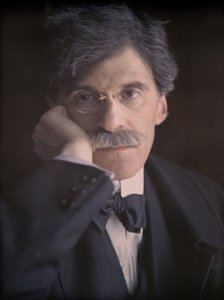
Alfred Stieglitz
1864 - 1946 , United States of America
Quick Facts
- Full Name: Alfred Stieglitz
- Nationality: American
- Date Of Birth: 1864
- Date Of Death: 1946
- Place Of Birth: Hoboken, United States of America
- Notable Artworks:
- Study of Georgia Engelhard with Dolls
- The Steerage
- Old and New New York
- Artistic Movement Or Style: Pictorialism, Modernism
- Artists Who Influenced This Artist: ['Hermann Wilhelm Vogel']
- Artists Or Movements Influenced By This Artist:
- Georgia O'Keeffe
- Arthur Garfield Dove