

 Preview
 Send
Send Share
Share
 Details
 Guide
Guide

 Download
 Similars
 X-Ray
X-Ray Diaporama
 Stats
StatsVisit to the Studio


 Read More
Hand Made Oil Reproduction
Hand-painted oil on canvas in your size and frame, made to order by our artists. ( Switch to Print Switch to Digital Image)




P118B $10

P118H $10

P118W $10

P438Z $10

P508JH $12

P508YH $12

P805H $10

P805Z $10

P919BZ $10

P919G $10

P919XJ $10

P959ZH $10

P968JZ $12

W106C $8

W218G $10

W218JH $8

W218Y $10

W307PJ $10

W316G $10

W316PJ $8

W316Y $10

W398PJ $8

W4111J $10

W500HY $15

W500JH $15

W692G $12

W849H $8

W940BG $15

W953PJ $8




Pick from our preset sizes that match the artwork's original proportions.

You may enter your own dimensions to fit a specific frame or space. If your selected size does not match the original image's proportions, we will either crop the artwork or extend the painting with additional hand-painted elements. A digital mockup will be sent for your approval before production begins.
Please note that the on-screen preview does not reflect the actual cropping or extension. Only the mockup will accurately show the final composition.
While custom sizes are available, we recommend selecting a dimension from the predefined list to preserve the original proportions.
After order, OriginalUniqueArt.com team will email client for instructions and provide a mockup preview
Worldwide Delivery () in 3/4 weeks instead of standard 5 weeks. (5 October). No compromise on quality.

Free Worldwide Express Shipping

High-Quality Linen Canvas

Full Shipping Insurance

Customs Tax Refund Guarantee

True Color Matching Guarantee

100-Day Return Policy (Defects Only)

100% Money-Back Guarantee

Bulk Discount Offer
 Glass option is only available in size under 110 CM

Visit to the Studio
Reproduction Medium
Reproduction Size
-


Total Price
$ 300
An Intimate Encounter: The Elegance of Alfred Stevens
In the quiet, sun-drenched corners of 19th-century Parisian life, few artists captured the essence of modern sophistication quite like Alfred Stevens. His masterpiece, "Visit to the Studio," invites the viewer into a private, whispered moment between two women, suspended in time. This painting is not merely a depiction of a room; it is an exploration of grace, social poise, and the delicate interplay of light and shadow. As we gaze upon the scene, we find ourselves uninvited guests to a serene encounter, where the boundaries between the public persona and private intimacy begin to blur.
The composition is a triumph of Academicism, characterized by a profound sense of balance and harmony. Stevens masterfully positions the two protagonists to create a rhythmic symmetry that guides the eye across the canvas. On the left, a woman stands with an air of poised contemplation, her hand resting on her hip, while on the and, another woman sits in a state of relaxed elegance. This structural equilibrium is deepened by the artist's expert use of chiaroscuro, where light dances across fine fabrics and illuminates the textures of the room, lending a three-dimensional vitality to the entire setting.
A Symphony of Texture and Tradition
Technically, "Visit to the Studio" serves as a testament to Stevens’s command over the oil medium. The artist employs a meticulous approach to detail, a hallmark of the French Academic Art Movement, which allows for a rich, tactile experience. One can almost feel the weight of the elaborate fabrics worn by the women and the smooth surface of the porcelain vase resting nearby. Every brushstroke is purposeful, contributing to a realistic representation that celebrates the beauty of the mundane. The inclusion of everyday objects—a chair, a potted plant, a soft couch in the background—anchors the scene in a tangible reality, making the elegance of the subjects feel both aspirational and accessible.
Beyond the surface level of realism, there is an underlying narrative of social transition. Created during an era when the art world was being shaken by the rise of Impressionism and Art Deco, Stevens’s commitment to the Academic style provides a sense of continuity and timelessness. He captures a specific moment in history where the allure of the upper-middle class was at its zenith. The painting does not seek to shock, but rather to enchant, using the familiar setting of a studio visit to explore themes of companionship and the quiet dignity of the modern woman.
An Inspiration for the Discerning Collector
For the art lover or interior designer, "Visit to the Studio" offers more than just visual beauty; it provides an atmosphere of refined tranquility. The painting’s palette and composition make it a versatile centerpiece, capable of adding a layer of historical depth and sophisticated charm to any high-end space. Whether placed in a contemporary gallery setting or a classic study, the work radiates a sense of calm and cultured taste.
Owning a reproduction of this work allows one to bring the luminous spirit of 19th-century Brussels and Paris into the modern home. It is an invitation to appreciate the enduring power of tradition and the subtle magic found in life's most quiet, elegant moments. To display this piece is to celebrate the mastery of Alfred Stevens and to surround oneself with a legacy of unparalleled craftsmanship and aesthetic grace.
Questions & Answers
Can I order an oil reproduction of "Visit to the Studio"?
"Visit to the Studio" is available as a hand-painted oil reproduction on linen canvas. The order can be placed on this page, with a choice of sizes.
What is "Visit to the Studio" made with, and in which style?
"Visit to the Studio" by Alfred Stevens combines the oil on canvas technique with the Academicism style. Technique and movement describe the making and the style of the work.
What atmosphere would a reproduction of "Visit to the Studio" by Alfred Stevens bring to a room?
With its classic mood, "Visit to the Studio" is suggested for a living room.
What kind of piece is "Visit to the Studio"?
"Visit to the Studio" is a wall art piece.
Where can I buy a print of "Visit to the Studio" by Alfred Stevens?
"Visit to the Studio" is available as a fine art print on cotton canvas or archival canvas paper. Orders are placed on this page, in the size of your choice.
Is there a guide for "Visit to the Studio" by Alfred Stevens?
A Guide page is available for "Visit to the Studio" by Alfred Stevens: a printable factsheet about the artwork, designed for students and classroom use.
Who created "Visit to the Studio"?
"Visit to the Studio" was created by Alfred Stevens. The information on this page describes Alfred Stevens's original work.
Artist Biography
early life and training
alfred émile léopold stevens, a renowned belgian painter, was born on may 11, 1823, in brussels. his family was deeply rooted in the visual arts, with his older brother joseph (1816–1892) and son léopold (1866–1935) being painters, while another brother arthur (1825–99) was an art dealer and critic.artistic career
stevens began his artistic journey at the académie royale des beaux-arts in brussels, where he studied under the guidance of françois navez, a neo-classical painter. in 1843, he moved to paris, joining his brother joseph, and was admitted to the école des beaux-arts. although it is disputed whether he became a student of jean auguste dominique ingres, stevens' early work, such as the pardon or absolution (hermitage, st. petersburg), signed and dated 1849, showcases his mastery of conventional naturalistic style, influenced by 17th-century dutch genre painting.rise to prominence
stevens' work was first publicly exhibited in 1851 at the brussels salon, earning him a third-class medal at the paris salon in 1853 and a second-class medal at the universal exposition in paris in 1855. his painting ce qu'on appelle le vagabondage (musée d'orsay, paris) caught the attention of napoleon iii, leading to a significant change in the treatment of the poor.notable works and legacy
- la dame en rose or woman in pink (musées royaux des beaux-arts de belgique, brussels), painted in 1866, exemplifies stevens' work during this period, combining a fashionably dressed woman with a detailed examination of japanese objects.
- stevens received the legion of honor (chevalier) from the french government in 1863 and was promoted to officer of the legion of honor in 1867.

Alfred Stevens
1823 - 1906 , Belgium
Quick Facts
- Artistic Movement Or Style: Realism, Dutch genre painting influence
- Artists Or Movements Influenced By This Artist: ['Impressionists']
- Artists Who Influenced This Artist:
- François Navez
- Pieter de Hooch
- Vermeer
- Full Name: Alfred Émile Léopold Stevens
- Nationality: Belgian
- Notable Artworks:
- The Pardon or Absolution
- Ce qu'on appelle le vagabondage
- Woman in Pink
- The Bath
- Pleasant Letter
- Place Of Birth: Brussels, Belgium
- Date Of Birth: 1823
- Date Of Death: 1906
Related Articles

25 Masterpieces by Sir Alfred James Munnings: The Essence of British Equine Art
Immerse yourself in the vibrant world of Sir Alfred James Munnings. Explore 25 iconic equine masterpieces capturing the soul of the British countryside through impressionistic light and movement. Find museum-quality art reproductions at OriginalUniqueArt.com. Discover all masterpieces online.

Masterpieces of Motion: The Top 25 Artworks by Sir Alfred James Munnings
Experience the vibrant spirit of British equestrian art through the top 25 masterpieces by Sir Alfred James Munnings. From impressionistic landscapes to iconic horse portraits, explore timeless stories and museum-quality reproductions for your decor. Discover all masterpieces on OriginalUniqueArt.com.
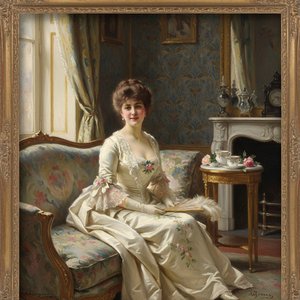
Alfred Stevens: Capturing Parisian Elegance & Fin-de-Siècle Intimacy
Discover the captivating world of Alfred Stevens, master of Parisian elegance & intimate portraiture. Explore his techniques, influences, and legacy – a prized collection for discerning art enthusiasts.

Mastering the Equine Spirit: The Top 25 Artworks by Sir Alfred James Munnings
Immerse yourself in the vibrant equine world of Sir Alfred James Munnings. Explore 25 iconic masterpieces capturing the soul of the British countryside through impressionistic light and movement. Find museum-quality art reproductions for your collection. Discover all masterpieces on OriginalUniqueArt.com

Masterpieces of the Countryside: Top 25 Sir Alfred James Munnings Artworks
Immerse yourself in the vibrant world of Sir Alfred James Munnings. Explore 25 iconic equestrian paintings and English landscapes that define British Impressionism. Find inspiration for museum-quality art reproductions and decor. Discover all masterpieces on OriginalUniqueArt.com.


