

 Preview
 Send
Send Share
Share
 Details
 Guide
Guide

 Download
 Similars
 X-Ray
X-Ray Diaporama
 Stats
StatsCrosshatch

 Read More
The artwork displayed on this page is protected by copyright law, which means we cannot legally create or sell an identical reproduction. This protection is enforced under international agreements such as the Berne Convention and by national laws, including those outlined by the U.S. Copyright Law - Title 17.
This method fully complies with copyright regulations because it does not involve copying or duplicating the protected artwork. Instead, it is a creative reinterpretation - a new painting that is influenced by the original but not identical to it.
Giclée / Art Print
Museum-quality giclée or canvas print with fast production and flexible finish options. ( Buy Hand Made Painting Switch to Digital Image)




































Pick from our preset sizes that match the artwork's original proportions.

Type the width and the height you need, to fit your frame or your wall. A print can only be cut, never made bigger than the picture, so a size with a different shape loses a part of the image. We send you a digital mockup to approve before we print anything. The picture shown on this page does not show the real cut — only the mockup does.
Worldwide Delivery () in 2 weeks instead of standard 4/5 weeks. (28 October)

Free Worldwide Express Shipping

High-Quality Linen Canvas

Full Shipping Insurance

Customs Tax Refund Guarantee

True Color Matching Guarantee

100-Day Return Policy (Defects Only)

100% Money-Back Guarantee

Bulk Discount Offer
 Glass option is only available in size under 110 CM

Crosshatch
Giclée / Art Print
Reproduction Size
-


Total Price
$ 81
A Striking Encounter: "Crosshatch" by Alexander Milne Calder
This captivating painting, currently residing within the esteemed Smithsonian American Art Museum, presents a unique and visually arresting depiction of two birds perched atop one another. Rendered in a striking palette of red, yellow, and black, these aren't your typical feathered creatures; they possess an almost industrial aesthetic, appearing to be constructed from wire or metal. This unconventional material choice immediately elevates the work beyond simple representation, hinting at a deeper exploration of form, texture, and artistic interpretation. The birds’ beaks gently touching creates a sense of intimacy and connection despite their seemingly rigid construction.Style & Technique: Bridging Realism and Abstraction
Alexander Milne Calder's style in "Crosshatch" demonstrates a fascinating bridge between realism and abstraction. While the subject matter – birds – is readily identifiable, the execution deviates significantly from traditional naturalistic painting. The use of bold colors and the implied materiality (wire or metal) suggest an influence of early modernism, particularly movements exploring industrial aesthetics and geometric forms. The technique itself remains somewhat enigmatic without further documentation; however, the sharp contrasts in color and the defined lines likely contribute to the overall sense of structure and deliberate design. It’s a testament to Calder's ability to transform familiar subjects into compelling artistic statements.Historical Context & The Calder Legacy
Born in Aberdeen, Scotland in 1898, Alexander Milne Calder established himself as a significant sculptor, particularly known for his architectural contributions to Philadelphia City Hall. "Crosshatch," though seemingly simple, reflects the burgeoning artistic experimentation of the early 20th century. Importantly, it places this work within a remarkable family legacy: both his son, Alexander Stirling Calder, and grandson, Alexander "Sandy" Calder, achieved international acclaim as sculptors, notably for their kinetic sculptures. Understanding this familial context highlights the enduring influence of artistic exploration passed down through generations, demonstrating a shared commitment to innovative form and challenging conventional representation. The painting’s presence in the Smithsonian American Art Museum further underscores its historical and cultural importance within the landscape of American art.Symbolism & Emotional Impact
The symbolism inherent in "Crosshatch" is open to interpretation, adding layers of intrigue for the viewer. The birds themselves often represent freedom, communication, or even spiritual connection. Their metallic appearance could symbolize the intersection of nature and industry, reflecting the rapid technological advancements of Calder’s time. The act of perching atop one another, beaks touching, suggests interdependence, harmony, or perhaps a quiet moment of shared existence. Emotionally, the painting evokes a sense of both strength and fragility – the birds are robust in their construction yet possess an undeniable vulnerability. It's a work that invites contemplation on themes of connection, resilience, and the beauty found within unexpected forms.Questions & Answers
Can I see "Crosshatch" by Alexander Milne Calder under different lights?
The X-Ray view of "Crosshatch" by Alexander Milne Calder is on the artwork's X-Ray page: an interactive examination of the image through eleven optical layers.
How do movement and era meet in "Crosshatch" by Alexander Milne Calder?
"Crosshatch" belongs to the Abstract Expressionism movement, and its creator worked in the Modern era.
Where can I find statistics about "Crosshatch" by Alexander Milne Calder?
A Stats page exists for "Crosshatch". It charts the monthly visits of the artwork and of the artist's other works, with country and language breakdowns.
Artist Biography
introduction to alexander milne calder
alexander milne calder was a scottish american sculptor, born in aberdeen, scotland in 1846. he is best known for his architectural sculpture of philadelphia city hall, and both his son, alexander stirling calder, and grandson, alexander 'sandy' calder, became significant sculptors in the 20th century.early life and career
alexander milne calder began his career in scotland, working for sculptor john rhind, while attending the royal academy in edinburgh. he moved to london and worked on the albert memorial. calder immigrated to the united states in 1868 and settled in philadelphia, where he studied with joseph a. bailly and took classes with thomas eakins at the pennsylvania academy of fine arts.notable works
some of alexander milne calder's notable works include:- philadelphia city hall: a commission that involved more than 250 pieces in marble and bronze, taking calder 20 years to complete.
- william penn: a colossal bronze statue that was to crown the city hall's tower.
- indian figure: a sculpture prior to its installation on city hall.
- south portal and west portal: illuminated with colored lights, showcasing calder's attention to detail.
legacy
alexander milne calder's legacy extends beyond his own work, as both his son and grandson became prominent sculptors. his contributions to the world of art can be seen in various museums, including the smithsonian american art museum and the galleria civica di arte moderna e contemporanea torino. to learn more about alexander milne calder and his work, visit https://OriginalUniqueArt.com/@/alexander-milne-calder or explore the wahoo art timeline for a detailed overview of art history. important to note that alexander milne calder's work has been recognized and appreciated by art enthusiasts and scholars alike, making him a significant figure in the world of art. his contributions will continue to be celebrated and studied for generations to come.
Alexander Milne Calder
1898 - 1976 , United Kingdom
Quick Facts
- Full Name: Alexander Milne Calder
- Nationality: Scottish-American
- Date Of Birth: 1898
- Date Of Death: 1976
- Place Of Birth: Aberdeen, United Kingdom
- Notable Artworks:
- Philadelphia City Hall
- William Penn statue
- Indian figure
- Artistic Movement Or Style: Architectural sculpture
- Artists Who Influenced This Artist: ['John Rhind']
- Artists Or Movements Influenced By This Artist:
- Alexander Stirling Calder
- Alexander Calder
Related Articles

The Enduring Form: Sculpture Across History, Technique & Emotional Resonance
Explore the rich history of sculpture with OriginalUniqueArt. Discover key techniques, influential artists & investment potential for discerning collectors. Expert insights into valuing and collecting timeless masterpieces.

The Enduring Form: Exploring Themes & Techniques in Sculpture Across Historical Periods
Explore the rich history of sculpture from ancient masterpieces to contemporary innovations. Discover key techniques, influential artists & investment potential for discerning art collectors.
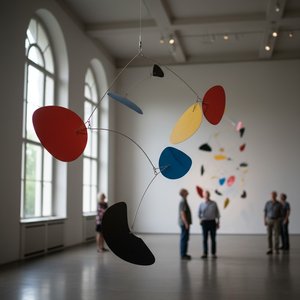
Alexander Calder: Kinetic Sculpture, Mobile Art & the Poetics of Chance
Explore the revolutionary world of Alexander Calder's kinetic sculptures & mobiles. Discover insights for collectors, acquisition advice, and the enduring legacy of this modern master. Expert analysis & art valuation.

Bronze Age to Modern Masters: 10 Sculptures That Redefined Art | OriginalUniqueArt
Journey through art history with 10 legendary bronze sculptures – from Michelangelo's David to Rodin’s Thinker. Explore the stories, techniques & timeless beauty of these masterpieces. Find museum-quality reproductions & elevate your home decor on OriginalUniqueArt.com.

Bronze Sculptures That Defined Art History | OriginalUniqueArt
Journey through art history with our Top 10 bronze sculptures! Explore masterpieces by Rodin, Michelangelo & more. Discover stories behind iconic statues and find museum-quality reproductions for your home decor at OriginalUniqueArt.com.


