- Home

- Oil Painting Reproduction
- alec grieve
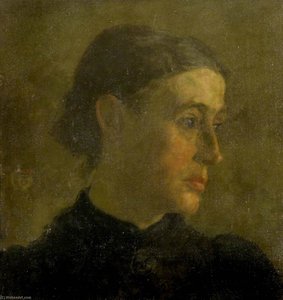
- Mrs Davidson

 Buy print
 Send
Send Share
Share
 Details

 Download
 Similars
 X-Ray
X-Ray Diaporama
Mrs Davidson
 1902
1902 35.0 x 32.0 cm
 Dundee Art Gallery And Museum
 Read More
Hand Made Oil Reproduction
Hand-painted oil on canvas in your size and frame, made to order by our artists.




































Pick from our preset sizes that match the artwork's original proportions.

You may enter your own dimensions to fit a specific frame or space. If your selected size does not match the original image's proportions, we will either crop the artwork or extend the painting with additional hand-painted elements. A digital mockup will be sent for your approval before production begins.
Please note that the on-screen preview does not reflect the actual cropping or extension. Only the mockup will accurately show the final composition.
While custom sizes are available, we recommend selecting a dimension from the predefined list to preserve the original proportions.
After order, OriginalUniqueArt.com team will email client for instructions and provide a mockup preview
Worldwide Delivery () in 3/4 weeks instead of standard 5 weeks. (20 July). No compromise on quality.

Free Worldwide Express Shipping

High-Quality Linen Canvas

Full Shipping Insurance

Customs Tax Refund Guarantee

True Color Matching Guarantee

60-Day Return Policy (Defects Only)

100% Money-Back Guarantee

Bulk Discount Offer
 Glass option is only available in size under 110 CM

Mrs Davidson
Reproduction Medium
Reproduction Size
-


Total Price
-
Artist Biography
Alec Grieve: A Master of Scottish Twilight
Born in Dundee, Scotland, in 1864, Alec Grieve’s artistic journey was one deeply intertwined with the evocative landscapes and shifting light of his native land. Initially trained at Dundee School of Art, he quickly distinguished himself through a unique approach to depicting the natural world – a fascination with twilight, mist, and the subtle nuances of color that defined the Scottish Highlands and the Tay River region. Grieve wasn’t merely an observer; he was a translator, capturing not just what he saw but also the feeling, the mood, the very essence of these places.
Grieve's early career unfolded against a backdrop of artistic experimentation and social change. He began as a commercial artist in London, working for publishers – a pragmatic step that allowed him to hone his skills and gain exposure. However, it was his return to Dundee in 1890 that truly ignited his creative spirit. He joined the Graphic Arts Association, a vibrant collective of artists pushing boundaries and challenging conventional artistic norms. This association provided a crucial platform for his work, allowing him to develop his distinctive style and establish himself within the local art scene.
Influenced profoundly by the Symbolist movement – particularly the atmospheric nocturnes of James McNeill Whistler – Grieve’s early paintings are characterized by their ethereal quality. The use of muted tones, often dominated by greys, blues, and purples, creates a sense of mystery and melancholy. His depictions of the Tay River, bathed in the soft glow of twilight, became particularly renowned. Works like *Nocturne in Grey – the Tay Ferries* (1895) exemplify this period, capturing not just the physical appearance of the river but also its intangible spirit.
The Symbolist and Socially Conscious Artist
As Grieve’s artistic vision matured, he began to explore themes beyond purely landscape. He delved into symbolism and religious imagery, creating works such as *Death and the Miser* (1893) and *Sancta Spirita* (1897), which reflected his intellectual interests and philosophical leanings. These pieces, while initially met with mixed critical reception – some critics found them overly dark or unsettling – demonstrated a growing depth and complexity in his artistic expression.
However, Grieve’s art wasn't confined to abstract symbolism. He maintained a deep connection to the working class of Dundee, reflecting this empathy through his social commentary. His series *The Blind at Work* (1894), depicting the lives and struggles of blind individuals in the city’s institution, stands as a powerful testament to his commitment to social justice. This work, alongside paintings like *The Ploughman and the Crows* (1903), which subtly critiques the exploitative relationship between labor and capital, reveals Grieve's dual role as an artist and a socially conscious advocate.
A Shift Towards Clarity and Regional Identity
Following his marriage in 1897, Grieve relocated to Tayport, a coastal town on the Firth of Tay. This move marked a significant shift in his artistic focus. While he continued to explore symbolic themes, his landscapes became increasingly rooted in the specific geography and character of the region. The light, colors, and textures of the Scottish countryside – the rolling hills, the dramatic coastline, and the ever-changing weather – took center stage.
In 1904, he co-founded the Tayport Artists’ Circle, a collective dedicated to promoting local art and fostering a sense of community. This initiative provided a platform for emerging artists and helped solidify Grieve's position as a leading figure in the Dundee artistic scene. His later works, such as *Pont du Cheval, Bruges* (a pair of paintings depicting the bridge), demonstrate a refined technique and a masterful understanding of light and atmosphere.
Legacy and Recognition
Alec Grieve’s career spanned nearly four decades, during which he produced an impressive body of work that continues to resonate with viewers today. While his Symbolist period initially garnered mixed reviews, his later landscapes – characterized by their evocative beauty and subtle social commentary – are now widely recognized as masterpieces of Scottish art. His paintings are held in prominent collections throughout Scotland, including the Perth Museum & Art Gallery and Dundee’s Newburgh-on-Tay.
Grieve's legacy extends beyond his individual artistic achievements. He played a vital role in fostering a vibrant artistic community in Dundee and contributed significantly to the development of Scottish landscape painting. His work serves as a poignant reminder of the power of art to capture not only the physical world but also the emotional and spiritual dimensions of human experience, particularly within the context of a changing society.

alec grieve
1864 - 1933
Quick Facts
- Artistic Movement Or Style: Symbolist, Landscape
- Artists Or Movements Influenced By This Artist:
- Symbolism
- Realism
- Artists Who Influenced This Artist: ['Whistler']
- Date Of Birth: 1864
- Date Of Death: 1933
- Full Name: Alec Grieve
- Nationality: Scottish
- Notable Artworks:
- Nightfall (1894)
- Nocturne in Grey – Tay Ferries
- Moonlight on the Tay (1897)
- Death and the Miser (1893)
- Place Of Birth: Dundee, Scotland