
 Preview
 Send
Send Share
Share
 Details
 Guide
Guide

 Download
 Similars
 X-Ray
X-Ray Diaporama
 Q&A
Q&A Stats
StatsThe Great Courier

- 100.0 x 113.0 cm


 Read More
Get a print-ready file that goes far beyond the web preview. Every digital image we sell comes from a high-resolution master in our stock database — usually 5,000 to 15,000 pixels wide — so you can print large, crop tightly, or reproduce fine detail with confidence.
No file leaves our studio untouched. A digital expert checks the colors against the original painting and corrects them if needed, then improves clarity and detail with professional retouching tools — always staying faithful to the artist's brushwork and style. The result is an image that looks like the painting, not like a filtered scan.
You approve before you're done: our expert sends the image by e-mail within 72 hours for your review. Not satisfied? Ask for improvements or corrections, or request a refund if the quality falls short.
This is the quality relied on by publishers, design studios, galleries and print shops.
Digital Image
Download a high-resolution file for personal display, printing, and creative projects. ( Switch to Print Buy Hand Made Painting)
Included in Every Digital Image Order
Expert Digital Delivery, Guaranteed
When you choose OriginalUniqueArt.com, you're not just getting an image - you're receiving a professionally enhanced digital artwork, crafted with precision and backed by a satisfaction guarantee. Here's everything that comes with your order, automatically:

Fast Email Delivery
Your high-resolution digital image file will be emailed to you within 72 hours of ordering - ready for immediate use.

AI-Enhanced Digital File
Your artwork is professionally optimized using advanced AI tools and manual editing, ensuring maximum detail, clarity, and color accuracy.

Free Lifetime Re-Delivery
Accidentally deleted or lost your file? No worries - we'll resend it to you anytime, free of charge.

No Import Fees - Ever
Enjoy your artwork instantly with zero customs, duties, or delivery fees - digital downloads are always tax-free.

Color Accuracy Guarantee
We ensure your digital image reflects the original colors as closely as possible using professional tools and color management.

100-Day Satisfaction Guarantee
If you're not satisfied with your digital image, we'll revise it or refund 100% within 100 days - no questions asked.

100% Money-Back Guarantee
Not satisfied? Get a full refund within 100 days of receiving your digital file - no questions asked.

Bulk Order Discounts
Buy 3 images, save 10% - Buy 5, save 15% - Buy 10+, save 20%. Great for creative projects, galleries, and agencies.
A Moment of Urgent Communication
Albrecht Dürer’s “The Great Courier” is more than just a depiction of a man on horseback; it's a meticulously crafted distillation of the Renaissance spirit – a testament to human observation, technical mastery, and the enduring power of communication. Created in 1495, this black-and-white engraving transports us to a world where speed and authority were paramount, where messages carried across vast distances held immense significance. The scene unfolds with dynamic energy: a rider, clad in what appears to be a richly adorned tunic, charges forward on a powerful horse, conveying an undeniable sense of urgency. Dürer doesn’t simply show movement; he captures the *feeling* of it – the strain in the horse's muscles, the rider’s focused gaze, and the implied momentum that propels them onward.
Northern Renaissance Precision
Dürer’s style firmly anchors “The Great Courier” within the Northern Renaissance tradition, a period characterized by an unparalleled dedication to detail and realism. Unlike the more idealized forms of Italian Renaissance art, Dürer's work embraces a grounded approach, meticulously rendering every element with astonishing precision. The artist’s mastery of engraving is immediately apparent in the incredibly controlled linework – each stroke deliberate, each shadow subtly defined. The use of hatching and cross-hatching creates a remarkable illusion of depth and texture, transforming flat paper into a convincing representation of form. Notice how Dürer employs these techniques to suggest the weight of the horse’s body, the folds in the rider's clothing, and even the subtle roughness of the landscape beyond.
- Line as Form: The primary element is line; it defines shape, creates texture, and establishes perspective.
- Hatching & Cross-hatching: These techniques build tonal values, adding depth and realism.
- Geometric Precision: While organic shapes dominate, the circular emblem hints at a symbolic order.
A Symphony of Gray
The monochromatic palette – shades of gray, black, and white – is not merely a limitation; it’s a deliberate choice that amplifies the engraving's impact. The stark contrast between light and dark creates a dramatic effect, emphasizing the figures against the blurred background. This technique highlights Dürer’s skill in manipulating tonal values to create a sense of three-dimensionality, making the scene feel remarkably tangible. The absence of color forces the viewer to focus on the intricacies of line and texture, deepening their engagement with the artwork.
Symbolism and Historical Context
“The Great Courier” transcends a simple depiction of a messenger; it’s imbued with symbolic weight. The rider's posture and the horse’s frantic pace communicate urgency and purpose – conveying an important message, perhaps even a royal decree or vital news. This theme resonated deeply within Renaissance society, where swift communication was essential for governance and diplomacy. The emblem at the top left corner likely held further significance, potentially representing heraldry, family lineage, or the authority of the messenger’s patron. Considering Dürer's time, this piece reflects a world grappling with expanding trade routes, burgeoning cities, and increasingly complex political landscapes – all demanding efficient means of communication.
Questions & Answers
Can I see "The Great Courier" by Albrecht Dürer on my own wall before buying?
"The Great Courier" has an augmented reality preview: the artwork's AR Preview page shows it in your own space on a compatible device.
What national origin stands behind the Northern Renaissance of "The Great Courier"?
"The Great Courier" was created by Albrecht Dürer, born in Italy, within the Northern Renaissance movement. The artist's origin links the work to Northern Renaissance as practiced by artists from Italy.
Which museum holds the original "The Great Courier"?
The original "The Great Courier" by Albrecht Dürer is held at the Кабінет графіки, Дрезден, Germany. A reproduction allows the work to be displayed at home.
Artist Biography
A Life Forged in Nuremberg: The Early Years and Apprenticeship
Albrecht Dürer, a name synonymous with the German Renaissance, emerged from the bustling artisan city of Nuremberg in 1471. His father, Albrecht Dürer the Elder, was a successful goldsmith who had immigrated from Hungary, bringing with him a lineage steeped in craftsmanship. It was within this environment—the scent of metal and the meticulous precision of handiwork—that young Albrecht’s artistic inclinations first took root. Though his father envisioned a similar path for him, apprenticing him initially in the family trade, it soon became undeniable that Albrecht possessed an exceptional gift for drawing. At thirteen, he transitioned to the workshop of Michael Wolgemut, Nuremberg's leading artist at the time. This was no mere technical training; it was immersion into a world of illuminated manuscripts, painted panels, and—crucially—the burgeoning art of woodcut illustration. The sheer volume of work produced by Wolgemut’s workshop, including the extensive illustrations for the *Nuremberg Chronicle*, provided Dürer with an unparalleled foundation in design, composition, and the mechanics of image-making. A remarkable silverpoint self-portrait from 1484, created when he was barely a teenager, stands as astonishing evidence of his precocious talent—a testament to a burgeoning artistic identity already taking shape.
The Italian Influence and Artistic Maturation
Dürer’s ambition extended far beyond the confines of Nuremberg. Driven by an insatiable curiosity and a desire to master the art of painting, he embarked on his first journey to Italy in 1494. This was not simply a sightseeing trip; it was a pilgrimage to the heart of the Renaissance. He encountered the works of masters like Raphael, Giovanni Bellini, and Leonardo da Vinci—artists who were redefining the possibilities of form, perspective, and human expression. The impact of this exposure was profound. Dürer absorbed the classical motifs, harmonious compositions, and subtle sfumato techniques that characterized Italian art, yet he never abandoned his Northern European sensibility for meticulous detail and symbolic depth. A second sojourn to Italy between 1505 and 1507 further solidified these influences, allowing him to study ancient Roman ruins and refine his understanding of anatomy and proportion. This synthesis of Northern precision and Italian grace became the hallmark of Dürer’s unique artistic style.
Mastering the Mediums: Painting, Engraving, and Woodcut
Dürer was a master of multiple mediums, each offering him distinct avenues for creative expression. His paintings, though fewer in number than his prints, demonstrate a remarkable command of oil paint and an ability to capture both physical likeness and psychological depth. Works like the *Feast of the Rose Garlands* reveal a vibrant palette influenced by Venetian colorism. However, it was in the realm of printmaking—particularly engraving and woodcut—that Dürer truly revolutionized artistic practice. He elevated these techniques from mere reproductive methods to independent art forms, capable of conveying complex narratives and profound emotions. The *Apocalypse* series (1498), a collection of fourteen woodcuts illustrating the Book of Revelation, showcased his mastery of this medium despite its inherent limitations. Later engravings like *Melencolia I* (1514) and *Saint Jerome in His Study* (1514) are testaments to his unparalleled skill—intricate compositions filled with symbolic meaning and executed with breathtaking precision. He didn’t just depict reality; he imbued it with layers of intellectual and spiritual significance.
A Theorist and Innovator: The Legacy of Albrecht Dürer
Dürer was not merely an artist; he was a scholar, a theorist, and an innovator who sought to understand the underlying principles governing artistic creation. He believed in the mathematical foundations of art and dedicated himself to establishing a scientific approach to representation. His treatises on geometry, proportion, and human anatomy—most notably *Four Books of Human Proportion* (1528)—were groundbreaking for their time, demonstrating his commitment to rigorous observation and rational analysis. These writings were not simply academic exercises; they were intended to elevate the status of artists from mere craftsmen to intellectual practitioners. Dürer’s legacy extends far beyond his individual artworks. He bridged the gap between Northern European traditions and Italian Renaissance ideals, introducing classical motifs into Northern art while maintaining its distinctive character. His theoretical contributions helped establish a new framework for artistic practice, inspiring generations of artists with his technical skill, innovative spirit, and profound vision. He remains, to this day, one of the most important figures in the history of Western art.
Influences and Enduring Impact
- Michael Wolgemut: Dürer’s initial mentor, providing foundational skills in drawing, painting, and woodcut techniques.
- Leonardo da Vinci: Inspired Dürer's exploration of anatomy, perspective, and sfumato—the subtle blending of tones.
- Raphael: Influenced Dürer’s compositional harmony and idealized forms.
- Giovanni Bellini: Contributed to Dürer's understanding of color and Venetian painting traditions.
Dürer’s influence reverberates through centuries of art history. His meticulous realism, his innovative use of printmaking, and his theoretical writings continue to inspire artists and scholars alike. He demonstrated that art could be both technically masterful and intellectually rigorous—a legacy that continues to shape the artistic landscape today. His work stands as a testament to the power of observation, the pursuit of knowledge, and the enduring human desire to create beauty and meaning.
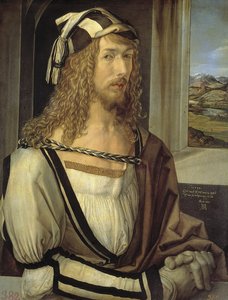
Albrecht Dürer
1471 - 1528 , Italy
Quick Facts
- Full Name: Albrecht Dürer
- Nationality: German
- Date Of Birth: 1471
- Date Of Death: 1528
- Place Of Birth: Nuremberg, Italy
- Notable Artworks:
- Apocalypse Series
- Melencolia I
- Saint Jerome in his Study
- Artistic Movement Or Style: German Renaissance
- Artists Who Influenced This Artist:
- Leonardo da Vinci
- Raphael
- Giovanni Bellini
- Artists Or Movements Influenced By This Artist: Northern Renaissance