Send
Send Share
Share
 Details
 Guide
Guide

 Download
 Similars
 Diaporama
 Stats
StatsHebe


 Read More
Giclée / Art Print
Museum-quality giclée or canvas print with fast production and flexible finish options. ( Buy Hand Made Painting Switch to Digital Image)




































Pick from our preset sizes that match the artwork's original proportions.

Type the width and the height you need, to fit your frame or your wall. A print can only be cut, never made bigger than the picture, so a size with a different shape loses a part of the image. We send you a digital mockup to approve before we print anything. The picture shown on this page does not show the real cut — only the mockup does.
Worldwide Delivery () in 2 weeks instead of standard 4/5 weeks. (26 October)

Free Worldwide Express Shipping

High-Quality Linen Canvas

Full Shipping Insurance

Customs Tax Refund Guarantee

True Color Matching Guarantee

100-Day Return Policy (Defects Only)

100% Money-Back Guarantee

Bulk Discount Offer
 Glass option is only available in size under 110 CM

Hebe
Giclée / Art Print
Reproduction Size
-


Total Price
$ 81
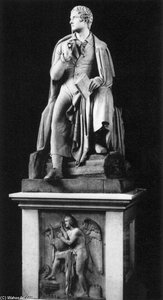
A Testament to Youthful Grace: Exploring Thorvaldsen’s Hebe Sculpture
The sculpture of Hebe by Albert Bertel Thorvaldsen stands as an enduring emblem of Neoclassical elegance and the pursuit of idealized beauty—a testament to a pivotal moment in artistic history. Crafted from pristine marble around 1806, this masterpiece captures not merely a figure but embodies the very essence of youthful vigor and divine grace, resonating powerfully with viewers centuries later.The Sculptor’s Vision: Thorvaldsen's Roman Influence
Thorvaldsen’s artistic journey began in Copenhagen, fueled by an innate talent nurtured within the Royal Danish Academy. However, it was his relocation to Rome in 1797 that truly cemented his legacy as a sculptor of unparalleled distinction. Recognizing the transformative power of classical antiquity—specifically the sculptures of Michelangelo and Canova—Thorvaldsen dedicated himself to replicating these monumental forms with meticulous precision. This immersion in Roman artistic tradition profoundly shaped his style, prioritizing clarity of form, harmonious proportions, and an unwavering commitment to capturing idealized human beauty. He sought to emulate the grandeur and serenity of the Roman temples and gardens, reflecting a broader cultural fascination with reviving Greco-Roman ideals.A Study in Marble: Technique and Craftsmanship
The sculpture’s remarkable smoothness and polished surface speak volumes about Thorvaldsen's mastery of marble carving technique. Employing chisels and hammers with unwavering patience and skill, he painstakingly sculpted the figure from a single block of Carrara marble—renowned for its purity and translucency. The sculptor skillfully utilized subtle gradations of shading to create realistic textures, capturing the folds of drapery and the contours of Hebe’s body with breathtaking accuracy. This meticulous attention to detail underscores Thorvaldsen's dedication to achieving an unparalleled level of realism within the confines of Neoclassical aesthetics—a stylistic choice that prioritized conveying emotion through form rather than overt ornamentation.Mythological Symbolism: Hebe and the Ambrosia Offering
Hebe, in Greek mythology, represents youthful immortality and divine nourishment – specifically the nectar and ambrosia consumed by gods to sustain their eternal life force. Thorvaldsen’s depiction of Hebe embodies this symbolic significance through her posture and gesture. Holding an amphora aloft, she symbolizes the provision of sustenance—the offering of nectar and ambrosia—essential for preserving divine vitality. The upward gaze conveys a sense of aspiration and serenity, reflecting the goddess's noble character and embodying the ideals of beauty and grace championed by Neoclassical art. This careful selection of iconography reinforces the sculpture’s overarching message: an affirmation of youthful vigor and spiritual transcendence.Emotional Resonance: Capturing Ideal Beauty
More than just a representation of a mythological figure, Thorvaldsen's Hebe transcends mere visual depiction to evoke profound emotional resonance. The sculpture’s serene countenance and graceful posture inspire contemplation—a reminder of the pursuit of perfection and the celebration of human beauty. Its timeless appeal lies in its ability to communicate universal themes of youthfulness, purity, and divine grace—values that continue to captivate audiences across cultures and eras. As a reproduction, this artwork offers an opportunity to bring forth the grandeur and serenity of classical art into any interior space, fostering appreciation for artistic excellence and celebrating the enduring legacy of Albert Bertel Thorvaldsen’s genius.Questions & Answers
What art movement does "Hebe" by Albert Bertel Thorvaldsen belong to?
The movement associated with "Hebe" by Albert Bertel Thorvaldsen is Neoclassical Style. This classification situates the work among related artists and artworks.
What size and orientation are recommended for a print of "Hebe" by Albert Bertel Thorvaldsen?
A print of "Hebe" by Albert Bertel Thorvaldsen is recommended at a large size in tall orientation.
How strong are the colors of "Hebe"?
"Hebe" by Albert Bertel Thorvaldsen is recorded with a muted saturation and a monochromatic intensity.
Artist Biography
Bertel Thorvaldsen: A Life in Stone
Albert Bertel Thorvaldsen (1770-1844) was a Danish and Icelandic sculptor of international renown, whose work embodies the ideals of Neoclassical art. His life story is one of remarkable talent, dedicated study, and widespread acclaim.
Early Life and Education
Born in Copenhagen, Denmark, to a working-class family with Icelandic roots, Thorvaldsen displayed artistic promise from a young age. He was accepted into the Royal Danish Academy of Art at just eleven years old. His exceptional skill earned him a stipend to travel to Rome in 1797 – a crucial step that would define his career.
Years in Rome: Developing a Style
Rome proved to be the ideal environment for Thorvaldsen’s artistic development. He immersed himself in the study of classical antiquity, meticulously copying ancient sculptures and absorbing their principles of form and proportion. This dedication led him to develop a distinctly Neoclassical style characterized by purity of line, idealized forms, and a sense of serene grandeur.
Influences and Artistic Development
Thorvaldsen was profoundly influenced by the works of ancient Greek and Roman sculptors, as well as by contemporary artists like Antonio Canova. However, he gradually moved away from Canova’s more flamboyant style towards a greater emphasis on simplicity and restraint. He sought to capture not just physical beauty but also moral virtue in his figures.
Major Achievements and Notable Works
- Religious Sculpture: Thorvaldsen created numerous religious works, including the tomb monument of Pope Pius VII – the only work by a non-Catholic artist within St. Peter’s Basilica.
- Mythological Subjects: His sculptures depicting mythological figures like Ganymede and the Eagle, Hebe, and Apollo are celebrated for their grace and classical beauty.
- Public Monuments: He received commissions for public monuments across Europe, including statues of Nicolaus Copernicus and Józef Poniatowski in Warsaw, and Maximilian I in Munich.
Return to Denmark and Legacy
In 1838, Thorvaldsen returned to Denmark as a national hero. The Danish government erected the Thorvaldsen Museum in Copenhagen to house his works, a testament to his immense popularity and artistic significance. He died in 1844 and is buried within the courtyard of the museum.
Historical Significance
Bertel Thorvaldsen played a pivotal role in shaping the Neoclassical movement. His sculptures were widely admired and imitated, influencing generations of artists. He successfully revived classical ideals in sculpture, creating works that continue to inspire awe and admiration today. His ability to blend technical skill with artistic vision cemented his place as one of the most important sculptors of the 19th century.

Albert Bertel Thorvaldsen
1770 - 1844 , Denmark
Quick Facts
- Birth Date: 1770
- Death Date: 1844
- Influenced: None, 'influenced by': 'Antonio Canova', 'movement': 'Neoclassicism', 'name': 'Albert Bertel Thorvaldsen', 'nationality': 'Danish, Icelandic', 'notable works': ['Statues of Nicolaus Copernicus and Józef Poniatowski (Warsaw)', 'Statue of Maximilian I (Munich)',
- Birth Place: Copenhagen, Denmark
- Date Of Birth: 1770
- Date Of Death: 1844
- Place Of Birth: Copenhagen, Denmark
Related Articles

The Enduring Allure of Marble in Art History: From Classical Sculpture to Modern Abstraction
Explore the captivating history of marble sculpture from ancient Greece to modern art. Discover renowned artists like Canova & Michelangelo, carving techniques, and investment insights at OriginalUniqueArt.

Bronze Age to Modern Masters: 10 Sculptures That Redefined Art | OriginalUniqueArt
Journey through art history with 10 legendary bronze sculptures – from Michelangelo's David to Rodin’s Thinker. Explore the stories, techniques & timeless beauty of these masterpieces. Find museum-quality reproductions & elevate your home decor on OriginalUniqueArt.com.

Bronze Sculptures That Defined Art History | OriginalUniqueArt
Journey through art history with our Top 10 bronze sculptures! Explore masterpieces by Rodin, Michelangelo & more. Discover stories behind iconic statues and find museum-quality reproductions for your home decor at OriginalUniqueArt.com.

The Enduring Form: Sculpture Across History, Technique & Emotional Resonance
Explore the rich history of sculpture with OriginalUniqueArt. Discover key techniques, influential artists & investment potential for discerning collectors. Expert insights into valuing and collecting timeless masterpieces.

The Enduring Form: Exploring Themes & Techniques in Sculpture Across Historical Periods
Explore the rich history of sculpture from ancient masterpieces to contemporary innovations. Discover key techniques, influential artists & investment potential for discerning art collectors.