Send
Send Share
Share
 Details
 Guide
Guide

 Download
 Similars
 Diaporama
 Q&A
Q&A Stats
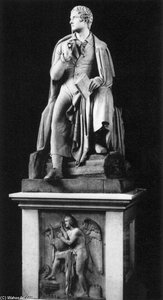
StatsGanymede and the Eagle

- 82.0 x 106.0 cm


 Read More
Giclée / Art Print
Museum-quality giclée or canvas print with fast production and flexible finish options. ( Buy Hand Made Painting Switch to Digital Image)




































Pick from our preset sizes that match the artwork's original proportions.

Type the width and the height you need, to fit your frame or your wall. A print can only be cut, never made bigger than the picture, so a size with a different shape loses a part of the image. We send you a digital mockup to approve before we print anything. The picture shown on this page does not show the real cut — only the mockup does.
Worldwide Delivery () in 2 weeks instead of standard 4/5 weeks. (2 November)

Free Worldwide Express Shipping

High-Quality Linen Canvas

Full Shipping Insurance

Customs Tax Refund Guarantee

True Color Matching Guarantee

100-Day Return Policy (Defects Only)

100% Money-Back Guarantee

Bulk Discount Offer
 Glass option is only available in size under 110 CM

Ganymede and the Eagle
Giclée / Art Print
Reproduction Size
-


Total Price
$ 81
A Divine Encounter in Marble
In the quiet, luminous presence of Bertel Thorvaldsen’s Ganymede and the Eagle, one does not merely observe a sculpture; one witnesses a moment suspended in eternity. This Neoclassical masterpiece captures a pivotal fragment of Greek mythology, where the mortal and the divine intersect with breathtaking tenderness. The scene depicts Ganymede, the Trojan prince of unparalleled beauty, offering sustenance to the eagle that is, in truth, the god Zeus in disguise. There is a profound, palpable tension held within the white marble—a delicate balance between the soft, vulnerable skin of the youth and the rugged, powerful anatomy of the predatory bird. As the eagle leans toward the bowl, the sculpture breathes with a life that transcends its stone medium, inviting the viewer into a world of cosmic enchantment.
The artistry of Thorvaldsen is revealed through his masterful command of texture and form. Carved from pristine white marble, the work exemplifies the Neoclassical pursuit of idealized perfection. The artist employs a sophisticated interplay of light and shadow to define the musculature of Ganymede’s kneeling frame, creating a sense of depth that makes the stone appear almost supple. While the boy's contours are smooth and flowing, reflecting an innocent grace, the eagle’s feathers are rendered with sharp, intricate detail, providing a tactile contrast that heightens the drama of the encounter. This technical brilliance ensures that the sculpture remains visually captivating from every angle, making it a profound focal point for any curated collection.
Symbolism and the Neoclassical Spirit
Beyond its physical beauty, Ganymede and the Eagle serves as a powerful allegory for the relationship between humanity and the divine. The eagle, representing the overwhelming power of Zeus, perches with a heavy, commanding presence, yet its action is one of quiet consumption rather than violent abduction. This nuance suggests a theme of divine favor and the sweetness of being chosen. For the collector or the admirer of classical antiquity, the piece resonates with themes of innocence, destiny, and the sublime. It captures that fleeting second before the ascent to Olympus, where earthly devotion meets celestial will.
For interior designers and connoisseurs of fine art, this work offers an unparalleled sense of prestige and historical weight. Whether placed in a sunlit gallery or a sophisticated study, a high-quality reproduction of this sculpture brings with it the intellectual rigor of the 19th-century Neoclassical movement. It is more than a decorative element; it is a conversation piece that evokes the grandeur of the Thorvaldsen Museum and the enduring legacy of Copenhagen’s most celebrated sculptor. To possess such a work is to invite the timeless elegance of ancient myth into the modern living space, creating an atmosphere of profound cultural depth and aesthetic serenity.
Questions & Answers
Is "Ganymede and the Eagle" free of copyright?
"Ganymede and the Eagle" by Albert Bertel Thorvaldsen is in the public domain - its copyright has expired. This status governs how the image of the work may be reproduced.
How does the style of "Ganymede and the Eagle" relate to its creator's era?
In "Ganymede and the Eagle" by Albert Bertel Thorvaldsen, the Neoclassical movement meets the 19th-Century era.
Is a high-resolution download of "Ganymede and the Eagle" available?
A digital image of "Ganymede and the Eagle" by Albert Bertel Thorvaldsen can be purchased on its Digital Image page: a high-resolution digital image download.
Artist Biography
Bertel Thorvaldsen: A Life in Stone
Albert Bertel Thorvaldsen (1770-1844) was a Danish and Icelandic sculptor of international renown, whose work embodies the ideals of Neoclassical art. His life story is one of remarkable talent, dedicated study, and widespread acclaim.
Early Life and Education
Born in Copenhagen, Denmark, to a working-class family with Icelandic roots, Thorvaldsen displayed artistic promise from a young age. He was accepted into the Royal Danish Academy of Art at just eleven years old. His exceptional skill earned him a stipend to travel to Rome in 1797 – a crucial step that would define his career.
Years in Rome: Developing a Style
Rome proved to be the ideal environment for Thorvaldsen’s artistic development. He immersed himself in the study of classical antiquity, meticulously copying ancient sculptures and absorbing their principles of form and proportion. This dedication led him to develop a distinctly Neoclassical style characterized by purity of line, idealized forms, and a sense of serene grandeur.
Influences and Artistic Development
Thorvaldsen was profoundly influenced by the works of ancient Greek and Roman sculptors, as well as by contemporary artists like Antonio Canova. However, he gradually moved away from Canova’s more flamboyant style towards a greater emphasis on simplicity and restraint. He sought to capture not just physical beauty but also moral virtue in his figures.
Major Achievements and Notable Works
- Religious Sculpture: Thorvaldsen created numerous religious works, including the tomb monument of Pope Pius VII – the only work by a non-Catholic artist within St. Peter’s Basilica.
- Mythological Subjects: His sculptures depicting mythological figures like Ganymede and the Eagle, Hebe, and Apollo are celebrated for their grace and classical beauty.
- Public Monuments: He received commissions for public monuments across Europe, including statues of Nicolaus Copernicus and Józef Poniatowski in Warsaw, and Maximilian I in Munich.
Return to Denmark and Legacy
In 1838, Thorvaldsen returned to Denmark as a national hero. The Danish government erected the Thorvaldsen Museum in Copenhagen to house his works, a testament to his immense popularity and artistic significance. He died in 1844 and is buried within the courtyard of the museum.
Historical Significance
Bertel Thorvaldsen played a pivotal role in shaping the Neoclassical movement. His sculptures were widely admired and imitated, influencing generations of artists. He successfully revived classical ideals in sculpture, creating works that continue to inspire awe and admiration today. His ability to blend technical skill with artistic vision cemented his place as one of the most important sculptors of the 19th century.

Albert Bertel Thorvaldsen
1770 - 1844 , Denmark
Quick Facts
- Birth Date: 1770
- Death Date: 1844
- Influenced: None, 'influenced by': 'Antonio Canova', 'movement': 'Neoclassicism', 'name': 'Albert Bertel Thorvaldsen', 'nationality': 'Danish, Icelandic', 'notable works': ['Statues of Nicolaus Copernicus and Józef Poniatowski (Warsaw)', 'Statue of Maximilian I (Munich)',
- Birth Place: Copenhagen, Denmark
- Date Of Birth: 1770
- Date Of Death: 1844
- Place Of Birth: Copenhagen, Denmark
Related Articles

The Enduring Allure of Marble in Art History: From Classical Sculpture to Modern Abstraction
Explore the captivating history of marble sculpture from ancient Greece to modern art. Discover renowned artists like Canova & Michelangelo, carving techniques, and investment insights at OriginalUniqueArt.

White on Canvas: 10 Masterpieces & Timeless Elegance for Your Home Decor
Explore 10 iconic white paintings by Monet, Whistler & Rothko! Discover the stories behind these serene masterpieces and their impact on art history. Find museum-quality reproductions for your home decor at .

10 Iconic Marble Masterpieces That Redefined the World of Art
Journey through history with 10 legendary marble masterpieces. From Michelangelo to Bernini, explore the stories behind these timeless sculptures. Find museum-quality art reproductions and curated decor inspiration for your home. Discover all masterpieces on OriginalUniqueArt.com.

10 Iconic Marble Masterpieces That Redefined the World of Art
Journey through history with 10 legendary marble masterpieces that redefined art. From Renaissance icons to neoclassical wonders, explore the stories behind these timeless sculptures and find museum-quality art reproductions for your decor. Discover all masterpieces on OriginalUniqueArt.com.

10 Iconic Marble Masterpieces That Redefined the World of Art
Journey through history with 10 legendary marble masterpieces. From Michelangelo to Bernini, explore the stories behind these timeless sculptures and find museum-quality art reproductions for your decor. Discover all masterpieces on OriginalUniqueArt.com.