Preview
 Send
Send Share
Share
 Details
 Guide
Guide

 Download
 Similars
 X-Ray
X-Ray Diaporama
 Q&A
Q&A Stats
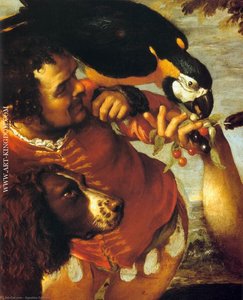
StatsHairy Harry, Mad Peter and Tiny Amon

- 101.0 x 133.0 cm


 Read More
Giclée / Art Print
Museum-quality giclée or canvas print with fast production and flexible finish options. ( Buy Hand Made Painting Switch to Digital Image)




P118B $10

P118H $10

P118W $10

P438Z $10

P508JH $12

P508YH $12

P805H $10

P805Z $10

P919BZ $10

P919G $10

P919XJ $10

P959ZH $10

P968JZ $12

W106C $8

W218G $10

W218JH $8

W218Y $10

W307PJ $10

W316G $10

W316PJ $8

W316Y $10

W398PJ $8

W4111J $10

W500HY $15

W500JH $15

W692G $12

W849H $8

W940BG $15

W953PJ $8




Pick from our preset sizes that match the artwork's original proportions.

Type the width and the height you need, to fit your frame or your wall. A print can only be cut, never made bigger than the picture, so a size with a different shape loses a part of the image. We send you a digital mockup to approve before we print anything. The picture shown on this page does not show the real cut — only the mockup does.
Worldwide Delivery () in 2 weeks instead of standard 4/5 weeks. (31 October)

Free Worldwide Express Shipping

High-Quality Linen Canvas

Full Shipping Insurance

Customs Tax Refund Guarantee

True Color Matching Guarantee

100-Day Return Policy (Defects Only)

100% Money-Back Guarantee

Bulk Discount Offer
 Glass option is only available in size under 110 CM

Hairy Harry, Mad Peter and Tiny Amon
Giclée / Art Print
Reproduction Size
-


Total Price
$ 81
A Symphony of Pastoral Virtue: Exploring Agostino Carracci’s “Hairy Harry, Mad Peter and Tiny Amon”
The painting "Hairy Harry, Mad Peter and Tiny Amon," attributed to Agostino Carracci (1598), transcends mere visual representation; it embodies the spirit of Bolognese Baroque—a movement striving for harmonious balance between classical ideals and emotive expression. Executed during a period marked by intellectual ferment and artistic experimentation, this monumental canvas offers a captivating glimpse into the aesthetic sensibilities of its time and speaks powerfully to themes of human interaction with nature and moral contemplation.Subject Matter and Composition
At first glance, the artwork depicts an idyllic tableau featuring three men—likely representing figures of authority or intellect—surrounded by a profusion of animals: birds, dogs, and monkeys. A young boy diligently feeds a bird, symbolizing innocence and care for the natural world. The central figure, adorned with a beard and draped in opulent robes, commands attention amidst his canine companions, embodying strength and perhaps regal dignity. Completing the ensemble is a gentleman observing the scene with thoughtful consideration—a testament to humanist values prioritizing reason and observation. Carracci’s masterful composition utilizes dynamic lines—curves and diagonals—to guide the viewer's gaze across the canvas, creating a sense of movement and inviting contemplation. The flattened perspective characteristic of Baroque art prioritizes emotional impact over strict spatial accuracy, immersing the spectator in this carefully crafted narrative space.Style and Technique: Embracing Naturalism Amidst Classical Influence
Carracci’s stylistic approach distinguishes itself from the Mannerist preoccupation with stylized forms and exaggerated poses. Instead, he champions naturalism—a deliberate effort to depict subjects realistically, capturing subtle nuances of light and texture. This commitment is evident in the meticulous brushwork employed throughout the painting, characterized by layering and glazing techniques that build up luminous surfaces. The artist skillfully utilizes sfumato—a smoky haze—to soften contours and create a hazy atmosphere, enhancing depth and contributing to an overall sense of ethereal beauty. The warm color palette dominated by browns, reds, and golds reinforces the painting’s grandeur and evokes feelings of warmth and richness.Historical Context: The Academy and Bolognese Artistic Renaissance
“Hairy Harry, Mad Peter and Tiny Amon” emerged from the crucible of the Academy degli Incamminati—established by Carracci himself alongside Annibale and Ludovico—a pioneering institution dedicated to reviving classical artistic traditions. This academy served as a beacon for aspiring artists, fostering a collective pursuit of excellence and shaping the stylistic landscape of Bolognese Baroque. The painting reflects the broader humanist ethos prevalent during the Renaissance, emphasizing human dignity and celebrating the beauty of the natural world – ideals that resonated deeply with Carracci’s contemporaries.Symbolism: Virtue, Wisdom, and Harmony
Beyond its visual splendor, “Hairy Harry, Mad Peter and Tiny Amon” is laden with symbolic significance. The animals represent not only the bounty of nature but also serve as metaphors for human virtues—gentleness, prudence, and contemplation. The figures themselves embody intellectual prowess and moral integrity, reflecting the academy’s core mission to cultivate enlightened minds. Ultimately, Carracci's masterpiece invites viewers to consider the harmonious relationship between humanity and its environment – a timeless message conveyed with breathtaking artistry.Questions & Answers
What is the perceived brightness of "Hairy Harry, Mad Peter and Tiny Amon" by Agostino Carracci?
Overall, "Hairy Harry, Mad Peter and Tiny Amon" is recorded as deep_shadow. Perceived brightness describes how light or dark the work appears.
What does "Hairy Harry, Mad Peter and Tiny Amon" by Agostino Carracci bring to an interior?
The dramatic atmosphere of "Hairy Harry, Mad Peter and Tiny Amon" by Agostino Carracci matches its recommended space: a living room.
Is there a slideshow for "Hairy Harry, Mad Peter and Tiny Amon" by Agostino Carracci?
The diaporama of "Hairy Harry, Mad Peter and Tiny Amon" can be watched on the artwork's Diaporama page.
Artist Biography
The Architect of Naturalism: The Life and Legacy of Agostino Carracci
Agostino Carracci stands as a pivotal figure in the burgeoning Baroque movement within Bologna, Italy. Often overshadowed by his more celebrated brother, Annibale, Agostino’s artistic vision—characterized by a deliberate rejection of Mannerist formalism and an embrace of classical ideals—established him as a crucial innovator who profoundly impacted the stylistic trajectory of Bolognese painting. He was not merely a craftsman but a visionary pedagogue, shaping the future generation of artists through the Accademia degli Incamminati, alongside Annibale and Ludovico Carracci. This academy became a crucible for a new era of art, moving away from the artificiality of the late Renaissance toward a more profound connection with reality. Born in Bologna in 1557 to Giovanni Battista Carracci and Lucrezia Panciatichi, Agostino’s artistic journey began under the tutelage of Domenico Tiberiadi. This early training instilled in him a foundational understanding of disegno—the humanist concept of drawing—which was essential for mastering classical proportions and perspective. While his contemporaries often leaned into the stylized forms and exaggerated poses of Mannerism, Agostino sought inspiration from the enduring strength of antiquity. He looked toward Roman sculpture and architecture as the ultimate models for achieving artistic excellence, believing that true beauty resided in the balance between idealized form and natural truth.The Mastery of Line and Light
Before he achieved renown for monumental frescoes and portraits, Carracci’s career found its footing through the intricate medium of engraving. This period was transformative, as he utilized the printmaker's tool to reproduce masterpieces by titans such as Federico Barocci, Tintoretto, Veronese, and Correggio. For Agostino, engraving was far more than a method of reproduction; it was a vital intellectual exercise in disseminating artistic knowledge across Europe. His prints demonstrated an acute sensitivity to tonal variations and chiaroscuro—the dramatic interplay of light and shadow—which would later become a hallmark of the Baroque style. Through these meticulous lines, he translated the fluid textures of paint into the permanent language of ink, elevating the status of printmaking within the fine arts. His technical prowess is perhaps most intimately captured in his preparatory works, where the boundary between study and masterpiece dissolves. In works such as his Study of a Spaniel’s Head, one can witness the artist's commitment to naturalism. Created around 1598, this drawing avoids all artifice, presenting the subject with remarkable realism—from the attentive eyes to the textured, curly fur of the ears. Such studies served as the essential building blocks for his larger compositions, proving that his devotion to the minute details of the natural world was the foundation upon which his grander, more classical visions were built.A Lasting Impression on the Baroque Era
The historical significance of Agostino Carracci lies in his role as a bridge between two eras. By challenging the intellectualized complexity of Mannerism with a renewed focus on clarity and natural observation, he helped midwife the birth of the Bolognese School. His ability to blend the classical elegance of the Renaissance with the emotional depth and dramatic lighting of the Baroque provided a blueprint for generations of painters. Whether through the ethereal beauty found in his The Three Graces or the familial intimacy captured in portraits of himself and his brothers, Agostino’s work remains a testament to a period of profound transition. Though his life was tragically short, ending in 1602, his influence endured far beyond his years. Through the Accademia degli Incamminati, he helped establish a pedagogical tradition that prioritized direct observation and classical study, ensuring that the principles of naturalism would become a cornerstone of Western art. His legacy is not found merely in individual canvases, but in the very way we perceive light, shadow, and the human form—a legacy of precision, passion, and an unwavering pursuit of truth in art.
Agostino Carracci
1557 - 1602 , Italy
Quick Facts
- Artistic Movement Or Style: Baroque, Naturalism
- Artists Or Movements Influenced By This Artist:
- Bolognese School
- Accademia degli Incamminati
- Artists Who Influenced This Artist:
- Domenico Tiberiadi
- Federico Barocci
- Tintoretto
- Veronese
- Correggio
- Full Name: Agostino Carracci
- Nationality: Italian
- Notable Artworks:
- The Three Graces
- Jupiter
- Study of a Spaniel’s Head
- Place Of Birth: Bologna, Italy
- Date Of Birth: 1557
- Date Of Death: 1602
Related Articles
Annibale Carracci: Bridging Renaissance Ideals & Baroque Innovation
Explore the life & art of Annibale Carracci, a pivotal figure bridging Renaissance ideals with Baroque innovation. Discover his masterpieces and lasting influence on Italian painting.

Baroque Masterpieces: 10 Paintings That Defined an Era |
Journey through the drama & grandeur of Baroque art! Explore 10 masterpieces by Caravaggio, Rembrandt, Rubens & more. Discover stunning oil paintings, rich colors & timeless stories. Find museum-quality reproductions at .
Chiaroscuro and Soul: A Definitive Guide to the Drama and Emotion of Italian Baroque Masterpieces
Embark on a sophisticated journey through Italian Baroque art. Discover the dramatic interplay of light and emotion in Caravaggio’s masterpieces and explore how to bring this timeless grandeur into your collection with expert art insights.

Baroque Drama: Bringing Opulence & Emotion into Contemporary Interiors
Explore the opulent world of Baroque interior design! Discover key elements, modern applications & how to bring dramatic elegance into your home with OriginalUniqueArt.com's authentic reproductions.

Italian Baroque Unlocked: High-Drama Art That Hits Hard
Dive into the high-drama world of Italian Baroque art. Discover how chiaroscuro, intense emotion, and theatrical lighting redefined aesthetics. Explore the visceral power of the Counter-Reformation through a modern lens with expert insights from OriginalUniqueArt.com.