Send
Send Share
Share
 Details
 Guide
Guide

 Download
 Similars
 Diaporama
 Stats
StatsLazarus
 Bronze
- Sculpture
- Mannerism
 1615
1615 41.0 x 65.0 cm
 National Gallery of Denmark
 Read More
Giclée / Art Print
Museum-quality giclée or canvas print with fast production and flexible finish options. ( Buy Hand Made Painting Switch to Digital Image)




































Pick from our preset sizes that match the artwork's original proportions.

Type the width and the height you need, to fit your frame or your wall. A print can only be cut, never made bigger than the picture, so a size with a different shape loses a part of the image. We send you a digital mockup to approve before we print anything. The picture shown on this page does not show the real cut — only the mockup does.
Worldwide Delivery () in 2 weeks instead of standard 4/5 weeks. (23 October)

Free Worldwide Express Shipping

High-Quality Linen Canvas

Full Shipping Insurance

Customs Tax Refund Guarantee

True Color Matching Guarantee

100-Day Return Policy (Defects Only)

100% Money-Back Guarantee

Bulk Discount Offer
 Glass option is only available in size under 110 CM

Lazarus
Giclée / Art Print
Reproduction Size
-


Total Price
$ 81
The Echoes of Antiquity in Bronze
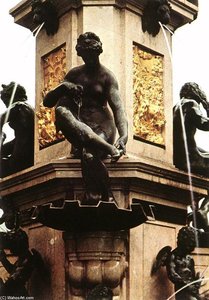
To gaze upon this bronze sculpture is to be transported across centuries, into a moment imbued with profound companionship and classical grace. The subject matter itself—a man reclining amidst his loyal dogs—evokes timeless narratives of human connection, echoing themes found in Greek mythology or the solemn dignity of Roman life. The craftsmanship displayed here is nothing short of masterful; every fold of the toga, every sinew visible beneath the skin, speaks to the virtuosity of its creator. It captures not merely a pose, but an emotional resonance—the quiet bond between humanity and its most steadfast companions.
Mannerist Flourishes and Technical Brilliance
While the primary subject matter draws from classical antiquity, the execution hints at the sophisticated currents of the early 17th century. The artist, adriaen de vries, was deeply influenced by the dramatic dynamism characteristic of Mannerism. Although the specific piece described in the photo is not the famous Lazarus and Cain Slaying Abel, it shares a lineage with that period's love for serpentine lines and complex compositions. The bronze medium itself allows the artist to achieve an incredible sense of weightlessness despite the solidity of the material. Observe how the figures are arranged; there is a deliberate, almost choreographed flow through the composition, suggesting movement even in repose. This technical skill ensures that the piece reads beautifully from any vantage point.
A Glimpse into 17th-Century Patronage
The date of 1615 places this work within a vibrant period of artistic exchange, particularly notable in Northern European courts like that of King Christian IV. Artists such as de vries thrived by catering to patrons who desired art that was both intellectually stimulating and aesthetically dazzling. Owning a reproduction of such a piece allows one to connect with the tastes of an era obsessed with sophisticated display and narrative depth. It speaks to a time when art served not just as decoration, but as a complex cultural statement.
Bringing Classical Drama Home
For the discerning collector or designer, this sculpture offers more than mere ornamentation; it is a focal point steeped in history and emotion. The rich patina of bronze, even in reproduction, carries an inherent gravitas that elevates any interior space. Imagine this piece situated in a grand hall, beside a fireplace mantel, or within a library—it commands attention while whispering tales of Roman virtue and enduring loyalty. It is a tangible link to the masters who understood how to freeze a fleeting moment of profound feeling into permanent, breathtaking art.
Questions & Answers
How do contrast and harmony combine in "Lazarus"?
The color analysis of "Lazarus" by Adriaen De Vries records a bold contrast and a unified palette harmony.
Can I use augmented reality to see "Lazarus" by Adriaen De Vries in my room?
The AR Preview page of "Lazarus" by Adriaen De Vries uses augmented reality to show the artwork in your own space, on a compatible device.
What technique and size is the original "Lazarus" by Adriaen De Vries?
"Lazarus" was made in bronze and measures 41 x 65 cm in its original form.
Artist Biography
The Master of Bronze and Motion
In the grand tapestry of European art history, few names resonate with the fluid elegance and technical virtuosity of Adriaen de Vries. A preeminent sculptor of the Northern Mannerist tradition, de Vries possessed a rare ability to breathe life into cold metal, transforming bronze into a medium of profound emotional intensity and kinetic energy. Born in The Hague, Netherlands, his early years were shaped by a lineage of craftsmanship, with whispers of an apprenticeship under masters like Willem Danielsz. van Tetrode or perhaps within the meticulous world of goldsmithing. This foundation in fine detail would later become the hallmark of his mature style, allowing him to manipulate patina and refined modeling with an unparalleled delicacy that bridged the gap between the intricate Mannerist aesthetic and the burgeoning drama of the Baroque.
His journey was one of constant movement across the great courts of Europe, a nomadic brilliance that saw him leave the Netherlands to seek glory in the heart of the continent. The influence of Giambologna, the legendary master he encountered in Florence, remains etched in the very sinews of his work. From this encounter, de Vries inherited a fascination with the figura serpentinata—the spiraling, twisting form that invites the viewer to circulate around the sculpture, discovering new perspectives and tensions with every step. As he moved through Milan and eventually into the service of powerful patrons like the Duke of Savoy and Emperor Rudolf II in Prague, his work became an international language of prestige, characterized by a sophisticated interplay of light and shadow across polished bronze surfaces.
A Legacy Cast in Metal
The true genius of de Vries lies in his ability to capture the ephemeral—a fleeting glance, a sudden muscular tension, or the divine transition of a soul. His sculptures are not merely static objects but frozen moments of profound narrative weight. Whether depicting the biblical tragedy of Cain killing Abel or the celestial grace of Mercury and Psyche, his work explores the depths of human impulse and mythological grandeur. In his hands, the bronze does not feel heavy; instead, it achieves an ethereal lightness, where limbs seem to float and drapery flows with a liquid grace that defies the medium's inherent rigidity.
Beyond his technical mastery of casting and modeling, de Vries holds a significant place in art history as a transitional figure. His international style served as a vital link, carrying the refined complexities of Northern Mannerism into the more emotive and expansive era of the Baroque. Although the turbulent shifts of the Thirty Years' War and changing artistic tastes meant he left no direct followers to carry his specific flame, his impact remains indelible. Today, his masterpieces reside in the world's most prestigious collections, serving as enduring testaments to a sculptor who could command the very essence of motion through the permanence of bronze.

Adriaen De Vries
1556 - 1626 , Netherlands
Quick Facts
- Artistic Movement Or Style: Northern Mannerism, Baroque
- Artists Who Influenced This Artist:
- Giambologna
- Willem Danielsz. van Tetrode
- Full Name: Adriaen de Vries
- Nationality: Dutch
- Notable Artworks:
- Herzog Heinrich Julius
- Cain killing Abel
- Lazarus
- Mercury and Psyche
- Place Of Birth: The Hague, Netherlands
- Date Of Birth: 1556
- Date Of Death: 1626
Related Articles
The Enduring Legacy of Bronze: History, Technique & Artistic Expression for the Collector
Explore the rich history & enduring appeal of bronze sculpture with expert insights for collectors at OriginalUniqueArt. Learn about casting techniques, iconic artists, and collecting tips.

Bronze Sculptures That Defined Art History | OriginalUniqueArt
Journey through art history with our Top 10 bronze sculptures! Explore masterpieces by Rodin, Michelangelo & more. Discover stories behind iconic statues and find museum-quality reproductions for your home decor at OriginalUniqueArt.com.

Bronze Age to Modern Masters: 10 Sculptures That Redefined Art | OriginalUniqueArt
Journey through art history with 10 legendary bronze sculptures – from Michelangelo's David to Rodin’s Thinker. Explore the stories, techniques & timeless beauty of these masterpieces. Find museum-quality reproductions & elevate your home decor on OriginalUniqueArt.com.

The Enduring Legacy of Bronze Sculpture: A Collector's Guide to Form & Cultural Significance
Explore the rich history & enduring appeal of bronze sculpture with expert insights for collectors at OriginalUniqueArt. Learn about casting techniques, iconic artists, and collecting tips to build a discerning art collection.

The Enduring Legacy of Bronze: A Historical & Artistic Exploration for the Collector
Explore the rich history & enduring appeal of bronze sculpture with expert insights for collectors at OriginalUniqueArt. Learn about casting techniques, iconic artists, collecting tips & contemporary interpretations.