Read More


 For artworks or reproductions larger than 105 cm (approximately 41 inches) on any side, the frame will be shipped as a kit, disassembled. This method ensures safe delivery and prevents damage during transport.


More about this painting
Text size

() ·
A painting made for you, by hand
Hand Made Oil Reproduction
Hand-painted oil on canvas in your size and frame, made to order by our artists. ( Switch to Print Switch to Digital Image)
Artist Biography
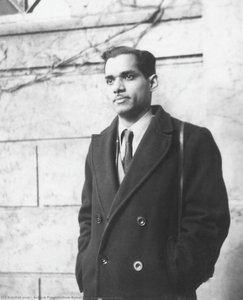
Achyut Kanvinde (1916-2002) was a pioneering Indian architect known for his Brutalist & functionalist designs. A key figure in modern Indian architecture, he championed vernacular influences and spatial innovation. Explore his iconic buildings like I
from ·
Chapter 1
How large should it be?
Slide to change the size; the picture on the left shows the frame at its real width. The proportions of the original are kept.
Standard
custom
CM
INCH
Pick from our preset sizes that match the artwork's original proportions.
Loading sizes...

width
height
Type the width and the height you need, to fit your frame or your wall. This is hand-painted, so for a size with a different shape the artist can paint a bit more around the picture, or cut a bit — you choose. We send you a digital mockup to approve before the painting starts. The picture shown on this page does not show the real result — only the mockup does.
Chapter 2
How should it arrive?
Choose the edges of the stretched canvas
Choose your frame

White $1

Blurside $1

Extended $1

P118B $10

P118H $10

P118W $10

P438Z $10

P508JH $12

P508YH $12

P805H $10

P805Z $10

P919BZ $10

P919G $10

P919XJ $10

P959ZH $10

P968JZ $12

W106C $8

W218G $10

W218JH $8

W218Y $10

W307PJ $10

W316G $10

W316PJ $8

W316Y $10

W398PJ $8

W4111J $10

W500HY $15

W500JH $15

W692G $12

W849H $8

W940BG $15

W953PJ $8

H24-GOLD $30

H24-SILVER $30

H36-GOLD $45

H36-SILVER $45
Framed
Moulding: . Overall size with the frame: .
Chapter 3
Who paints it, and should anything change?
Examples of what can be changed: Replace face with customer photo; Add pet (e.g., replace cat with dog); Include hidden message in background; Change background landscape or elements.
After order, OriginalUniqueArt.com team will email client for instructions and provide a mockup preview
After order, OriginalUniqueArt.com team will email client for instructions and provide a mockup preview
Worldwide Delivery () in 3/4 weeks instead of standard 5 weeks. (5 November). No compromise on quality.
Chapter 4
The finishing touches
A nameplate, as in a museum?
Engraved Bronze Plaque Details
This elegant plaque features the artist's name and the title of the artwork, finely engraved for a timeless presentation.
It is made from bronze with a refined, elegant finish. The text is precisely laser-engraved for a sharp and permanent result. Measuring 9x2 cm, the plaque is compact yet easy to read. It's built to be durable and scratch-resistant, offering a professional, museum-quality look. Mounting is simple thanks to the included adhesive backing.
Transparent Acrylic Plaque Details
The plaque includes essential engraved details such as the artist's name, the title of the artwork, the date it was created, the type of media used-like oil on canvas or watercolor-a brief description of the piece, and a QR code that links to the complete artwork information.
It is crafted from clear acrylic, offering a sleek, modern appearance. The text is UV-engraved in black to ensure strong visual contrast. With a size of 10x15 cm, it ensures optimal readability. It comes equipped with two metal hooks for secure wall mounting. The plaque is designed to be weather-resistant, making it suitable for various environments, and it includes interactive features that work seamlessly with smartphone scanning.
Black Acrylic Plaque Details
This elegant plaque includes engraved information such as the artist's name, the title of the artwork, the date it was created, the type of media used (like oil on canvas or watercolor), a short description of the artwork, and a QR code for quick access to more information.
The plaque itself is made from refined black acrylic with a premium finish. The text is laser-engraved in white for high contrast and readability. Its size is 10x15 cm, designed to be easy to read. It comes with two metal hooks for professional mounting. The design is sleek and fits any interior style. It is also weather-resistant and durable, with built-in digital integration for mobile compatibility.
A protective varnish?
When do you need it?
Chapter 5
Your painting, as you ordered it
Nehru Science Centre
Reproduction Medium
Reproduction Size
-
Elite Senior Artist
More detail, finesse, and extra production time
-
Reproduction Frame
-
-
For artworks or reproductions larger than 105 cm (approximately 41 inches) on any side, the frame will be shipped as a kit, disassembled. This method ensures safe delivery and prevents damage during transport.
Professional assembly required - this is not a DIY product.
The kit must be assembled and the canvas stretched by an experienced professional framer, using wood glue (not supplied), a canvas stretching plier and clamps to hold the bars square while the glue dries. Incorrect assembly or uneven canvas tension can permanently damage the artwork and is not covered by our warranty.
All solid wood bars are included, precisely cut to size.
Assembled with the screws provided, plus wood glue for the corner joints, which is not supplied and must be sourced by your framer.
Professional tools are required and not included: a canvas stretching plier (tensioner) and clamps to hold the bars square while the glue dries.
Important:
The corner joints require wood glue, the bars must be held with clamps until the glue is fully dry, and tightening the canvas on the assembled frame requires a canvas stretching plier. None of these are included in the kit. Please arrange an experienced professional framer before ordering this size.
Nameplate
-
-
Protective Varnish
Glossy Varnish (enhances colors, protects against light/moisture)
-
Customize My Artwork
Examples of what can be changed: Replace face with customer photo; Add pet (e.g., replace cat with dog); Include hidden message in background; Change background landscape or elements.
-
Urgent
Worldwide Delivery () in 3/4 weeks instead of standard 5 weeks. (5 November). No compromise on quality.
-
Express Shipping
Worldwide Delivery () in 5 weeks. (12 November).
Included
Total Price
$ 300
Glass option is only available in size under 110 CM
Included with every order
- Free Worldwide Express Shipping
- High-Quality Linen Canvas
- Full Shipping Insurance
- Customs Tax Refund Guarantee
- True Color Matching Guarantee
- 100-Day Return Policy (Defects Only)
- 100% Money-Back Guarantee
- Bulk Discount Offer
 Preview
 Send
Send Share
Share
 Details
 Guide
Guide

 Download
 Similars
 X-Ray
X-Ray Diaporama
 Q&A
Q&A Stats
StatsIn numbers
- 29frames to choose from
- standard sizes, in its own proportions
- 5weeks to paint and deliver it
About the original

This Artwork Is Under Copyright Protection
The artwork displayed on this page is protected by copyright law, which means we cannot legally create or sell an identical reproduction. This protection is enforced under international agreements such as the Berne Convention and by national laws, including those outlined by the U.S. Copyright Law - Title 17.
As a respectful and legal alternative, we offer custom, hand-painted artworks inspired by the original. Our skilled and professional artists carefully study the original's style, mood, and artistic essence to create a new, unique piece that evokes the same feeling - while remaining an original creation in its own right.
This method fully complies with copyright regulations because it does not involve copying or duplicating the protected artwork. Instead, it is a creative reinterpretation - a new painting that is influenced by the original but not identical to it.

Achyut Purushottam Kanvinde
1916 - 2002, India
Quick facts about Achyut Purushottam Kanvinde
- Full Name: Achyut Purushottam Kanvinde
- Nationality: Indian
- Date Of Birth: 1916
- Date Of Death: 2002
- Place Of Birth: Achara, India
- Notable Artworks:
- IIT Kanpur
- Nehru Science Centre
- ISKCON Temple
- Artistic Movement Or Style: Brutalism, Functionalist
- Artists Who Influenced This Artist:
- Walter Gropius
- Bauhaus
- Artists Or Movements Influenced By This Artist:
- Paul Rudolph
- I. M. Pei
Artist Biography
Achyut Purushottam Kanvinde: Architect of Space and Spirit
Achyut Purushottam Kanvinde (1916-2002) stands as a pivotal figure in the evolution of Indian architecture, a visionary who seamlessly blended Brutalist functionality with profound respect for vernacular traditions. Born in Achara, a small village within the Konkan region of Maharashtra, his early life was deeply rooted in the rhythms of rural India – a formative experience that would profoundly shape his architectural philosophy and approach. His father, an artist, instilled in him a sensitivity to form and color, while the stark beauty of the Konkan landscape ignited a lifelong fascination with spatial relationships and natural light. This confluence of influences laid the groundwork for a career dedicated to creating buildings that were not merely structures but living extensions of their environment and inhabitants.
Kanvinde’s formal training began at the prestigious J.J. School of Arts in Mumbai, where he honed his skills under Claude Batley, a leading architect of his time. However, it was his subsequent exposure to European architectural movements – particularly the Bauhaus principles championed by Walter Gropius – that truly catalyzed his artistic development. He spent time studying at Harvard’s Graduate School of Design, immersing himself in the radical ideas of modernism and embracing its emphasis on functionality, simplicity, and a rejection of ornamentation. This transatlantic journey provided him with a crucial framework for synthesizing traditional Indian values with contemporary architectural thinking.
Early Career and Government Service
Returning to India after World War II, Kanvinde joined the Council for Scientific and Industrial Research (CSIR), a move that proved instrumental in shaping his professional trajectory. During this period, he gained invaluable experience working on a diverse range of projects, from government buildings to research facilities. It was during this time that he began to develop his signature style – characterized by robust concrete forms, expansive open spaces, and an innovative use of natural light. His work reflected a deep understanding of structural engineering combined with a keen awareness of human needs and the importance of creating comfortable, functional environments.
His tenure at CSIR was marked by significant achievements, including the design of several landmark buildings that would become integral to India’s architectural landscape. Notably, he played a key role in the construction of the Nehru Science Centre in Delhi, a complex that seamlessly integrates scientific research with public engagement through its innovative spatial arrangements and striking concrete facade. He also contributed significantly to the National Council of Applied Economic Research (NCAER) building in New Delhi, showcasing his ability to create functional spaces while maintaining an aesthetic sensibility.
Key Architectural Achievements & Design Philosophy
Kanvinde’s architectural legacy extends far beyond these individual projects. He was a prolific designer, responsible for over 450 buildings across India, each reflecting his evolving design philosophy. A core tenet of his work was the integration of ‘Vastu Shastra,’ the ancient Indian system of architecture based on cosmological principles and harmony with nature. This wasn’t simply a superficial incorporation; Kanvinde meticulously studied and applied Vastu Shastra to ensure that his buildings were not only structurally sound but also aligned with the natural energies of their surroundings.
He championed asymmetry as a design element, rejecting the rigid symmetry often associated with Western architecture. His designs favored dynamic forms, open spaces, and an emphasis on natural light – principles deeply rooted in both Vastu Shastra and the Bauhaus aesthetic. He believed that buildings should be ‘instruments of human experience,’ creating spaces that fostered interaction, contemplation, and a sense of connection to the environment. His work at IIT Kanpur exemplifies this philosophy, with its expansive courtyards, soaring ceilings, and abundant natural light – a space designed to inspire learning and collaboration.
Recognition & Lasting Influence
Achyut Kanvinde’s contributions to Indian architecture were widely recognized throughout his career. In 1974, he was awarded the Padma Shri, India's second-highest civilian honor, a testament to his profound impact on the nation’s built environment. He served as President of the Indian Institute of Architects from 1974 to 1976, further solidifying his position as a leading voice in the profession. His influence extended beyond his own designs; he mentored countless young architects, fostering a generation committed to blending modern principles with traditional values.
Even after his death in 2002, Kanvinde’s work continues to inspire and inform architectural practice in India and beyond. His buildings stand as enduring symbols of innovation, functionality, and a deep respect for the cultural heritage of the country. His legacy is not simply one of concrete and steel but of a profound understanding of space, light, and the human spirit – a testament to an architect who truly understood how to build for both the present and the future.
Explore artworks organized by themes, styles, and characteristics.