

 Preview
 Send
Send Share
Share
 Details
 Guide
Guide

 Download
 Similars
 X-Ray
X-Ray Diaporama
 Stats
StatsCarnaby Street
 Marker / Felt-tip
- Modernism
 1966
1966- Modern
 5.0 x 27.0 cm
 Sakıp Sabancı Museum
 Read More
The artwork displayed on this page is protected by copyright law, which means we cannot legally create or sell an identical reproduction. This protection is enforced under international agreements such as the Berne Convention and by national laws, including those outlined by the U.S. Copyright Law - Title 17.
This method fully complies with copyright regulations because it does not involve copying or duplicating the protected artwork. Instead, it is a creative reinterpretation - a new painting that is influenced by the original but not identical to it.
Giclée / Art Print
Museum-quality giclée or canvas print with fast production and flexible finish options. ( Buy Hand Made Painting Switch to Digital Image)




P118B $10

P118H $10

P118W $10

P438Z $10

P508JH $12

P508YH $12

P805H $10

P805Z $10

P919BZ $10

P919G $10

P919XJ $10

P959ZH $10

P968JZ $12

W106C $8

W218G $10

W218JH $8

W218Y $10

W307PJ $10

W316G $10

W316PJ $8

W316Y $10

W398PJ $8

W4111J $10

W500HY $15

W500JH $15

W692G $12

W849H $8

W940BG $15

W953PJ $8




Pick from our preset sizes that match the artwork's original proportions.

Type the width and the height you need, to fit your frame or your wall. A print can only be cut, never made bigger than the picture, so a size with a different shape loses a part of the image. We send you a digital mockup to approve before we print anything. The picture shown on this page does not show the real cut — only the mockup does.
Worldwide Delivery () in 2 weeks instead of standard 4/5 weeks. (27 October)

Free Worldwide Express Shipping

High-Quality Linen Canvas

Full Shipping Insurance

Customs Tax Refund Guarantee

True Color Matching Guarantee

100-Day Return Policy (Defects Only)

100% Money-Back Guarantee

Bulk Discount Offer
 Glass option is only available in size under 110 CM

Carnaby Street
Giclée / Art Print
Reproduction Size
-


Total Price
$ 81
A Moment Frozen in Time: The Spirit of 1966
In the vibrant tapestry of mid-century modernism, few works capture the electric pulse of cultural revolution quite like Abidin Dino’s Carnaby Street. Created in 1966, this intimate piece serves as a window into one of the most transformative eras of the twentieth century. The artwork depicts a woman standing amidst the legendary London street, her hands raised toward the sky in a gesture of pure, unadulterated liberation. It is more than just a depiction of a location; it is an evocative snapshot of the "Swinging Sixties," where fashion, music, and social rebellion converged to redefine the global identity. Through Dino’s eyes, we witness the joy of a generation breaking free from the rigid structures of the past.
The subject matter—a woman in a bikini amidst the urban bustle—functions as a powerful symbol of the era's burgeoning sexual revolution and the democratization of fashion. Carnaby Street, once a mere thoroughfare, had become the epicenter of a new way of life, and Dino captures this metamorphosis with profound sensitivity. The figure’s posture suggests a celebratory surrender to the moment, inviting the viewer to share in the euphoria of a world being reborn. For collectors and enthusiasts, this piece offers a nostalgic yet radical connection to a time when every street corner felt like the threshold of a new frontier.
Mastery of Line and the Intimacy of Technique
Technically, Carnaby Street is a masterclass in the use of spontaneous, expressive line work. Executed with the precision and fluidity of felt-tip pens, the artwork possesses a raw, immediate quality that feels almost like a page torn from a personal diary. Dino, a pivotal figure in the Turkish "D Group," was renowned for his ability to blend European modernist influences with a deeply personal, graphic sensibility. The delicate yet confident strokes create a sense of movement and life, allowing the silhouette of the subject to dance against the implied backdrop of the London cityscape.
The small scale of the work—measuring just 5 x 27 cm—adds an element of preciousness and intimacy. It is a piece that demands close inspection, rewarding the observer with subtle details in the linework that might be missed at first glance. This compact format makes it an extraordinary choice for interior designers looking to create focal points in curated galleries or sophisticated, modern living spaces. A high-quality reproduction of this work allows the delicate textures of Dino’s hand-drawn technique to shine, bringing a sense of historical depth and artistic soul to any collection.
An Enduring Legacy for the Modern Collector
Beyond its aesthetic charm, Carnaby Street carries the weight of Abidin Dino’s complex legacy. As an artist who navigated the intersections of Turkish heritage and international modernism, Dino possessed a unique ability to translate global shifts into intimate visual narratives. This work stands as a testament to his versatility and his role as a chronicler of human emotion and social change. For the discerning collector, owning a piece that evokes such a potent historical atmosphere is an opportunity to preserve a fragment of cultural history.
Whether displayed as part of a larger collection of mid-century graphics or used as a singular, evocative accent in a contemporary room, this artwork radiates a timeless energy. It speaks to the enduring human desire for freedom and the beauty found in fleeting moments of joy. To bring a reproduction of Carnaby Street into one's home is to invite the spirit of 1966—a spirit of boundless possibility and artistic courage—into the everyday environment.
Questions & Answers
At what age did Abidin Dino make "Carnaby Street"?
Abidin Dino made "Carnaby Street" at the age of 53. The artist was born in 1913 and the work is dated 1966.
What is a reproduction of "Carnaby Street" by Abidin Dino recommended for?
The recommended use of a print of "Carnaby Street" is conversation.
Which room is "Carnaby Street" by Abidin Dino recommended for, given its colors?
The neutrals colors of "Carnaby Street" by Abidin Dino match its recommended space: a studio apartment.
Artist Biography
Abidin Dino: A Life in Art
Abidin Dino (1913-1993) was a pivotal Turkish artist whose work spanned several decades and reflected both his homeland’s rich cultural heritage and the influences of European modernism. His journey as an artist was marked by innovation, social commentary, and a deep commitment to artistic expression.
Early Life and Influences
Born on March 23, 1913, in Istanbul, Turkey, Abidin Dino came from an art-loving family. This early exposure fostered his passion for drawing and painting. His grandfather, Abidin Pasha Dino, was an Albanian Ottoman diplomat, adding a unique cultural dimension to his lineage. He spent parts of his childhood in Geneva and France, experiencing different artistic environments before returning to Istanbul in 1925.
Artistic Development & The D Group
Dino’s formal education was briefly interrupted when he left Robert College to dedicate himself fully to art. He quickly began publishing cartoons and articles, establishing himself as a rising talent. In 1933, alongside other innovative painters, he co-founded the “D Group”, a collective that challenged conventional artistic norms in Turkey. The D Group’s exhibitions were groundbreaking for their time.
Early Career & Soviet Union
A significant turning point came when Dino was invited by Soviet director Sergei Yutkevich to work at the Lenfil Studios in Leningrad (now Saint Petersburg) in 1933. This experience, encouraged by Atatürk himself, exposed him to new artistic techniques and perspectives. He worked as a scenery designer and assistant director, even directing his own film, “Miners,” in Moscow, Kyiv, and Odesa.
Parisian Period & International Exposure
Dino spent considerable time in Paris, first from 1937-1939 and then settling there permanently in 1952. He encountered leading figures of the Parisian art world, including Gertrude Stein, Tristan Tzara, and Pablo Picasso. This period was crucial for his artistic development, allowing him to absorb new influences and refine his style.
Artistic Style & Themes
Abidin Dino’s artistic style is characterized by:
- Expressive Brushwork: His use of felt-tip pen often added depth and texture to his compositions.
- Vibrant Color Palette: Reflecting the rich cultural heritage of both Turkey and France.
- Innovative Composition: He experimented with form and perspective, creating dynamic and engaging artworks.
His work frequently explored themes of:
- Social realism – depicting the lives of ordinary people.
- Political commentary – reflecting his concerns about social justice and political issues.
- Turkish culture – celebrating its traditions, landscapes, and people.
Major Achievements & Recognition
Throughout his career, Abidin Dino achieved significant recognition:
- Participation in the “Harbour Exhibition” showcasing Turkish dockworkers and fishermen.
- Designing the Turkish pavilion at the 1939 New York World’s Fair.
- Regular exhibitions with the Salon de Mai in Paris for eight years from 1954.
Later Life & Legacy
Dino continued to create art and engage with the artistic community until his death on December 7, 1993, in Villejuif Hospital, Paris. His body was returned to Istanbul for burial in Aşiyan Cemetery.
Historical Significance
Abidin Dino’s legacy extends beyond his individual artworks. He played a vital role in bridging Turkish and European art scenes, influencing subsequent generations of artists with his innovative style and commitment to social commentary. His work remains a testament to the power of art to reflect and shape our understanding of the world.

Abidin Dino
1913 - 1993 , Turkey
Quick Facts
- Name: Abidin Dino
- Movement: Expressionism, Social realism
- Birth Date: 1913-03-23
- Death Date: 1993-12-07
- Birth Place: Istanbul, Turkey
- Nationality: Turkish
- Date Of Birth: 1913
- Date Of Death: 1993
- Notable Works: In the Pub - Television, Çiçek / Flower, Soho - Radio
- Place Of Birth: Turkey
Related Articles

From Walls to Galleries: The Bold Evolution of Street Art and Its Rise into High-End Collectibles
Explore the captivating journey of street art from urban walls to prestigious galleries. Discover how contemporary graffiti has evolved into a high-end collectible movement, redefining modern interior design and global art culture.

The Nuances of Graphite: Exploring Emotional Depth & Technical Mastery in Pencil Drawing
Explore the captivating world of graphite drawing! Discover its rich history, master essential techniques like chiaroscuro, and learn how artists evoke emotion through this timeless medium. Expert insights for art enthusiasts.

Mastering the Line: A Comprehensive Expert Guide to Technical Precision and Expressive Depth in Drawing
Elevate your artistic practice with this expert guide to mastering the line. Discover advanced techniques in graphite, charcoal, and contour drawing designed for art students seeking technical precision and expressive depth in their fine art studies.
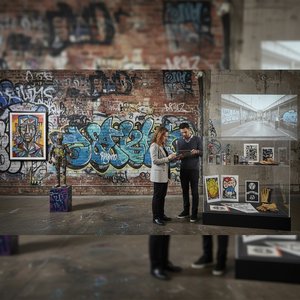
Beyond Graffiti: Exploring the Evolution & Cultural Impact of Street Art for Collectors
Explore the evolution of street art from rebellious origins to a respected fine art form. Discover key artists like Banksy & learn how to collect urban art with confidence. Expert insights for discerning investors.

Beyond the Line: Mastering the Raw Power of Contemporary Drawing and Urban Expression
Master the raw energy of contemporary drawing. Explore how street art, bold graphic lines, and urban grit are redefining modern aesthetics. Discover expert trend forecasts for collecting high-impact, pop-culture-inspired pieces that transform any space with unapologetic power.


