Portrait of Kathleen McEnery

The 19 Most Famous Kathleen McEnery Paintings, Each One of a Kind

Updated November 2026 · ranked by our popularity score (searches, visits and orders for each work) · 19 works by Kathleen McEnery in our catalogue

In short

Two Callas (1925) is the Kathleen McEnery painting that draws the most eyes; the original belongs to the Dulwich Picture Gallery, London. After it, the eye goes to Rubber Plant 3 (1929) and Money Plant (1956). Among the 19 works of Kathleen McEnery in our catalog, these 19 are the most famous, each a unique original presented with its year, its museum and the reason it endures.

1885 – 1971, Brooklyn Group f/64 Most works: Dulwich Picture Gallery

Top 10 paintings by Kathleen McEnery, through the gallery's eye

1
Two Callas (1925) by Kathleen McEnery

Two Callas

1925 · Gelatin Silver Print · Dulwich Picture Gallery, London

In the quiet, monochromatic world of Imogen Cunningham’s Two Callas, time seems to suspend itself. Created around 1925, this striking silver gelatin print transcends simple botanical documentation to become a profound meditation on shape and texture. The photograph captures two calla lilies in a moment of sculptural perfection, their pristine white petals emerging from an abyss of deep, velvety black. There is an undeniable intimacy in the way the lens…

2
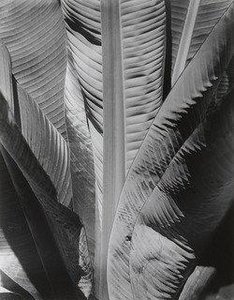
Rubber Plant 3 (1929) by Kathleen McEnery

Rubber Plant 3

1929 · Acrylic On Canvas · Dulwich Picture Gallery, London

Imogen Cunningham’s Botanical Reverie: “Rubber Plant 3” The photograph "Rubber Plant 3," created by Imogen Cunningham in 1929, stands as a testament to the artist's unwavering dedication to capturing the quiet beauty of the natural world—a cornerstone of Group f/64’s ethos. More than just an image of a plant bud unfolding, it embodies Cunningham’s masterful manipulation of light and form, resulting in a piece that transcends mere documentation and delves…

3
Money Plant (1956) by Kathleen McEnery

Money Plant

1956 · Film Photography · SCAD Museum of Art, Savannah

In "Money Plant" by Kathleen McEnery, a single branch ascends through a vertical arrangement. The stem is densely crowded with dried seed pods. These Lunaria pods possess a circular, flattened quality, resembling a collection of silver coins or weathered medallions. The botanical subject matter is stripped of all distraction, focusing entirely on the organic geometry of the plant. Each pod sits caught in a moment of stillness, suspended in a…

7
Magnolia Blossom (1925) by Kathleen McEnery

Magnolia Blossom

1925 · Black and White Photography · Dulwich Picture Gallery, London

To gaze upon this photograph of a magnolia blossom is to enter a hushed, intimate world, suspended between shadow and light. It is not merely a picture of a flower; it is an exquisite meditation on form, texture, and the quiet resilience of natural beauty. Imogen Cunningham, whose pioneering lens captured the essence of the Pacific Northwest, presents us here with a composition that demands close contemplation. The entire frame…

Kathleen McEnery's famous paintings, numbers 11 to 19

The subjects that held Kathleen McEnery's eye

The four subjects that come back most often in these originals, each with its finest example.

The museums that keep Kathleen McEnery's originals

The 3 museums that hold the most of the paintings on this page.

Museum City Works by Kathleen McEnery Paintings from this list
Dulwich Picture Gallery, LondonDulwich Picture Gallery London 3 Two Callas, Rubber Plant 3, Magnolia Blossom
SCAD Museum of Art, SavannahSCAD Museum of Art Savannah 1 Money Plant
Smithsonian American Art Museum, Washington, D.C.Smithsonian American Art Museum Washington, D.C. 1 Going to the Bath

Kathleen McEnery across the decades: one unique original for each

Works per decade

Pick a decade to see the original that defines it.

Kathleen McEnery's paintings: questions for the gallery

What is the single most famous work of Kathleen McEnery?Reveal the answer

Two Callas (1925), Dulwich Picture Gallery, London. Rubber Plant 3 (1929) and Money Plant (1956) come next.

At what age did Kathleen McEnery create Two Callas?Reveal the answer

40 years old: Two Callas dates from 1925, and Kathleen McEnery was born in 1885.

Which ten paintings by Kathleen McEnery are the most famous?Reveal the answer

Two Callas, Rubber Plant 3, Money Plant, Glacial Lily, Roi Partridge, Richard, Catharine and Marcia Marple, Magnolia Blossom, Morris Graves, Ruth Asawa at work with children and Going to the Bath. The ranking above gives each one's year and museum.

How many works by Kathleen McEnery are known?Reveal the answer

Our catalog holds 19 works by Kathleen McEnery, dated from 1909 to 1960.

Where can the most famous Kathleen McEnery originals be seen?Reveal the answer

Mostly in Dulwich Picture Gallery (London), SCAD Museum of Art (Savannah) and Smithsonian American Art Museum (Washington, D.C.). The museum table above lists them all.

During which period did Kathleen McEnery create the best-known paintings?Reveal the answer

In 1910s: 7 of the 19 works on this page were made then, Roi Partridge among them.

Which famous Kathleen McEnery painting is the earliest, and which the latest?Reveal the answer

On this page, the earliest is Going to the Bath (1909) and the latest Auragia (1960).

What subjects did Kathleen McEnery favour?Reveal the answer

Botanical study (2), Black and white (2) and Portrait (2), across the 19 works on this page.

Which movement does the work of Kathleen McEnery belong to?Reveal the answer

Group f/64, judging by the originals on this page.

What Kathleen McEnery originals can I see at the Dulwich Picture Gallery?Reveal the answer

Two Callas, Rubber Plant 3 and Magnolia Blossom: the Dulwich Picture Gallery, London holds 3 of the works on this page.

Kathleen McEnery: a portrait of the artist

Early Life and Artistic Awakening

Imogen Cunningham, a pioneering force in American photography, was born on April 12, 1883, in Portland, Oregon, into a large family of ten children. Her early life, marked by a move to Seattle in 1889, fostered an independent spirit and a keen observational eye. Though formal art education wasn’t prioritized within her upbringing, Cunningham pursued lessons independently, demonstrating an innate artistic inclination from a young age. A pivotal moment arrived in 1901 when, at the age of eighteen, she acquired her first camera – a 4x5 inch view camera purchased through mail order. This acquisition sparked a lifelong passion and led to the creation of a darkroom within the family woodshed, a space where she began to explore the nascent art form that would define her career. Her academic pursuits at the University of Washington, culminating in a chemistry degree in 1907 with a thesis focused on photographic processes, reveal an early understanding of the scientific underpinnings of her chosen medium. This blend of artistic sensibility and technical knowledge would become a hallmark of her work. A profound encounter with the photographs of Gertrude Käsebier proved particularly influential, solidifying Cunningham’s resolve to pursue photography as more than just a hobby.

From Pictorialism to Modernist Vision

Cunningham's initial foray into professional photography involved an apprenticeship with Edward S. Curtis in Seattle, where she honed her skills in portraiture and mastered the intricate platinum printing technique while contributing to his monumental project documenting Native American cultures. She subsequently established her own studio, initially embracing the prevailing Pictorialist aesthetic – a style characterized by soft focus, staged compositions, and an attempt to emulate painting. Her work during this period garnered critical acclaim, but Cunningham’s artistic trajectory was far from settled. A period of study in Dresden, Germany, under Professor Robert Luther in 1909 further refined her technical expertise, particularly in photographic chemistry. However, it was the subsequent decades that witnessed a dramatic shift in her approach. Marriage to Roi Partridge in 1915 and the raising of three children coincided with a relocation to San Francisco in 1920, marking a turning point in both her personal and artistic life. While continuing portrait work, Cunningham began to explore botanical photography, captivated by the intricate details of flowers and plants. This fascination evolved into an exploration of industrial landscapes, documenting factories and urban scenes with a growing emphasis on sharp focus and unmanipulated imagery. The defining moment arrived with her association with Group f/64 in the 1930s – alongside luminaries like Ansel Adams and Edward Weston – a collective dedicated to “straight photography,” prioritizing clarity, precision, and a rejection of Pictorialist manipulation.

A Legacy of Diverse Subjects and Technical Mastery

Throughout her long and prolific career, Imogen Cunningham demonstrated an extraordinary versatility, seamlessly transitioning between diverse subjects while maintaining a consistent commitment to technical excellence. She revisited portraiture, famously photographing the hands of artists and musicians – capturing not just likenesses but also revealing character through gesture and form. Her work for *Vanity Fair* magazine allowed her to portray celebrities without artifice, presenting them in their natural state. However, it was perhaps her botanical studies that cemented her reputation as a master photographer. Images like “Rubber Plant 3” (1929) and “Money Plant” (1956) are iconic examples of her ability to transform ordinary subjects into extraordinary works of art, revealing the inherent beauty and complexity of the natural world through meticulous detail and dramatic lighting. Cunningham’s style was characterized by a masterful command of light and shadow, a keen eye for composition, and an unwavering dedication to sharpness and clarity. She didn't merely record what she saw; she interpreted it, imbuing her photographs with a sense of emotional resonance and intellectual depth.

Historical Significance and Enduring Influence

Imogen Cunningham’s contributions to American photography are immense and far-reaching. A true innovator, she navigated the evolving landscape of the medium, embracing both the artistic aspirations of Pictorialism and the modernist principles of straight photography. Her work challenged conventional notions of beauty and expanded the boundaries of photographic expression. The establishment of the Imogen Cunningham Trust in 1975 underscored her commitment to preserving and promoting her legacy for future generations. Though she passed away in 1976, her influence continues to resonate with photographers today. She stands as a testament to the power of artistic vision, technical skill, and unwavering dedication – a pioneering figure who helped shape the development of photographic art and left an indelible mark on the history of visual culture. Her ability to find beauty in the mundane, to reveal the extraordinary within the ordinary, remains a source of inspiration for artists and viewers alike. Cunningham’s work is not simply about what she photographed; it's about how she saw the world.