Portrait of Gyula Tornai

Gyula Tornai Paintings: The 39 Most Famous, Through a Gallery's Eye

Updated October 2026 · ranked by our popularity score (searches, visits and orders for each work) · 40 works by Gyula Tornai in our catalogue

In short

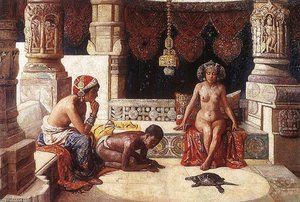
To the gallery's eye, Gyula Tornai's most famous painting is The Favourite Of The Harem. The Artist’s Mother (1884) and Geisha complete the trio every eye recognises. Of the 40 works by Gyula Tornai in our catalog, the gallery presents the 39 most famous below, each original with its year, its museum and what makes it unique.

1861 – 1928, Spišský Hrhov Orientalism Most works: Hungarian National Gallery

The gallery's top 10 Gyula Tornai paintings

Gyula Tornai paintings, ranked 11 to 39

The subjects that held Gyula Tornai's eye

The four subjects that come back most often in these originals, each with its finest example.

The museums that keep Gyula Tornai's originals

The 2 museums that hold the most of the paintings on this page.

Museum City Works by Gyula Tornai Paintings from this list
Hungarian National Gallery, BudapestHungarian National Gallery Budapest 3 The Artist’s Mother, The Yard of the Church at Dilvára, The Artist’s Father
Gardiner Museum of Ceramic Art, TorontoGardiner Museum of Ceramic Art Toronto 1 Box Decorated with Playing Putti

Gyula Tornai, the signature paintings of each year

Every dated original by Gyula Tornai on this page was made in 1884: here they are, the most famous first.

Works per year

Pick a year to see its originals.

Gyula Tornai's paintings: the gallery answers

Which Gyula Tornai painting is the most famous of all?Reveal the answer

The Favourite Of The Harem. The Artist’s Mother (1884) and Geisha come next.

Which are Gyula Tornai's top 10 paintings?Reveal the answer

The Favourite Of The Harem, The Artist’s Mother, Geisha, Box Decorated with Playing Putti, A Street Musician, The Oriental Lute Player, In The Harem, An Oriental Man With A Copper Bowl, The Moorish Smoker and Portrait of jaroslava the artists daughter. The ranking above gives each one's year and museum.

How many works did Gyula Tornai create?Reveal the answer

Our catalog holds 40 works by Gyula Tornai.

Where do Gyula Tornai's most famous originals hang?Reveal the answer

Mostly in Hungarian National Gallery (Budapest) and Gardiner Museum of Ceramic Art (Toronto). The museum table above lists them all.

Which subjects did Gyula Tornai return to most?Reveal the answer

Nude figure (2), Dramatic lighting (2) and Music (2), across the 39 works on this page.

Which movement is Gyula Tornai associated with?Reveal the answer

Orientalism, judging by the originals on this page.

Which Gyula Tornai originals does the Hungarian National Gallery hold?Reveal the answer

The Artist’s Mother, The Yard of the Church at Dilvára and The Artist’s Father: the Hungarian National Gallery, Budapest holds 3 of the works on this page.

Gyula Tornai: the artist

Gyula Tornai: Life and Legacy

Early Life and Education

  • Born: 1861 in Görgö, Hungary (now Spišský Hrhov, Slovakia).
  • Gyula Tornai received his foundational art education at prestigious academies in Vienna and Munich.
  • He further honed his skills under the guidance of Hans Makart and Gyula Benczúr at Benczúr's Studios in Budapest. This period significantly shaped his early artistic style.
  • His initial works focused on popular, everyday themes, reflecting a traditional approach to genre painting.

Artistic Development and Influences

  • Early Style: Tornai’s early paintings were heavily influenced by Hans Makart's style – known as “Makartstil” in German – characterized by opulent detail and dramatic compositions.
  • Shift to Orientalism: Travel played a crucial role in his artistic evolution. Journeys to Spain, Algeria, and particularly Morocco sparked a profound shift towards Orientalist themes.
  • He spent ten years immersed in North African culture, including a year living in Tangiers (1890-1891), which deeply informed his depictions of street life, merchants, musicians, and harem scenes.

Travels to the Far East and Patronage

  • Expanding Horizons: In 1905, Tornai embarked on a transformative journey to the Far East, extending his Orientalist interests to India and Japan.
  • Count Okuma’s Patronage: Upon arriving in Japan, he painted a portrait of Count Okuma, the former Prime Minister, who became a significant patron. This patronage granted Tornai unprecedented access to Japanese society and culture.
  • This unique position allowed him to explore Buddhism and Shintoism in depth, enriching his artistic understanding and representation of Japanese life.
  • Notable Works from Japan: During his 16-month stay, he created paintings such as “A Japanese Princess Going to Church,” “Geisha,” “The Geisha House,” and “The Samurai Warrior.”

Recognition and Major Achievements

  • Exposition Universelle (1900): Tornai achieved international acclaim at the Exposition Universelle in Paris, winning a bronze medal for his work.
  • Exhibitions: His paintings were exhibited in Paris and London (1907), Budapest’s Műcsarnok (1909), and the National Salon (1917).
  • Posthumous Exhibition (1929): An exhibition of his legacies was organized by an auction hall following his death.
  • Critical Reception: Contemporary critics praised his works for their vibrant colors, appreciation of Eastern aesthetics, irony, humor and wit. His painting “The Connoisseurs” is a prime example of this unique approach.

Historical Significance and Legacy

  • Orientalist Contribution: Gyula Tornai’s work significantly contributed to the Orientalist movement, offering fresh perspectives on Eastern cultures through a European lens.
  • Hungarian National Gallery: Several of his paintings are now held in the Hungarian National Gallery, solidifying his place in Hungarian art history.
  • Unique Perspective: Tornai’s ability to blend exotic themes with humor and insightful observations set him apart from other Orientalist painters. He didn't merely depict the East; he offered a nuanced commentary on it.
  • Death: Gyula Tornai passed away in 1928, leaving behind a rich artistic legacy that continues to captivate audiences today.