Portrait of Arkhip Kuindzhi

The 100 Most Famous Arkhip Kuindzhi Paintings, Each One of a Kind

Updated November 2026 · ranked by our popularity score (searches, visits and orders for each work) · 252 works by Arkhip Kuindzhi in our catalogue

In short

Russian «Ночь на Днепре» Moonlit Night on the Dniepr Alternative title(s) Русский Лунная ночь на Днепре (1882) is the Arkhip Kuindzhi painting that draws the most eyes; the original belongs to the The State Russian Museum, St. Petersburg. After it, the eye goes to Moonlight Night on the Dnieper (1880) and Christ in the Garden of Gethsemane (1901). Among the 252 works of Arkhip Kuindzhi in our catalog, these 100 are the most famous, each a unique original presented with its year, its museum and the reason it endures.

1841 – 1910, Mariupol uyezd Realism Most works: The State Russian Museum

Top 10 paintings by Arkhip Kuindzhi, through the gallery's eye

1
Russian «Ночь на Днепре» Moonlit Night on the Dniepr Alternative title(s) Русский Лунная ночь на Днепре (1882) by Arkhip Kuindzhi

Russian «Ночь на Днепре» Moonlit Night on the Dniepr Alternative title(s) Русский Лунная ночь на Днепре

1882 · Oil On Canvas · The State Russian Museum, St. Petersburg

In Russian «Ночь на Днепре» Moonlit Night on the Dniepr Alternative title(s) Русский Лунная ночь на Днепре, Arkhip Kuindzhi utilizes a heavily lowered horizon line to prioritize the nocturnal sky. This structural choice allows the celestial expanse to occupy a vast portion of the canvas. The composition centers on the banks of the Dnieper river during a full moon, where the light interacts with the landscape through extreme tonal contrasts.…

2
Moonlight Night on the Dnieper (1880) by Arkhip Kuindzhi

Moonlight Night on the Dnieper

1880 · Oil On Canvas

The painting presents a nocturnal view of the Dnieper River banks under the influence of a full moon. A low horizon line allows the sky to occupy a large portion of the canvas. In this upper expanse, clouds move across the dark atmosphere, through which moonlight filters to create patches of light. Below, the river surface reflects this lunar glow, creating a bright, luminous path that cuts through the darker…

3
Christ in the Garden of Gethsemane (1901) by Arkhip Kuindzhi

Christ in the Garden of Gethsemane

1901 · Oil On Canvas

This oil on canvas, titled Christ in the Garden of Gethsemane, was painted by Arkhip Kuindzhi in 1901. The work measures 107.5 x 143.5 cms, or 42 ¼ x 56 ¼ ins. It is currently held within the collection at the Vorontsov Palace in Alupka.

4
Sunset in the winter. A coast of the sea (1890) by Arkhip Kuindzhi

Sunset in the winter. A coast of the sea

1890 · Oil On Canvas

The oil on canvas work titled Sunset in the winter. A coast of the sea was created by Arkhip Kuindzhi. This painting, dating from about 1890, represents a specific moment of light over a coastal environment during the winter season. The composition focuses on the intersection of the sea and the sky during the transition of the sun.

5
Winter. Spots of Light on Cottage Roof (1895) by Arkhip Kuindzhi

Winter. Spots of Light on Cottage Roof

1895 · Oil

In this work, titled Winter. Spots of Light on Cottage Roof, Arkhip Kuindzhi presents a quiet, realistic depiction of a snowy landscape. Created about 1895, the painting captures a moment of stillness within a wintry setting. Small houses are scattered throughout the scene, their white roofs standing out against the heavy, snow-covered ground. It is a scene that feels lived-in, yet momentarily paused by the cold.

6
Sunset in the forest (1878) by Arkhip Kuindzhi

Sunset in the forest

1878 · Oil On Canvas

The painting titled Sunset in the forest is a landscape created by Arkhip Kuindzhi. It captures a specific moment where the sun retreats behind a dense collection of trees. This work dates to about 1878. The scene focuses on the interplay between the silhouettes of the timber and the fading light of the day.

7
Cypresses on a Seashore. The Crimea (1887) by Arkhip Kuindzhi

Cypresses on a Seashore. The Crimea

1887 · Oil On Canvas

Tall, dark cypress trees pierce the horizon, their narrow forms reaching toward a sky that holds the weight of the sea. Along the Crimean coast, the land meets the water in a quiet collision of earth and salt. A small boat rests near the edge, a tiny speck of human presence against the vast, rhythmic movement of the tide. The trees stand in various positions, some anchored deep in the…

8
The Sea. The Crimea (1908) by Arkhip Kuindzhi

The Sea. The Crimea

1908 · Oil On Canvas

The Sea. The Crimea is a work by Arkhip Kuindzhi, executed in 1908. The artist, born in 1841 in Mariupol uyezd, Russian Empire, focused his later years on the specificities of light and atmosphere within the natural landscape. He died in 1910, leaving behind a body of work defined by a rigorous study of color and perception.

10
A Birch Grove.1901 by Arkhip Kuindzhi

A Birch Grove.1901

Oil On Canvas

A Birch Grove.1901 is a work by Arkhip Kuindzhi. The artist was born in the Mariupol uyezd, Russian Empire, in 1841 or 1842. His lineage traces back to Greek ancestors who sought refuge near the Azov Sea during the reign of Catherine II. This heritage shaped the multicultural background of his early life.

Arkhip Kuindzhi's famous paintings, numbers 11 to 100

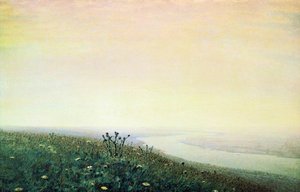
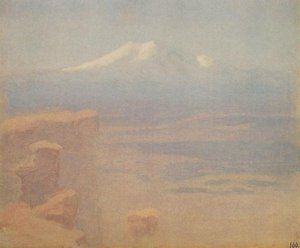
11Steppe. Cornfield (1875) by Arkhip KuindzhiSteppe. Cornfield1875 12Winter (1895) by Arkhip KuindzhiWinter1895 13Moonlight Night on the Dnieper (1908) by Arkhip KuindzhiMoonlight Night on the Dnieper1908 14Elbrus day by Arkhip KuindzhiElbrus day 15Dali. Crimea by Arkhip KuindzhiDali. Crimea 16Sunrise by Arkhip KuindzhiSunrise 17Sunset 2 by Arkhip KuindzhiSunset 2 18Snow tops (1895) by Arkhip KuindzhiSnow tops1895 19Evening in Ukraine (1878) by Arkhip KuindzhiEvening in Ukraine1878 · The State Russian Museum 20Sea with sailing ships by Arkhip KuindzhiSea with sailing ships 21Dnepr in the morning by Arkhip KuindzhiDnepr in the morning 22Forest (1870) by Arkhip KuindzhiForest1870 23View of the Isaac Cathedral at Moonlight Night (1869) by Arkhip KuindzhiView of the Isaac Cathedral at Moonlight Night1869 24View of the Isaac Cathedral at Moonlight Night (1869) by Arkhip KuindzhiView of the Isaac Cathedral at Moonlight Night1869 25Autumn. Stormy day over the steppe (1875) by Arkhip KuindzhiAutumn. Stormy day over the steppe1875 · Tretyakov Gallery 26Forgotten Village (1873) by Arkhip KuindzhiForgotten Village1873 27Forest near the water (1872) by Arkhip KuindzhiForest near the water1872 28Wild grass (1875) by Arkhip KuindzhiWild grass1875 29Roofs. Winter (1876) by Arkhip KuindzhiRoofs. Winter1876 · The State Russian Museum 30Poplar trees (1874) by Arkhip KuindzhiPoplar trees1874 31Sea. Gloomy Day (1878) by Arkhip KuindzhiSea. Gloomy Day1878 · The State Russian Museum 32Clouds (1875) by Arkhip KuindzhiClouds1875 33Night on the Dnieper (1882) by Arkhip KuindzhiNight on the Dnieper1882 34Birch Grove (1879) by Arkhip KuindzhiBirch Grove1879 · The State Russian Museum 35Birch Grove (1880) by Arkhip KuindzhiBirch Grove1880 · The State Russian Museum 36Evening on the Steppe (1883) by Arkhip KuindzhiEvening on the Steppe1883 · The State Russian Museum 37Night at the Don (1882) by Arkhip KuindzhiNight at the Don1882 · Kiev National Picture Gallery 38Ukraine (1879) by Arkhip KuindzhiUkraine1879 39A Birch Grove (1880) by Arkhip KuindzhiA Birch Grove1880 40Sea coast. View of Mount Demerdzhi (1880) by Arkhip KuindzhiSea coast. View of Mount Demerdzhi1880 41View of the beach and sea from the mountains. Crimea (1880) by Arkhip KuindzhiView of the beach and sea from the mountains. Crimea1880 42A Birch Grove (1879) by Arkhip KuindzhiA Birch Grove1879 43Night (1880) by Arkhip KuindzhiNight1880 44A Birch Grove (1880) by Arkhip KuindzhiA Birch Grove1880 45View of the Kremlin from the Zamoskvorechye District (1882) by Arkhip KuindzhiView of the Kremlin from the Zamoskvorechye District1882 46A Birch Grove (1879) by Arkhip KuindzhiA Birch Grove1879 47After a Rain (1879) by Arkhip KuindzhiAfter a Rain1879 48After a Rain (1879) by Arkhip KuindzhiAfter a Rain1879 49Russian «Ночь на Днепре» Moonlit Night on the Dniepr (1882) by Arkhip KuindzhiRussian «Ночь на Днепре» Moonlit Night on the Dniepr1882 · Tretyakov Gallery 50Breakers on a rainy day (1890) by Arkhip KuindzhiBreakers on a rainy day1890 · The State Russian Museum 51Roofs (1887) by Arkhip KuindzhiRoofs1887 · The State Russian Museum 52Mountain Valley. Crimea (1890) by Arkhip KuindzhiMountain Valley. Crimea1890 · The State Russian Museum 53Moonlit Night (1890) by Arkhip KuindzhiMoonlit Night1890 · The State Russian Museum 54Seashore (1890) by Arkhip KuindzhiSeashore1890 55Forest Lake. Cloud (1890) by Arkhip KuindzhiForest Lake. Cloud1890 · The State Russian Museum 56Seashore (1887) by Arkhip KuindzhiSeashore1887 57The Crimea. The Southern Shore (1887) by Arkhip KuindzhiThe Crimea. The Southern Shore1887 · The State Russian Museum 58Autumn (1890) by Arkhip KuindzhiAutumn1890 59Winter. Sunlight on The Hoar Frost (1890) by Arkhip KuindzhiWinter. Sunlight on The Hoar Frost1890 · The State Russian Museum 60Sunset Effect (1890) by Arkhip KuindzhiSunset Effect1890 61Landscape in Crimea (1896) by Arkhip KuindzhiLandscape in Crimea1896 · Finnish National Gallery 62Landscape. Steppe (1895) by Arkhip KuindzhiLandscape. Steppe1895 63Winter (1895) by Arkhip KuindzhiWinter1895 64Twilight (1895) by Arkhip KuindzhiTwilight1895 65Portrait of an unknown man (1895) by Arkhip KuindzhiPortrait of an unknown man1895 · The State Russian Museum 66Volga (1895) by Arkhip KuindzhiVolga1895 67Winter. Fog (1895) by Arkhip KuindzhiWinter. Fog1895 68Snow tops (1895) by Arkhip KuindzhiSnow tops1895 69Noon. Herd in the steppe (1895) by Arkhip KuindzhiNoon. Herd in the steppe1895 · The State Russian Museum 70The head of a Ukrainian peasant in a straw hat (1895) by Arkhip KuindzhiThe head of a Ukrainian peasant in a straw hat1895 71Snowy mountain peaks. Caucasus. (1895) by Arkhip KuindzhiSnowy mountain peaks. Caucasus.1895 72Sunrise (1895) by Arkhip KuindzhiSunrise1895 73A Birch Grove. Spots of sunlight (1895) by Arkhip KuindzhiA Birch Grove. Spots of sunlight1895 · The State Russian Museum 74Oaks (1900) by Arkhip KuindzhiOaks1900 · The State Russian Museum 75Dnieper (1901) by Arkhip KuindzhiDnieper1901 76Clouds (1905) by Arkhip KuindzhiClouds1905 · The State Russian Museum 77Rainbow (1900) by Arkhip KuindzhiRainbow1900 78Elbrus (1900) by Arkhip KuindzhiElbrus1900 79Crimea (1905) by Arkhip KuindzhiCrimea1905 · The State Russian Museum 80Fishing on the Black Sea (1900) by Arkhip KuindzhiFishing on the Black Sea1900 81Clouds (1905) by Arkhip KuindzhiClouds1905 82In the Crimea (1905) by Arkhip KuindzhiIn the Crimea1905 83Oaks (1905) by Arkhip KuindzhiOaks1905 84A Birch Grove (9) (1901) by Arkhip KuindzhiA Birch Grove (9)1901 85Red Sunset on the Dnieper (1905) by Arkhip KuindzhiRed Sunset on the Dnieper1905 86Ploughing on oxen by Arkhip KuindzhiPloughing on oxen 87Portrait of N.A. Jaroshenko by Arkhip KuindzhiPortrait of N.A. Jaroshenko 88Portrait of Ivan Kramskoi by Arkhip KuindzhiPortrait of Ivan Kramskoi 89Men's head in a straw hat by Arkhip KuindzhiMen's head in a straw hat 90Forest. Burdock (1908) by Arkhip KuindzhiForest. Burdock1908 91Sunset by Arkhip KuindzhiSunset 92Fog in the mountains. Caucasus (1908) by Arkhip KuindzhiFog in the mountains. Caucasus1908 93Crescent moon at sunset (1908) by Arkhip KuindzhiCrescent moon at sunset1908 94Forest expanse (1908) by Arkhip KuindzhiForest expanse1908 95Forest Glade. Fog (1908) by Arkhip KuindzhiForest Glade. Fog1908 · The State Russian Museum 96The top of Mount Elbrus in the Sunlight (1908) by Arkhip KuindzhiThe top of Mount Elbrus in the Sunlight1908 97Red sunset (1908) by Arkhip KuindzhiRed sunset1908 98Grove (1908) by Arkhip KuindzhiGrove1908 · The State Russian Museum 99Elbrus in the Evening (1908) by Arkhip KuindzhiElbrus in the Evening1908 100Coast of the sea with a rock (1908) by Arkhip KuindzhiCoast of the sea with a rock1908

The subjects that held Arkhip Kuindzhi's eye

The four subjects that come back most often in these originals, each with its finest example.

The museums that keep Arkhip Kuindzhi's originals

The 4 museums that hold the most of the paintings on this page.

Museum City Works by Arkhip Kuindzhi Paintings from this list
The State Russian Museum, St. PetersburgThe State Russian Museum St. Petersburg 44 Russian «Ночь на Днепре» Moonlit Night on the Dniepr Alternative title(s) Русский Лунная ночь на Днепре, Evening in Ukraine, Roofs. Winter
Tretyakov Gallery, MoscowTretyakov Gallery Moscow 11 Autumn. Stormy day over the steppe, Russian «Ночь на Днепре» Moonlit Night on the Dniepr
Kiev National Picture Gallery, KyivKiev National Picture Gallery Kyiv 1 Night at the Don
Finnish National Gallery, HelsinkiFinnish National Gallery Helsinki 1 Landscape in Crimea

Arkhip Kuindzhi across the decades: one unique original for each

Works per decade

Pick a decade to see the original that defines it.

Arkhip Kuindzhi's paintings: questions for the gallery

What is the single most famous work of Arkhip Kuindzhi?Reveal the answer

Russian «Ночь на Днепре» Moonlit Night on the Dniepr Alternative title(s) Русский Лунная ночь на Днепре (1882), The State Russian Museum, St. Petersburg. Moonlight Night on the Dnieper (1880) and Christ in the Garden of Gethsemane (1901) come next.

At what age did Arkhip Kuindzhi create Russian «Ночь на Днепре» Moonlit Night on the Dniepr Alternative title(s) Русский Лунная ночь на Днепре?Reveal the answer

41 years old: Russian «Ночь на Днепре» Moonlit Night on the Dniepr Alternative title(s) Русский Лунная ночь на Днепре dates from 1882, and Arkhip Kuindzhi was born in 1841.

Which ten paintings by Arkhip Kuindzhi are the most famous?Reveal the answer

Russian «Ночь на Днепре» Moonlit Night on the Dniepr Alternative title(s) Русский Лунная ночь на Днепре, Moonlight Night on the Dnieper, Christ in the Garden of Gethsemane, Sunset in the winter. A coast of the sea, Winter. Spots of Light on Cottage Roof, Sunset in the forest, Cypresses on a Seashore. The Crimea, The Sea. The Crimea, Moonlight Night on the River and A Birch Grove.1901. The ranking above gives each one's year and museum.

How many works by Arkhip Kuindzhi are known?Reveal the answer

Our catalog holds 252 works by Arkhip Kuindzhi, dated from 1869 to 1908.

Where can the most famous Arkhip Kuindzhi originals be seen?Reveal the answer

Mostly in The State Russian Museum (St. Petersburg), Tretyakov Gallery (Moscow) and Kiev National Picture Gallery (Kyiv). The museum table above lists them all.

During which period did Arkhip Kuindzhi create the best-known paintings?Reveal the answer

In 1890s: 25 of the 100 works on this page were made then, Sunset in the winter. A coast of the sea among them.

Which famous Arkhip Kuindzhi painting is the earliest, and which the latest?Reveal the answer

On this page, the earliest is View of the Isaac Cathedral at Moonlight Night (1869) and the latest The Sea. The Crimea (1908).

What subjects did Arkhip Kuindzhi favour?Reveal the answer

Forests (20), Landscape (16) and Mountains (16), across the 100 works on this page.

What materials did Arkhip Kuindzhi paint with most?Reveal the answer

Oil On Canvas, for 17 of the 100 works on this page.

Which movement does the work of Arkhip Kuindzhi belong to?Reveal the answer

Realism, judging by the originals on this page.

What Arkhip Kuindzhi originals can I see at the The State Russian Museum?Reveal the answer

Russian «Ночь на Днепре» Moonlit Night on the Dniepr Alternative title(s) Русский Лунная ночь на Днепре, Evening in Ukraine and Roofs. Winter: the The State Russian Museum, St. Petersburg holds 22 of the works on this page.

Arkhip Kuindzhi: a portrait of the artist

A Life Illuminated: The World of Arkhip Kuindzhi

Arkhip Ivanovich Kuindzhi, a name resonating with the golden hues of Ukrainian sunsets and the ethereal glow of moonlit nights, remains one of Russia’s most beloved landscape painters. Born in 1842, or perhaps 1841 – the exact date shrouded in some mystery – in Mariupol, Ukraine, his origins were humble, steeped in the multicultural tapestry of the region. Of Greek descent, a lineage tracing back to ancestors who sought refuge near the Azov Sea during Catherine II’s reign, Kuindzhi's early life was marked by hardship. Orphaned at a young age, he navigated a childhood filled with labor – working on church construction sites, tending livestock, and assisting in a corn merchant’s shop. Yet, even amidst these struggles, a spark of artistic inclination flickered, nurtured by a Greek family friend who provided him with rudimentary education. This early exposure to both the practicalities of life and the seeds of learning would profoundly shape his artistic vision.

From Icon Retouching to Masterful Landscapes

Kuindzhi’s journey toward becoming a celebrated artist was not one of formal academic training, at least initially. A brief apprenticeship with the renowned marine painter Ivan Aivazovsky in Feodosia proved more focused on technical skills like paint mixing than artistic development. He then honed his craft under Adolf Fessler, a student of Aivazovsky’s, before venturing into photography as a retoucher in Taganrog. This experience, though seemingly disparate from painting, was crucial; it instilled within him a keen understanding of light and shadow, composition, and the meticulous detail required to capture reality – skills he would later masterfully translate onto canvas. His attempt to establish his own photographic studio proved unsuccessful, prompting a pivotal move to Saint Petersburg in 1865. There, he pursued studies at the Academy of Arts, though largely independently, eventually earning recognition as a free-lance artist in 1868 and becoming a full member in 1893.

The Alchemy of Light: Kuindzhi’s Artistic Development

Kuindzhi's artistic development was characterized by an unwavering pursuit of capturing the expressive power of light. He wasn’t merely depicting landscapes; he was attempting to *recreate* the very experience of being immersed in nature, bathed in its radiant glow. Early works like “Autumn Weather” (1870) and “Lake Ladoga” (1870), while demonstrating his technical skill, hinted at a deeper ambition. It was with paintings such as "Deserted Village" (1874) and “The Chumak Road” (1875) that he began to address social themes, aligning himself with the realist-minded Society for Traveling Art Exhibitions. However, Kuindzhi soon transcended purely social commentary, embarking on a path of “pure poetry,” as some critics described it. His breakthrough came with "Ukrainian Night" (1876), followed by the breathtaking “Birch Grove” (1879) and the iconic “Moonlit Night on the Dnieper” (1880). These works weren’t simply representations of scenes; they were immersive experiences, achieved through innovative techniques. He employed composite methods, creating panoramic views that enveloped the viewer, and experimented with layering pigments to achieve an unparalleled luminosity. The effect was often described as almost supernatural, drawing crowds eager to witness his mastery of light.

Legacy and Influence: A Master Illuminator

Kuindzhi’s influence extended beyond his captivating paintings. He became a respected teacher at the St. Petersburg Academy of Arts, achieving professorship in 1892 and heading the landscape workshop by 1894. He also played a key role in establishing the Society of Artists in 1909, fostering a new generation of talent. His work resonated deeply with artists seeking to break free from traditional academic constraints and explore the emotional power of color and light.
  • A Pioneer of Luminism: Kuindzhi is considered a key figure in the development of luminism, an artistic style emphasizing the effects of light in landscapes.
  • Influence on Symbolism: His dramatic use of light and atmosphere also foreshadowed elements found in symbolist painting.
  • National Identity & Ukrainian Pride: His depictions of Ukrainian landscapes contributed to a growing sense of national identity and artistic pride within Ukraine, even as his work was celebrated across Russia.
Though he withdrew from public exhibitions after the height of his fame, Kuindzhi’s legacy endures. His paintings continue to captivate audiences with their breathtaking beauty and technical brilliance, serving as a testament to his unwavering dedication to capturing the ephemeral magic of light and its profound impact on our perception of the world. He wasn't just painting landscapes; he was painting emotions, memories, and the very soul of nature itself.