Text size

() ·

A painting made for you, by hand

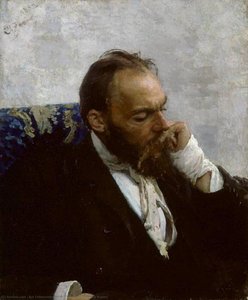
Portrait of Pavel Tretyakov, Founder of the Tretyakov Gallery.

Hand Made Oil Reproduction

Hand-painted oil on canvas in your size and frame, made to order by our artists. ( Switch to Print Switch to Digital Image)

Collectible Description

Admire Ilya Repin's 'Portrait of Pavel Tretyakov,' a captivating depiction of the art collector who founded Moscow’s renowned Tretyakov Gallery. Witness his thoughtful gaze and masterful brushstrokes in this iconic 1883 masterpiece.

Artist Biography

A master of Russian realism, Ilya Repin is famed for Barge Haulers on the Volga. Explore his powerful and emotive masterpieces today.

from ·

Chapter 1

How large should it be?

Slide to change the size; the picture on the left shows the frame at its real width. The proportions of the original are kept.

Standard
custom
CM
INCH

Pick from our preset sizes that match the artwork's original proportions.

width
height

Type the width and the height you need, to fit your frame or your wall. This is hand-painted, so for a size with a different shape the artist can paint a bit more around the picture, or cut a bit — you choose. We send you a digital mockup to approve before the painting starts. The picture shown on this page does not show the real result — only the mockup does.

Chapter 2

How should it arrive?

Choose the edges of the stretched canvas

Choose your frame

Corner sample of the WhiteWrap canvas edge finish, stretched on solid wood bars
White $1
Corner sample of the BlurSideWrap canvas edge finish, stretched on solid wood bars
Blurside $1
Corner sample of the ExtendedWrap canvas edge finish, stretched on solid wood bars
Extended $1
Corner sample of the P118B picture frame: moulded polystyrene, 5 cm wide and 3 cm thick
P118B $10
Corner sample of the P118H picture frame: moulded polystyrene, 5 cm wide and 3 cm thick
P118H $10
Corner sample of the P118W picture frame: moulded polystyrene, 5 cm wide and 3 cm thick
P118W $10
Corner sample of the P438Z picture frame: moulded polystyrene, 5.5 cm wide and 3.5 cm thick
P438Z $10
Corner sample of the P508JH picture frame: moulded polystyrene, 7 cm wide and 3.5 cm thick
P508JH $12
Corner sample of the P508YH picture frame: moulded polystyrene, 7 cm wide and 3.5 cm thick
P508YH $12
Corner sample of the P805H picture frame: moulded polystyrene, 5 cm wide and 3.5 cm thick
P805H $10
Corner sample of the P805Z picture frame: moulded polystyrene, 5 cm wide and 3.5 cm thick
P805Z $10
Corner sample of the P919BZ picture frame: moulded polystyrene, 7 cm wide and 3.5 cm thick
P919BZ $10
Corner sample of the P919G picture frame: moulded polystyrene, 7 cm wide and 3.5 cm thick
P919G $10
Corner sample of the P919XJ picture frame: moulded polystyrene, 7 cm wide and 3.5 cm thick
P919XJ $10
Corner sample of the P959ZH picture frame: moulded polystyrene, 5 cm wide and 3 cm thick
P959ZH $10
Corner sample of the P968JZ picture frame: moulded polystyrene, 6 cm wide and 4 cm thick
P968JZ $12
Corner sample of the W106C picture frame: solid wood, 5 cm wide and 3 cm thick
W106C $8
Corner sample of the W218G picture frame: solid wood, 5 cm wide and 3 cm thick
W218G $10
Corner sample of the W218JH picture frame: solid wood, 5 cm wide and 3 cm thick
W218JH $8
Corner sample of the W218Y picture frame: solid wood, 5 cm wide and 3 cm thick
W218Y $10
Corner sample of the W307PJ picture frame: solid wood, 6 cm wide and 3 cm thick
W307PJ $10
Corner sample of the W316G picture frame: solid wood, 6 cm wide and 3 cm thick
W316G $10
Corner sample of the W316PJ picture frame: solid wood, 6 cm wide and 3 cm thick
W316PJ $8
Corner sample of the W316Y picture frame: solid wood, 6 cm wide and 3 cm thick
W316Y $10
Corner sample of the W398PJ picture frame: solid wood, 5 cm wide and 3 cm thick
W398PJ $8
Corner sample of the W4111J picture frame: solid wood, 6.5 cm wide and 3.5 cm thick
W4111J $10
Corner sample of the W500HY picture frame: solid wood, 7 cm wide and 5 cm thick
W500HY $15
Corner sample of the W500JH picture frame: solid wood, 7 cm wide and 5 cm thick
W500JH $15
Corner sample of the W692G picture frame: solid wood, 8 cm wide and 4 cm thick
W692G $12
Corner sample of the W849H picture frame: solid wood, 5 cm wide and 3 cm thick
W849H $8
Corner sample of the W940BG picture frame: solid wood, 7.5 cm wide and 4.5 cm thick
W940BG $15
Corner sample of the W953PJ picture frame: solid wood, 6 cm wide and 3.5 cm thick
W953PJ $8
Corner sample of the H24-GOLD picture frame: carved wood with gesso, 10 cm wide and 6 cm thick
H24-GOLD $30
Corner sample of the H24-SILVER picture frame: carved wood with gesso, 10 cm wide and 6 cm thick
H24-SILVER $30
Corner sample of the H36-GOLD picture frame: carved wood with gesso, 15 cm wide and 6.5 cm thick
H36-GOLD $45
Corner sample of the H36-SILVER picture frame: carved wood with gesso, 15 cm wide and 6.5 cm thick
H36-SILVER $45
Frame preview
Framed

Moulding: . Overall size with the frame: .

Chapter 3

Who paints it, and should anything change?

Examples of what can be changed: Replace face with customer photo; Add pet (e.g., replace cat with dog); Include hidden message in background; Change background landscape or elements.
After order, OriginalUniqueArt.com team will email client for instructions and provide a mockup preview

Chapter 4

Worldwide Delivery () in 3/4 weeks instead of standard 5 weeks. (22 November). No compromise on quality.

The finishing touches

A nameplate, as in a museum?

Engraved Bronze Plaque Details

This elegant plaque features the artist's name and the title of the artwork, finely engraved for a timeless presentation.

It is made from bronze with a refined, elegant finish. The text is precisely laser-engraved for a sharp and permanent result. Measuring 9x2 cm, the plaque is compact yet easy to read. It's built to be durable and scratch-resistant, offering a professional, museum-quality look. Mounting is simple thanks to the included adhesive backing.

Transparent Acrylic Plaque Details

The plaque includes essential engraved details such as the artist's name, the title of the artwork, the date it was created, the type of media used-like oil on canvas or watercolor-a brief description of the piece, and a QR code that links to the complete artwork information.

It is crafted from clear acrylic, offering a sleek, modern appearance. The text is UV-engraved in black to ensure strong visual contrast. With a size of 10x15 cm, it ensures optimal readability. It comes equipped with two metal hooks for secure wall mounting. The plaque is designed to be weather-resistant, making it suitable for various environments, and it includes interactive features that work seamlessly with smartphone scanning.

Black Acrylic Plaque Details

This elegant plaque includes engraved information such as the artist's name, the title of the artwork, the date it was created, the type of media used (like oil on canvas or watercolor), a short description of the artwork, and a QR code for quick access to more information.

The plaque itself is made from refined black acrylic with a premium finish. The text is laser-engraved in white for high contrast and readability. Its size is 10x15 cm, designed to be easy to read. It comes with two metal hooks for professional mounting. The design is sleek and fits any interior style. It is also weather-resistant and durable, with built-in digital integration for mobile compatibility.

A protective varnish?

When do you need it?

Chapter 5

Your painting, as you ordered it

Portrait of Pavel Tretyakov, Founder of the Tretyakov Gallery.

Reproduction Medium

Reproduction Size

-

Elite Senior Artist

More detail, finesse, and extra production time

-

Reproduction Frame

-

-

For artworks or reproductions larger than 105 cm (approximately 41 inches) on any side, the frame will be shipped as a kit, disassembled. This method ensures safe delivery and prevents damage during transport.

Professional assembly required - this is not a DIY product.
The kit must be assembled and the canvas stretched by an experienced professional framer, using wood glue (not supplied), a canvas stretching plier and clamps to hold the bars square while the glue dries. Incorrect assembly or uneven canvas tension can permanently damage the artwork and is not covered by our warranty.

  • All solid wood bars are included, precisely cut to size.

  • Assembled with the screws provided, plus wood glue for the corner joints, which is not supplied and must be sourced by your framer.

  • Professional tools are required and not included: a canvas stretching plier (tensioner) and clamps to hold the bars square while the glue dries.

Important:
The corner joints require wood glue, the bars must be held with clamps until the glue is fully dry, and tightening the canvas on the assembled frame requires a canvas stretching plier. None of these are included in the kit. Please arrange an experienced professional framer before ordering this size.

Nameplate

-

-

Protective Varnish

Glossy Varnish (enhances colors, protects against light/moisture)

-

Customize My Artwork

Examples of what can be changed: Replace face with customer photo; Add pet (e.g., replace cat with dog); Include hidden message in background; Change background landscape or elements.

-

Urgent

Worldwide Delivery () in 3/4 weeks instead of standard 5 weeks. (22 November). No compromise on quality.

-

Express Shipping

Worldwide Delivery () in 5 weeks. (29 November).

Included

Total Price

$ 300

Total Price $ 300

Glass option is only available in size under 110 CM

Included with every order

  • Free Worldwide Express Shipping
  • High-Quality Linen Canvas
  • Full Shipping Insurance
  • Customs Tax Refund Guarantee
  • True Color Matching Guarantee
  • 100-Day Return Policy (Defects Only)
  • 100% Money-Back Guarantee
  • Bulk Discount Offer

The Visionary Collector: Ilya Repin’s Portrait of Pavel Tretyakov

Ilya Yefimovich Repin's 1883 portrait of Pavel Tretyakov is more than a simple likeness; it’s a carefully constructed tableau of wealth, intellect, and the burgeoning spirit of Russian cultural patronage. Painted during a pivotal moment in Russia’s artistic development – the rise of Realism alongside the enduring traditions of academic art – the work offers a profound glimpse into the man who would shape one of the nation's most significant cultural institutions: the Tretyakov Gallery. Repin, already a celebrated figure known for his dramatic narratives and keen psychological insight, masterfully captures Tretyakov’s contemplative demeanor, suggesting a mind deeply engaged with both the material world he commanded and the artistic treasures he was amassing.

Ilya Repin Self-Portrait

The photograph of the painting shows a man with a beard, sitting in a chair. The man appears to be wearing a suit and tie, giving the impression that he might be a businessman or an intellectual. He has his hands clasped together while looking at something off-camera. In the background, there are several paintings hanging on the wall behind him. These paintings vary in size and position, adding depth to the scene. The overall atmosphere of the painting suggests a sense of contemplation or thoughtfulness from the man depicted.

A Study in Repin’s Realist Technique

Repin's skill lies not merely in his ability to render a likeness but in his masterful use of color, light, and texture. The portrait is executed in oil on canvas, utilizing a technique that allows for both subtle gradations and bold, expressive strokes. Notice the way he employs chiaroscuro – the dramatic contrast between light and shadow – to sculpt Tretyakov’s face, emphasizing his features and conveying a sense of inner intensity. The muted palette, dominated by browns, grays, and ochres, reflects the seriousness of the subject and creates an atmosphere of quiet contemplation. The brushwork itself is loose and gestural in places, particularly around the folds of Tretyakov’s clothing, suggesting movement and life while maintaining a formal elegance.

The background, featuring several paintings hanging on the wall, isn't merely decorative; it serves as a visual testament to Tretyakov’s collecting passion. These works – though not explicitly identified in the original painting – represent a carefully curated selection of artistic talent, mirroring Repin’s own ambitions for a national gallery. The inclusion of these pieces subtly elevates Tretyakov’s status, positioning him as a discerning patron and an advocate for Russian art.

Symbolism and the Portrait of a Patron

Beyond its technical brilliance, the portrait is rich in symbolic meaning. Tretyakov's posture – hands clasped together, gaze directed off-camera – speaks to introspection and deep thought. He’s not actively engaged in conversation or business; instead, he appears lost in contemplation, perhaps considering the legacy of his collection or reflecting on the role of art in society. The chair itself is a symbol of authority and stability, reinforcing Tretyakov's position as a powerful figure within Moscow’s elite circles. The very act of being painted – a formal portrait session – underscores the importance he placed on self-representation and legacy.

Furthermore, the painting can be viewed as a commentary on the evolving role of the Russian bourgeoisie in the late 19th century. Tretyakov represents a new generation of wealthy businessmen who were increasingly interested in supporting the arts, challenging the traditional patronage system dominated by the aristocracy. His vision – to establish a public gallery dedicated to showcasing Russian art – was revolutionary and ultimately transformative for the nation’s cultural landscape.

A Legacy Preserved: Reproductions and Artistic Appreciation

Today, this remarkable portrait stands as a cornerstone of the Tretyakov Gallery's collection, offering a tangible link to its founding figure. OriginalUniqueArt offers meticulously crafted hand-painted reproductions that faithfully capture Repin’s artistry and the profound depth of this iconic image. Whether you are an art enthusiast, a collector seeking a significant addition to your collection, or simply drawn to the beauty and historical resonance of this masterpiece, our reproductions provide a remarkable opportunity to experience the power and elegance of Ilya Yefimovich Repin's vision.

Questions & Answers

What space matches the colors of "Portrait of Pavel Tretyakov, Founder of the Tretyakov Gallery." by Ilya Repin?

The dark colors of "Portrait of Pavel Tretyakov, Founder of the Tretyakov Gallery." by Ilya Repin match its recommended space: a living room.

Can I use augmented reality to see "Portrait of Pavel Tretyakov, Founder of the Tretyakov Gallery." by Ilya Repin in my room?

"Portrait of Pavel Tretyakov, Founder of the Tretyakov Gallery." has an augmented reality preview: the artwork's AR Preview page shows it in your own space on a compatible device.

Is a high-resolution download of "Portrait of Pavel Tretyakov, Founder of the Tretyakov Gallery." available?

To get a digital file of "Portrait of Pavel Tretyakov, Founder of the Tretyakov Gallery." by Ilya Repin, order a high-resolution digital image download on its Digital Image page.

More about this painting

Preview AR preview Switch to Print Switch to Digital Image Send
Details Guide Add to favorites Download Similars X-Ray Diaporama Q&A Stats

In numbers

  • 1883the year it was painted
  • 29frames to choose from
  • standard sizes, in its own proportions
  • 5weeks to paint and deliver it
Ilya Repin

Ilya Repin

1844 - 1930, Ukraine

Quick facts about Ilya Repin

  • Artistic Movement Or Style: Realism
  • Artists Or Movements Influenced By This Artist: ['Socialist Realism']
  • Artists Who Influenced This Artist:
    • Ivan Kramskoi
    • Vasily Perov
  • Full Name: Ilya Yefimovich Repin
  • Nationality: Ukrainian-born Russian
  • Notable Artworks:
    • Barge Haulers on the Volga
    • Reply of the Zaporozhian Cossacks
    • Ivan the Terrible and His Son Ivan
  • Place Of Birth: Chuguev, Russia
  • Date Of Birth: 1844
  • Date Of Death: 1930

Artist Biography

Early Life, Family and Training

Ilya Yefimovich Repin entered the world on August 5, 1844, in Chuguev, located within the Kharkov Governorate of the Russian Empire. His upbringing was shaped by the practicalities of a modest household; his father, Yefim Vasilyevich Repin, was a military settler who later worked as an itinerant merchant. This background provided a connection to the movement of people and the realities of provincial life that would later inform his perspective. His early years were defined by the quiet discipline of a small town, far from the formal academies that would eventually define his professional life.

The seeds of his technical skill were sown through a traditional apprenticeship. At the age of sixteen, he began the meticulous work of painting icons, learning the craft under the guidance of local icon painters. This period of training required a precise hand and an understanding of religious composition. It was a rigorous introduction to the visual language of his surroundings, teaching him to observe the nuances of form and light before he ever stepped foot in a major metropolitan center.

In 1863, driven by an ambition to refine his talent, he traveled to Saint Petersburg. He did not enter the Imperial Academy of Arts through the standard channels at first, but instead audited courses, absorbing the atmosphere and instruction of the institution. This period of self-directed study allowed him to bridge the gap between his provincial training and the formal academic standards of the capital. He was a man of persistence, navigating the transition from a student of religious imagery to a serious practitioner of secular art.

The Rise of a Realist Master

The transition from a student to a central figure in Russian art was marked by rapid academic success. After navigating the challenges of his early training, he secured his first prizes at the Imperial Academy of Arts in 1869 and 1871. These accolades signaled a shift toward a more direct engagement with the world around him. His growing reputation led to a significant commission from Grand Duke Vladimir Alexandrovich for The Barge Haulers on the Volga, a work that would define his early career and establish his commitment to depicting the realities of labor.

Between 1873 and 1876, his perspective expanded through two years spent in Paris and Normandy. This period allowed him to observe the techniques of painting in the open air, which he would later integrate into his own approach to light and form. He did not merely replicate the styles he encountered; instead, he refined a method of capturing the human condition with a specific, unvarnished clarity. This period of travel provided the technical breadth necessary to move beyond simple representation into a more profound psychological realism.

By 1894, his influence had become institutionalized when he was appointed a professor of historical painting at the St. Petersburg Academy. He had moved from the periphery of the art world to its very center, teaching the next generation how to navigate the tension between academic tradition and the demand for social truth. His career had come full circle, from a student auditing classes to a master shaping the direction of national art.

Key Works and Masterpieces

Repin’s ascent was marked by a profound ability to translate the struggles of the common man into monumental visual narratives. In 1873, he produced Barge Haulers on the Volga, a work that captured the brutal physical toil of laborers dragging boats along the river. This painting moved beyond simple observation, offering a searing indictment of social injustice through the exhaustion and resolve of its subjects. It established him as a painter deeply attuned to the human condition and the socio-political tensions of his era.

His interest in the complexities of the Russian soul led him to explore both religious and historical themes with intense psychological depth. Between 1880 and 1883, he painted Religious Procession in Kursk Province, a nuanced study of faith and social hierarchy. This period also saw the development of Reply of the Zaporozhian Cossacks, a work created between 1880 and 1891 that captured a defiant spirit of resistance. His brushwork often balanced the joy of folk motifs with the darker, more heavy aspects of history.

The capacity for drama reached a peak in 1885 with Ivan the Terrible and His Son Ivan. This depiction of a moment of horrific violence and remorse remains one of his most striking explorations of power and guilt. Through these varied subjects, Repin moved from the grit of the riverbanks to the heavy shadows of the Kremlin, always maintaining a focus on the internal struggles of his figures.

Technique and Artistic Style

Repin established himself as the foremost exponent of the Russian Realist style, a movement that sought to strip away academic idealization in favor of the unvarnished truth of contemporary life. His artistic language was defined by a profound sense of plasticity, a quality that allowed him to render the human form and its surroundings with a tangible, three-dimensional presence. This technical command enabled him to move beyond mere likeness, capturing the physical weight of a laborer or the subtle tension in a historical scene. He was a master of genre painting, finding profound meaning in the everyday activities of the common people and the complex social hierarchies of his era.

His approach was not static, however. During his time in France and Italy, he encountered the burgeoning Impressionist movement, and the influence of French plein-air techniques became evident in his later work. He began to integrate these observations into his rigorous realist foundation, utilizing light and brushwork to suggest atmosphere and movement rather than relying solely on rigid, polished finishes. This synthesis allowed him to depict the psychological depth of his subjects through a more fluid, observational lens. He used the human face as a landscape of emotion, often focusing on the internal struggles of his sitters.

Later Years and Death

The final chapter of Repin’s life was marked by a quiet withdrawal from the turbulent currents of history. Following the February Revolution of 1917, he found himself increasingly disillusioned by the violence and terror unleashed by the Bolsheviks. This profound sense of unease prompted a retreat from the center of Russian life toward the more tranquil surroundings of his estate, Penates. Located in Kuokkala, Finland, this sanctuary provided a refuge from the political upheaval that had reshaped his homeland.

In this secluded setting, he continued to paint, finding a sense of peace away from the social transformations occurring in the cities. His focus shifted toward more personal and introspective subjects, often drawing from his immediate surroundings and the people closest to him. He remained active in his craft until his final days, maintaining a connection to the art that had defined his existence. He died on 29 September 1930 in Kuokkala. He is buried at The Penates.

Legacy and Enduring Influence

The influence of Ilya Yefimovich Repin extended far beyond the borders of the Russian Empire, reaching into the very foundations of modern painting. By defining the parameters of Russian realism, he established a visual language that would later inform the development of Socialist Realism. His ability to merge technical academic precision with a sharp social conscience allowed his work to function as a mirror to a changing society. This commitment to portraying the human condition with honesty ensured that his impact would be felt by generations of artists who followed in his footsteps.

His reputation was recognized on the international stage, far from the provincial towns of his youth. In 1900, he served as a jury member of the Paris World Fair, a position that reflected his standing among the global artistic elite. This recognition was further solidified when he was awarded the Legion of Honour, an honor that underscored his importance to the European art world. He moved between the rigorous traditions of the Academy and the evolving techniques of plein-air painting, leaving behind a body of work that bridged the gap between the old world and the new.

Where to See the Works Today

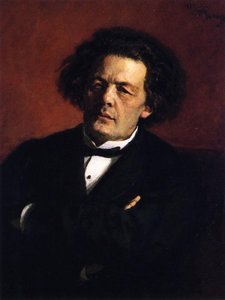
The physical presence of Repin's oeuvre is scattered across several major institutions, reflecting the breadth of his influence. The Tretyakov Gallery in Moscow remains the most significant repository, housing 26 of his works. Within this collection, one can find his portrait of the composer Modest Musorgsky, dated 1881, alongside the portrait of Pavel Tretyakov from 1883. These pieces offer a direct encounter with the psychological depth he brought to his subjects.

Beyond Moscow, his canvases have traveled to various corners of Europe and the former Soviet territories. The Vitebsk Museum of Modern Art holds two of his works, while the Pushkin State Museum in Moscow preserves a single piece. In Prague, the National Gallery maintains one of his paintings, ensuring his visual language remains accessible to international audiences. These specific locations provide a fragmented but significant map of his artistic output.

Quick Facts

  • Dimensions: 98 x 76 cm
  • Medium: Oil on canvas
  • Notable elements: Wall paintings
  • Title: Portrait of Pavel Tretyakov
  • Artistic style: Realism

Art Quiz

There is only one correct answer for each question.

Question 1:
What is the primary subject of Ilya Repin’s ‘Portrait of Pavel Tretyakov, Founder of the Tretyakov Gallery’?
Question 2:
The painting includes several paintings on the wall behind Pavel Tretyakov. What is the purpose of this inclusion?
Question 3:
Ilya Yefimovich Repin was known for his work during which century?
Question 4:
What is Pavel Tretyakov primarily known for in Russian history?
Question 5:
Based on the image description, what is Pavel Tretyakov doing in the portrait?