Preview
 Send
Send Share
Share
 Details
 Guide
Guide

 Download
 Similars
 X-Ray
X-Ray Diaporama
 Stats
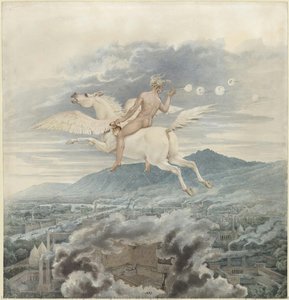
StatsBerlin, Unter den Linden. View of the Lustgarten with Schlossbrücke, the Altes Museum, cathedral, and palace
 Ink On Paper
- Neoclassicism
 19th Century
 97.0 x 50.0 cm
 Kupferstichkabinett
 Read More
Hand Made Oil Reproduction
Hand-painted oil on canvas in your size and frame, made to order by our artists. ( Switch to Print Switch to Digital Image)




P118B $10

P118H $10

P118W $10

P438Z $10

P508JH $12

P508YH $12

P805H $10

P805Z $10

P919BZ $10

P919G $10

P919XJ $10

P959ZH $10

P968JZ $12

W106C $8

W218G $10

W218JH $8

W218Y $10

W307PJ $10

W316G $10

W316PJ $8

W316Y $10

W398PJ $8

W4111J $10

W500HY $15

W500JH $15

W692G $12

W849H $8

W940BG $15

W953PJ $8




Pick from our preset sizes that match the artwork's original proportions.

Type the width and the height you need, to fit your frame or your wall. This is hand-painted, so for a size with a different shape the artist can paint a bit more around the picture, or cut a bit — you choose. We send you a digital mockup to approve before the painting starts. The picture shown on this page does not show the real result — only the mockup does.
After order, OriginalUniqueArt.com team will email client for instructions and provide a mockup preview
Worldwide Delivery () in 3/4 weeks instead of standard 5 weeks. (22 October). No compromise on quality.

Free Worldwide Express Shipping

High-Quality Linen Canvas

Full Shipping Insurance

Customs Tax Refund Guarantee

True Color Matching Guarantee

100-Day Return Policy (Defects Only)

100% Money-Back Guarantee

Bulk Discount Offer
 Glass option is only available in size under 110 CM

Berlin, Unter den Linden. View of the Lustgarten with Schlossbrücke, the Altes Museum, cathedral, and palace
Reproduction Medium
Reproduction Size
-


Total Price
$ 375
A Glimpse into Berlin's Grandeur: An Architectural Dream
To gaze upon this depiction of Berlin’s Lustgarten is to step directly into a meticulously preserved moment of 19th-century urban aspiration. The scene unfolds with the stately dignity characteristic of grand European capitals at the turn of an age—a time when civic pride was rendered in stone, dome, and carefully planned boulevard. We are presented not merely with buildings, but with the very embodiment of Enlightenment ideals translated into physical space. The composition draws the eye along a broad, ordered vista, where the monumental presence of the Alte Museum stands sentinel alongside the soaring promise of the cathedral. It speaks to an era obsessed with order, symmetry, and the public display of cultural achievement.
Mastery in Line: Technique and Topographical Precision
The technical brilliance underpinning this work is immediately apparent. The artist has employed a technique reminiscent of the finest topographical engravings—a painstaking marriage of pen and ink mastery. Observe how the texture is built up; it is not simply drawn, but painstakingly rendered through hatching and cross-hatching. These delicate linear marks simulate the varied surfaces of aged stone, the rustle of foliage, and the drape of period attire. The perspective employed is wonderfully linear, drawing the viewer deep into the heart of the composition while maintaining a sense of airy depth. This level of detail suggests an almost scientific dedication to recording reality, yet it remains imbued with artistic flourish.
The Spirit of Place: Historical Context and Symbolism
This view captures Berlin at a pivotal juncture—a city blossoming into its modern self. The inclusion of key civic structures anchors the piece firmly in history. Beyond the mere cataloging of architecture, the painting functions as a symbol of burgeoning cultural confidence. The open space of Lustgarten itself suggests leisure, intellectual discourse, and the vital role of public life in shaping a society’s character. It evokes the grand promenade, where thinkers mingled with nobility, all under the watchful gaze of enduring architectural forms. For the collector or designer, this piece offers an immediate connection to historical gravitas.
Bringing the Past Home: An Aesthetic for Modern Interiors
Reproducing such a sophisticated work allows one to infuse a space with unparalleled depth and narrative weight. Imagine this sepia-toned vision gracing a drawing-room or library; it acts as an intellectual centerpiece, transforming a mere wall into a portal. The muted palette and the inherent formality of the subject matter lend themselves beautifully to interiors favoring classical elegance, dark woods, and curated antique furnishings. It is more than decoration; it is a conversation starter, inviting contemplation on the passage of time and the enduring beauty of human endeavor.
Questions & Answers
What technique was used for "Berlin, Unter den Linden. View of the Lustgarten with Schlossbrücke, the Altes Museum, cathedral, and palace" by Karl Friedrich Schinkel?
The medium of "Berlin, Unter den Linden. View of the Lustgarten with Schlossbrücke, the Altes Museum, cathedral, and palace" by Karl Friedrich Schinkel is ink on paper. Reproductions aim to render the appearance of this technique.
What space matches the colors of "Berlin, Unter den Linden. View of the Lustgarten with Schlossbrücke, the Altes Museum, cathedral, and palace" by Karl Friedrich Schinkel?
The neutrals colors of "Berlin, Unter den Linden. View of the Lustgarten with Schlossbrücke, the Altes Museum, cathedral, and palace" by Karl Friedrich Schinkel match its recommended space: a living room.
Why is the copyright status of "Berlin, Unter den Linden. View of the Lustgarten with Schlossbrücke, the Altes Museum, cathedral, and palace" what it is?
"Berlin, Unter den Linden. View of the Lustgarten with Schlossbrücke, the Altes Museum, cathedral, and palace" by Karl Friedrich Schinkel is in the public domain - its copyright has expired. Copyright duration runs from the artist's death, which occurred in 1841.
Artist Biography
A Prussian Visionary: The Life and Legacy of Karl Friedrich Schinkel
Karl Friedrich Schinkel, born in Neuruppin, Germany, in 1781, occupies a singular position within the annals of 19th-century art and architecture. His life was a compelling narrative woven with threads of personal hardship and professional triumph, unfolding against the backdrop of shifting political landscapes and burgeoning artistic movements. The devastating fire that ravaged Neuruppin in 1787, tragically claiming his father’s life while Schinkel was still a young boy, cast a long shadow over his formative years. This early experience, perhaps, instilled within him a profound appreciation for order, permanence, and the enduring power of form—qualities that would later define his artistic vision. It undoubtedly contributed to the meticulous precision and emotional resonance so characteristic of his mature work. He received early mentorship under Friedrich Gilly and his father David Gilly, both influential architects in Berlin, absorbing their classical principles while simultaneously encountering more experimental ideas – a crucial blend that shaped his developing aesthetic sensibilities. These foundational years provided Schinkel with a robust understanding of architectural history and technique, preparing him for the pivotal decisions that lay ahead.From Painterly Aspirations to Architectural Mastery
Initially, Schinkel pursued painting as his chosen profession, demonstrating considerable talent in landscape and portraiture. However, a turning point arrived during an exhibition in Berlin in 1810, where he encountered Caspar David Friedrich’s iconic *Wanderer above the Sea of Fog*. The sheer emotional depth and masterful execution of Friedrich's work prompted a moment of profound self-assessment within Schinkel. Recognizing that his own artistic inclinations did not align with achieving such heights in painting, he made the decisive shift to architecture. This was not merely a change in profession but a testament to Schinkel’s intellectual honesty and commitment to pursuing where his true talents lay. It is noteworthy that his earlier experience with painting profoundly influenced his architectural designs, imbuing them with a sense of atmosphere, spatial awareness, and emotional depth often absent in more purely technical approaches. He understood the power of visual storytelling and sought to translate that understanding into the built environment, creating spaces that resonated with feeling as much as function.A Synthesis of Styles: Neoclassicism, Gothic Revival, and Beyond
Schinkel’s architectural style is remarkably difficult to categorize neatly, representing instead a sophisticated synthesis of various influences. While firmly rooted in Neoclassical principles—a reaction against the perceived excesses of Baroque and Rococo—he moved away from the prevailing emphasis on Imperial Roman forms, opting for a more refined Greek-inspired aesthetic. This embrace of Greek Revival was not merely stylistic; it reflected Schinkel’s belief that architecture should possess both structural integrity and poetic resonance, engaging with history while simultaneously evoking emotion. However, he did not limit himself to Neoclassicism. He also demonstrated a remarkable aptitude for the Gothic Revival style, exemplified in works like Schloss Rosenau and Friedrichswerder Church. This willingness to explore different historical styles, adapting them to contemporary needs and sensibilities, set him apart from many of his contemporaries. His designs were characterized by meticulous attention to detail, innovative use of materials, and a profound understanding of spatial relationships. He was not simply replicating past forms; he was reinterpreting them through the lens of his own artistic vision.Landmark Creations: Shaping Berlin and Beyond
Schinkel’s legacy is indelibly etched into the urban landscape of Berlin and beyond through his numerous landmark creations. The Neue Wache (1816–1818), an early work, showcases his emerging Neoclassical style with its restrained elegance and dignified presence. The National Monument for the Liberation Wars (1818–1821) stands as a powerful testament to Prussian resilience and national pride. The Schauspielhaus (1819–1821), rebuilt on Gendarmenmarkt after a devastating fire, exemplifies his refined theatre design. However, it is perhaps the Altes Museum (1823–1830), located on Museum Island, that remains his most iconic achievement—a masterpiece of classical architecture that served as a model for national art museums worldwide. Beyond Berlin, the Bauakademie (1832–1836) represents Schinkel’s most innovative work, foreshadowing modernist architectural principles with its clean lines and functional design. His unexecuted plans, such as those for transforming the Athenian Acropolis or designing the Orianda Palace in Crimea, reveal a boundless imagination and ambition that extended far beyond realized projects. These unrealized visions offer a glimpse into the full scope of his creative potential.A Lasting Influence: Bridging Tradition and Modernity
Karl Friedrich Schinkel’s influence extends far beyond the physical structures he created. He was also a prolific theorist and draftsman, disseminating his ideas through publications like *Sammlung architektonischer Entwürfe* (1820–1837) and *Werke der höheren Baukunst* (1840–1846). These works provided valuable insights into his design principles and construction techniques, influencing generations of architects. Though political constraints and his untimely death in 1841 prevented him from fully realizing all his ambitious visions, Schinkel remains a pivotal figure in German architectural history. He bridged the gap between Neoclassicism and the emergence of modernism, leaving behind a legacy that continues to inspire and resonate today. His buildings are not merely monuments to the past but living testaments to the power of thoughtful design and enduring artistic vision—a testament to a man who truly shaped the aesthetic landscape of his time.- Key Achievements: Altes Museum, Neue Wache, Bauakademie, Schauspielhaus.
- Influences: Friedrich Gilly, David Gilly, Caspar David Friedrich, Greek and Gothic architectural traditions.
- Legacy: A pivotal figure in German architecture, bridging Neoclassicism and Modernism.

Karl Friedrich Schinkel
1781 - 1841 , Germany
Quick Facts
- Full Name: Karl Friedrich Schinkel
- Nationality: Prussian
- Date Of Birth: 1781
- Date Of Death: 1841
- Place Of Birth: Neurenberg, Germany
- Notable Artworks:
- Neue Wache
- Altes Museum
- Bauakademie
- A Boat Trip
- Artistic Movement Or Style: Neoclassical, Gothic Revival
- Artists Who Influenced This Artist:
- Friedrich Gilly
- Caspar David Friedrich
- Artists Or Movements Influenced By This Artist:
- Modern architecture
- German architects
Related Articles
Staatliche Museen Berlin: 25 Masterpieces for Your Home | OriginalUniqueArt
Journey through 25 iconic artworks at Staatliche Museen Berlin! Explore Nefertiti, Pergamon Altar & masterpieces of German art history. Find museum-quality reproductions & curated decor ideas to bring timeless beauty home. Discover all masterpieces on OriginalUniqueArt.com.
18th Century Masters: 10 Artworks That Define an Era | OriginalUniqueArt
Journey through 18th century art! Explore 10 iconic paintings – from Rococo elegance to Neoclassical grandeur. Discover Fragonard, David & more. Find museum-quality reproductions and elevate your home decor on OriginalUniqueArt.com.

Caspar David Friedrich: Romanticism's Master of Landscape & the Sublimity of Inner Experience
Explore the profound landscapes of Caspar David Friedrich, a master of German Romanticism. Discover the symbolism, themes & enduring influence of this iconic artist. A deep dive into his life and work.
Neue Sachlichkeit: The Unflinching Realism and Social Critique of German New Objectivity
Explore the raw realism of Neue Sachlichkeit. Discover how German New Objectivity artists like Otto Dix and George Grosz captured the turbulent Weimar Republic through unflinching social critique and precise detail. A definitive guide for art historians and collectors.

German Expressionism's 10 Defining Masterpieces | Art for Your Home
Explore 10 defining German Expressionism masterpieces – from Munch's 'The Scream' to Kandinsky’s abstracts. Discover the artists, stories & bold colors behind this powerful art movement. Find museum-quality reproductions at OriginalUniqueArt.com.