Text size

() ·

A painting made for you, by hand

Renée de France, Duchess of Ferrara and Chartres

Hand Made Oil Reproduction

Hand-painted oil on canvas in your size and frame, made to order by our artists. ( Switch to Print Switch to Digital Image)

Collectible Description

Admire Renée de France, Duchess of Ferrara, captured with exquisite detail by Jean Clouet. This captivating portrait embodies Renaissance elegance and artistry.

Artist Biography

Jean Clouet (1480-1541): French Renaissance portraitist & miniaturist famed for elegant drawings of Francis I's court. Discover his masterful use of chalk and psychological insight.

from ·

Chapter 1

How large should it be?

Slide to change the size; the picture on the left shows the frame at its real width. The proportions of the original are kept.

Standard
custom
CM
INCH

Pick from our preset sizes that match the artwork's original proportions.

width
height

Type the width and the height you need, to fit your frame or your wall. This is hand-painted, so for a size with a different shape the artist can paint a bit more around the picture, or cut a bit — you choose. We send you a digital mockup to approve before the painting starts. The picture shown on this page does not show the real result — only the mockup does.

Chapter 2

How should it arrive?

Choose the edges of the stretched canvas

Choose your frame

Corner sample of the WhiteWrap canvas edge finish, stretched on solid wood bars
White $1
Corner sample of the BlurSideWrap canvas edge finish, stretched on solid wood bars
Blurside $1
Corner sample of the ExtendedWrap canvas edge finish, stretched on solid wood bars
Extended $1
Corner sample of the P118B picture frame: moulded polystyrene, 5 cm wide and 3 cm thick
P118B $10
Corner sample of the P118H picture frame: moulded polystyrene, 5 cm wide and 3 cm thick
P118H $10
Corner sample of the P118W picture frame: moulded polystyrene, 5 cm wide and 3 cm thick
P118W $10
Corner sample of the P438Z picture frame: moulded polystyrene, 5.5 cm wide and 3.5 cm thick
P438Z $10
Corner sample of the P508JH picture frame: moulded polystyrene, 7 cm wide and 3.5 cm thick
P508JH $12
Corner sample of the P508YH picture frame: moulded polystyrene, 7 cm wide and 3.5 cm thick
P508YH $12
Corner sample of the P805H picture frame: moulded polystyrene, 5 cm wide and 3.5 cm thick
P805H $10
Corner sample of the P805Z picture frame: moulded polystyrene, 5 cm wide and 3.5 cm thick
P805Z $10
Corner sample of the P919BZ picture frame: moulded polystyrene, 7 cm wide and 3.5 cm thick
P919BZ $10
Corner sample of the P919G picture frame: moulded polystyrene, 7 cm wide and 3.5 cm thick
P919G $10
Corner sample of the P919XJ picture frame: moulded polystyrene, 7 cm wide and 3.5 cm thick
P919XJ $10
Corner sample of the P959ZH picture frame: moulded polystyrene, 5 cm wide and 3 cm thick
P959ZH $10
Corner sample of the P968JZ picture frame: moulded polystyrene, 6 cm wide and 4 cm thick
P968JZ $12
Corner sample of the W106C picture frame: solid wood, 5 cm wide and 3 cm thick
W106C $8
Corner sample of the W218G picture frame: solid wood, 5 cm wide and 3 cm thick
W218G $10
Corner sample of the W218JH picture frame: solid wood, 5 cm wide and 3 cm thick
W218JH $8
Corner sample of the W218Y picture frame: solid wood, 5 cm wide and 3 cm thick
W218Y $10
Corner sample of the W307PJ picture frame: solid wood, 6 cm wide and 3 cm thick
W307PJ $10
Corner sample of the W316G picture frame: solid wood, 6 cm wide and 3 cm thick
W316G $10
Corner sample of the W316PJ picture frame: solid wood, 6 cm wide and 3 cm thick
W316PJ $8
Corner sample of the W316Y picture frame: solid wood, 6 cm wide and 3 cm thick
W316Y $10
Corner sample of the W398PJ picture frame: solid wood, 5 cm wide and 3 cm thick
W398PJ $8
Corner sample of the W4111J picture frame: solid wood, 6.5 cm wide and 3.5 cm thick
W4111J $10
Corner sample of the W500HY picture frame: solid wood, 7 cm wide and 5 cm thick
W500HY $15
Corner sample of the W500JH picture frame: solid wood, 7 cm wide and 5 cm thick
W500JH $15
Corner sample of the W692G picture frame: solid wood, 8 cm wide and 4 cm thick
W692G $12
Corner sample of the W849H picture frame: solid wood, 5 cm wide and 3 cm thick
W849H $8
Corner sample of the W940BG picture frame: solid wood, 7.5 cm wide and 4.5 cm thick
W940BG $15
Corner sample of the W953PJ picture frame: solid wood, 6 cm wide and 3.5 cm thick
W953PJ $8
Corner sample of the H24-GOLD picture frame: carved wood with gesso, 10 cm wide and 6 cm thick
H24-GOLD $30
Corner sample of the H24-SILVER picture frame: carved wood with gesso, 10 cm wide and 6 cm thick
H24-SILVER $30
Corner sample of the H36-GOLD picture frame: carved wood with gesso, 15 cm wide and 6.5 cm thick
H36-GOLD $45
Corner sample of the H36-SILVER picture frame: carved wood with gesso, 15 cm wide and 6.5 cm thick
H36-SILVER $45
Frame preview
Framed

Moulding: . Overall size with the frame: .

Chapter 3

Who paints it, and should anything change?

Examples of what can be changed: Replace face with customer photo; Add pet (e.g., replace cat with dog); Include hidden message in background; Change background landscape or elements.
After order, OriginalUniqueArt.com team will email client for instructions and provide a mockup preview

Worldwide Delivery () in 3/4 weeks instead of standard 5 weeks. (11 November). No compromise on quality.

Chapter 4

The finishing touches

A nameplate, as in a museum?

Engraved Bronze Plaque Details

This elegant plaque features the artist's name and the title of the artwork, finely engraved for a timeless presentation.

It is made from bronze with a refined, elegant finish. The text is precisely laser-engraved for a sharp and permanent result. Measuring 9x2 cm, the plaque is compact yet easy to read. It's built to be durable and scratch-resistant, offering a professional, museum-quality look. Mounting is simple thanks to the included adhesive backing.

Transparent Acrylic Plaque Details

The plaque includes essential engraved details such as the artist's name, the title of the artwork, the date it was created, the type of media used-like oil on canvas or watercolor-a brief description of the piece, and a QR code that links to the complete artwork information.

It is crafted from clear acrylic, offering a sleek, modern appearance. The text is UV-engraved in black to ensure strong visual contrast. With a size of 10x15 cm, it ensures optimal readability. It comes equipped with two metal hooks for secure wall mounting. The plaque is designed to be weather-resistant, making it suitable for various environments, and it includes interactive features that work seamlessly with smartphone scanning.

Black Acrylic Plaque Details

This elegant plaque includes engraved information such as the artist's name, the title of the artwork, the date it was created, the type of media used (like oil on canvas or watercolor), a short description of the artwork, and a QR code for quick access to more information.

The plaque itself is made from refined black acrylic with a premium finish. The text is laser-engraved in white for high contrast and readability. Its size is 10x15 cm, designed to be easy to read. It comes with two metal hooks for professional mounting. The design is sleek and fits any interior style. It is also weather-resistant and durable, with built-in digital integration for mobile compatibility.

A protective varnish?

When do you need it?

Chapter 5

Your painting, as you ordered it

Renée de France, Duchess of Ferrara and Chartres

Reproduction Medium

Reproduction Size

-

Elite Senior Artist

More detail, finesse, and extra production time

-

Reproduction Frame

-

-

For artworks or reproductions larger than 105 cm (approximately 41 inches) on any side, the frame will be shipped as a kit, disassembled. This method ensures safe delivery and prevents damage during transport.

Professional assembly required - this is not a DIY product.
The kit must be assembled and the canvas stretched by an experienced professional framer, using wood glue (not supplied), a canvas stretching plier and clamps to hold the bars square while the glue dries. Incorrect assembly or uneven canvas tension can permanently damage the artwork and is not covered by our warranty.

  • All solid wood bars are included, precisely cut to size.

  • Assembled with the screws provided, plus wood glue for the corner joints, which is not supplied and must be sourced by your framer.

  • Professional tools are required and not included: a canvas stretching plier (tensioner) and clamps to hold the bars square while the glue dries.

Important:
The corner joints require wood glue, the bars must be held with clamps until the glue is fully dry, and tightening the canvas on the assembled frame requires a canvas stretching plier. None of these are included in the kit. Please arrange an experienced professional framer before ordering this size.

Nameplate

-

-

Protective Varnish

Glossy Varnish (enhances colors, protects against light/moisture)

-

Customize My Artwork

Examples of what can be changed: Replace face with customer photo; Add pet (e.g., replace cat with dog); Include hidden message in background; Change background landscape or elements.

-

Urgent

Worldwide Delivery () in 3/4 weeks instead of standard 5 weeks. (11 November). No compromise on quality.

-

Express Shipping

Worldwide Delivery () in 5 weeks. (18 November).

Included

Total Price

$ 300

Total Price $ 300

Glass option is only available in size under 110 CM

Included with every order

  • Free Worldwide Express Shipping
  • High-Quality Linen Canvas
  • Full Shipping Insurance
  • Customs Tax Refund Guarantee
  • True Color Matching Guarantee
  • 100-Day Return Policy (Defects Only)
  • 100% Money-Back Guarantee
  • Bulk Discount Offer

Renée de France, Duchess of Ferrara and Chartres – A Portrait of Renaissance Grace

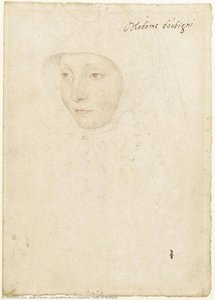
Jean Clouet’s “Renée de France, Duchess of Ferrara and Chartres” is more than just a portrait; it's a meticulously crafted window into the refined world of 16th-century French courtly life. Completed around 1520, this drawing, rendered in delicate *pierre noire* (black chalk) on paper, captures not merely the likeness of a noblewoman but also her inner composure and quiet dignity. The image speaks volumes about the era’s fascination with humanism, beauty, and the subtle power dynamics within aristocratic circles.

Clouet, a master of his craft, belonged to a lineage deeply rooted in artistic tradition. His father, likely a painter for the Duke of Burgundy, instilled in him a rigorous approach to observation and representation – a hallmark evident in Renée’s remarkably lifelike features. The artist's skill lies not just in anatomical accuracy but also in conveying an atmosphere of restrained elegance. Notice how Clouet subtly models the fabric of her gown, creating a sense of volume and texture without resorting to heavy shading. The careful rendering of the ruffled collar, a fashionable detail of the period, demonstrates his attention to detail and understanding of contemporary fashion.

A Woman of Two Worlds

Renée de France’s life itself is a fascinating tapestry woven from threads of diplomacy and personal tragedy. Born into the tumultuous Valois dynasty – her father was King Louis XII of France, and her mother, Anne of Brittany – she navigated the complex political landscape of Europe with grace and intelligence. Her marriage to Alfonso II d'Este, Hereditary Prince of Ferrara, brought her to Italy, a region vastly different from the opulent courts of Paris and Blois. This duality—a French noblewoman transplanted to the heart of the Italian Renaissance—is powerfully represented in the portrait.

The background, though somewhat indistinct, hints at this transition. The suggestion of architectural elements – perhaps a glimpse of a distant wall or building – speaks to the foreign setting of Ferrara. Furthermore, Renée’s gaze, directed downwards, conveys a sense of introspection and perhaps even melancholy, reflecting the challenges she faced as a woman in a patriarchal society and a diplomat navigating unfamiliar political waters. The subtle downturn of her lips hints at a quiet sadness, a poignant counterpoint to the beauty of her face.

Symbolism and Renaissance Ideals

Beyond its immediate visual appeal, “Renée de France” is rich in symbolic meaning. The portrait adheres closely to the conventions of Renaissance portraiture, which sought to elevate the subject beyond mere representation. The pose—a classic half-length format—was intended to showcase both the individual and their status. Renée’s hands, folded gracefully in her lap, suggest modesty and virtue – qualities highly valued in aristocratic women during this period.

The use of *pierre noire* itself is significant. This technique, favored by Clouet and his contemporaries, allowed for a remarkable level of detail and precision. It was particularly well-suited to capturing the nuances of skin tone, fabric texture, and subtle expressions. The drawing’s monochrome palette reinforces the sense of timelessness and emphasizes the inherent beauty of Renée's features.

A Timeless Masterpiece

“Renée de France, Duchess of Ferrara and Chartres” remains a testament to Jean Clouet’s artistic genius and a captivating window into the world of 16th-century European nobility. Its exquisite detail, subtle symbolism, and emotional resonance continue to resonate with viewers today. This drawing is not merely a portrait; it's an intimate glimpse into the life and spirit of a remarkable woman—a symbol of grace, intelligence, and resilience in a time of great political and social change. It’s a piece that speaks volumes through its quiet elegance and enduring beauty.

Questions & Answers

What aliases or alternate names does Jean Clouet have?

Jean Clouet appears under the alternate names Janet, Jehannot, Cloet.

What is the creation date of "Renée de France, Duchess of Ferrara and Chartres" by Jean Clouet?

"Renée de France, Duchess of Ferrara and Chartres" by Jean Clouet was created in 1519.

How can I view "Renée de France, Duchess of Ferrara and Chartres" by Jean Clouet as a slideshow?

"Renée de France, Duchess of Ferrara and Chartres" by Jean Clouet can be viewed as a slideshow on the artwork's Diaporama page.

More about this painting

Preview AR preview Switch to Print Switch to Digital Image Send
Details Guide Add to favorites Download Similars X-Ray Diaporama Q&A Stats

In numbers

  • 1519the year it was painted
  • 29frames to choose from
  • standard sizes, in its own proportions
  • 5weeks to paint and deliver it
Jean Clouet

Jean Clouet

1480 - 1541, Belgium

Quick facts about Jean Clouet

  • Full Name: Jean Clouet
  • Nationality: French
  • Date Of Birth: 1480
  • Date Of Death: 1541
  • Place Of Birth: Brussels, Belgium
  • Notable Artworks:
    • A Forest Pool
    • Lamentation
    • The Lovers
    • Portrait of Francis I
    • Marguerite of France
  • Artistic Movement Or Style: Renaissance portraiture
  • Artists Or Movements Influenced By This Artist: ['François Clouet']

Artist Biography

A Courtly Hand: The Life and Art of Jean Clouet

Jean Clouet, a name whispered with reverence among connoisseurs of the French Renaissance, remains an enigmatic figure despite his profound impact on portraiture. Born around 1480, likely in Brussels within the Low Countries—though definitive records are scarce—Clouet’s artistic journey led him to become one of the most sought-after painters at the court of Francis I. His origins are shrouded in some mystery; while “Clouet” may not have been his birth name, it became synonymous with a distinctive style that captured the essence of an era defined by elegance and burgeoning humanism. The early influences shaping Clouet’s artistic vision remain somewhat speculative, yet the hallmarks of Flemish training—a meticulous attention to detail, subtle modeling, and a refined sense of realism—are undeniably present in his work. It's believed he may have been connected to a family of artists already established in Brussels, further solidifying the foundations of his technical skill.

Ascension at the French Court

Clouet’s arrival at the French court around 1516 marked a turning point not only in his career but also in the evolution of royal portraiture. Francis I, a passionate patron of the arts and a monarch determined to emulate the Italian Renaissance courts, recognized Clouet's exceptional talent immediately. Unlike previous court painters who often focused on grand historical narratives or religious scenes, Clouet specialized in capturing the likenesses of those within the king’s inner circle—nobles, courtiers, and members of the royal family. He wasn’t merely recording features; he was delving into character, conveying personality through subtle nuances of expression and posture. This shift towards psychological insight set his work apart. Appointed as painter and wardrobe valet, then progressing to more prestigious positions, Clouet enjoyed a level of favor rarely granted to artists of the time, receiving a salary comparable to that of esteemed surgeons—a testament to Francis I’s high regard for his abilities. He established himself in Tours initially before relocating with the court to Fontainebleau, becoming an integral part of the vibrant artistic atmosphere fostered by the king.

The Art of Likeness: Technique and Style

Jean Clouet's mastery lay not in flamboyant displays of color or dramatic compositions but in a quiet, understated elegance. He favored drawing as his primary medium, particularly utilizing black and red chalk on paper. These drawings weren’t preliminary sketches; they were often finished works in themselves, prized for their delicate lines, subtle shading, and remarkable ability to capture the sitter's individual character. His technique involved a meticulous layering of strokes, building up form with incredible precision. When working in paint—often employing oil on panel—he maintained this same level of refinement, creating portraits that were both realistic and idealized. He possessed an uncanny ability to convey texture – the sheen of silk, the weight of velvet, the delicate softness of skin – adding another layer of verisimilitude to his work. While influenced by Italian Renaissance masters whose works Francis I avidly collected, Clouet’s style remained distinctly French, characterized by a certain restraint and an emphasis on capturing inner life rather than outward grandeur.

Legacy and Enduring Influence

Though Jean Clouet died around 1541 in Paris, his artistic legacy extended far beyond his lifetime. His son, François Clouet, continued the family tradition, inheriting both his father’s skill and his position at court. Together, they established a dynasty of portraitists who shaped the visual image of the French Renaissance for generations. The rediscovery of Clouet's extensive collection of drawings in the 19th century—many held within the collections of Musée Condé in Chantilly—sparked renewed interest in his work and cemented his place as a pivotal figure in art history. His influence can be seen in the works of later portraitists who sought to emulate his ability to capture not just physical likeness but also the inner essence of their subjects. The portraits attributed to Clouet offer a unique window into the world of the French court, providing invaluable insights into the personalities and power dynamics of the era. His drawings remain treasured possessions in museums worldwide, continuing to captivate viewers with their beauty, subtlety, and enduring psychological depth. Jean Clouet’s art is a testament to the power of observation, the skill of draftsmanship, and the timeless appeal of capturing the human spirit on paper and canvas.

Quick Facts

  • Location: Musée Condé, Chantilly
  • Subject or theme: Portrait of a woman
  • Medium: Chalk on paper
  • Dimensions: 28.7 x 20.5 cm
  • Artistic style: Renaissance portrait

Art Quiz

There is only one correct answer for each question.

Question 1:
What is the primary subject of Jean Clouet’s painting, ‘Renée de France, Duchess of Ferrara and Chartres’?
Question 2:
In what year was the painting ‘Renée de France, Duchess of Ferrara and Chartres’ likely created?
Question 3:
Which of the following best describes Jean Clouet’s artistic style?
Question 4:
The painting utilizes the technique of ‘pierre noire’ (black chalk). What is the primary purpose of this technique in Clouet's work?
Question 5:
Renée de France was a member of which royal family?