Preview
 Send
Send Share
Share
 Details
 Guide
Guide

 Download
 Similars
 X-Ray
X-Ray Diaporama
 Stats
StatsCount Fortunato Martinengo Cesaresco
 Oil On Canvas
- WallArt
- Italian Renaissance
 1542
1542- Renaissance
 114.0 x 94.0 cm
 National Gallery
 Read More
Hand Made Oil Reproduction
Hand-painted oil on canvas in your size and frame, made to order by our artists. ( Switch to Print Switch to Digital Image)




P118B $10

P118H $10

P118W $10

P438Z $10

P508JH $12

P508YH $12

P805H $10

P805Z $10

P919BZ $10

P919G $10

P919XJ $10

P959ZH $10

P968JZ $12

W106C $8

W218G $10

W218JH $8

W218Y $10

W307PJ $10

W316G $10

W316PJ $8

W316Y $10

W398PJ $8

W4111J $10

W500HY $15

W500JH $15

W692G $12

W849H $8

W940BG $15

W953PJ $8




Pick from our preset sizes that match the artwork's original proportions.

You may enter your own dimensions to fit a specific frame or space. If your selected size does not match the original image's proportions, we will either crop the artwork or extend the painting with additional hand-painted elements. A digital mockup will be sent for your approval before production begins.
Please note that the on-screen preview does not reflect the actual cropping or extension. Only the mockup will accurately show the final composition.
While custom sizes are available, we recommend selecting a dimension from the predefined list to preserve the original proportions.
After order, OriginalUniqueArt.com team will email client for instructions and provide a mockup preview
Worldwide Delivery () in 3/4 weeks instead of standard 5 weeks. (27 September). No compromise on quality.

Free Worldwide Express Shipping

High-Quality Linen Canvas

Full Shipping Insurance

Customs Tax Refund Guarantee

True Color Matching Guarantee

100-Day Return Policy (Defects Only)

100% Money-Back Guarantee

Bulk Discount Offer
 Glass option is only available in size under 110 CM

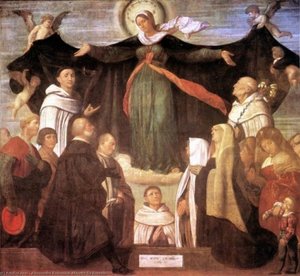
Count Fortunato Martinengo Cesaresco
Reproduction Medium
Reproduction Size
-


Total Price
$ 300
A Glimpse into Renaissance Nobility: The Count Fortunato Martinengo Cesaresco
To stand before this portrait is to step directly into the rarefied atmosphere of 16th-century Italian aristocracy. Alessandro Bonvicino, known to us as Moretto da Brescia, has captured not merely a likeness, but an entire persona—that of Count Fortunato Martinengo Cesaresco. The subject dominates the composition, enveloped in the rich textures and imposing grandeur of his costume, particularly the magnificent fur coat adorned with what appears to be a stylized lion motif. His posture suggests a moment of profound contemplation; seated yet utterly present, he gazes into an unseen distance with a distinctly furrowed brow. This is not a portrait designed for fleeting admiration, but one intended to convey enduring status and intellectual depth.
The Masterful Hand of Moretto da Brescia
Moretto da Brescia’s technique here speaks volumes about his mastery within the Venetian Renaissance tradition. While he absorbed influences from giants like Titian, his signature touch remains one of serene luminosity and exquisite color handling. Observe how the light seems to catch the nap of the fur, giving it a palpable weight, contrasting beautifully with the subtle modeling of the skin tones. The artist employs a sophisticated blend of detailed realism for the costume elements while maintaining an almost dreamlike quality in the overall atmosphere. This balance between meticulous detail and ethereal grace is what elevates the work from mere representation to high art.
Symbolism and the Courtly Setting
The narrative richness extends beyond the central figure. The inclusion of background elements—a secondary, perhaps attendant figure, and the delicate presence of two birds—adds layers of symbolic meaning common in period portraiture. These details ground the Count within a specific social milieu, suggesting patronage, lineage, and perhaps even allegorical commentary on his character or fortune. The lion motif on the coat is an unmistakable symbol of nobility, courage, and regal power, all carefully curated elements that speak to the sitter's elevated standing in society.
An Echo of Contemplative Power for Your Space
For the discerning collector or designer, this piece offers more than just historical decoration; it provides an anchor of sophisticated narrative. The deep, contemplative mood emanating from the Count makes it a breathtaking focal point for any grand hall, library, or formal reception area. Owning a reproduction of this work allows one to invite a sense of measured dignity and Renaissance gravitas into modern life. It is a piece that demands a moment of pause, encouraging viewers to consider the weight of history and the enduring power of human character.
Artist Biography
A Serene Voice of the Venetian Renaissance
Alessandro Bonvicino, known universally as Moretto da Brescia, stands as a pivotal figure in the artistic landscape of 16th-century Italy. Born around 1498 in Rovato, Lombardy, he emerged during a period of intense artistic innovation, inheriting the legacy of masters like Titian and Raphael while forging his own distinctive style characterized by remarkable tranquility and luminous color palettes. Unlike many contemporaries consumed by dramatic narratives or flamboyant ornamentation, Moretto’s oeuvre prioritizes contemplative beauty—a reflection of the humanist ideals that permeated Renaissance Europe. His name, a tribute to his birthplace, serves as a permanent link to the rich cultural heritage of Brescia, a city that provided the perfect backdrop for his quiet, profound mastery.
His formative years were steeped in Brescia's artistic tradition, where he honed his skills under the tutelage of Giovanni Battista Brustolo. This early training instilled in him a profound appreciation for classical forms and harmonious compositions that would define his career. As his talent blossomed, Moretto’s work began to exhibit a unique synthesis of influences; while he absorbed the grace of Raphael and the atmospheric richness of the Venetian school, he resisted the more theatrical impulses of artists like Tintoretto. Instead, he cultivated an aesthetic of restraint, where figures are rendered with understated elegance against backgrounds bathed in soft, diffused light. This meticulous attention to detail and masterful use of glazing techniques contribute significantly to the ethereal quality of his canvases, making his work feel both physically present and spiritually transcendent.
Mastery of Light and Devotional Depth
The true essence of Moretto’s genius is perhaps most visible in his religious commissions. He mastered the genre of the altarpiece with unparalleled grace, transforming sacred narratives into moments of quiet introspection. In these works, biblical scenes are depicted with a remarkable sensitivity, conveying deep spiritual truths without resorting to overt emotionalism or jarring drama. His ability to manipulate light—creating a sense of sfumato that wraps around his subjects—allows for a soft, naturalistic glow that breathes life into the saints and martyrs he portrays. This luminous quality is not merely a technical feat but a symbolic one, representing the divine presence within the earthly realm.
Beyond his religious devotion, Moretto was also a celebrated portraitist. His portraits are noted for their psychological depth and a certain dignified stillness that captures the character of his subjects with remarkable clarity. Whether depicting high-ranking clergy or local nobility, he imbued his sitters with a sense of permanence and poise. The following elements characterize his technical approach:
- Luminous Color Palettes: A sophisticated use of color that emphasizes harmony over contrast.
- Atmospheric Perspective: The creation of depth through the subtle manipulation of light and shadow.
- Classical Composition: A reliance on balanced, stable structures derived from Renaissance humanism.
- Textural Realism: An extraordinary ability to render the tactile quality of fabrics, metals, and skin.
Legacy and Historical Significance
As the Renaissance progressed toward the more turbulent and energetic Mannerist style, Moretto da Brescia remained a steadfast guardian of serenity. His historical significance lies in his ability to maintain a sense of classical equilibrium amidst a changing artistic world. He provided a necessary counterpoint to the grandiosity of Veronese and the dynamism of Tintoretto, offering instead a vision of peace and spiritual clarity. This unique position allowed him to influence subsequent generations of Lombard painters, ensuring that the quiet dignity of the Brescian school would endure.
Today, Moretto’s works are cherished not only for their technical brilliance but for the emotional sanctuary they provide to the viewer. His paintings serve as windows into a period of profound intellectual and spiritual searching, where art was used to bridge the gap between the human experience and the divine. Through his enduring legacy, Alessandro Bonvicino continues to remind us that true power in art often resides not in the loudest gesture, but in the most whispered truth.

alessandro bonvicino (moretto da brescia)
1498 - 1554 , Italy
Quick Facts
- Artistic Movement Or Style: Renaissance art
- Artists Who Influenced This Artist:
- Titian
- Raphael
- Date Of Birth: c. 1498
- Date Of Death: December 1554
- Full Name: Alessandro Bonvicino
- Nationality: Italian
- Notable Artworks:
- Portrait of a Man
- Christ in the Wilderness
- Female portraits in front of landscapes 1
- Place Of Birth: Rovato, Italy
Related Articles
Leonardo da Vinci's Masterpieces: Explore 25 Iconic Artworks for Your Home | OriginalUniqueArt
Journey through Leonardo da Vinci's genius with our curated selection of 25 iconic artworks. Explore the stories behind Mona Lisa, The Last Supper & more Renaissance masterpieces. Find museum-quality art reproductions for your home at OriginalUniqueArt.com.

Leonardo da Vinci: A Renaissance Master’s Synthesis of Art, Science & Human Observation – Reinterpreted for the Collector
Explore Leonardo da Vinci’s timeless masterpieces with OriginalUniqueArt. Discover insights into his art, science, and legacy – trusted expertise for discerning collectors seeking authentic reproductions & investment opportunities.

Giclée Prints: Archival Quality & Aesthetic Nuances for the Discerning Collector
Explore the world of giclée prints with OriginalUniqueArt. Learn about archival quality, aesthetic nuances & investment potential. Expert guidance for discerning art collectors seeking museum-quality reproductions and lasting value.

The Enduring Legacy of Fine Art Prints: Technique, History & Aesthetic Impact
Explore the rich history & techniques of fine art prints. Discover investment potential, assess authenticity, and learn how to preserve your collection with expert guidance. Trusted insights for discerning collectors.

Echoes of Time: Exploring the Enduring Appeal & Historical Context of Vintage Art Prints
Explore the captivating world of vintage art prints! Discover their history, collecting tips & enduring appeal. Expert insights on chromolithography and building a legacy collection with OriginalUniqueArt.