early life and education
charles henry kennett watkins, a prominent figure in new zealand's art scene, was born on july 14, 1847, in ootacamund, india to major john watkins of the indian army. his life was marked by adaptability and artistic prowess. after attending wellington college and studying in switzerland and france, watkins pursued further studies that likely influenced his unique perspective on new zealand's landscapes and the maori culture.artistic career and notable works
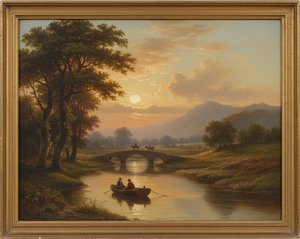
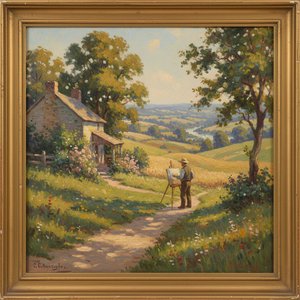
upon immigrating to new zealand at 27, watkins initially worked as a photographer before teaching in russell. in 1876, he became the first headmaster of the auckland free school of art, marking the beginning of his illustrious career. some of his notable works include:- waikato river (oil on canvas, 1881), a serene depiction of new zealand's natural beauty, showcased at the auckland art gallery toi o tāmaki.
- the haunt of the moa, a scene in puriri forest (oil on canvas, 1885), highlighting his fascination with the country's flora and fauna.
- the phantom canoe: a legend of lake tarawera (oil on canvas, 1888), a mystical piece delving into new zealand's rich cultural heritage. view more of charles henry kennett watkins' artworks on OriginalUniqueArt: https://OriginalUniqueArt.com/@/charles-henry-kennett-watkins
personal life and legacy
on 10 october 1876, watkins married clara eliza alice davis at kerikeri, with whom he had four children. his passing on 31 july 1933 in mercury bay, waikato, marked the end of an era. explore the artist's biography and notable works on wikipedia: https://en.wikipedia.org/wiki/kennett_watkins discover more about new zealand's art scene and its influential figures on OriginalUniqueArt: /en/art/list/
Questions & Answers
What moods do Kennett Watkins's artworks express?
Kennett Watkins's works can be browsed by mood on the artist's Mood Room page, which arranges the artworks by their recorded moods.
What are the birthplace and birth year of Kennett Watkins?
Kennett Watkins was born in Ooty in 1847.
Is there a chronological account of Kennett Watkins?
Kennett Watkins's career unfolds period by period on the artist's Chronicle page: a horizontal timeline of the artworks, grouped into career-period chapters.