Early Influences & Academic Foundations: Weir's Parisian Training
 Wikipedia: J. Alden Weir
Julian Alden Weir (August 30, 1852 – December 8, 1919) was an American impressionist painter and member of the Cos Cob Art Colony near Greenwich, Connecticut. Weir was also one of the founding members of "The Ten", a loosely allied group of American ...
Julian Alden Weir’s artistic journey began not amidst the blossoming landscapes he would later immortalize, but within the rigorous traditions of European academic painting. Born in 1852 into a family steeped in art—his father, Robert Walter Weir, was a respected professor at West Point—the young Julian inherited a deep appreciation for draftsmanship and historical subject matter. However, it was his four years spent studying at the École des Beaux-Arts in Paris during the 1870s that fundamentally shaped his early technique. While immersed in the Parisian art world, Weir initially embraced the established norms of realism, diligently honing his skills under masters like Jean-Léon Gérôme. He excelled in meticulous detail and precise rendering, a style reflected in his initial works. Yet, even during this period of formal training, a subtle restlessness began to emerge—a questioning of rigid conventions that would ultimately lead him down a different path. His letters from the time reveal a growing discomfort with what he perceived as the artificiality of academic painting, foreshadowing his eventual embrace of a more direct and emotionally resonant approach.
The Shift Towards Impressionism: Embracing Light and Atmosphere
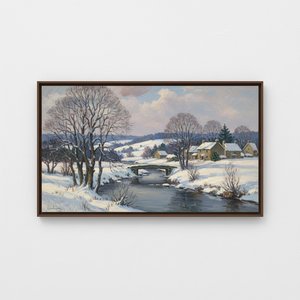
 Ravine near Branchville
Experience 'Ravine near Branchville' by Julian Alden Weir – a serene 1915 American Impressionist landscape. Explore its tranquil beauty & masterful technique at our gallery.
Upon returning to New York in 1877, Weir found himself at a pivotal crossroads. While he initially struggled with the burgeoning Impressionist movement—famously dismissing early examples as “horrible things” lacking drawing and form—his encounters with fellow artists like John Twachtman and Theodore Robinson proved transformative. These friendships sparked a gradual but profound shift in his artistic philosophy. Weir began to experiment with capturing fleeting moments of light and atmosphere, moving away from the precise detail of his earlier work towards a looser, more expressive brushstroke. This wasn’t an immediate conversion; rather, it was a carefully considered evolution influenced by Japanese prints—their flattened perspectives, asymmetrical compositions, and subtle tonal variations—and a growing desire to depict the subjective experience of nature. He found himself increasingly drawn to the idea of conveying *sentiment* through color and light, rather than simply replicating visual reality. This period marked a crucial turning point, laying the groundwork for his signature style.
Weir Farm: A Sanctuary for Artistic Innovation and Rural Scenes
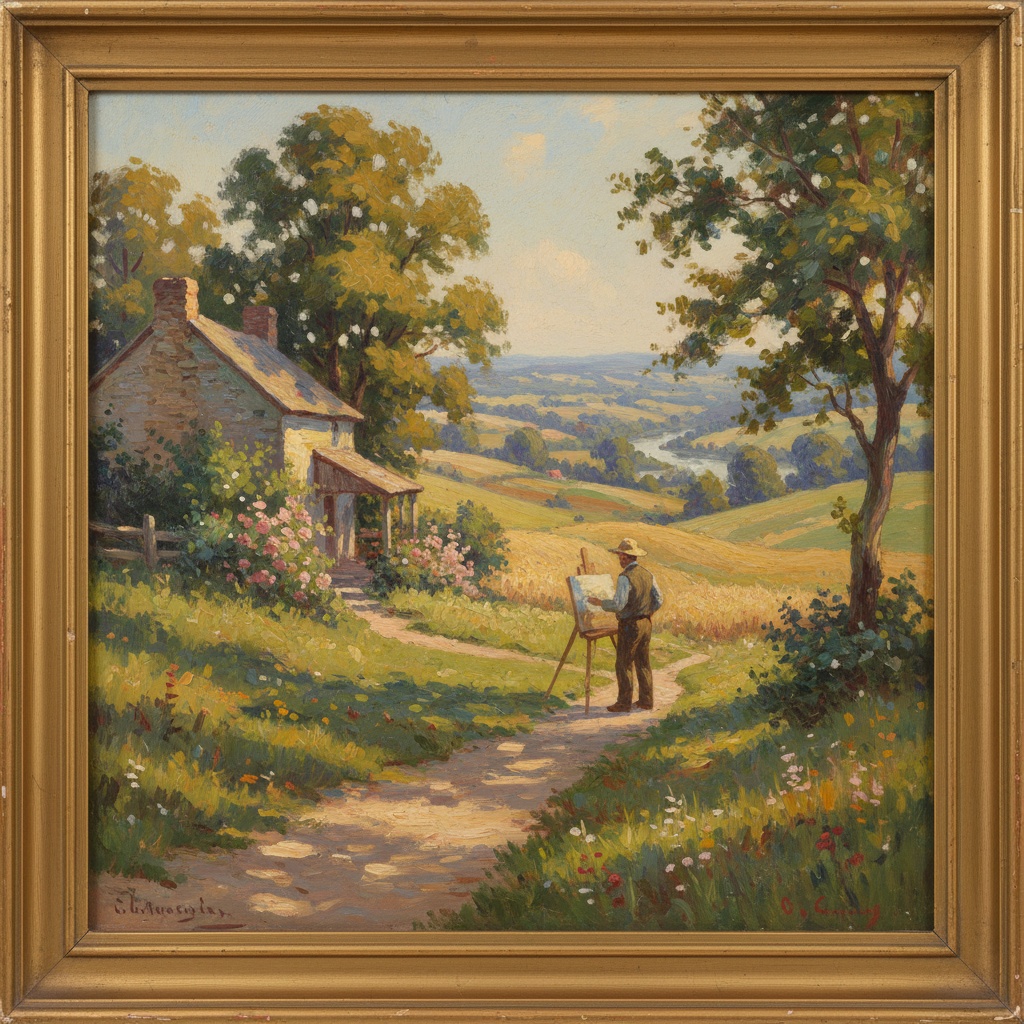
The acquisition of farm property in Branchville, Connecticut, in 1883 proved to be a watershed moment in Weir’s career. This idyllic setting—a sprawling homestead surrounded by rolling hills and tranquil landscapes—became more than just a home; it was a sanctuary for artistic exploration and the wellspring of his most enduring work. Here, away from the pressures of the New York art world, Weir could fully immerse himself in the beauty of rural life. The farm provided endless inspiration: sleeping dogs bathed in sunlight, waving grasses shimmering in the breeze, and the quiet presence of his wife, Anna, tending to her garden. These seemingly simple subjects became the focus of his paintings, imbued with a sense of peace and tranquility that resonated deeply with viewers. The landscape wasn’t merely depicted; it was *felt*. Weir's brother aptly described the farm as “a pleasant place for retreat,” and it truly became a haven where he could refine his technique and develop his unique artistic voice.
Genre Painting & the Depiction of American Life in Weir’s Work
While often categorized as an Impressionist, Julian Alden Weir's work also demonstrates a strong affinity for genre painting—the depiction of everyday life. However, he elevated this tradition beyond mere documentation. His scenes weren’t simply records of rural existence; they were carefully constructed compositions that explored the changing landscape of late 19th-century America. Paintings like U.S. Thread Company Mills, Willimantic, Connecticut (1893) offer a nuanced portrayal of industry coexisting with nature, showcasing both the progress and potential anxieties of the era. Similarly, Ploughing for Buckwheat (New England Plowman) captures the dignity and labor of agricultural life, presenting a romanticized yet realistic vision of rural work. Weir’s ability to imbue these scenes with a sense of quiet contemplation—a harmonious balance between human activity and natural beauty—distinguished him from his contemporaries. He wasn't simply painting what he saw; he was capturing the *essence* of American life.
‘The Ten’ and Weir’s Legacy within American Art History
In 1897, Weir joined forces with a group of like-minded artists—including Childe Hassam, John Twachtman, and J. Alden Weir—to form “The Ten,” a loosely allied collective dissatisfied with the constraints of traditional art organizations. This marked a significant moment in American art history, as ‘The Ten’ sought to establish an independent platform for exhibiting their work and promoting a more modern aesthetic. Weir served as a unifying force within the group, advocating for artistic freedom and encouraging experimentation. His leadership helped solidify the movement's reputation and paved the way for greater acceptance of Impressionism in America. Beyond his role in ‘The Ten’, Weir’s influence extended to his students and fellow artists, who admired his dedication to capturing light, atmosphere, and the beauty of the natural world. He became a pivotal figure in shaping the American art landscape.
A Lasting Influence: Exploring Weir's Technique and Enduring Appeal
Julian Alden Weir’s legacy extends far beyond his beautiful paintings. His masterful technique—characterized by subtle brushwork, harmonious color palettes, and a keen eye for composition—continues to inspire artists today. He wasn’t merely replicating scenes; he was translating emotions onto canvas, capturing the fleeting beauty of light and atmosphere with remarkable sensitivity. The enduring appeal of his work lies in its ability to evoke a sense of peace, tranquility, and connection to nature. Whether depicting a quiet farm scene or an industrial landscape, Weir consistently demonstrated a profound respect for his subjects and a commitment to artistic integrity. For those seeking to understand the evolution of American Impressionism and the power of capturing the essence of rural life, Julian Alden Weir remains a truly captivating and influential figure. Explore the serene beauty of his paintings at OriginalUniqueArt.com and discover the timeless appeal of this quiet master.