Romanticism
A gun crew (Томас Стотхард)
Томас Стотхард (1755–1834) створив A gun crew. Він належить до напряму Romanticism. Виконано в Oil On Canvas.
- Oil On Canvas

 Переглянути в інтер'єрі

 Картина олією ручної роботи
 Надіслати як листівку
 Поділитися
 Інформаційна картка


 Завантажити
 Схожі екземпляри
 Рентгенівське дослідження
 Слайд-шоу
 Питання та відповіді

 Статистика
A gun crew коротко
- Назва
- A gun crew
- Художник
- Томас Стотхард (1755–1834)
- Рік народження митця
- Лондон, Сполучене Королівство
- Матеріал
- Oil On Canvas
- Рух
- Romanticism
- Період
- 19th Century
- Сюжет
- maritime struggle, shipwreck rescue, human resilience, dramatic coastline, 18th century seafaring, historical labor
Що зображено на A gun crew?
The Subject and Artist of the Work
In the dramatic scene of A gun crew, the viewer finds themselves amidst a chaotic struggle on a rugged, rocky shore. Sailors strain with every ounce of their strength, their bodies leaning into the heavy weight of a massive object—perhaps a piece of a shipwreck or a heavy fragment of debris—as they attempt to haul it from the sea. The air feels thick with the exertion of these men, caught in a moment of intense physical toil against the unyielding elements. This struggle highlights the sheer hardship and resilience required to survive the unpredictable nature of the ocean.
The artist behind this intense depiction is Thomas Stothard. Born in London, United Kingdom, Stothard brings a sense of narrative urgency to the canvas, focusing on the human cost of maritime life. He moves away from mere stillness to capture the very essence of desperation and the precariousness of existence at sea. Every figure in the composition seems locked in a battle against overwhelming forces, both natural and man-made, as they fight to reclaim something from the waves.
Composition and Visual Elements
The scene unfolds within a tightly packed space that pulls the viewer directly into the heart of the chaos. Figures cluster together in a frantic mass, their bodies overlapping to convey a sense of urgent, shared struggle. Every movement feels compressed, as if the very air is heavy with the effort of the men. Diagonal lines, formed by the straining ropes and the angled limbs of the sailors, cut through the frame to lead the eye toward the central point of action. This arrangement creates a feeling of immediacy, trapping the viewer within the struggle.
A flattened perspective heightens this sense of claustrophobia, making the rocky shore and the wreckage feel as though they are pressing inward. Light does not merely fall upon the scene; it seems to emanate from multiple sources, pouring down from above and glowing from within the wreckage itself. These light sources cast dramatic shadows that define the rugged textures of the environment and the straining muscles of the crew. The interplay of light and shadow emphasizes the desperation of the moment, highlighting the raw power of nature as it clashes against human resilience.
Technique and Artistic Style
The oil paint clings to the canvas with a heavy, impasto-like texture, particularly where the wreckage meets the shore. This thick application of pigment gives the scene a tactile, rugged quality, making the struggle feel physically present. The brushwork is not precise; instead, it is loose and expressive, using energetic strokes to capture the sudden movement and the chaotic energy of the sailors. Every layer of paint contributes to a sense of depth and turmoil, as if the medium itself is caught in the same upheaval as the figures on the rocks.
The style leans heavily into Romanticism, prioritizing raw emotion and the intensity of the moment over clinical realism. This emotional weight is carried by a dark and earthy color palette. Deep browns and blacks dominate the shadows, while strong, sudden bursts of red pull the eye through the darkness. Light emanates from multiple sources, appearing to glow from within the wreckage itself and from above, casting dramatic shadows that heighten the sense of urgency. The result is a scene defined by tension and the visceral power of the elements.
Зображення високої роздільної здатності A gun crew
Суспільне надбання: художник помер у 1834 році.
Томас Стотхард, A gun crew. Суспільне надбання
Відповіді на запитання про A gun crew
Яка техніка була використана для створення «A gun crew» роботи Томас Стотхард?
Для створення «A gun crew» Томас Стотхард використав(ла) техніку Oil On Canvas. Саме ця техніка визначає матеріальну природу оригінального твору.
Що зображено на творі «A gun crew» роботи Томас Стотхард?
«A gun crew» роботи Томас Стотхард зображує: maritime struggle, shipwreck rescue, human resilience, dramatic coastline, 18th century seafaring, historical labor, force of nature.
Чи можна вільно відтворювати зображення «A gun crew» роботи Томас Стотхард?
Щодо авторського права, «A gun crew» є є суспільним надбанням — термін дії авторського права закінчився.
Хто є автором твору "A gun crew"?
«A gun crew» було створено Томас Стотхард. Інформація на цій сторінці описує оригінальний твір Томас Стотхард.
До якого стилю належить "A gun crew"?
«A gun crew» — це твір у стилі Romanticism. Назва течії вказує на художню традицію, до якої належить цей твір.
До якого періоду творчості Томас Стотхард належить твір "A gun crew"?
«A gun crew» належить до Mature Period творчого шляху Томас Стотхард. Ця класифікація пов’язує твір із етапом становлення митця.
Яким чином обґрунтовано статус авторського права на «A gun crew» роботи Томас Стотхард?
«A gun crew» за авторством Томас Стотхард перебуває у є суспільним надбанням — термін дії авторського права закінчився. Термін дії авторського права розраховується з року смерті митця; Томас Стотхард помер(ла) у 1834.
Яке місце посідає «A gun crew» у творчому дорозі Томас Стотхард?
«A gun crew» належить до Romanticism творчості Томас Стотхард, чиї характерні теми включають classical & romantic blend, seafaring hardship depicted, humanity vs. nature's force, british maritime history, stothard's sentimental style, illustrative historical scenes, moralizing narrative art.
Чи є "A gun crew" типовим для звичного стилю Томас Стотхард?
Серед відомих тем Томас Стотхард, як і в classical & romantic blend, seafaring hardship depicted, humanity vs. nature's force, british maritime history, stothard's sentimental style, illustrative historical scenes, moralizing narrative art, у творі «A gun crew» особливий акцент зроблено на maritime struggle, shipwreck rescue, human resilience, dramatic coastline, 18th century seafaring, historical labor, force of nature.
Про художника Томас Стотхард

1755–1834, Сполучене Королівство
Томас Стотхард
Томас Стотхард: Ткач мрій та історичного відлуння Народжений у гамірному серці Лондона в 1755 році, Томас Стотхард прожив життя, що нагадувало гобелен, витканий із ниток витонченої краси, художнього учнівства та незгасної пристрасті до розповіді історій. Його ранні роки були позначені крихким здоров'ям — дитинство, проведено переважно далеко від дому через фізичну вразливість — проте саме цей період виховав у ньому глибоку здатність до тихого споглядання, що згодом стане основою його мистецтва. Свій творчий шлях він розпочав як малювальник візерунків для парчових шовків; ця навичка прищепила йому гострий погляд на деталі та глибоке розуміння текстури й кольору — якості, які він згодом перенесе у свої знамениті ілюстрації. Формальне навчання Стотхарда розпочалося в Королівській академії в 1778 році, що стало поворотним моментом, який спрямував його до кар'єри, присвяченої візуальному наративу.
Також за участю Томас Стотхард
 The Supper by the Fountain1820
 Portrait Of General Francis Marion )1732
 The Return of Othello, 'Othello,' Act II, Scene II1799
 The Horrors of War, Sketch for Burghley House Mural1800
Есе до твору A gun crew
 Emotion vs. Observation: A Guide to Romanticism and RealismMaster the differences between Romanticism and Realism through expert analysis. Discover the art of emotion versus observation now.
 Echoes of Conflict: A Curated Exploration of Art Capturing the Intensity of War and Human ResilienceExplore a profound collection of historical war art. From visceral realism to poignant depictions of human resilience, discover museum-qual…
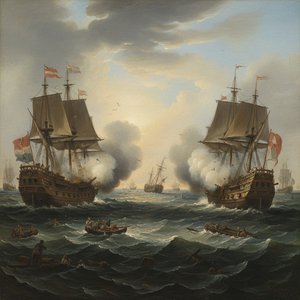 Masterpieces of Maritime Warfare: The Artistry and Intensity of Naval Combat in Historical PaintingExplore the dramatic intensity of naval combat through art history. From Romanticism to classical maritime masterpieces, discover how legen…