Berlin Secession · 1900
Salome, Second Version (Ловіс Корінт, 1900)
Ловіс Корінт (1858–1925) створив Salome, Second Version. Дата створення — 1900. Він належить до напряму Berlin Secession. Виконано в Acrylic On Canvas. Екземпляр зберігається в Museum der bildenden Künste у Лейпциг, Німеччина. Розмір: 127 × 148 cm
- 1900
- Acrylic On Canvas
- 127 × 148 cm
- Museum der bildenden Künste, Лейпциг

 Переглянути в інтер'єрі

 Картина олією ручної роботи
 Надіслати як листівку
 Поділитися
 Інформаційна картка


 Завантажити
 Схожі екземпляри
 Рентгенівське дослідження
 Слайд-шоу
 Питання та відповіді

 Статистика
Salome, Second Version коротко
- Назва
- Salome, Second Version
- Художник
- Ловіс Корінт (1858–1925)
- Рік народження митця
- Гвардєйськ, Росія
- Дата
- 1900
- Матеріал
- Acrylic On Canvas
- Розміри
- 127 × 148 cm
- Де подивитися
- Museum der bildenden Künste, Лейпциг, Німеччина
- Період
- 19th Century
- Сюжет
- salome, herodias, dance, tragedy, execution, biblical
Що зображено на Salome, Second Version?
A Descent into Shadow and Desire: Lovis Corinth’s ‘Salome, Second Version’
Lovis Corinth's “Salome, Second Version,” painted in 1900, isn’t merely a depiction of the biblical tale; it’s a visceral exploration of power, betrayal, and the unsettling allure of darkness. This arresting canvas, currently residing within the Museum der Bildenden Künste in Leipzig, immediately commands attention with its dramatic composition and intensely expressive palette. Corinth, a pivotal figure bridging Impressionism and Expressionism, masterfully eschews traditional romanticism, instead presenting a Salome far removed from the idealized figures of earlier portrayals. Instead of a passive object of desire, she emerges as a complex, almost defiant presence – a woman caught in the throes of her own ambition and haunted by the consequences of her actions.
The painting’s genesis lies within the turbulent artistic landscape of early 20th-century Berlin. Corinth, having moved there from Munich, found himself at the heart of a vibrant, often contentious, art scene. The Secession group, with its emphasis on freedom and innovation, provided a fertile ground for his evolving style. “Salome” reflects this period’s fascination with psychological depth and emotional intensity – a departure from the polished surfaces of academic painting. Corinth deliberately chose to revisit the legend, not as a straightforward narrative illustration, but as an opportunity to delve into the character's inner turmoil and the moral ambiguity at the heart of the story.
The Dance and its Discontents: Technique and Composition
Corinth’s technique is immediately striking. He employs a bold, almost frenetic brushstroke – thick impasto applied with visible energy – that imbues the canvas with a sense of movement and urgency. The colors are rich and saturated, dominated by deep reds, purples, and blacks, creating an atmosphere of dramatic intensity. The composition itself is carefully constructed to draw the viewer into the scene. Salome, positioned centrally, dominates the foreground, her body tilted forward in a pose that suggests both vulnerability and calculated seduction. The figures surrounding her – the servant bearing the head, the watchful woman with the fan, and the shadowy men – are rendered with varying degrees of detail, contributing to the painting’s overall sense of unease and disorientation.
- Brushwork: Thick, expressive strokes create a dynamic and unsettling effect.
- Color Palette: Dominated by deep reds, purples, and blacks, evoking drama and shadow.
- Composition: Salome is centrally positioned, drawing the viewer's eye and emphasizing her role as the focal point of the scene.
Symbolism and Interpretation: A Portrait of Moral Ambiguity
Beyond the literal depiction of the biblical story, “Salome” is laden with symbolic meaning. The dance itself represents a dangerous allure – a seductive invitation to transgression. The severed head on the platter isn’t simply a gruesome trophy; it's a potent symbol of ambition and the destructive consequences of unchecked desire. Corinth deliberately avoids offering a clear moral judgment, instead presenting a complex portrait of a woman driven by both her own desires and the manipulative influence of her mother. The inclusion of the fan-bearing woman, often interpreted as Herodias, adds another layer of intrigue, suggesting a conspiracy at play – a deliberate orchestration of events that leads to John the Baptist’s demise.
Furthermore, the painting can be viewed through the lens of the burgeoning feminist movement of the time. Salome's defiant gaze and her unapologetic embrace of her sexuality challenged traditional notions of female virtue and presented a powerful image of female agency – albeit one ultimately consumed by tragedy. Corinth’s decision to portray her as a figure of both beauty and menace reflects the complex and often contradictory attitudes towards women in early 20th-century society.
Emotional Resonance: A Timeless Exploration of Human Darkness
“Salome, Second Version” continues to resonate with viewers today because it taps into fundamental human emotions – desire, betrayal, guilt, and the haunting awareness of our own mortality. Corinth’s masterful use of color, composition, and symbolism creates a painting that is both visually arresting and psychologically profound. It's not a comfortable image; it confronts us with the darker aspects of human nature and reminds us that even in moments of apparent beauty and pleasure, there can be a lurking sense of unease and impending doom. Reproductions of this powerful work offer a glimpse into Corinth’s artistic genius and provide an opportunity to contemplate the timeless themes explored within its shadowed depths.
У якому музеї зберігається Salome, Second Version?
Museum der bildenden Künste
Лейпциг, Німеччина
Спад, викуваний часом: Душа мистецького серця Лейпцига У яскравому культурному ландшафті Саксонії, Німеччина, височіє інституція, що є набагато більшим, ніж просто сховищем шедеврів; це живий завіт людській стійкості та незламній силі творчості. Museum der bildenden Künste (MdbK) у Лейпцигу втілює в собі сім століть мистецьких зусиль, плетучи оповідь, що простягається від пізнього Середньовіччя до передових рубежів сучасної практики. Заснований у 1837 році як Лейпцизьке мистецьке товариство, шлях музею був шляхом глибокої трансформації, позначеним тінями руйнувань та блиском відродження.


Зображення високої роздільної здатності Salome, Second Version
Суспільне надбання: художник помер у 1925 році.
Ловіс Корінт, Salome, Second Version (1900), Museum der bildenden Künste. Суспільне надбання
Відповіді на запитання про Salome, Second Version
Де сьогодні можна побачити «Salome, Second Version» роботи Ловіс Корінт?
Оригінал твору «Salome, Second Version» можна побачити в Museum der bildenden Künste, Лейпциг, Німеччина.
У якому році було створено «Salome, Second Version» роботи Ловіс Корінт?
«Salome, Second Version» роботи Ловіс Корінт було створено у 1900 році.
Яка техніка використана у творі "Salome, Second Version"?
Для створення «Salome, Second Version» Ловіс Корінт використав(ла) техніку Acrylic On Canvas. Саме ця техніка визначає матеріальну природу оригінального твору.
Які розміри оригіналу "Salome, Second Version"?
Розмір оригіналу «Salome, Second Version» роботи Ловіс Корінт становить 127 x 148 cm.
Які сюжети зображені у «Salome, Second Version» роботи Ловіс Корінт?
Тематика, представлена у «Salome, Second Version» роботи Ловіс Корінт, включає salome, herodias, dance, tragedy, execution, biblical, figures. Разом вони підсумовують зміст твору.
Чи не захищений твір "Salome, Second Version" авторським правом?
«Salome, Second Version» роботи Ловіс Корінт перебуває у є суспільним надбанням — термін дії авторського права закінчився. Цей статус визначає правила відтворення зображення твору.
Хто є автором твору "Salome, Second Version"?
«Salome, Second Version» приписують Ловіс Корінт.
До якого художнього напряму належить «Salome, Second Version» роботи Ловіс Корінт?
Мистецький напрям, до якого належить «Salome, Second Version» роботи Ловіс Корінт, — це Berlin Secession. Така класифікація дозволяє розмістити цей твір у контексті суміжних митців та творів мистецтва.
Яке місце посідає «Salome, Second Version» у творчому шляху Ловіс Корінт?
У межах творчого шляху Ловіс Корінт твір "Salome, Second Version" належить до періоду Berlin Secession Era. Ця фаза дозволяє порівняти його з іншими роботами митця.
Про художника Ловіс Корінт

1858–1925, Росія
Ловіс Корінт
A Life Forged in Paint: The World of Lovis Corinth Lovis Corinth, народився Франц Генріх Луїс 21 липня 1858 року в Прусській області, що межувала з Ничоліською територією (нинішня Росія), у сільському районі Тауваде. Його дитинство було сповнене фізичної праці та близького контакту з природою – батько працював ковалем, а мати займалася вишивкою. Цей досвід, хоч і не очевидний на перший погляд, заклав основу для його майбутнього бачення світу, яке пронизане спостережливістю та глибоким почуттям до реальності. Спочатку він навчався в Академії Königsberg у 1876 році, але швидко зрозумів, що академічна традиція не зможе задовольнити його творчі амбіції.
Також за участю Ловіс Корінт
 У скотобоях1893
 Вільгельміна з м'ячем1915
 Portrait of the Painter Paul Eugène Gorge1908
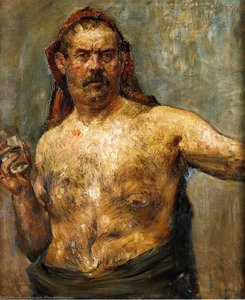 Self Portrait with a Glass1907
Есе до твору Salome, Second Version
 Lovis Corinth: Bridging Impressionism & Expressionism – A Study of Artistic EvolutionExplore the fascinating artistic journey of Lovis Corinth, a pivotal figure bridging Impressionism & Expressionism. Discover his evolution,…
 The Soul of the Brushstroke: Why Textured Impasto Defines the Magic of Impressionist MasterpiecesDiscover the tactile magic of Impressionism. Explore how the impasto technique breathes life into masterpieces through texture and light. E…
 Unveiling the Dreamer: The 25 Most Iconic Masterpieces by Gustave MoreauStep into the dreamlike world of Gustave Moreau. Explore 25 iconic Symbolist masterpieces, from mythic legends to opulent textures. Find in…