Förhandsvisa
 Skicka
 Dela
Dela
 Visa detaljer
 Guide
Guide

 Ladda ner
 Liknande objekt
 Röntgen
 Bildspel
 Q&A
Q&A Statistik
Showing at Tattersall's
 Oil On Panel
- WallArt
- British Modernism
 1919
1919- Modern
 58.0 x 71.0 cm
 Ashmoleanmuseet i Oxford
 Visa mer
Giclée / Konsttryck
Giclée- eller canvasprint av museumskvalitet med snabb produktion och flexibla ytbehandlingsalternativ. ( Beställ handmålad reproduktion Byt till digital bild)




P118B Skr10

P118H Skr10

P118W Skr10

P438Z Skr10

P508JH Skr12

P508YH Skr12

P805H Skr10

P805Z Skr10

P919BZ Skr10

P919G Skr10

P919XJ Skr10

P959ZH Skr10

P968JZ Skr12

W106C Skr8

W218G Skr10

W218JH Skr8

W218Y Skr10

W307PJ Skr10

W316G Skr10

W316PJ Skr8

W316Y Skr10

W398PJ Skr8

W4111J Skr10

W500HY Skr15

W500JH Skr15

W692G Skr12

W849H Skr8

W940BG Skr15

W953PJ Skr8




Välj bland våra förinställda storlekar som motsvarar konstverkets ursprungliga proportioner.

Ange den bredd och höjd du behöver för att passa din ram eller vägg. Ett tryck kan endast beskäras, aldrig göras större än originalbilden, vilket innebär att ett format med en annan proportion leder till att en del av bilden går förlorad. Vi skickar en digital mockup för godkännande innan vi påbörjar tryckningen. Bilden som visas på denna sida visar inte den faktiska beskärningen — det är endast mockuppen som gör det.
Leverans över hela världen () på 2 veckor istället för standard 4/5 veckor. (30 oktober)

Fri expressfrakt över hela världen

Högkvalitativ linnecanvas

Fullständig fraktförsäkring

Garantier för återbetalning av tullavgifter

Garantier för exakt färgåtergivning

100 dagars returrätt (endast vid fel)

100% pengarna tillbaka-garanti

Mängdrabatt erbjuds
 Glasalternativet är endast tillgängligt i storlekar under 110 cm.

Showing at Tattersall's
Giclée / Konsttryck
Storlek på reproduktion
-


Slutgiltigt pris
Skr 800
A Vibrant Snapshot of Racing Tradition
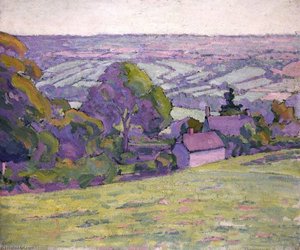
Robert Bevan's “Showing at Tattersall’s,” completed in 1919, stands as a remarkable testament to British Modernism and a captivating portrayal of the social fabric surrounding horse racing during its golden age. This oil on panel painting transcends mere depiction; it captures an atmosphere brimming with energy and ambition—a feeling palpable even through high-quality reproductions. The scene unfolds as a bustling tableau, presenting a horse race unfolding against the backdrop of London’s streets. Bevan skillfully employs diagonal lines to guide the viewer's eye across the canvas, emphasizing the movement of the horses as they surge forward. At the heart of this composition lies a striking blue horse, appearing to gallop with a sense of unbridled power, serving as a focal point that anchors the surrounding chaos.
The painting is far more than a simple record of an event; it is a meticulously crafted tableau vivant, a frozen moment brimming with the energy and social significance of an era. Tattersalls, renowned for its history of selling thoroughbred racehorses, serves here as a microcosm of society, a place where wealth, status, and tradition converged. Through his brush, Bevan captures the excitement of the competition, utilizing warmer tones of reds and yellows emanating from the spectators to highlight the palpable tension and joy of the crowd. For the collector or interior designer, this piece offers a window into a vanished world, bringing a sense of historical prestige and dynamic movement into any contemporary space.
Mastery of Color and Fauvist Influence
Bevan’s artistic approach aligns closely with the burgeoning Fauvist movement, spearheaded by legends like Matisse and Derain. Like his contemporaries, Bevan prioritized expressive color over strict realism, choosing to prioritize emotion and sensation above meticulous detail. This stylistic choice is evident in the textured brushstrokes that imbue the canvas with a palpable sense of immediacy. The dominant hue of striking blue is chosen not just for its visual impact but also to represent prestige and nobility—associations fitting for the legendary auction house. These bold colors are balanced by a sophisticated use of light, where diffused daylight creates an atmospheric depth that anchors the scene.
The technique showcases Bevan's distinctive style, characterized by smooth planes of color, sharp outlines, and a deliberate flattening of perspective. While his approach is reminiscent of Impressionism, he pushes beyond mere representation to achieve a modern abstraction. The figures within the painting are rendered with a remarkable degree of realism, yet they are imbued with a subtle sense of ambiguity; faces are often obscured by hats or coats, suggesting a detachment that emphasizes the spectacle itself rather than individual personalities. This deliberate choice invites the viewer to become an observer within the scene, making the artwork an immersive experience.
A Timeless Addition to the Modern Interior
As a founding member of the Camden Town Group, Robert Bevan sought to capture the gritty yet vibrant realities of London life. “Showing at Tattersall’s” exemplifies this mission, offering a sophisticated blend of movement and stillness. The painting's ability to balance energetic composition with a harmonious color palette makes it an exceptional choice for art lovers seeking pieces that provoke conversation and evoke emotion. Whether placed in a grand gallery or as a focal point in a curated residential collection, the work radiates a sense of vitality.
For those looking to invest in a high-quality reproduction, this piece provides more than just decoration; it offers an infusion of British heritage and modernist innovation. The interplay of the cool blues against the warm, sunlit tones creates a visual rhythm that complements various interior aesthetics, from classic traditionalism to sleek modern minimalism. Owning a piece of this caliber allows one to possess a fragment of the golden age of racing, preserved through the lens of a master who redefined the boundaries of British art.
Frågor och svar
Vilken mättnad och intensitet har "Showing at Tattersall's" av Robert Polhill Bevan?
"Showing at Tattersall's" av Robert Polhill Bevan återges med en Clear Color Presence mättnad och en Vivid intensitet.
Vem är upphovspersonen till "Showing at Tattersall's" och inom vilken stilriktning?
Bakom "Showing at Tattersall's" står Robert Polhill Bevan och British Modernism-rörelsen.
Vilken känsla tillför "Showing at Tattersall's" av Robert Polhill Bevan ett rum?
"Showing at Tattersall's" av Robert Polhill Bevan har en Elegant atmosfär och rekommenderas för ett Living Room. Stämningen är vad verket tillför det omgivande rummet.
Konstnärsbiografi
Robert Polhill Bevan (1865–1925): British Painter & Camden Town Group Founder
Robert Polhill Bevan, born in Hove in 1865, occupies a pivotal yet often understated position within the narrative of early 20th-century British art. Emerging from a Quaker background steeped in banking connections – his parents were Richard Alexander Bevan and Laura Maria Polhill – he defied conventional expectations to become a daring innovator, a key figure in the transition from Impressionism towards more radical explorations of color and form. His journey was one of constant experimentation, absorbing influences from across Europe while forging a distinctly personal artistic vision that would profoundly impact the development of modern art in Britain. Bevan’s early education at Westminster School of Art under Fred Brown provided a solid foundation, but it was his subsequent studies at the Académie Julian in Paris that truly ignited his creative spark. There, he encountered a constellation of rising stars – Paul Sérusier, Pierre Bonnard, Édouard Vuillard, and Maurice Denis – artists who were challenging academic conventions and embracing new approaches to painting. These encounters proved formative, exposing Bevan to the principles of synthetism and laying the groundwork for his future explorations.Brittany, Fauvism, and The Pursuit of Pure Color
The impact of Brittany on Bevan’s artistic development cannot be overstated. Two significant journeys in 1890 and 1891 immersed him in the atmosphere of Pont-Aven, a small coastal town that had become a magnet for artists seeking an alternative to Parisian salon culture. The bold colors and simplified forms championed by artists like Gauguin resonated deeply with Bevan, influencing his early drawings and prints. He was particularly drawn to the luminous landscapes of Breton Brittany – scenes rendered in vibrant hues that prioritized expressive color over accurate representation. This fascination fueled his artistic impulse and cemented his commitment to capturing the emotional essence of nature—a characteristic that would define much of his oeuvre. Around 1904 Bevan embarked on a path of experimentation with pure color, anticipating the emergence of Fauvism on the continent. His painting “Courtyard” stands as a remarkable demonstration of this proto-Fauvist approach, eschewing naturalistic detail in favor of intense chromatic intensity—a boldness that distinguished him from many of his British contemporaries and signaled a decisive break from Impressionist traditions. This stylistic shift was underpinned by an engagement with the ideas of Cézanne and Van Gogh, whose explorations of form and color served as crucial precedents for Bevan’s own artistic endeavors.The Camden Town Group & Collaborative Artistic Spirit
Bevan wasn't merely an individual artist; he actively cultivated connections with fellow creatives who shared his vision for modern British art. He was a founding member of the Fitzroy Street Group, alongside artists like Walter Sickert and Frank Auerbach—a collective dedicated to depicting urban life in London with uncompromising honesty and stylistic innovation. This group’s commitment to capturing the gritty realities of industrial Britain mirrored Bevan's own fascination with the changing social landscape of his time. Furthermore, he established the Camden Town Group in 1911, uniting a cohort of artists who championed bold color palettes and expressive brushwork—a movement that would solidify Bevan’s reputation as a pioneer of British modernism. Collaborations with fellow painters fostered intellectual exchange and propelled artistic experimentation, shaping the trajectory of British art during the formative years of the twentieth century. The influence of Maurice Denis – whose decorative aesthetic resonated deeply with Bevan – is evident in his stylistic choices and underscores the importance of artistic dialogue within the broader context of modernist culture.Landscapes & Artistic Expression: Bevan’s Signature Style
Bevan's artistic output was characterized by a profound engagement with landscape painting—a genre he pursued consistently throughout his career, reflecting both personal passion and intellectual curiosity. His depictions of Sussex landscapes – particularly Hawkridge Farmhouse – are imbued with an understated elegance, capturing the subtle nuances of light and atmosphere through meticulous observation and expressive brushwork. Similarly, his explorations of Breton Brittany—rendered in luminous colors that prioritize emotional resonance over photographic accuracy—demonstrate Bevan’s ability to convey the sublime beauty of the natural world. He skillfully blended Impressionist techniques with elements of Divisionism/Pointillism – a technique pioneered by Georges Seurat – resulting in canvases marked by shimmering surfaces and vibrant color harmonies. This stylistic fusion exemplifies Bevan's commitment to pushing boundaries and experimenting with innovative approaches to artistic representation—a hallmark of his distinctive oeuvre.Legacy & Recognition
Robert Polhill Bevan’s contribution to British art history is undeniable. He remains a vital figure for understanding the complex evolution of British painting in the early twentieth century, embodying the spirit of experimentation and innovation that defined the era. His paintings are held in prestigious collections across Europe and North America—including Brighton Art Gallery, Tate Britain, V&A London, and The Fitzwilliam Museum Cambridge—testament to their enduring artistic merit and historical significance. Bevan’s influence extended beyond his own work, inspiring subsequent generations of artists who embraced bold color palettes and expressive brushwork—a legacy that continues to resonate within the contemporary art world. His retrospective exhibition at Colnaghi's in 1961 served as a crucial moment of recognition, securing his place among the foremost British painters of his time and ensuring that Bevan’s artistic vision would endure for decades to come.
Robert Polhill Bevan
1865 - 1925 , Storbritannien
Kortfakta
- Artistic Movement Or Style: Fauvismus, Divisionism
- Artists Or Movements Influenced By This Artist:
- Camden Town Group
- London Group
- Artists Who Influenced This Artist:
- Paul Gauguin
- Velázquez
- Goya
- Renoir
- Date Of Birth: 1865
- Date Of Death: 1925
- Full Name: Robert Polhill Bevan
- Nationality: Britannien
- Notable Artworks:
- The Farmhouse
- Ploughing on the Downs
- Queen’s Grove
- The Cab Horse
- Place Of Birth: Hove, United Kingdom
Relaterade artiklar
The Noble Steed on Canvas: A Historical & Artistic Exploration of Horse Painting Across Cultures
Explore the rich history of horse painting! Discover masterpieces from Stubbs to Munnings & learn about symbolism, techniques & artists. Find museum-quality reproductions at OriginalUniqueArt.

Hubert Robert: Picturing Ruins, Preserving Memory – A Study of Romantic Antiquarianism & Artistic Innovation
Explore the captivating world of Hubert Robert, master of Romantic landscape painting & 'capriccio' ruins. Discover his historical context, artistic innovations, and collecting insights with OriginalUniqueArt.

The Equine Muse: A Historical & Artistic Exploration of Horses in Painting
Explore the captivating history of horses in painting! Discover Renaissance masterpieces, Baroque grandeur & expert insights for collecting equestrian art. Learn about symbolism, techniques & lasting value with OriginalUniqueArt.
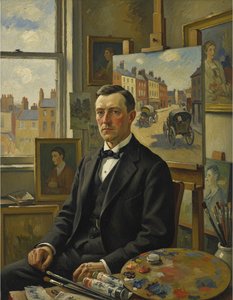
Robert Bevan: Pioneering British Post-Impressionism & the Camden Town Group's Intimate Vision
Explore the life & work of Robert Bevan, a pioneer of British Post-Impressionism and founding member of the Camden Town Group. Discover his vibrant landscapes and lasting impact on early 20th-century art.
The Noble Steed: A Historical and Artistic Exploration of Horses in Fine Art
Explore the rich history of horses in fine art! From ancient depictions to Renaissance masterpieces & beyond, discover iconic artworks and artists. Learn about symbolism, techniques, and find museum-quality reproductions at OriginalUniqueArt.