
 Förhandsvisa
 Skicka
 Dela
Dela
 Visa detaljer

 Ladda ner
 Liknande objekt
 Röntgen
 Bildspel
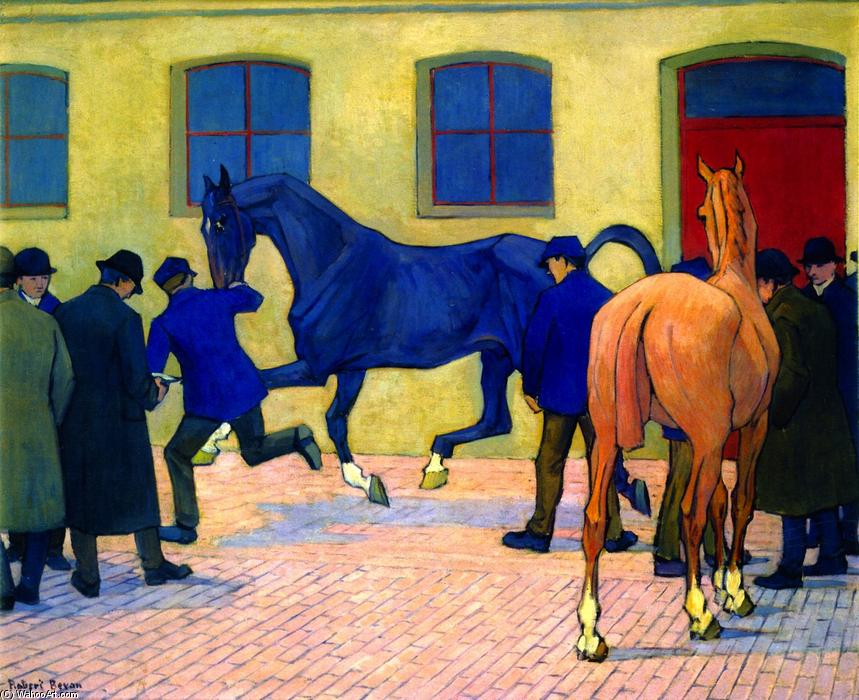
Showing at Tattersall's
 Oil On Panel
- British Modernism
 1919
1919 58.0 x 71.0 cm
 Ashmoleanmuseet i Oxford
 Visa mer
Handgjord oljereproduktion
Handmålad olja på duk i din valda storlek och ram, tillverkad efter beställning av våra konstnärer. ( Beställ tryck Köp högupplöst bild)




P118B $10

P118H $10

P118W $10

P438Z $10

P508JH $12

P508YH $12

P805H $10

P805Z $10

P919BZ $10

P919G $10

P919XJ $10

P959ZH $10

P968JZ $12

W106C $8

W218G $10

W218JH $8

W218Y $10

W307PJ $10

W316G $10

W316PJ $8

W316Y $10

W398PJ $8

W4111J $10

W500HY $15

W500JH $15

W692G $12

W849H $8

W940BG $15

W953PJ $8




Välj bland våra förinställda storlekar som motsvarar konstverkets ursprungliga proportioner.

Du kan ange egna mått för att passa en specifik ram eller yta. Om den valda storleken inte matchar originalbildens proportioner kommer vi antingen att beskära konstverket eller utöka målningen med ytterligare handmålade element. En digital skiss skickas till dig för godkännande innan produktionen påbörjas.
Observera att förhandsvisningen på skärmen inte återspeglar den faktiska beskärningen eller utökningen. Endast skissen visar den slutgiltiga kompositionen korrekt.
Även om anpassade storlekar är möjliga, rekommenderar vi att du väljer en dimension från den fördefinierade listan för att bevara originalproportionerna.
Efter beställning kommer OriginalUniqueArt.com team att mejla kunden för instruktioner och tillhandahålla en skissförhandsvisning
Leverans över hela världen () på 3–4 veckor istället för standard 5 veckor. (21 augusti). Inga kompromisser med kvaliteten.

Fri expressfrakt över hela världen

Högkvalitativ linnecanvas

Fullständig fraktförsäkring

Garantier för återbetalning av tullavgifter

Garantier för exakt färgåtergivning

60 dagars returrätt (endast vid fabrikationsfel)

100% pengarna tillbaka-garanti

Mängdrabatt erbjuds
 Glasalternativet är endast tillgängligt i storlekar under 110 cm.

Showing at Tattersall's
Reproduktionsmedium
Storlek på reproduktion
-


Slutgiltigt pris
$ 300
Beskrivning av konstverket
A Vibrant Snapshot of Racing Tradition: Examining Robert Bevan’s “Showing at Tattersall’s”
Robert Bevan's "Showing at Tattersall’s," completed in 1919, stands as a remarkable testament to British Modernism and a captivating portrayal of the social fabric surrounding horse racing during its golden age. Currently residing within the Ashmolean Museum’s collection in Oxford, this oil on panel painting transcends mere depiction; it captures an atmosphere brimming with energy and ambition—a feeling palpable even through reproductions. Bevan's masterful use of color and composition elevates the scene beyond a simple record of an event, transforming it into a symbol of dynamism and aspiration.The Scene Unfolds: Composition and Color Palette
At first glance, “Showing at Tattersall’s” presents a bustling tableau—a horse race unfolding against the backdrop of London’s streets. Bevan skillfully employs diagonal lines to guide the viewer's eye across the canvas, emphasizing the movement of the horses as they surge forward. The dominant hue is a striking shade of blue, chosen not just for its visual impact but also perhaps to represent prestige and nobility—associations fitting for Tattersall’s auction house, renowned for its history of selling thoroughbred racehorses. Complementing this bold color are warmer tones – reds and yellows – emanating from the spectators and highlighting the excitement of the competition. These contrasting hues create a harmonious balance that underscores the painting's emotional resonance.Bevan’s Style: Fauvist Influences and Camden Town Group Aesthetic
Bevan’s artistic approach aligns closely with the burgeoning Fauvist movement, spearheaded by artists like Matisse and Derain. Like his contemporaries, Bevan prioritized expressive color over strict realism, prioritizing emotion and sensation above meticulous detail. This stylistic choice is evident in the textured brushstrokes that imbue the canvas with a palpable sense of immediacy. Furthermore, Bevan’s affiliation with the Camden Town Group—a collective dedicated to documenting urban life—is discernible in the painting's depiction of London’s environment. The artist skillfully captures the gritty realism of the city alongside the grandeur of the horse racing spectacle, reflecting the group’s broader ambition to portray modern Britain in all its complexity.Symbolism Beyond the Race Track
Beyond the immediate visual drama of the race itself, “Showing at Tattersall’s” carries deeper symbolic significance. The horses represent not only physical prowess but also status and success—aspirations shared by both participants and observers. The positioning of figures around the horses underscores the importance of social interaction and hierarchy within this cultural institution. Bevan's deliberate framing invites contemplation on themes of ambition, tradition, and the pursuit of excellence – ideas that resonate powerfully even today.Emotional Impact: Capturing a Moment in Time
Ultimately, Bevan’s “Showing at Tattersall’s” succeeds in conveying an unforgettable impression—a snapshot of a pivotal moment in British cultural history. The painting's vibrant colors and dynamic composition evoke feelings of exhilaration and anticipation, transporting the viewer back to 1919 London. It serves as a poignant reminder that art can capture not just what is seen but also what is felt—a legacy cemented by Bevan’s enduring contribution to Modern British Art.Konstnärsbiografi
Robert Polhill Bevan (1865–1925): British Painter & Camden Town Group Founder
Robert Polhill Bevan, born in Hove in 1865, occupies a pivotal yet often understated position within the narrative of early 20th-century British art. Emerging from a Quaker background steeped in banking connections – his parents were Richard Alexander Bevan and Laura Maria Polhill – he defied conventional expectations to become a daring innovator, a key figure in the transition from Impressionism towards more radical explorations of color and form. His journey was one of constant experimentation, absorbing influences from across Europe while forging a distinctly personal artistic vision that would profoundly impact the development of modern art in Britain. Bevan’s early education at Westminster School of Art under Fred Brown provided a solid foundation, but it was his subsequent studies at the Académie Julian in Paris that truly ignited his creative spark. There, he encountered a constellation of rising stars – Paul Sérusier, Pierre Bonnard, Édouard Vuillard, and Maurice Denis – artists who were challenging academic conventions and embracing new approaches to painting. These encounters proved formative, exposing Bevan to the principles of synthetism and laying the groundwork for his future explorations.Brittany, Fauvism, and The Pursuit of Pure Color
The impact of Brittany on Bevan’s artistic development cannot be overstated. Two significant journeys in 1890 and 1891 immersed him in the atmosphere of Pont-Aven, a small coastal town that had become a magnet for artists seeking an alternative to Parisian salon culture. The bold colors and simplified forms championed by artists like Gauguin resonated deeply with Bevan, influencing his early drawings and prints. He was particularly drawn to the luminous landscapes of Breton Brittany – scenes rendered in vibrant hues that prioritized expressive color over accurate representation. This fascination fueled his artistic impulse and cemented his commitment to capturing the emotional essence of nature—a characteristic that would define much of his oeuvre. Around 1904 Bevan embarked on a path of experimentation with pure color, anticipating the emergence of Fauvism on the continent. His painting “Courtyard” stands as a remarkable demonstration of this proto-Fauvist approach, eschewing naturalistic detail in favor of intense chromatic intensity—a boldness that distinguished him from many of his British contemporaries and signaled a decisive break from Impressionist traditions. This stylistic shift was underpinned by an engagement with the ideas of Cézanne and Van Gogh, whose explorations of form and color served as crucial precedents for Bevan’s own artistic endeavors.The Camden Town Group & Collaborative Artistic Spirit
Bevan wasn't merely an individual artist; he actively cultivated connections with fellow creatives who shared his vision for modern British art. He was a founding member of the Fitzroy Street Group, alongside artists like Walter Sickert and Frank Auerbach—a collective dedicated to depicting urban life in London with uncompromising honesty and stylistic innovation. This group’s commitment to capturing the gritty realities of industrial Britain mirrored Bevan's own fascination with the changing social landscape of his time. Furthermore, he established the Camden Town Group in 1911, uniting a cohort of artists who championed bold color palettes and expressive brushwork—a movement that would solidify Bevan’s reputation as a pioneer of British modernism. Collaborations with fellow painters fostered intellectual exchange and propelled artistic experimentation, shaping the trajectory of British art during the formative years of the twentieth century. The influence of Maurice Denis – whose decorative aesthetic resonated deeply with Bevan – is evident in his stylistic choices and underscores the importance of artistic dialogue within the broader context of modernist culture.Landscapes & Artistic Expression: Bevan’s Signature Style
Bevan's artistic output was characterized by a profound engagement with landscape painting—a genre he pursued consistently throughout his career, reflecting both personal passion and intellectual curiosity. His depictions of Sussex landscapes – particularly Hawkridge Farmhouse – are imbued with an understated elegance, capturing the subtle nuances of light and atmosphere through meticulous observation and expressive brushwork. Similarly, his explorations of Breton Brittany—rendered in luminous colors that prioritize emotional resonance over photographic accuracy—demonstrate Bevan’s ability to convey the sublime beauty of the natural world. He skillfully blended Impressionist techniques with elements of Divisionism/Pointillism – a technique pioneered by Georges Seurat – resulting in canvases marked by shimmering surfaces and vibrant color harmonies. This stylistic fusion exemplifies Bevan's commitment to pushing boundaries and experimenting with innovative approaches to artistic representation—a hallmark of his distinctive oeuvre.Legacy & Recognition
Robert Polhill Bevan’s contribution to British art history is undeniable. He remains a vital figure for understanding the complex evolution of British painting in the early twentieth century, embodying the spirit of experimentation and innovation that defined the era. His paintings are held in prestigious collections across Europe and North America—including Brighton Art Gallery, Tate Britain, V&A London, and The Fitzwilliam Museum Cambridge—testament to their enduring artistic merit and historical significance. Bevan’s influence extended beyond his own work, inspiring subsequent generations of artists who embraced bold color palettes and expressive brushwork—a legacy that continues to resonate within the contemporary art world. His retrospective exhibition at Colnaghi's in 1961 served as a crucial moment of recognition, securing his place among the foremost British painters of his time and ensuring that Bevan’s artistic vision would endure for decades to come.
Robert Polhill Bevan
1865 - 1925 , Storbritannien
Kortfakta
- Artistic Movement Or Style: Fauvismus, Divisionism
- Artists Or Movements Influenced By This Artist:
- Camden Town Group
- London Group
- Artists Who Influenced This Artist:
- Paul Gauguin
- Velázquez
- Goya
- Renoir
- Date Of Birth: 1865
- Date Of Death: 1925
- Full Name: Robert Polhill Bevan
- Nationality: Britannien
- Notable Artworks:
- The Farmhouse
- Ploughing on the Downs
- Queen’s Grove
- The Cab Horse
- Place Of Birth: Hove, United Kingdom
Relaterade artiklar
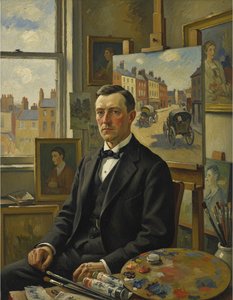
Robert Bevan: Pioneering British Post-Impressionism & the Camden Town Group's Intimate Vision
Explore the life & work of Robert Bevan, a pioneer of British Post-Impressionism and founding member of the Camden Town Group. Discover his vibrant landscapes and lasting impact on early 20th-century art.
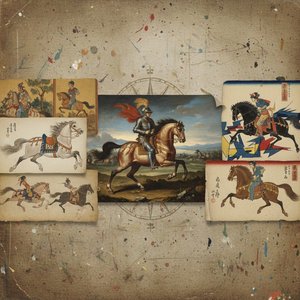
The Noble Steed on Canvas: A Historical & Artistic Exploration of Horse Painting Across Cultures
Explore the rich history of horse painting! Discover masterpieces from Stubbs to Munnings & learn about symbolism, techniques & artists. Find museum-quality reproductions at OriginalUniqueArt.

The Equine Muse: A Historical & Artistic Exploration of Horses in Painting
Explore the captivating history of horses in painting! Discover Renaissance masterpieces, Baroque grandeur & expert insights for collecting equestrian art. Learn about symbolism, techniques & lasting value with OriginalUniqueArt.
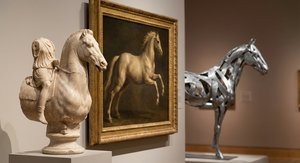
The Noble Steed: A Historical and Artistic Exploration of Horses in Fine Art
Explore the rich history of horses in fine art! From ancient depictions to Renaissance masterpieces & beyond, discover iconic artworks and artists. Learn about symbolism, techniques, and find museum-quality reproductions at OriginalUniqueArt.

Hubert Robert: Picturing Ruins, Preserving Memory – A Study of Romantic Antiquarianism & Artistic Innovation
Explore the captivating world of Hubert Robert, master of Romantic landscape painting & 'capriccio' ruins. Discover his historical context, artistic innovations, and collecting insights with OriginalUniqueArt.



