Portret Карло Маратти

100 najpoznatijih slika umetnika Карло Маратти, svaka potpuno jedinstvena

Ažurirano: новембар 2026 · rangirano prema našem koeficijentu popularnosti (pretrage, posete i porudžbine za svako delo) · 130 dela Карло Маратти u našem katalogu

Ukratko

André Le Nôtre (1681) je slika autora Карло Маратти koja privlači najviše pažnje; original se nalazi u muzeju Château de Versailles, Versaj. Nakon toga, pogled se seli na Apollo Chasing Daphne (1681) i Saint John the Baptist Pointing to Christ in a Landscape (1656). Među 130 dela umetnika Карло Маратти u našem katalogu, ovih 100 su najpoznatija, od kojih je svako jedinstveni original predstavljen sa godinom nastanka, muzejom i razlogom zbog kojeg je i danas neprocenjivo.

1625 – 1713, Camerano Baroque Najviše dela: Bavarske državne slikopisne kolekcije

Top 10 slika umetnika Карло Маратти, iz ugla galerije

1
André Le Nôtre (1681) čiji je Карло Маратти

André Le Nôtre

1681 · Acrylic On Canvas · Château de Versailles, Versaj

André Le Nôtre’s portrait, painted in 1681 by Carlo Maratta, offers a glimpse into the mind of a man who fundamentally reshaped the landscape of Europe. More than simply a gardener, Le Nôtre was the “King of Gardeners,” Controller General of Buildings, Arts and Manufactures for France, and, crucially, Gardener to the King – a position that afforded him unparalleled influence over the aesthetic sensibilities of his era. The painting…

2
Apollo Chasing Daphne (1681) čiji je Карло Маратти

Apollo Chasing Daphne

1681 · Acrylic On Canvas · Musées Royaux des Beaux-Arts, Brisel

Carlo Maratta’s “Apollo Chasing Daphne,” completed in 1681, isn't merely a depiction of Greek mythology; it’s an exquisitely crafted distillation of humanist ideals within the Baroque aesthetic. Hanging proudly at the Musées Royaux des Beaux-Arts in Brussels—a testament to Belgian cultural heritage—the canvas commands attention with its serene composure and subtle dynamism.

3
Saint John the Baptist Pointing to Christ in a Landscape (1656) čiji je Карло Маратти

Saint John the Baptist Pointing to Christ in a Landscape

1656 · Oil · Harvard Art Museums, Kembriđ

A single arm cuts through the air, a diagonal line of intent that directs the eye from the rugged foreground toward a distant, blue-mantled figure. Saint John the Baptist reclines in the landscape, his body angled toward the viewer while his gaze seeks something beyond the immediate frame. He wears a heavy, magenta cloak that anchors the composition, a deep splash of color against the earthy browns and muted greens…

4
Saint John the Evangelist on Patmos (1700) čiji je Карло Маратти

Saint John the Evangelist on Patmos

1700 · Oil On Canvas · Rijksmuseum, Amsterdam

The oil on canvas titled Saint John the Evangelist on Patmos is a work by the Roman painter Carlo Maratta. Created between about 1680 and about 1720, the painting captures a moment of divine transcription. The subject focuses on the evangelist Johannes as he writes upon the island of Patmos.

5
Death of Saint Joseph (1676) čiji je Карло Маратти

Death of Saint Joseph

1676 · Oil On Canvas · Kunsthistorisches Museum, Beč

The air in the room feels heavy with the weight of a final breath. In this 1676 oil painting, the earthly realm and the heavens collide in a single, breathless moment. Below, the mortal figures gather around the bed where Saint Joseph lies in his final hours. The Virgin Mary, Jesus, and Joseph form a central triangle of light, their faces illuminated by a theatrical glow that cuts through the…

6
Portrait of Cavalier Burnes (1676) čiji je Карло Маратти

Portrait of Cavalier Burnes

1676 · Oil · Statens Museum For Kunst, Kopenhagen

Portrait of Cavalier Burnes is a painting by the Italian artist Carlo Maratta. Executed about 1676, this work belongs to the genre of portraiture. It presents a single male figure, capturing the likeness of a man through a focused, bust-length composition.

7
The Flight into Egypt (1664) čiji je Карло Маратти

The Flight into Egypt

1664 · Oil On Canvas · Metropoliten музеј у Њујорку, Њујорк

The air feels heavy with the weight of a sudden departure. In this scene, the Holy Family moves through a landscape that seems to pulse with both urgency and divine grace. The Virgin Mary sits upon a rocky bank, her form draped in a deep blue mantle that rests heavily over a pink robe. She cradles the Christ Child closely, her gaze fixed on the path ahead. To her side,…

8
Madonna and Child (1660) čiji je Карло Маратти

Madonna and Child

1660 · Oil On Canvas · Kunsthistorisches Museum, Beč

This oil painting on canvas presents a close-up view of the upper bodies of the Madonna and Child. The figures are positioned along a diagonal axis that moves from the top left toward the bottom right of the frame. A beam of light descends from the upper left corner, striking the faces of both the mother and the infant. This lighting creates a chiaroscuro effect, where bright highlights on skin…

9
The Painter Andrea Sacchi (1661) čiji je Карло Маратти

The Painter Andrea Sacchi

1661 · Oil On Canvas · Музеј Прадо, Мадрид

The light enters from the upper left, striking a face etched with quiet intelligence. It is the portrait of Andrea Sacchi, captured in the year 1661. A sharp white collar cuts through the darkness, providing a crisp boundary between the skin and the deep blacks of his clothing. The subject sits slightly off-center, his gaze meeting the viewer with a solemn weight. Dark, wavy hair falls in soft, blended strands…

10
The Vanity of the Earthly (1669) čiji je Карло Маратти

The Vanity of the Earthly

The scene unfolds within The Vanity of the Earthly, an allegorical oil painting that captures a moment of profound stillness and reflection. Created by Carlo Maratta, the work emerges from the mid-seventeenth century, dating to about 1669. It exists as a window into the Baroque era, where the weight of existence meets the fleeting nature of worldly pursuits. The subject matter invites a quiet wonder regarding the transient beauty of…

Čuvena dela umetnika Карло Маратти, od 11 do 100

11Madonna and Child Enthroned with Angels and Saints (1680) čiji je Карло МараттиMadonna and Child Enthroned with Angels and Saints1680 · Santa Maria in Vallicella 12Virgin and Child with St John (1704) čiji je Карло МараттиVirgin and Child with St John1704 · Kunsthistorisches Museum 13Adoration of the Shepherds (1690) čiji je Карло МараттиAdoration of the Shepherds1690 · Ermitaž 14Rebecca and Eliezer at the Well (1655) čiji je Карло МараттиRebecca and Eliezer at the Well1655 · Muzej umetnosti u Indianapolisu 15Portrait of a Cardinal (Barberini) (1650) čiji je Карло МараттиPortrait of a Cardinal (Barberini)1650 16Prédication de Saint Jean Baptiste (1655) čiji je Карло МараттиPrédication de Saint Jean Baptiste1655 · Musée des Beaux-Arts de Pau 17Portrait of Giovanni Pietro Bellori (1650) čiji je Карло МараттиPortrait of Giovanni Pietro Bellori1650 18Magdalene in the desert (1650) čiji je Карло МараттиMagdalene in the desert1650 · Музеј Прадо 19The Angel of the Annunciation in a Garland of Flowers (1651) čiji je Карло МараттиThe Angel of the Annunciation in a Garland of Flowers1651 20Study for the altarpiece of Saint Rosalie among the Plague-Stricken (1658) čiji je Карло МараттиStudy for the altarpiece of Saint Rosalie among the Plague-Stricken1658 · Yale University Art Gallery 21Portrait of a gentleman (1650) čiji je Карло МараттиPortrait of a gentleman1650 22Christ and the Samaritan woman. (1650) čiji je Карло МараттиChrist and the Samaritan woman.1650 23Alpheus and Arethusa (1655) čiji je Карло МараттиAlpheus and Arethusa1655 24Depiction in the Temple (1669) čiji je Карло МараттиDepiction in the Temple1669 · Bavarske državne slikopisne kolekcije 25Sleeping, Naked Child (1669) čiji je Карло МараттиSleeping, Naked Child1669 · Bavarske državne slikopisne kolekcije 26Christ on the Mount of Olives (1669) čiji je Карло МараттиChrist on the Mount of Olives1669 · Bavarske državne slikopisne kolekcije 27Mary with Child and Infant John (1669) čiji je Карло МараттиMary with Child and Infant John1669 · Bavarske državne slikopisne kolekcije 28Madonna and Child (1669) čiji je Карло МараттиMadonna and Child1669 · Bavarske državne slikopisne kolekcije 29Pope Clement IX (1669) čiji je Карло МараттиPope Clement IX1669 · Bavarske državne slikopisne kolekcije 30Carolus (1669) čiji je Карло МараттиCarolus1669 · Bavarske državne slikopisne kolekcije 31Bathing wood nymph (1669) čiji je Карло МараттиBathing wood nymph1669 · Bavarske državne slikopisne kolekcije 32Caritas by Carlo Maratti (1669) čiji je Карло МараттиCaritas by Carlo Maratti1669 · Bavarske državne slikopisne kolekcije 33Portrait of Maria Madalena Rospigliosi (1664) čiji je Карло МараттиPortrait of Maria Madalena Rospigliosi1664 34Portrait of Giovanna Garzoni (1665) čiji je Карло МараттиPortrait of Giovanna Garzoni1665 35Portrait of Maria Maddalena Rospigliosi Panciatichi (1664) čiji je Карло МараттиPortrait of Maria Maddalena Rospigliosi Panciatichi1664 36The Rape of Europa (1682) čiji je Карло МараттиThe Rape of Europa1682 · National Gallery of Ireland 37The Flight into Egypt (1677) čiji je Карло МараттиThe Flight into Egypt1677 38The Vision of Saint Stanislas Kostka (1685) čiji je Карло МараттиThe Vision of Saint Stanislas Kostka1685 · Royal Collection 39The Origin of the Red Rose (1676) čiji je Карло МараттиThe Origin of the Red Rose1676 · Statens Museum For Kunst 40The finding of Romulus and Remus (1686) čiji je Карло МараттиThe finding of Romulus and Remus1686 41Bath of Diana (1684) čiji je Карло МараттиBath of Diana1684 42Flora (1690) čiji je Карло МараттиFlora1690 43Virgin and Child (1697) čiji je Карло МараттиVirgin and Child1697 · Statens Museum For Kunst 44The Adoration of the Shepherds (1689) čiji je Карло МараттиThe Adoration of the Shepherds1689 · Statens Museum For Kunst 45Cupids and Garlands of Flowers with a Parrot (1694) čiji je Карло МараттиCupids and Garlands of Flowers with a Parrot1694 46Portrait of Francesca Gommi Maratti (1701) čiji je Карло МараттиPortrait of Francesca Gommi Maratti1701 · Cleveland Museum of Art 47Marchese Niccolò Maria Pallavicini (1650-1714) guided to the Temple of Virtù by Apollo with a Self-portrait of the Artist (1705) čiji je Карло МараттиMarchese Niccolò Maria Pallavicini (1650-1714) guided to the Temple of Virtù by Apollo with a Self-portrait of the Artist1705 48Madonna and Child (1711) čiji je Карло МараттиMadonna and Child1711 · Minneapolis Institute of Art 49The Judgment of Paris (1708) čiji je Карло МараттиThe Judgment of Paris1708 · Tsarskoye Selo 50Assumption of Mary (1713) čiji je Карло МараттиAssumption of Mary1713 · Fries Museum 51Annunciation (1713) čiji je Карло МараттиAnnunciation1713 52Hagar and Ishmael (1701) čiji je Карло МараттиHagar and Ishmael1701 · Музеј Прадо 53Saint John on Patmos (1669) čiji je Карло МараттиSaint John on Patmos1669 · Bavarske državne slikopisne kolekcije 54The Virgin and Child in Glory (1680) čiji je Карло МараттиThe Virgin and Child in Glory1680 · Музеј Прадо 55Portrait of Count Franz Anton Berka of Dubá (1670) čiji je Карло МараттиPortrait of Count Franz Anton Berka of Dubá1670 · Narodna galerija Prag 56Adoration of the Shepherds (1690) čiji je Карло МараттиAdoration of the Shepherds1690 · Ermitaž 57A Young Man (1663) čiji je Карло МараттиA Young Man1663 · Staatliche Museen zu Berlin 58Virgin in contemplation čiji je Карло МараттиVirgin in contemplationМузеј Прадо 59Self-portrait (1684) čiji je Карло МараттиSelf-portrait1684 · British Museum 60Adoration of the Magi (in Garland) čiji je Карло МараттиAdoration of the Magi (in Garland)Ermitaž 61Time driving a boat ferries the four seasons and a sleeping figure toward death (1713) čiji je Карло МараттиTime driving a boat ferries the four seasons and a sleeping figure toward death1713 · Civic Museums of Reggio Emilia 62The Holy Night (The Nativity) (1656) čiji je Карло МараттиThe Holy Night (The Nativity)1656 · Staatliche Kunstsammlungen Dresden 63Retrato de Faustina Maratti. (1686) čiji je Карло МараттиRetrato de Faustina Maratti.1686 64The Virgin Appearing to St Philip Neri (1675) čiji je Карло МараттиThe Virgin Appearing to St Philip Neri1675 · Galleria Palatina 65St. Mark the Evangelist čiji je Карло МараттиSt. Mark the EvangelistМузеј Тисен-Борнемиза 66Self-portrait čiji je Карло МараттиSelf-portrait 67Assumption and the Doctors of the Church (1689) čiji je Карло МараттиAssumption and the Doctors of the Church1689 · Santa Maria del Popolo 68The Virgin teaching the infant Christ to read čiji je Карло МараттиThe Virgin teaching the infant Christ to readFitzwilliam Museum 69The Annunciation čiji je Карло МараттиThe AnnunciationRoyal Collection 70Virgin and Child čiji je Карло МараттиVirgin and ChildFinnish National Gallery 71The Flagellation of Christ čiji je Карло МараттиThe Flagellation of ChristMuzej finih umetnosti u Bostonu 72Virgin Mary čiji je Карло МараттиVirgin Mary 73Nativity čiji je Карло МараттиNativityNacionalni muzej u Krakovu 74The Visitation čiji je Карло МараттиThe Visitation 75The Martyrdom of St. Andrew čiji je Карло МараттиThe Martyrdom of St. Andrew 76The Holy Family With Angels čiji je Карло МараттиThe Holy Family With Angels 77Annunciation čiji je Карло МараттиAnnunciation 78The Birth of the Virgin čiji je Карло МараттиThe Birth of the Virgin 79The Assumption of the Virgin čiji je Карло МараттиThe Assumption of the Virgin 80The Adoration of the Magi čiji je Карло МараттиThe Adoration of the Magi 81The Madonna with the Young Christ Sleeping čiji je Карло МараттиThe Madonna with the Young Christ Sleeping 82The Virgin and Child with the Young St. John the Baptist čiji je Карло МараттиThe Virgin and Child with the Young St. John the Baptist 83Christ and the Samaritan Woman čiji je Карло МараттиChrist and the Samaritan Woman 84Studies for the head of Jael čiji je Карло МараттиStudies for the head of Jael 85Painter Andrea Sacchi čiji je Карло МараттиPainter Andrea Sacchi 86The Madonna and Child čiji je Карло МараттиThe Madonna and Child 87Rebecca and Eliezer at the Well čiji je Карло МараттиRebecca and Eliezer at the Well 88Madonna and Child čiji je Карло МараттиMadonna and Child 89Judith čiji je Карло МараттиJudithKapitolinski muzeji 90Madonna and Child with the Young Saint John the Baptist čiji je Карло МараттиMadonna and Child with the Young Saint John the BaptistDetroit Institute of Arts 91Arcangelo Corelli (1700) čiji je Карло МараттиArcangelo Corelli1700 · Royal College of Music Museum 92The Holy Family čiji je Карло МараттиThe Holy FamilyToledo Museum of Art 93The Sleep of the Infant Jesus, with Musician Angels (1697) čiji je Карло МараттиThe Sleep of the Infant Jesus, with Musician Angels1697 · Luvr 94Study for a Statue of the Apostle Peter (1703) čiji je Карло МараттиStudy for a Statue of the Apostle Peter1703 · Kunstpalast 95Maria Immaculata (1688) čiji je Карло МараттиMaria Immaculata1688 · Slika Galerija Sanssouci 96Hercules and Onfalia čiji je Карло МараттиHercules and Onfalia 97Madonna with Saints Verso čiji je Карло МараттиMadonna with Saints Verso 98The Annunciation čiji je Карло МараттиThe Annunciation 99Holy Family čiji je Карло МараттиHoly Family 100Faith and Justice Enthroned čiji je Карло МараттиFaith and Justice Enthroned

Čuvena dela Карло Маратти po periodima

Motivi koji su privlačili pažnju Карло Маратти

Četiri teme koje se najčešće ponavljaju u ovim originalima, svaka sa svojim vrhunskim primerom.

Muzeji u kojima se čuvaju originalna dela umetnika Карло Маратти

8 muzeja u kojima se nalazi najviše slika sa ove stranice.

Muzej Grad Radovi umetnika Карло Маратти Slike iz ovog spiska
Bavarske državne slikopisne kolekcije, MinhenBavarske državne slikopisne kolekcije Minhen 11 The Vanity of the Earthly, Depiction in the Temple, Sleeping, Naked Child
Музеј Прадо, МадридМузеј Прадо Мадрид 5 The Painter Andrea Sacchi, Magdalene in the desert, Hagar and Ishmael
Statens Museum For Kunst, KopenhagenStatens Museum For Kunst Kopenhagen 4 Portrait of Cavalier Burnes, The Origin of the Red Rose, Virgin and Child
Ermitaž, Sankt PeterburgErmitaž Sankt Peterburg 4 Adoration of the Shepherds, Adoration of the Shepherds, Adoration of the Magi (in Garland)
Kunsthistorisches Museum, BečKunsthistorisches Museum Beč 3 Death of Saint Joseph, Madonna and Child, Virgin and Child with St John
Royal Collection, LondonRoyal Collection London 2 The Vision of Saint Stanislas Kostka, The Annunciation
National Gallery of Ireland, DublinNational Gallery of Ireland Dublin 2 The Rape of Europa
Fitzwilliam MuseumFitzwilliam Museum 2 The Virgin teaching the infant Christ to read

Карло Маратти kroz decenije: jedan jedinstveni original za svaku

Radovi po decenijama

Izaberite deceniju da biste videli original koji je definiše.

Slike umetnika Карло Маратти: pitanja za galeriju

Koje je najpoznatije delo umetnika Карло Маратти?Otkrij odgovor

André Le Nôtre (1681), Château de Versailles, Versaj. Slede Apollo Chasing Daphne (1681) i Saint John the Baptist Pointing to Christ in a Landscape (1656).

U kojoj je godini Карло Маратти stvorio/la André Le Nôtre?Otkrij odgovor

56 godina: André Le Nôtre datira iz 1681, a Карло Маратти je rođen/a 1625.

Koji je deset najpoznatijih slika autora Карло Маратти?Otkrij odgovor

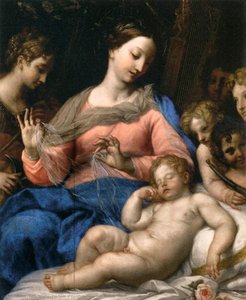
André Le Nôtre, Apollo Chasing Daphne, Saint John the Baptist Pointing to Christ in a Landscape, Saint John the Evangelist on Patmos, Death of Saint Joseph, Portrait of Cavalier Burnes, The Flight into Egypt, Madonna and Child, The Painter Andrea Sacchi i The Vanity of the Earthly. Gornji rang pokazuje godinu i muzej za svako od njih.

Koliko je poznatih dela umetnika Карло Маратти?Otkrij odgovor

Naš katalog sadrži 130 dela umetnika Карло Маратти, datiranih od 1650 do 1713.

Gde se mogu videti najpoznatiji originali umetnika Карло Маратти?Otkrij odgovor

Većinom u Bavarske državne slikopisne kolekcije (Minhen), Музеј Прадо (Мадрид) i Statens Museum For Kunst (Kopenhagen). Tabela muzeja iznad sadrži njih sve.

U kom periodu je Карло Маратти stvorio/la svoje najpoznatije slike?Otkrij odgovor

U 1660s: 18 od 100 dela na ovoj stranici nastalo je tada, od čega je The Flight into Egypt.

Ko je najraniji, a koje je najkasnije čuveno delo umetnika Карло Маратти?Otkrij odgovor

Na ovoj stranici, najstarije delo je iz Portrait of a Cardinal (Barberini) (1650), a najnovije iz Assumption of Mary (1713).

Koje su teme Карло Маратти preferirao/la?Otkrij odgovor

Woman (37), Man (20) i Clouds (17), kroz svih 100 dela na ovoj stranici.

Sa kojim materijalima je Карло Маратти najčešće slikao?Otkrij odgovor

Oil On Canvas, za 36 od 100 dela na ovoj stranici.

Kojem umetničkom pravcu pripada delo umetnika Карло Маратти?Otkrij odgovor

Baroque, sudeći po originalima na ovoj stranici.

Koja originalna dela Карло Маратти mogu videti u Bavarske državne slikopisne kolekcije?Otkrij odgovor

The Vanity of the Earthly, Depiction in the Temple i Sleeping, Naked Child: Bavarske državne slikopisne kolekcije, Minhen čuva 11 dela sa ove stranice.

Карло Маратти: portret umetnika

Мајстор римског барокног класицизма

Карло Марата, често познат као Марати, представља кључну фигуру у италијанском сликарству 17. века, оличавајући прелаз од високог барока ка рафиниранијој и класично инспирисаној естетици. Рођен 15. маја 1625. године у Камерану, у Папској Држави – данас део Италије – његов уметнички пут започео је раног преласка у Рим у доби од једанаест година. Овај релокација се показала трансформативном, јер је ушао у радионицу Андрее Сакија, сликара познатог по мерима композиције и посвећености класичним идеалима. Утицај Сакија би дубоко обликовао Маратинов развијајући се стил, усађујући му преданост јасноћи, равнотежи и суздржаној емоционалности која га је разликовала од разгледнијих савременика барока. Овај учеништво није била само техничка обука; то је било уроњење у филозофски приступ уметности, који даје приоритет интелектуалној строгости и хармоничном дизајну уместо драматичног спектакла. Марата је апсорбовао ове принципе, али се није задржао само у њима, демонстрирајући изванредну способност синтетисања класичних основа са преовладајућим струјањима барокне осетљивости.

Процват каријере у Риму

Маратинов таленат је брзо процветао, и до средине 1650-их већ је привукао значајне поруџбине. Њихова рана дела, као што је *Посета* (1656) за Санта Марију дела Паче, откривају мајсторску команду светлости и покрета, у комбинацији са растућом способношћу да религиозним сценама пружи опипљив осећај духовне дубине. Он једноставно није реплицирао утврђене моделе; он их је обогаћивао својом јединственом визијом, карактерисаном грациозним фигурама, елегантним драперијама и суптилном, али моћном употребом боје. У овом периоду настало је и *Тајна тројства откривена Светом Августину* (око 1655), дело које оличава његову вештину балансирања класичног идеализма са барокном динамиком. Како је његова репутација расла, тако су се повећале размере и престиж његових поруџбина. Постао је омиљени уметник међу истакнутим римским породицама и, што је још важније, самом папству. Током шест деценија, Марата је добио покровитељство од не мање од шест папа – сведочанство његове уметничке снаге и политичке проницљивости. Ова конзистентна папска подршка није пружила само финансијску сигурност, већ га је позиционирала у самом срцу римског уметничког и културног живота.

Синтеза стилова и утицаја

Маратинов стил се често описује као „класицизирајући барок”, термин који обухвата његов јединствени положај у историји уметности. Иако дубоко укорењен у класичној традицији која потиче од Рафаела, он није био имун на утицај театралнијих тенденција барока. Њигов савременик, Ђовани Белори, препознао је ову синтезу, документујући Маратинов уметнички приступ у раној биографији. Уметник је вешто интегрирао драматичну употребу светлости и сенке карактеристичне за барокну сликарство са јасноћом облика и композицијском равнотежом коју су фаворизовали класичари. Ова фузија је резултирала делима која су била емотивно ангажована и интелектуално задовољавајућа. Његова палета, иако живописна, често је била уздржана, дајући приоритет хармоничним односима боја уместо смелим контрастима. Одликовао се у приказивању религиозних наратива, пружајући им осећај поштовања и духовне интензивности. *Појава Девице Светом Филипу Нерију* (око 1675), сада смештена у Палати Пити у Фиренци, врхунски је пример његове способности да тумачи такве теме са грациозношћу и дубоким емоционалним резонансом.

Иза сликарства: рестаурација и наслеђе

Маратинов допринос се протезао ван стварања нових уметничких дела; поверено му је и очување уметничког наслеђа Рима. 1702-1703. године, Иноћентије XI га је именовао за *суперинтендента дес шамбрес ду ватикан* и задао му је посао поправке Рафаелових фрески у Ватиканским стајалицама – одговорност која је подвукла његов статус водећег ауторитета за класичну уметност. Ово предузеће није било само питање техничке рестаурације; то је био чин поштовања према једном од највећих уметничких блага Италије, повереног мајстору који је разумео његов значај. Марата је наставио да продуктивно ради до своје смрти у Риму 15. децембра 1713. године, остављајући иза себе огромно и инфлуенцијално тело рада. Његово наслеђе као мајстора каснобарокног класицизирајућег стила трајало је током 18. века, утичући на генерације уметника са његовим нагласком на јасноћи, равнотежи и хармоничном композицији. Данас се његова слика може пронаћи у музејима широм света, укључујући оне представљене на платформама попут OriginalUniqueArt.com, обезбеђујући да његова уметничка визија настави да инспирише и очарава публику годинама које долазе.

Кључна дела и трајни утицај

  • Аполо гони Дафну: Динамичан приказ класичног мита, који показује Маратинов вештину портретисања покрета и емоција.
  • Поклоњење мудраца (у венцу): Богато детаљна композиција која оличава његову мајсторску команду боје и облика.
  • Поклоњење пастира: Барокно ремек-дело из 1690. године, слављено по својој божанској симболици и динамичној аранжману.
  • Посета: Рано дело које демонстрира Маратинов развијајући се таленат за светлост и покрет у религиозном контексту.
  • Тајна тројства откривена Светом Августину: Убедљив пример његове способности да споји класични идеализам са барокним елементима.
Маратинов утицај се протеже ван специфичних слика; лежи у артикулацији стила који је повезао две ере, нудећи рафинирану и интелектуално ангажовану алтернативу претерано драматичним тенденцијама високог барока. Он остаје значајна фигура за разумевање еволуције италијанске уметности и њеног трајног наслеђа на западној уметничкој традицији.