Portret Ђорђоне

83 najpoznatijih slika umetnika Ђорђоне, svaka potpuno jedinstvena

Ažurirano: новембар 2026 · rangirano prema našem koeficijentu popularnosti (pretrage, posete i porudžbine za svako delo) · 92 dela Ђорђоне u našem katalogu

Ukratko

Spavajuća Venera (1510) je slika autora Ђорђоне koja privlači najviše pažnje; original se nalazi u muzeju Gemäldegalerie Alte Meister, Dresden. Nakon toga, pogled se seli na Понор (Ђорђоне) i Tri Filozofa (1508). Među 92 dela umetnika Ђорђоне u našem katalogu, ovih 83 su najpoznatija, od kojih je svako jedinstveni original predstavljen sa godinom nastanka, muzejom i razlogom zbog kojeg je i danas neprocenjivo.

1478 – 1510, Кастелфранко Венето Visoka renesansa Najviše dela: Kunsthistorisches Museum

Top 10 slika umetnika Ђорђоне, iz ugla galerije

1
Spavajuća Venera (1510) čiji je Ђорђоне

Spavajuća Venera

1510 · Ulje na platnu · Gemäldegalerie Alte Meister, Dresden

, poznata i kao Venere dormiente, Dresdenska Venera ili Venere di Dresda, predstavlja jedno od najznačajnijih dela italijanske renesanse. Smatrano kao delo koje se pripisuje Đorđonu i/ili Ticijanu, ovo platno je nastalo oko 1510. godine. Ono simbolizuje sudbonosni odmak od krutih, linearnih stilova tog doba, umesto toga se snažno oslanjajući na estetiku venecijanske škole i naturalistički pokret renesanse.

2
Понор (Ђорђоне) čiji je Ђорђоне

Понор (Ђорђоне)

Ulje na platnu · Gallerie dell'Accademia di Venezia, Venecija

Јорђоново "Невоља": Венецијанска мистерија у бојама и сенкама "Невоља" (La Tempesta) Јорђонеа, једног од најутајношнијих и најзагонетнијих ликова ренесансне епохе, представља нешто више од пуке слике – то је приказ атмосфере, слика која позива на размишљање о сложености људских емоција и моћи природе. Настала у доба високе ренесансе, ова композиција се истиче као један од најизразитнијих и најдискутираних примера италијанске уметности из XVI века. Уместо јасне наративне линије, Јорђоне нам…

3
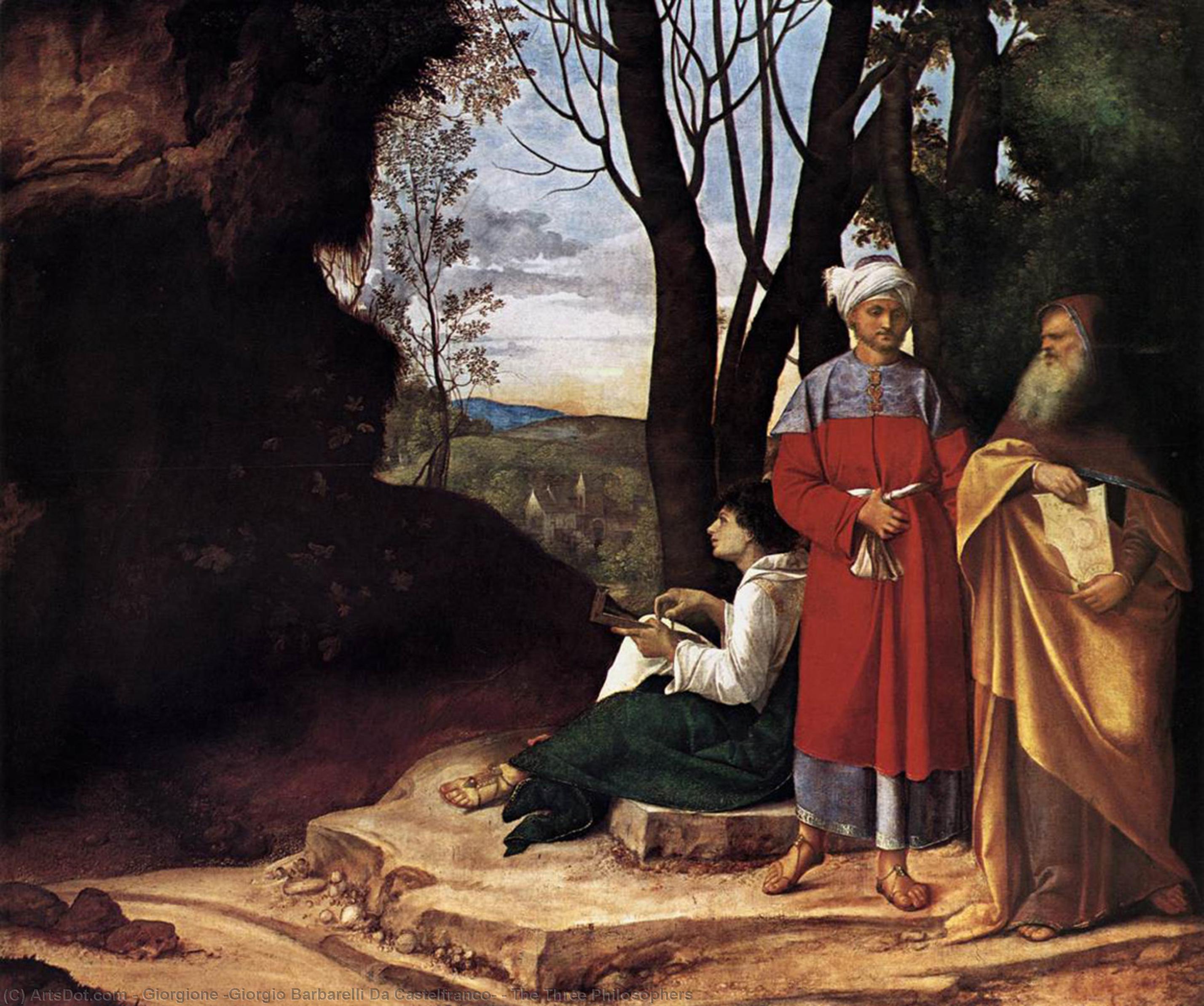
Tri Filozofa (1508) čiji je Ђорђоне

Tri Filozofa

1508 · Ulje na platnu · Kunsthistorisches Museum, Beč

Predmet i Kompozicija “Tri Filozofa” Giorgiona predstavljaju jednu od najtraženijih slika renesanse, prikazujući tri figure u dubokoj introspekciji, okružene idiličnim pejzažom. Ova scena, zabeležena oko 1508. godine, nije samo vizuelno lepota, već i simbolična reprezentacija potrage za mudrosti i harmonijom između čoveka i prirode. Tri figure, svedoči o intelektualnom dijalogu ili dubokoj introspekciji, svaka zauzete u čitanju, pisanju ili razmišljanju. Kompozicija, balansirana i elegantna, poziva gledalca da se upusti u…

4
Judita (1500) čiji je Ђорђоне

Judita

1500 · Ulje na platnu

U ovom serenej renesansnoj slici, susrećemo ženu u stanju dubokog kontemplativnog mişljenja. Postavljena ispred mekog, atmosferskog pejzaža udaljenih planina i drveća, figura Judite je smeštena sa uravnoteženom, spokojnom gracioznošću. Ovde postoji mir koji protivreči nasilnoj prirodi njene biblijske priče. Obložena je protokajućim odelima u boji terakote i maslovito zelenoj, njeno telo je integrisano u okruženje kroz meke, stopljene prelaze sfumato tehnike. Svetlost je difuzna, kao pod oblačnim nebom, ne bacajući…

5
Sveća Venere čiji je Ђорђоне

Sveća Venere

Ulje na platnu

Spavanje Venere: Giorgioneova himna lepoti i misteriji Giorgiona "Spavanje Venere" nije samo slika; ona je vizija sna, utočište u harmoniji boja i oblika, i trajna oda lepoti koja prevazilazi vreme. Nastala u periodu visoke renesanse, ova ikonična dela predstavlja vrhunac venecijanske umetnosti, kombinujući klasičnu eleganciju sa prirodnim realizmom i poetskom spokojnošću. Pred nama se prostire prizor Venere, rimske boginje ljubavi i lepote, u mirnom snu, izlučujući auru senzualnosti i gracioznosti…

6
Tri filozofa (1509) čiji je Ђорђоне

Tri filozofa

1509 · Ulje na platnu · Kunsthistorisches Museum, Beč

Delo Đordonea pod nazivom „Tri filozofa”, nastalo oko 1509. godine, nije samo običan portret; to je poziv na tihi razgovor koji traje kroz vekove. Ovo slikarstvo, obavijeno velom misterije i nagađanja, nalazi se u zarobljenošću očaravajućeg mreže istorijskih zapisa, umetničkih interpretacija i primamljivog simbolizma. Prvobitno osmišljeno kao monumentalno delo za venecijanskog trgovca Taddeo Contarinija, njegovo putovanje kroz vreme – od raskošnih kolekcija Venecije do dvora u Bruselu – suptilno je…

7
Armor (1510) čiji je Ђорђоне

Armor

1510 · Oil On Canvas

In the annals of the High Renaissance, few figures possess the enigmatic allure of Giorgio Barbarelli da Castelfranco, known to history as Giorgione. His work, often shrouded in a poetic and atmospheric mystery, finds one of its most profound expressions in the painting Armor. This captivating portrait presents a nobleman clad in gleaming, meticulously rendered armor, a powerful symbol of status and military prowess that resonated deeply within the Venetian…

8
Pastoralni koncert (Fête champêtre) (1509) čiji je Ђорђоне

Pastoralni koncert (Fête champêtre)

1509 · Ulje na platnu · Luvr, Pariz

Pastoralni koncert, koji se pripisuje Đorđonu — imenu koje je sinonim za umetničku misteriju — stoji kao jedno od najslavnijih dela visoke renesanse. Više od običnog prelepog prikaza figura u mirnom pejzažu, ovo delo otelovljuje fascinaciju tog doba klasičnim idealima i predstavlja ključni trenutak u istoriji umetnosti. Smešteno u samom srcu muzeja Luvr u Parizu, ovo monumentalno ulje na platnu nastavlja da očarava posetioce svojim eteričnim sjajem i dubokim simboličkim…

9
Tri doba čiji je Ђорђоне

Tri doba

Renesanski dijalog: Otkrivanje Đorđonijevih „Tri doba” „Tri doba”, koje se pripisuje zagonetnom venecijanskom majstoru Đorđonu (Giorgio Barbarelli da Castelfranco, 1477/78–1510), predstavlja očaravajući portret koji prevazilazi puku reprezentaciju, uvodeći posmatrače u svet filozofske kontemplacije i tihe ljudske povezanosti. Iako tačno datovanje dela ostaje predmet rasprave zbog ograničenog broja definitivno pripisanih dela ovog umetnika, ono stoji kao svedočanstvo Đorđonijevog inovativnog pristupa renesanskom slikarstvu. Tema i kompozicija: Studija ljudske interakcije Delo prikazuje tri…

10
David (1501) čiji je Ђорђоне

David

1501 · Ulje · Statens Museum For Kunst, Kopenhagen

Svetlost pada iz gornjeg levog ugla, udarajući u poliranu površinu oklopnog okrugaš i izdvajajući lice iz dubokih, teških senki. U ovom monohromatskom svetu, čovek se izdvaja, a njegovo prisustvo se oseća kroz oštre odsjaje na čelu i nosu. On nosi metalni teret ratnika, ali u njegovom pogledu vlada tiha, turobna nepomičnost. Iza njega, iz tame na desnoj strani, izranja eterično lice,erski saputnik koji kompoziciji dodaje sloj misterije. Ivice oklopa definisane…

Čuvena dela umetnika Ђорђоне, od 11 do 83

11Rustic Concert (1530) čiji je ЂорђонеRustic Concert1530 12Ceres (1510) čiji je ЂорђонеCeres1510 · Gemäldegalerie 13Tempest (detail)_5 čiji je ЂорђонеTempest (detail)_5 14Sacred conversation (1505) čiji je ЂорђонеSacred conversation1505 15Judith čiji je ЂорђонеJudithErmitaž 16Madona iz Kastelfranka čiji je ЂорђонеMadona iz Kastelfranka 17Nude young woman (1508) čiji je ЂорђонеNude young woman1508 18Mlada žena ("Laura") (1506) čiji je ЂорђонеMlada žena ("Laura")1506 · Kunsthistorisches Museum 19Залог (Il Tramonto) čiji je ЂорђонеЗалог (Il Tramonto) 20Portrait of Giovanni Borgherini and Trifone Gabriele (1509) čiji je ЂорђонеPortrait of Giovanni Borgherini and Trifone Gabriele1509 · Bavarske državne slikopisne kolekcije 21Tempest (detail)_3 čiji je ЂорђонеTempest (detail)_3 22Portrait of a Young Man (1501) čiji je ЂорђонеPortrait of a Young Man1501 · Statens Museum For Kunst 23Portret mladog čoveka1 čiji je ЂорђонеPortret mladog čoveka1Bavarske državne slikopisne kolekcije 24Virgin and Child (The Tallard Madonna) (1510) čiji je ЂорђонеVirgin and Child (The Tallard Madonna)1510 · Ešmolijan muzej umetnosti i arheologije 25Стара жена čiji je ЂорђонеСтара женаGallerie dell'Accademia di Venezia 26Madonna And Child Enthroned Between St Francis And St Liberalis (detail) čiji je ЂорђонеMadonna And Child Enthroned Between St Francis And St Liberalis (detail) 27Woman with a Unicorn (1510) čiji je ЂорђонеWoman with a Unicorn1510 · Rijksmuseum 28Self-Portrait čiji je ЂорђонеSelf-Portrait 29Tempest (detail)_4 čiji je ЂорђонеTempest (detail)_4 30Judith (detail) čiji je ЂорђонеJudith (detail) 31Madonna And Child Enthroned Between St Francis And St Liberalis (detail)_2 čiji je ЂорђонеMadonna And Child Enthroned Between St Francis And St Liberalis (detail)_2 32Tempest_2 čiji je ЂорђонеTempest_2 33David with the Head of Goliath (1500) čiji je ЂорђонеDavid with the Head of Goliath1500 34The Reading Madonna čiji je ЂорђонеThe Reading Madonna 35Adoration Of The Magi čiji je ЂорђонеAdoration Of The Magi 36Homage to a poet čiji je ЂорђонеHomage to a poetNational Gallery 37Solomonovo suđenje čiji je ЂорђонеSolomonovo suđenje 38Adoration of the Shepherds čiji je ЂорђонеAdoration of the ShepherdsNational Gallery of Art 39Portrait of a Venetian Gentleman (1510) čiji je ЂорђонеPortrait of a Venetian Gentleman1510 40Adoration Of The Shepherds (detail)_3 čiji je ЂорђонеAdoration Of The Shepherds (detail)_3 41Globe, moon, sun (astronomy) (1510) čiji je ЂорђонеGlobe, moon, sun (astronomy)1510 42Arithmetic (1510) čiji je ЂорђонеArithmetic1510 43Ratnik sa mladoženjom (1510) čiji je ЂорђонеRatnik sa mladoženjom1510 · Galerija Ufizi 44Nymphs and Children in a Landscape with Shepherds čiji je ЂорђонеNymphs and Children in a Landscape with ShepherdsNational Gallery 45Giovanni Borgherini and His Tutor (1508) čiji je ЂорђонеGiovanni Borgherini and His Tutor1508 · National Gallery of Art 46A Man in Armour čiji je ЂорђонеA Man in Armour 47Self-portrait (1510) čiji je ЂорђонеSelf-portrait1510 · Herzog Anton Ulrich Museum 48Self-portrait čiji je ЂорђонеSelf-portrait 49Portrait of a Young Woman (Laura) čiji je ЂорђонеPortrait of a Young Woman (Laura) 50David with the Head of Goliath (1510) čiji je ЂорђонеDavid with the Head of Goliath1510 · Kunsthistorisches Museum 51Portrait of young man čiji je ЂорђонеPortrait of young manAlte Pinakothek 52The Hour Glass čiji je ЂорђонеThe Hour GlassThe Phillips Collection 53Tempest (detail)_2 čiji je ЂорђонеTempest (detail)_2 54Tempest (detail) čiji je ЂорђонеTempest (detail) 55Pastoral Concert (detail) čiji je ЂорђонеPastoral Concert (detail) 56Madonna and Child with St. Anthony and St. Roch čiji je ЂорђонеMadonna and Child with St. Anthony and St. Roch 57Portrait of a Man čiji je ЂорђонеPortrait of a Man 58Portrait of An Archer čiji je ЂорђонеPortrait of An ArcherScottish National Gallery 59Portrait of a Young Man čiji je ЂорђонеPortrait of a Young Man 60Tempest (detail)_7 čiji je ЂорђонеTempest (detail)_7 61Madonna And Child Enthroned Between St Francis And St Liberalis (detail)_3 čiji je ЂорђонеMadonna And Child Enthroned Between St Francis And St Liberalis (detail)_3 62Tempest (detail)_6 čiji je ЂорђонеTempest (detail)_6 63Portrait of a Young Man (The Broccardo Portrait) (1510) čiji je ЂорђонеPortrait of a Young Man (The Broccardo Portrait)1510 · Szépművészeti Múzeum 64Adoration Of The Shepherds (detail) čiji je ЂорђонеAdoration Of The Shepherds (detail) 65Adoration Of The Shepherds (detail)_2 čiji je ЂорђонеAdoration Of The Shepherds (detail)_2 66Portrait Of A Youth (antonio Broccardo) čiji je ЂорђонеPortrait Of A Youth (antonio Broccardo) 67Boy with flute (1508) čiji je ЂорђонеBoy with flute1508 · Hampton Court Palace 68Il Tramonto (The Sunset) (1508) čiji je ЂорђонеIl Tramonto (The Sunset)1508 · National Gallery 69Portret Francesca Marije della Rovere (1502) čiji je ЂорђонеPortret Francesca Marije della Rovere1502 · Kunsthistorisches Museum 70A Young Man čiji je ЂорђонеA Young ManGemäldegalerie 71Portrait of a Gentleman in Armor čiji je ЂорђонеPortrait of a Gentleman in Armor 72Self-portrait (1510) čiji je ЂорђонеSelf-portrait1510 · Szépművészeti Múzeum 73Bogorodica i dete u pejzažu čiji je ЂорђонеBogorodica i dete u pejzažuErmitaž 74Klanjanje kraljeva (1506) čiji je ЂорђонеKlanjanje kraljeva1506 · National Gallery 75Musical instruments (music) (1510) čiji je ЂорђонеMusical instruments (music)1510 76Moses' Trial by Fire čiji je ЂорђонеMoses' Trial by Fire 77Nude (1508) čiji je ЂорђонеNude1508 · Gallerie dell'Accademia di Venezia 78The Impassioned Singer čiji je ЂорђонеThe Impassioned SingerGalleria Borghese 79Double Portrait (1502) čiji je ЂорђонеDouble Portrait1502 · Museo Nazionale del Palazzo di Venezia 80Youth holding an Arrow (1505) čiji je ЂорђонеYouth holding an Arrow1505 · Kunsthistorisches Museum 81A Soldier (1510) čiji je ЂорђонеA Soldier1510 · Kunsthistorisches Museum 82The Holy Family čiji je ЂорђонеThe Holy FamilyNational Gallery of Art 83Giovanni Borgherini and His Tutor čiji je ЂорђонеGiovanni Borgherini and His TutorNational Gallery of Art

Čuvena dela Ђорђоне po periodima

Motivi koji su privlačili pažnju Ђорђоне

Četiri teme koje se najčešće ponavljaju u ovim originalima, svaka sa svojim vrhunskim primerom.

Muzeji u kojima se čuvaju originalna dela umetnika Ђорђоне

8 muzeja u kojima se nalazi najviše slika sa ove stranice.

Muzej Grad Radovi umetnika Ђорђоне Slike iz ovog spiska
Kunsthistorisches Museum, BečKunsthistorisches Museum Beč 7 Tri Filozofa, Tri filozofa, Mlada žena ("Laura")
National Gallery, LondonNational Gallery London 4 Homage to a poet, Nymphs and Children in a Landscape with Shepherds, Il Tramonto (The Sunset)
National Gallery of Art, WashingtonNational Gallery of Art Washington 4 Adoration of the Shepherds, Giovanni Borgherini and His Tutor, The Holy Family
Gallerie dell'Accademia di Venezia, VenecijaGallerie dell'Accademia di Venezia Venecija 3 Понор (Ђорђоне), Стара жена, Nude
Statens Museum For Kunst, KopenhagenStatens Museum For Kunst Kopenhagen 2 David, Portrait of a Young Man
Gemäldegalerie, BerlinGemäldegalerie Berlin 2 Ceres, A Young Man
Ermitaž, Sankt PeterburgErmitaž Sankt Peterburg 2 Judith, Bogorodica i dete u pejzažu
Bavarske državne slikopisne kolekcije, MinhenBavarske državne slikopisne kolekcije Minhen 2 Portrait of Giovanni Borgherini and Trifone Gabriele, Portret mladog čoveka1

Ђорђоне kroz godine: jedinstveni originali svakog dela

Originalna dela Ђорђоне prikazana ovde obuhvataju period od otprilike deset godina, od 1500 do 1510: oko prati ih godinu po godinu.

Radovi po godinama

Izaberite godinu da biste videli originalna dela.

Slike umetnika Ђорђоне: pitanja za galeriju

Koje je najpoznatije delo umetnika Ђорђоне?Otkrij odgovor

Spavajuća Venera (1510), Gemäldegalerie Alte Meister, Dresden. Slede Понор (Ђорђоне) i Tri Filozofa (1508).

U kojoj je godini Ђорђоне stvorio/la Spavajuća Venera?Otkrij odgovor

32 godina: Spavajuća Venera datira iz 1510, a Ђорђоне je rođen/a 1478.

Koji je deset najpoznatijih slika autora Ђорђоне?Otkrij odgovor

Spavajuća Venera, Понор (Ђорђоне), Tri Filozofa, Judita, Sveća Venere, Tri filozofa, Armor, Pastoralni koncert (Fête champêtre), Tri doba i David. Gornji rang pokazuje godinu i muzej za svako od njih.

Koliko je poznatih dela umetnika Ђорђоне?Otkrij odgovor

Naš katalog sadrži 92 dela umetnika Ђорђоне, datiranih od 1500 do 1510.

Gde se mogu videti najpoznatiji originali umetnika Ђорђоне?Otkrij odgovor

Većinom u Kunsthistorisches Museum (Beč), National Gallery (London) i National Gallery of Art (Washington). Tabela muzeja iznad sadrži njih sve.

U kom periodu je Ђорђоне stvorio/la svoje najpoznatije slike?Otkrij odgovor

U 1510: 15 od 83 dela na ovoj stranici nastalo je tada, od čega je Spavajuća Venera.

Ko je najraniji, a koje je najkasnije čuveno delo umetnika Ђорђоне?Otkrij odgovor

Na ovoj stranici, najstarije delo je iz Judita (1500), a najnovije iz Spavajuća Venera (1510).

Koje su teme Ђорђоне preferirao/la?Otkrij odgovor

Venetian painting (21), Landscape (17) i Renaissance (16), kroz svih 83 dela na ovoj stranici.

Sa kojim materijalima je Ђорђоне najčešće slikao?Otkrij odgovor

Oil On Canvas, za 28 od 83 dela na ovoj stranici.

Kojem umetničkom pravcu pripada delo umetnika Ђорђоне?Otkrij odgovor

Visoka renesansa, sudeći po originalima na ovoj stranici.

Koja originalna dela Ђорђоне mogu videti u Kunsthistorisches Museum?Otkrij odgovor

Tri Filozofa, Tri filozofa i Mlada žena ("Laura"): Kunsthistorisches Museum, Beč čuva 7 dela sa ove stranice.

Ђорђоне: portret umetnika

The Life and Identity of Giorgione

To understand the trajectory of the Venetian school, one must confront the shadow cast by Giorgione. He was an Italian painter of the Venetian school during the High Renaissance, yet his biography remains a collection of fragments. Born in the small town of Castelfranco Veneto, Italy, around 1477 or 1478, he operated within a culture that valued both technical precision and atmospheric depth. His identity was as layered as his oil glazes. While history knows him by the name Giorgione, this was a nickname earned through his tall stature. His actual name was likely Zorzi.

His career was a brief, intense flash in the history of the Republic of Venice. He died around 1510 at the age of thirty-two or thirty-three, a death that cut short a period of intense stylistic transition. This early passing left a void that his contemporaries had to fill, turning his limited output into a subject of intense scrutiny. He did not rely on a long, documented life to establish his presence; instead, his impact is measured by the suddenness of his departure and the specific, moody qualities he introduced to the Venetian landscape.

Early Life and Artistic Training

Giorgione’s origins lie in Castelfranco Veneto, Italy. While the exact year of his birth remains a subject of debate, his presence in the Venetian art scene was established early. He did not work in a vacuum; his development was shaped by the rigorous traditions of the Venetian school. He likely apprenticed under Giovanni Bellini, the dominant figure of the era. This connection provided him with a foundation in the established techniques of the time before he began to deviate from them. His training was not merely about imitation but about absorbing the technical language of a leading master.

By the time he was established in Venice, he was recognized as a professional peer to other significant painters. Records identify him as a colleague of the master Vincenzo Catena. This status indicates that he had moved beyond the stage of a mere student and was actively participating in the competitive professional landscape of the Republic. His early career was defined by this transition from a student of Bellini to a recognized practitioner working alongside his contemporaries.

Patrons and Early Commissions

Giorgione’s early career was defined by high-level access to the Venetian power structure. He secured commissions from the most influential figures of the Republic, proving his utility to the state long before his death. The Council of Ten, the supreme governing body of Venice, commissioned him to produce a work for the Hall of the Audience in the Doge's Palace. This was no minor task. It placed his output directly within the political heart of the city. His ability to navigate these circles is further evidenced by his portraits of prominent figures, including Doge Agostino Barbarigo. These early assignments demonstrate that he was already a recognized professional with the technical skill required for state-level portraiture.

His work also addressed the private, often somber, needs of the Venetian nobility. Tuzio Costanzo commissioned a painting from the artist in memory of his son, Matteo. This type of personal, commemorative work highlights the artist's role in the social and religious rituals of the time. Even his native region provided significant work; in 1504, he was tasked with painting an altarpiece for the cathedral in Castelfranco Veneto. These diverse commissions—ranging from state halls to private memorials and religious altarpieces—show a painter who was deeply integrated into the functional fabric of Venetian life.

Technique and Artistic Style

Giorgione’s approach fundamentally shifted the focus of Venetian painting from the rigid, linear precision of the Florentine tradition toward a sensory experience defined by color and atmosphere. He moved away from the heavy reliance on disegno, instead utilizing oil paint to construct the illusion of texture, light, and air. This technical mastery allowed him to build depth through the sophisticated layering of pigments rather than through sharp, structural outlines. By employing sfumato—the use of subtle gradations of tone—he softened the edges of his subjects, allowing them to merge into their surroundings. This method prioritized an overall harmony over the pursuit of meticulous, isolated detail.

His innovation extended beyond technical execution into the very nature of subject matter. Giorgione introduced a range of themes that functioned through mood rather than through explicit narrative. He moved away from the requirement that a painting must tell a clear story, often presenting scenes that exist to embody a specific feeling or a lyrical quality. This shift allowed for a sense of ambiguity, where the landscape and the figures exist in a state of quiet tension. In works like The Tempest, the atmosphere itself becomes a primary subject, as much as the figures depicted within it.

Key Masterpieces and Notable Works

Giorgione’s output remains defined by a refusal to provide easy answers. The Tempest, dated between 1506 and 1508, remains a primary example of this ambiguity, presenting a scene that resists a single, definitive reading. Similarly, Pastoral Concert (c. 1509) prioritizes mood over a clear narrative, a technique that shifted the focus of Venetian painting toward atmosphere. His 1508 work, The Three Philosophers, further demonstrates this ability to use landscape and light to create a sense of mystery rather than a simple historical or religious record.

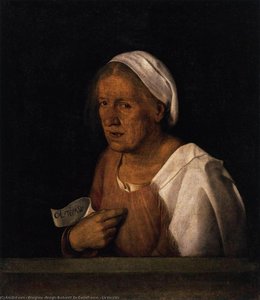
The artist also redefined the depiction of the human form and its relationship to the natural world. The Sleeping Venus is a significant departure from previous traditions, establishing a specific genre of reclining nudes. In Judith, executed around 1504, he explored intense subject matter through a lens of subtle tonal shifts. His 1506 oil on canvas, Laura, is particularly notable as it is the only work he signed and dated, providing a rare, concrete anchor in his otherwise elusive career. This work shows a clear transition toward a style defined by muted colors and sfumato.

Other significant works highlight his range in both religious and secular themes. The Castelfranco Madonna (c. 1503/04) uses a high throne and landscape to bridge the gap between the divine and the earthly. His 1506 painting, The Old Woman, functions as an allegory of time, while his portraiture continues to emphasize psychological depth through careful composition. These works collectively prove that his impact was rooted in a specific, technical mastery of light and color.

Circle and Artistic Influence

Giorgione’s impact is measured by the lineage of painters who absorbed his approach to atmosphere and color. His most significant connection was his mentorship of Titian, who would eventually dominate the High Renaissance. This transition from Giorgione’s moody, poetic sensibility to Titian’s more robust style defined the trajectory of Venetian art. Beyond Titian, his direct teaching shaped the hands of several notable figures, including Dosso Dossi, Giovanni da Udine, Andrea Schiavone, and Francesco Torbido. These artists carried his specific methods into the next generation of Venetian production.

The reach of his style extended into the works of many others who did not necessarily study under him directly but operated within the stylistic wake he created. Palma Vecchio and Giovanni Cariani both utilized the tonal depth and light-driven compositions that Giorgione pioneered. Similarly, Sebastiano del Piombo integrated these Venetian qualities into his own practice. His influence was not a single, rigid school but a widespread shift in how painters handled the relationship between landscape and subject. This shift moved the focus away from strict line toward a more sensory, atmospheric execution.

Legacy and Historical Significance

Giorgione’s impact is measured by the fundamental shift he forced upon Venetian painting. He acted as the essential bridge between the established traditions of the early Venetian masters and the radical innovations later perfected by Titian. By moving away from the rigid, linear constraints of the Florentine school, he helped establish the foundations of the Venetian School of Italian Renaissance painting. His work prioritized the sensory experience of light and atmosphere over the mathematical precision of drawing. This shift changed how color was used to define form, moving the focus from the outline to the essence of the subject itself.

His influence stems from a refusal to adhere to strict narrative clarity. By emphasizing poetic mood and atmospheric effects, he opened doors for subsequent generations to explore art as a medium for emotion rather than just storytelling. This approach allowed for a new kind of visual language where the landscape and the subject exist in a state of shared, often ambiguous, tension. He remains a primary symbol of artistic freedom and innovation, proving that a painter could prioritize feeling and suggestion over literal accuracy.

Where to See His Works Today

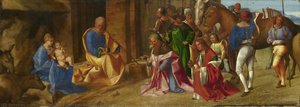
To encounter the physical reality of Giorgione's impact, one must travel across Europe's major museum collections. His presence is felt most strongly in Vienna, where the Kunsthistorisches Museum houses several significant pieces, including the Portrait of Francesco Maria della Rovere. This collection provides a clear look at his ability to handle individual likenesses. In London, the National Gallery preserves The Adoration of the Kings, a work that demonstrates his early command of religious subject matter.

The landscape and mythological shifts he introduced are anchored in Paris and Dresden. The Louvre holds Pastoral Concert (Fête champêtre), a work central to understanding his departure from strict narrative. Meanwhile, the Gemäldegalerie Alte Meister in Dresden contains The Sleeping Venus, a painting that fundamentally altered the depiction of the female nude in Western art. These works are not mere relics; they are the primary evidence of his technical shifts.

Venice and St. Petersburg offer the most direct connections to his most debated and intense compositions. The Gallerie dell'Accademia in Venice holds The Tempest, a painting that remains a central point of study for its ambiguous atmosphere. In Russia, the Hermitage Museum preserves Judith, providing a rare look at his handling of dramatic, high-stakes subject matter. These specific locations hold the actual surfaces where his innovations in color and light were first realized.