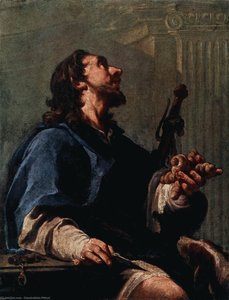
Portret Ђамбатиста Питони

62 najpoznatijih slika umetnika Ђамбатиста Питони, svaka potpuno jedinstvena

Ažurirano: новембар 2026 · rangirano prema našem koeficijentu popularnosti (pretrage, posete i porudžbine za svako delo) · 63 dela Ђамбатиста Питони u našem katalogu

Ukratko

Portrait of a mathematician (1740) je slika autora Ђамбатиста Питони koja privlači najviše pažnje; original se nalazi u muzeju Kunsthistorisches Museum, Beč. Nakon toga, pogled se seli na Saint Eustace refuses to honour the gods of Rome (1722) i Trajan trying to compel Saint Eustace to worship the statue of Jupiter (1722). Među 63 dela umetnika Ђамбатиста Питони u našem katalogu, ovih 62 su najpoznatija, od kojih je svako jedinstveni original predstavljen sa godinom nastanka, muzejom i razlogom zbog kojeg je i danas neprocenjivo.

1687 – 1767, Венеција Rococo Najviše dela: Bavarske državne slikopisne kolekcije

Top 10 slika umetnika Ђамбатиста Питони, iz ugla galerije

1
Portrait of a mathematician (1740) čiji je Ђамбатиста Питони

Portrait of a mathematician

1740 · Oil On Canvas · Kunsthistorisches Museum, Beč

A man sits in a three-quarter length pose, positioned slightly off-center against a dark, indistinct background. He wears a brown coat over a waistcoat, paired with a crisp white cravat at the neck. A turquoise blue cloak is draped across his shoulders, providing a cool-toned contrast to the warmer earth tones of his clothing. His head is framed by a voluminous, white powdered wig with structured curls. The subject's gaze…

Čuvena dela umetnika Ђамбатиста Питони, od 11 do 62

11Homily of John the Baptist (1727) čiji je Ђамбатиста ПитониHomily of John the Baptist1727 · Bavarske državne slikopisne kolekcije 12Susanna and the Elders (Pittoni, Louvre Museum) (1723) čiji je Ђамбатиста ПитониSusanna and the Elders (Pittoni, Louvre Museum)1723 13Annunciation (1740) čiji je Ђамбатиста ПитониAnnunciation1740 14The Madonna and Child, Saint Anthony of Padua and three little angels (1740) čiji je Ђамбатиста ПитониThe Madonna and Child, Saint Anthony of Padua and three little angels1740 15The Sacrifice of Polyxena (1735) čiji je Ђамбатиста ПитониThe Sacrifice of Polyxena1735 16Martyrdom of Saint Bartholomew (1735) čiji je Ђамбатиста ПитониMartyrdom of Saint Bartholomew1735 · The Nelson-Atkins Museum of Art 17The Virgin and Child adored by Saint Carlo Borromeo (1743) čiji je Ђамбатиста ПитониThe Virgin and Child adored by Saint Carlo Borromeo1743 · National Museum of Art, Architecture and Design 18The Sacrifice of the Polyxena (1737) čiji je Ђамбатиста ПитониThe Sacrifice of the Polyxena1737 · Bavarske državne slikopisne kolekcije 19The generosity of Scipio (1737) čiji je Ђамбатиста ПитониThe generosity of Scipio1737 · Bavarske državne slikopisne kolekcije 20The birth of Christ (1735) čiji je Ђамбатиста ПитониThe birth of Christ1735 · Bavarske državne slikopisne kolekcije 21The Continence of Scipio (1734) čiji je Ђамбатиста ПитониThe Continence of Scipio1734 · Statens Museum For Kunst 22The Sacrifice of Polyxena at the Tomb of Achilles (1735) čiji je Ђамбатиста ПитониThe Sacrifice of Polyxena at the Tomb of Achilles1735 · Walters Art Museum 23St. Anna, accompanied by St. Peter and St. Anthony of Padua, instructs the young Mary in reading the Holy Bible (1748) čiji je Ђамбатиста ПитониSt. Anna, accompanied by St. Peter and St. Anthony of Padua, instructs the young Mary in reading the Holy Bible1748 · Gemäldegalerie 24Eliezer and Rebecca (1750) čiji je Ђамбатиста ПитониEliezer and Rebecca1750 · Musée des Beaux-Arts de Bordeaux 25The Sacrifice of Polyxena in Malibu (1732) čiji je Ђамбатиста ПитониThe Sacrifice of Polyxena in Malibu1732 · J. Paul Getty Museum 26The Rest on the Flight into Egypt (1725) čiji je Ђамбатиста ПитониThe Rest on the Flight into Egypt1725 · Fundación Colección Thyssen-Bornemisza 27Света Елизабета Венгерска раздаје помоћи (1734) čiji je Ђамбатиста ПитониСвета Елизабета Венгерска раздаје помоћи1734 · Szépművészeti Múzeum 28Sacrifice of Isaac (1720) čiji je Ђамбатиста ПитониSacrifice of Isaac1720 · Сан Франческо делла Виња 29Sts Jerome and Peter of Alcantara (1725) čiji je Ђамбатиста ПитониSts Jerome and Peter of Alcantara1725 · Nacionalna galerija Škotske 30Descent from the Cross čiji je Ђамбатиста ПитониDescent from the CrossFine Arts Museums of San Francisco 31The Sacrifice of Polyxena čiji je Ђамбатиста ПитониThe Sacrifice of PolyxenaErmitaž 32Смрт Јозефа čiji je Ђамбатиста ПитониСмрт ЈозефаCharlottenburg Palace 33Head of the Virgin (1730) čiji je Ђамбатиста ПитониHead of the Virgin1730 · Musée des Beaux-Arts de Strasbourg 34Annunciation (1758) čiji je Ђамбатиста ПитониAnnunciation1758 · Gallerie dell'Accademia di Venezia 35The Continence of Scipio (1733) čiji je Ђамбатиста ПитониThe Continence of Scipio1733 36Moses saved from the waters (1730) čiji je Ђамбатиста ПитониMoses saved from the waters1730 · Portland Art Museum 37Memorial to James, First Earl of Stanhope (1726) čiji je Ђамбатиста ПитониMemorial to James, First Earl of Stanhope1726 · Chrysler Museum of Art 38Giustizia e Pace con Minerva e Giove (1730) čiji je Ђамбатиста ПитониGiustizia e Pace con Minerva e Giove1730 39Hannibal swearing revenge against the Romans (1723) čiji je Ђамбатиста ПитониHannibal swearing revenge against the Romans1723 · Pinacoteca di Brera 40The Marriage of Placidia and Constantius (1740) čiji je Ђамбатиста ПитониThe Marriage of Placidia and Constantius1740 · Ermitaž 41The Jacob's blessing čiji je Ђамбатиста ПитониThe Jacob's blessingErmitaž 42The Emperor Honorius elects Costantius his co-governor (1740) čiji je Ђамбатиста ПитониThe Emperor Honorius elects Costantius his co-governor1740 43Saints Presenting a Devout Woman to the Virgin and Child (1725) čiji je Ђамбатиста ПитониSaints Presenting a Devout Woman to the Virgin and Child1725 · Cleveland Museum of Art 44Crassus sacks the temple of Jerusalem (1743) čiji je Ђамбатиста ПитониCrassus sacks the temple of Jerusalem1743 · Gallerie dell'Accademia di Venezia 45The Vision of Saint Anthony of Padua (1730) čiji je Ђамбатиста ПитониThe Vision of Saint Anthony of Padua1730 · San Diego Museum of Art 46An Allegorical Monument to Sir Isaac Newton (1728) čiji je Ђамбатиста ПитониAn Allegorical Monument to Sir Isaac Newton1728 · Fitzwilliam Museum 47Dionysus and Ariadne (1730) čiji je Ђамбатиста ПитониDionysus and Ariadne1730 · Museu de Arte de São Paulo Assis Chateaubriand 48Adoration of the Magi (1740) čiji je Ђамбатиста ПитониAdoration of the Magi1740 · Crkva Svetih Nazarija i Celusa 49Dido Founding Carthage (1721) čiji je Ђамбатиста ПитониDido Founding Carthage1721 · Ermitaž 50Death of King Candaules (1720) čiji je Ђамбатиста ПитониDeath of King Candaules1720 · Ermitaž 51Madonna and Child with two angels (1737) čiji je Ђамбатиста ПитониMadonna and Child with two angels1737 · Nacionalni muzej u Varšavi 52Venus and Mars of Warsaw (1720) čiji je Ђамбатиста ПитониVenus and Mars of Warsaw1720 · Nacionalni muzej u Varšavi 53Bacchus and Ariadne (1720) čiji je Ђамбатиста ПитониBacchus and Ariadne1720 · Nacionalni muzej u Varšavi 54Diana and Endymion (1723) čiji je Ђамбатиста ПитониDiana and Endymion1723 · Ermitaž 55Abraham Sacrificing His Son Isaac (1750) čiji je Ђамбатиста ПитониAbraham Sacrificing His Son Isaac1750 · Muzej finih umetnosti u Bostonu 56The miracle of the loaves and fishes (1725) čiji je Ђамбатиста ПитониThe miracle of the loaves and fishes1725 · Nacionalna galerija Viktorije 57Mars and Venus (1720) čiji je Ђамбатиста ПитониMars and Venus1720 58Bacchus and Ariadne (1723) čiji je Ђамбатиста ПитониBacchus and Ariadne1723 59Polyxena in front of the Achilles' Tomb (1734) čiji je Ђамбатиста ПитониPolyxena in front of the Achilles' Tomb1734 60The Torture of St Thomas (1722) čiji je Ђамбатиста ПитониThe Torture of St Thomas1722 · San Stae 61Свети Рох (1727) čiji je Ђамбатиста ПитониСвети Рох1727 · Szépművészeti Múzeum 62The Penitent Magdalene (1740) čiji je Ђамбатиста ПитониThe Penitent Magdalene1740 · Gallerie dell'Accademia di Venezia

Čuvena dela Ђамбатиста Питони po periodima

Motivi koji su privlačili pažnju Ђамбатиста Питони

Četiri teme koje se najčešće ponavljaju u ovim originalima, svaka sa svojim vrhunskim primerom.

Muzeji u kojima se čuvaju originalna dela umetnika Ђамбатиста Питони

8 muzeja u kojima se nalazi najviše slika sa ove stranice.

Muzej Grad Radovi umetnika Ђамбатиста Питони Slike iz ovog spiska
Bavarske državne slikopisne kolekcije, MinhenBavarske državne slikopisne kolekcije Minhen 6 The death of St. Joseph, The St. Eustace refuses idolatry, Homily of John the Baptist
Ermitaž, Sankt PeterburgErmitaž Sankt Peterburg 6 The Sacrifice of Polyxena, The Marriage of Placidia and Constantius, The Jacob's blessing
Nacionalni muzej u Varšavi, VaršavaNacionalni muzej u Varšavi Varšava 4 Bacchus and Ariadne, Madonna and Child with two angels, Venus and Mars of Warsaw
Szépművészeti Múzeum, BudimpeštaSzépművészeti Múzeum Budimpešta 3 The Nativity, Света Елизабета Венгерска раздаје помоћи, Свети Рох
Gallerie dell'Accademia di Venezia, VenecijaGallerie dell'Accademia di Venezia Venecija 3 Annunciation, Crassus sacks the temple of Jerusalem, The Penitent Magdalene
Kunsthistorisches Museum, BečKunsthistorisches Museum Beč 1 Portrait of a mathematician
Kraljevski zamak u Varšavi, VaršavaKraljevski zamak u Varšavi Varšava 1 Saint Eustace refuses to honour the gods of Rome
Museo Diocesano Tridentino, TrentoMuseo Diocesano Tridentino Trento 1 San Domenico

Ђамбатиста Питони kroz decenije: jedan jedinstveni original za svaku

Radovi po decenijama

Izaberite deceniju da biste videli original koji je definiše.

Slike umetnika Ђамбатиста Питони: pitanja za galeriju

Koje je najpoznatije delo umetnika Ђамбатиста Питони?Otkrij odgovor

Portrait of a mathematician (1740), Kunsthistorisches Museum, Beč. Slede Saint Eustace refuses to honour the gods of Rome (1722) i Trajan trying to compel Saint Eustace to worship the statue of Jupiter (1722).

U kojoj je godini Ђамбатиста Питони stvorio/la Portrait of a mathematician?Otkrij odgovor

53 godina: Portrait of a mathematician datira iz 1740, a Ђамбатиста Питони je rođen/a 1687.

Koji je deset najpoznatijih slika autora Ђамбатиста Питони?Otkrij odgovor

Portrait of a mathematician, Saint Eustace refuses to honour the gods of Rome, Trajan trying to compel Saint Eustace to worship the statue of Jupiter, Bacchus and Ariadne, Healing of Saint Antiochus, San Domenico, The Sacrifice of Polyxena at the Tomb of Achilles, The Nativity, The death of St. Joseph i The St. Eustace refuses idolatry. Gornji rang pokazuje godinu i muzej za svako od njih.

Koliko je poznatih dela umetnika Ђамбатиста Питони?Otkrij odgovor

Naš katalog sadrži 63 dela umetnika Ђамбатиста Питони, datiranih od 1717 do 1758.

Gde se mogu videti najpoznatiji originali umetnika Ђамбатиста Питони?Otkrij odgovor

Većinom u Bavarske državne slikopisne kolekcije (Minhen), Ermitaž (Sankt Peterburg) i Nacionalni muzej u Varšavi (Varšava). Tabela muzeja iznad sadrži njih sve.

U kom periodu je Ђамбатиста Питони stvorio/la svoje najpoznatije slike?Otkrij odgovor

U 1720s: 22 od 62 dela na ovoj stranici nastalo je tada, od čega je Saint Eustace refuses to honour the gods of Rome.

Ko je najraniji, a koje je najkasnije čuveno delo umetnika Ђамбатиста Питони?Otkrij odgovor

Na ovoj stranici, najstarije delo je iz Bacchus and Ariadne (1717), a najnovije iz Annunciation (1758).

Koje su teme Ђамбатиста Питони preferirao/la?Otkrij odgovor

Man (4), Drapery (4) i Woman (3), kroz svih 62 dela na ovoj stranici.

Sa kojim materijalima je Ђамбатиста Питони najčešće slikao?Otkrij odgovor

Oil On Canvas, za 9 od 62 dela na ovoj stranici.

Kojem umetničkom pravcu pripada delo umetnika Ђамбатиста Питони?Otkrij odgovor

Rococo i Baroque, sudeći po originalima na ovoj stranici.

Koja originalna dela Ђамбатиста Питони mogu videti u Bavarske državne slikopisne kolekcije?Otkrij odgovor

The death of St. Joseph, The St. Eustace refuses idolatry i Homily of John the Baptist: Bavarske državne slikopisne kolekcije, Minhen čuva 6 dela sa ove stranice.

Ђамбатиста Питони: portret umetnika

The Venetian Master of Light and Drama

In the vibrant, water-bound splendor of eighteenth-century Venice, few artists captured the theatrical essence of the late Baroque and Rococo periods as fluently as Giambattista Pittoni. Born in Venice, his artistic soul was shaped by a profound connection to the masters who preceded him in this maritime republic. His early training was deeply personal, conducted under the guidance of his uncle, Francesco Pittoni, a painter of the Venetian Baroque. This lineage provided him with a foundation in the grand traditions of his native city, allowing him to weave together the dramatic intensity of the previous era with the emerging grace of the Rococo.

Pittoni’s work is characterized by an extraordinary command of movement and luminosity. He possessed a unique ability to bring a sense of breathing life to his canvases, utilizing a palette that celebrated the interplay of light and shadow. Whether depicting sacred figures or mythological legends, his brushwork often achieved a breathtaking realism, capturing opulent textures and profound human emotions. His mastery was not merely in the depiction of form, but in the creation of atmosphere—a skill that allowed him to navigate the transition from the heavy, emotive weight of the Baroque to the more effervescent and airy qualities of the Rococo style.

A Legacy of Devotion and Grandeur

The breadth of Pittoni’s oeuvre reflects both his technical versatility and his deep engagement with the spiritual and classical themes of his time. His compositions often utilized elegant, triangular structures to guide the viewer's eye through scenes of divine intervention or historical significance. Some of his most notable subjects include:

Beyond his individual canvases, Pittoni held a position of significant prestige within the Venetian art community. He was among the founders of the Academy of Fine Arts of Venice, eventually serving as its second president, succeeding the legendary Tiepolo. This leadership role underscores his importance not just as a creator, but as a pillar of the artistic establishment in Venice.

Historical Significance and Enduring Influence

The historical footprint of Giambattista Pittoni is preserved in some of the world's most esteemed galleries. His ability to synthesize the dramatic tension of the Baroque with the light-filled elegance of the Rococo ensured that his work remained relevant during a period of profound stylistic evolution. From the Louvre Museum in Paris to the Pushkin Museum in Moscow and the National Gallery of Scotland, his paintings continue to serve as vital windows into the artistic spirit of eighteenth-century Italy.

Through his meticulous attention to detail and his ability to evoke deep emotional responses, Pittoni left behind a catalogue of works that celebrate the human condition, the divine, and the timeless beauty of classical myth. His legacy remains intertwined with the very identity of Venice, representing a pinnacle of Venetian painting where light, color, and drama converge in perfect harmony.