

 Pregledaj u prostoru
 Podeli
 Podeli
 Detalji
 Vodič
Vodič

 Preuzmi sliku
 Slični predmeti
 Rendgenski snimak
 Automatska prezentacija
 Statistika
Untitled


 Pročitaj više
Umetničko delo prikazano na ovoj stranici zaštićeno je autorskim pravima, što znači da zakonski nismo u mogućnosti da kreiramo niti prodajemo identičnu reprodukciju. Ova zaštita se sprovodi u skladu sa međunarodnim sporazumima kao što su Bernska konvencija i nacionalnim zakonima, uključujući i one koji su definisani u Američki zakon o autorskom pravu – Naslov 17.
Ovaj metod je u potpunosti usklađen sa regulativama o autorskim pravima jer ne podrazumeva kopiranje ili dupliranje zaštićenih umetničkih dela. Umesto toga, reč je o kreativnoj reinterpretaciji – novom slikarskom delu koje je inspirisano originalom, ali nije identično njemu.
Giclee štampa / Umetnički otisak
Giclée štampa ili print na platnu muzejskog kvaliteta uz brzu izradu i raznovrsne opcije završne obrade. ( Naručite ručno oslikano reprodukciju Pređi na prodaju digitalnih slika)




































Izaberite jednu od naših unapred definisanih veličina koje odgovaraju originalnim proporcijama umetničkog dela.

Unesite širinu i visinu koja vam je potrebna, kako bi se uklopili u vaš ram ili na vaš zid. Štampa se može samo iseći, nikada ne može biti veća od originalne slike, stoga format sa drugačijim proporcijama gubi deo slike. Poslaćemo vam digitalni prikaz radi potvrde pre nego što započnemo štampu. Slika prikazana na ovoj stranici ne pokazuje stvarni rez — to pokazuje samo digitalni prikaz.
Dostava širom sveta () za 2 nedelje umesto uobičajenih 4/5 nedelja. (26 октобар)

Besplatna ekspresna dostava širom sveta

Visokokvalitetno laneno platno

Sveobuhvatno osiguranje transporta

Garancija povraćaja carine i uvoznih dažbina

Garancija vernosti boja i autentičnosti pri reprodukciji

Politika povraćaja u roku od 100 dana (samo u slučaju nedostataka)

Garancija povrata 100% novca

Popust pri većoj količini
 Opcija sa staklom dostupna je samo za dimenzije manje od 110 cm

Untitled
Giclee štampa / Umetnički otisak
Veličina reprodukcije
-


Ukupna cena
дин 8249
Biografija umetnika
The Witness of Bengal’s Turbulent Century
Somnath Hore (1921–2006) was far more than a mere creator of forms; he was a profound chronicler of the human condition, standing as an unflinching witness to the socio-imaginative upheavals of twentieth-century Bengal. His artistic journey was inextricably linked to the very marrow of social struggle, shaped by the devastating echoes of the 1943 Bengal famine and the defiant spirit of the Tebhaga peasant movement. Born in Chittagong, Hore’s early life was deeply colored by the political currents of his era. His affiliation with the Communist Party during his youth infused his work with a powerful socialist ideology, transforming his practice into a medium for documenting historical trauma and advocating for social justice. He did not merely observe history from the periphery; he translated the hunger, the resistance, and the resilience of the marginalized into a visual language that remains hauntingly relevant today.The Architecture of Suffering and Technique
The technical brilliance of Hore’s oeuvre lies in his ability to translate visceral, often agonizing experiences into delicate, rhythmic textures. As a master of printmaking, he achieved legendary status through his command of lithography and intaglio, using these mediums to explore the depths of human vulnerability. He is perhaps most celebrated for his development of the unique pulp-print technique, a method that allowed him to imbue his work with a raw, tactile quality. This was most notably realized in his critically acclaimed Wounds series, where the very texture of the paper seemed to mirror the physical and emotional scars of the people he depicted. Through meticulous hatching and cross-hatching, Hore sculpted light out of darkness, using fine, rhythmic lines to create a sense of depth that was both aesthetically masterful and emotionally heavy. Whether through the starkness of a charcoal drawing or the intricate layers of an etching, his work captures a profound intimacy—a moment where the artist’s hand becomes a vessel for collective memory.A Sculptural Legacy in Clay and Spirit
As his artistic vision matured, Hore expanded his dialogue with form, moving from the two-dimensional plane into the tactile, three-dimensional world of sculpture. Utilizing stoneware clay and bronze, he brought a contorted, expressive energy to his figures, echoing the tension and endurance found in his earlier prints. This transition allowed him to explore the weight and presence of the human body in space, imbuing his sculptures with a humanist sensibility that was both grounded in realism and elevated by poetic expression. His later years were deeply rooted in the academic and creative community of Santiniketan, where he headed the Graphics and Printmaking Department at Kala Bhavan. Working alongside luminaries such as K.G. Subramanyan and Ramkinkar Baij, Hore helped shape the trajectory of modern Indian art. His legacy remains a testament to the power of art to serve as both a mirror to society’s darkest moments and a celebration of the indomitable human spirit.
Somnath Hore
1921 - 2006 , India
Brzi pregled
- Full Name: Somnath Hore
- Nationality: Indian
- Date Of Birth: 1921
- Date Of Death: 2006
- Place Of Birth: India
- Notable Artworks: ['Untitled']
- Artistic Movement Or Style: Social realism
Srodni članci
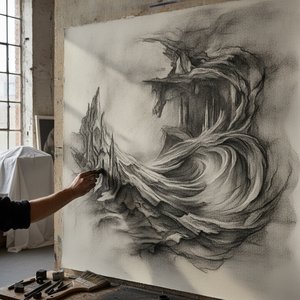
Mastering Charcoal: A Professional Guide to Texture and Depth for Large-Scale Interior Art Commissions
Discover professional techniques for mastering charcoal texture and depth. An expert guide for hotel designers and procurement managers looking to integrate high-impact monochrome art into large-scale hospitality projects with precision and scale.

Mastering Charcoal: The Definitive Expert Guide to Capturing Profound Depth, Texture, and Shadow
Elevate your artistry with this definitive expert guide to mastering charcoal. Designed for art students, learn professional techniques for capturing profound depth, intricate textures, and dramatic shadows through advanced blending and chiaroscuro methods.

Mastering the Line: A Comprehensive Expert Guide to Technical Precision and Expressive Depth in Drawing
Elevate your artistic practice with this expert guide to mastering the line. Discover advanced techniques in graphite, charcoal, and contour drawing designed for art students seeking technical precision and expressive depth in their fine art studies.

Mastering Charcoal: The History, Technique, and Chiaroscuro Power of Black and White Art
Explore the profound history and technical mastery of charcoal art. From prehistoric origins to Renaissance chiaroscuro, learn the essential additive and subtractive techniques used by masters to capture light, shadow, and raw emotional depth in monochrome fine art.

The Eloquent Form: A Historical & Aesthetic Exploration of the Nude in Art
Explore the captivating history of the nude in art! From ancient Greece to modern masters, discover its evolving symbolism, techniques & enduring beauty. Expert insights for collectors and enthusiasts.