The Architectural Impact of Charcoal: Utilizing High-Contrast Monochrome in Hospitality Design
 michelle cioccoloni
Michelle Cioccoloni: A World Rendered in Monochrome London-based artist Michelle Cioccoloni has carved a distinctive niche within contemporary art, captivating audiences with her meticulously rendered monochrome ink drawings. Her work isn’t merely ob...
In the sophisticated realm of hospitality design, where atmosphere is as critical as architecture, the strategic use of monochrome art serves as a powerful tool for establishing prestige and visual cohesion. Charcoal, with its elemental ability to command attention through stark contrast, offers an unparalleled depth that color-saturated works often lack. For the hotel designer or procurement manager, integrating charcoal-inspired compositions allows for the creation of a "visual anchor" within expansive lobbies or transitional corridors. The medium’s inherent reliance on chiaroscary—the dramatic interplay between light and shadow—creates an illusionistic space that can make even the most minimalist modern interior feel grounded and monumental. By stripping away the distractions of a full palette, charcoal art directs the eye toward form, texture, and volume, providing a sense of quiet contemplation and luxury that resonates with discerning travelers seeking a sanctuary from the chaotic outside world.
Beyond mere decoration, these works function as architectural elements that define the mood of a space. A large-scale charcoal study can transform a sterile, white-walled corridor into a gallery-like experience, imbuing the property with an air of historical weight and artistic permanence. The ability to manipulate the "void" of black against the "light" of the paper allows designers to control the perceived weight of a room, using deep, velvety blacks to add gravity to high-ceilinged atriums or lighter, atmospheric smudges to create intimacy in lounge settings.
Technical Mastery: Understanding Carbon Density, Grain, and Substrate for Large-Format Works
 Mastering Charcoal: The Definitive Expert Guide to Capturing Profound Depth, Texture, and Shadow
The Elemental Power of Charcoal: An Introduction to the Medium There is an almost mystical gravity to charcoal, a weight that settles upon the artist the moment the first charred mark meets the paper. To work with charcoal is to engage in one of the ...
To appreciate the impact of charcoal on a large scale, one must understand the technical nuances that differentiate a simple sketch from a professional masterpiece. The medium is far from uniform; it exists on a spectrum of density and volatility. At one end, we find Willow or Vine charcoal, characterized by its delicate, ephemeral nature. These tools are essential for establishing the initial, ghostly compositions that define the structural layout of a piece. Because they are easily manipulated, they allow for the soft, atmospheric transitions required to render light-drenched landscapes or misty architectural details.
In contrast, Compressed charcoal provides the intense, permanent blacks necessary for creating deep shadows and high-impact focal points. For large-format commissions intended for hotel lobbies, the interplay between these two densities is what creates true dimensionality. The substrate—the paper or canvas itself—plays an equally vital role. A heavily textured, "toothy" surface is required to catch the carbon dust, allowing artists to build up rich, impasto-like layers of shadow. When selecting or commissioning works for large-scale installations, understanding this relationship between tool, density, and grain ensures that the final artwork possesses the physical presence required to hold its own against grand architectural features.
Achieving Dimensionality: The Interplay of Chiaroscuro and Subtractive Techniques
 Subtractive drawing
Subtractive drawing is a technique in which the drawing surface is covered with graphite or charcoal marks and then erased to make the image. This technique is often used to add texture, establish tonal shapes, or create the appearance of reflected l...
The true magic of charcoal lies in its dual nature: it is both an additive and a subtractive medium. While many view drawing as the act of placing marks upon a surface, professional mastery often involves the sophisticated technique of subtractive drawing. In this process, the artist may first coat a section of the paper in a layer of charcoal dust, only to "draw" with light by using kneaded erasers or putty tools to lift pigment away. This method is instrumental in creating the appearance of reflected light, highlights on sculptural forms, and the subtle glow of an interior light source hitting a textured surface.
This technique, when combined with traditional additive strokes, allows for a level of modeling that mimics three-dimensional sculpture. By strategically erasing to reveal the stark white of the underlying substrate, the artist can create sharp, crisp edges that contrast against soft, smudged shadows. This tension between the presence of carbon and the absence of it is what gives charcoal works their profound sense of volume. For a designer, this means commissioning pieces that do not merely sit on the wall but appear to emerge from it, adding a tactile, sculptural quality to the interior's decorative program.
Strategic Implementation: Integrating Textural Charcoal Art into Modern Hotel Interiors
 Textured Sand Layers Above a Charcoal Geometric Grid
The Alchemy of Texture and Order In the contemporary landscape of abstract expressionism, few works command the room with such profound presence as Textured Sand Layers Above a Charcoal Geometric Grid . This masterpiece by David Moreau is not merely ...
Integrating charcoal-themed art into a modern hospitality project requires a strategic approach to texture and scale. In contemporary hotel design, where "tactile topography" is a rising trend, charcoal works can be paired with other textured materials—such as stone, raw wood, or heavy linens—to create a multi-sensory environment. The grit and grain of a charcoal drawing complement the organic fluidity of modern architectural forms, bridging the gap between geometric rigidity and natural warmth.
One highly effective method for large-scale implementation is the use of multi-panel layouts. Splitting a single, expansive charcoal composition across three, four, or even five panels allows the artwork to wrap around corners or span wide staircases, creating a cohesive narrative that guides the guest through the space. This "fragmented" approach also allows for easier logistics and installation in complex architectural environments. Furthermore, when paired with custom framing—such as deep espresso or natural wood—these monochrome works can be tailored to match the specific color palette of a hotel's branding, ensuring that the art feels like an integrated part of the building's DNA rather than an afterthought.
Sourcing and Procurement: Scalable Solutions for Professional Art Commissions
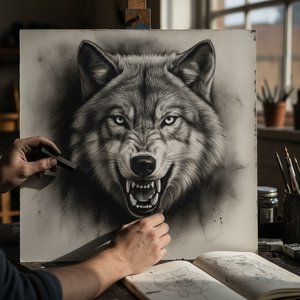 Charcoal Art Mastery: A Visual Journey Through Raw Power, Deep Shadows, and Expressive Texture
The Soul of the Smudge: Understanding Charcoal's Raw Emotional Impact There is a primal, unyielding honesty found within the blackened remains of burnt wood that no other medium can replicate. For the art student standing before a blank, toothy paper...
For procurement managers and hospitality chains, the challenge of art acquisition is often defined by the need for scale, reliability, and budget predictability. When furnishing large-scale projects like hotels or corporate headquarters, the ability to source high-quality, repeatable, and customizable art is paramount. The modern professional requires a supply chain that understands the complexities of bulk orders, international shipping, and strict project timelines.
At OriginalUniqueArt.com, we specialize in providing these scalable solutions for the global trade. Our service is built around operational reliability, offering everything from high-resolution museum-quality prints to bespoke, hand-painted oil reproductions that capture the true impasto and textural depth of charcoal studies. We understand the pressures of large-scale procurement: we provide clear documentation, VAT-compliant invoicing, and a streamlined order management system that allows you to track your commission from the initial digital mockup to final delivery via DHL or FedEx. Whether you are looking for a single statement piece or a coordinated series of multi-panel works for an entire floor, our commitment to academic excellence and logistical precision ensures that your vision is realized on time and within budget.