

 Pregledaj u prostoru
 Podeli
 Podeli
 Detalji
 Vodič
Vodič

 Preuzmi sliku
 Slični predmeti
 Rendgenski snimak
 Automatska prezentacija
 Statistika
Nude Study
 Acrylic On Canvas
- WallArt
- High Renaissance
 1515
1515 41.0 x 28.0 cm
 Pročitaj više
Ručno rađena uljana reprodukcija
Ručno oslikano uljanim bojama na platnu u dimenzijama i okviru po vašem izboru, izrađeno po porudžbini od strane naših umetnika. ( Pređi na prodaju štampanih primeraka Pređi na prodaju digitalnih slika)




P118B дин10

P118H дин10

P118W дин10

P438Z дин10

P508JH дин12

P508YH дин12

P805H дин10

P805Z дин10

P919BZ дин10

P919G дин10

P919XJ дин10

P959ZH дин10

P968JZ дин12

W106C дин8

W218G дин10

W218JH дин8

W218Y дин10

W307PJ дин10

W316G дин10

W316PJ дин8

W316Y дин10

W398PJ дин8

W4111J дин10

W500HY дин15

W500JH дин15

W692G дин12

W849H дин8

W940BG дин15

W953PJ дин8




Izaberite jednu od naših unapred definisanih veličina koje odgovaraju originalnim proporcijama umetničkog dela.

Unesite širinu i visinu koja vam je potrebna, kako bi se uklopili u vaš ram ili zid. Pošto je ovo ručno oslikano delo, umetnik može naslikati malo više prostora oko slike ili malo skratiti ivice za dimenzije drugačijeg oblika — izbor je na vama. Pre početka rada, poslaćemo vam digitalni prikaz radi potvrde. Slika prikazana na ovoj stranici ne predstavlja konačan rezultat — samo digitalni prikaz pokazuje stvarnu sliku.
Nakon narudžbine, tim OriginalUniqueArt.com će klijentu putem e-pošte poslati uputstva i dostaviti prikaz predloženog rešenja
Svetska isporuka () za 3/4 nedelje umesto uobičajenih 5 nedelja. (21 октобар). Bez kompromisa po pitanju kvaliteta.

Besplatna ekspresna dostava širom sveta

Visokokvalitetno laneno platno

Sveobuhvatno osiguranje transporta

Garancija povraćaja carine i uvoznih dažbina

Garancija vernosti boja i autentičnosti pri reprodukciji

Politika povraćaja u roku od 100 dana (samo u slučaju nedostataka)

Garancija povrata 100% novca

Popust pri većoj količini
 Opcija sa staklom dostupna je samo za dimenzije manje od 110 cm

Nude Study
Tehnika izrade reprodukcije
Veličina reprodukcije
-


Ukupna cena
дин 30749
A Study in Male Form and Reflection: Raphael’s ‘Nude Study’ (1515)
Raphael’s “Nude Study,” painted in 1515, is more than simply a depiction of two nude male figures; it's a profound meditation on masculinity, power, and the very nature of representation. Emerging from the vibrant artistic crucible of Urbino – a city renowned for its humanist ideals and patronage under Duke Federico da Montefeltro – Raphael’s early works already demonstrated an extraordinary command of anatomy and a nascent ability to imbue his subjects with psychological depth. This particular piece, executed during a period of intense experimentation within his studio, reveals the artist grappling with complex themes through a deceptively simple composition.
The painting immediately draws the eye to the central figures, positioned before an ornate mirror that dominates the background. The mirroring effect creates a captivating visual loop, doubling the presence of the men and subtly suggesting notions of duality – perhaps representing opposing forces or even the artist’s own internal struggles with artistic identity. The figures themselves are rendered with a remarkable sensitivity to light and shadow, characteristic of Raphael's developing style. Notice how he masterfully uses *chiaroscuro*—the dramatic contrast between light and dark—to sculpt their forms, emphasizing musculature and creating a sense of volume that transcends mere representation. The smooth, almost porcelain-like quality of the skin speaks to Raphael’s meticulous study of human anatomy, informed by his father's artistic practice and the prevailing Renaissance interest in classical ideals of beauty.
The Weight of Weapons and Ancient Echoes
Crucially, these are not idealized figures adrift in a timeless realm. Both men are armed – one holding a sword, the other a bow – elements that immediately anchor the scene within a historical context. While the precise narrative remains open to interpretation, the inclusion of weaponry hints at potential allegorical meanings. Some scholars suggest connections to ancient Greek mythology, perhaps referencing scenes from heroic tales where male figures embody strength and martial prowess. Others propose a Roman influence, recalling depictions of gladiators or warriors engaged in battle. The juxtaposition of nudity with weapons creates a tension, suggesting vulnerability alongside power, a delicate balance that is central to the painting’s emotional resonance.
The positioning of the figures – one turned away from the viewer and the other facing forward – further complicates the narrative. This deliberate asymmetry invites speculation about their relationship and intentions. Is there an unspoken dialogue between them? Does the averted figure represent a hidden truth or a concealed emotion? Raphael’s masterful use of space and perspective encourages the viewer to actively participate in constructing the story, transforming the painting into a dynamic invitation to interpretation.
Technique and the Urbino Renaissance
Raphael's technique in “Nude Study” is a testament to his burgeoning skill and the artistic innovations flourishing during the Urbino Renaissance. He employed *sfumato*, a subtle blurring of lines and edges, particularly around the figures’ contours, creating an ethereal quality that softens their forms and imbues them with a sense of grace. The use of oil paint allowed for layering and blending, contributing to the painting's rich textures and luminous colors. The palette is restrained – primarily earthy tones punctuated by subtle highlights – reflecting the refined aesthetic sensibilities of the time.
Furthermore, this work exemplifies Raphael’s early engagement with humanist principles. He wasn’t simply replicating classical forms; he was actively analyzing them, understanding their underlying structure and applying that knowledge to create a distinctly modern interpretation. The attention to detail, the psychological depth conveyed through gesture and expression, and the masterful manipulation of light and shadow all point to a young artist poised to become one of the most celebrated figures in Western art history.
A Timeless Reflection: Reproduction Options
OriginalUniqueArt offers exquisite, hand-painted reproductions of Raphael’s “Nude Study,” meticulously crafted to capture the essence of this captivating masterpiece. Our skilled artisans utilize archival-quality materials and techniques that faithfully replicate the original's luminosity and texture. Whether you seek a stunning addition to your art collection or a sophisticated element for your interior design, our reproductions provide an authentic and enduring representation of Raphael’s profound exploration of human form and reflection. Explore our range of sizes and framing options today – each reproduction is a testament to the enduring power of Renaissance artistry.
Pitanja i odgovori
Koji su dominantni koloriti u delu „Nude Study”, Rafael?
„Nude Study“ definiše Monochrome paleta kojoj dominira Driftwood (#ab7b6a).
Kolika je zasićenost boja u delu „Nude Study”, Rafael?
Paleta dela "Nude Study" ima Muted zasićenost.
Da li je „Nude Study”, Rafael poznato umetničko delo?
"Nude Study" je klasifikovan kao Iconic.
Biografija umetnika
Рафаело: Легенда Изазване Светлом
Рафаело Санцио да Урбино, познат свету као Рафаело, израстао је из изузетно плодне културне атмосфере. Рођен 1483. године у Урбину, малом али интелектуално живом граду-држави у централној Италији, његове прве године биле су испуњене окружењем које је ценило и умнешко вештине и хуманистичко образовање. Његов отац, Ђовани Санти, није био само сликар запослен код војводе Федерика да Монтефелтра – он је био човек дубоко ангажован у струјама ренесансног мишљења, песник који је хроничарио живот војводе и активно тражио иновативне уметничке идеје из целе Италије и шире. Ово уроњење у дворјански амбијент, који је ценио унапређење и интелектуалан дискурс, дубоко је обликовало Рафаелове чула. Губитак оца са једанаест година на њега је бацио одговорност, али му је такође пружио прилику да усврши своје вештине у породичној радионици, апсорбујући технике и традиције под руководством локалних уметника. Чак и у овим раним делима, нежна грација и детаљна пажња – обележја његовог зрелог стила – почела су да се истичу.
Од Умбрије до Фиренце: Апсорбовање Нових Утицаја
Уметничко путовање Рафаела било је непрекидно еволуирало, обележено периодима интензивног студија и асимилације. Његов први тренинг под Пиетром Перугином у Перуђи поставио је чврст темељ у умбријском стилу – карактеристичном по мекој моделирању, хармоничним композицијама и смиреним религиозним сценама. Међутим, Рафаело је поседовао неугасиву љубопитљивост која га је наводила да тражи нове изазове и проширује своје уметничке хоризонте. 1504. године кренуо је у Фиренцу, град тада пуљак уметничке иновације. Овде се сусрео са делима Леонарда да Винчија и Микеланђела, уметника који су потиснули границе сликања на невиђен начин. Он је пажљиво изучавао њихове технике – Леонардов „сфумато”, његове суптилне градације светлости и сенке, и Микеланђелове моћне анатомијске прецизности и драматичних композиција. Ова фирентинска фаза била је кључала за Рафаела, приморавајући га да се суочи са новим уметничким могућностима и синтетише их у своју сопствену јединствену визију. Утицај је видљив у повећаној динамици и психолошкој дубини његових дела из тог времена, посебно у серији Мадона.
Римски Тријумф: Комисије и Мајсторска Дела
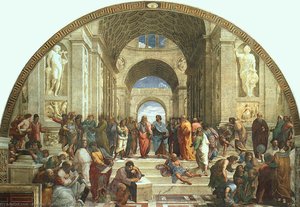
1508. године Рафаело је добио позив који би променио ток његове каријере – позив од папе Јулија II да дође у Рим. Ово је означило почетак његовог најпродуктивнијег и славнијег периода. Вечити град пружио му је незапоређиву прилику да покаже свој таленат у великом обиму, украшавајући папине апартмане у Ватикану задивљујућим фрескама. Школа Атиње, можда његово најчувеније дело, служи као сведочанство о његовом мајсторству композиције, перспективе и филозофске алегорије. У његовом величанственом простору Рафаело је окупио фигуре из класичне антике – Платона, Аристотела, Питагоре, Еуклида – стварајући набој који слави људски разум и потрагу за знањем. Наставио је да ради за касније папе, међу којима је био Лео X, подухватајући монументалне пројекте као што је декорација Стана дела Сегнатура и Стана д'Елиодора. Његове фреске у овим собама нису само декоративне; они су дубоке изјаве о папиној моћи, религиозном веровању и идеалима ренесансе.
Синтеза Грације и Величанства: Рафаелов Уметнички Стил
Рафаелов уметнички стил често се описује као хармонична мешавина грације, јасноће и идеализоване лепоте. Он је поседовао изузетан дар да синтетише различите утицаје – умбријску традицију, флорентинске иновације, класичну антику – у јединствено избалансирану естетику. Његове композиције су пажљиво планиране, показујући осећај реда и пропорција које одражавају његово дубоко разумевање ренесанских принципа. Његова фигуре зраче смирену достојанственост и емоционалну изразитост, оличавајући хуманистички идеал људског савршенства. Био је такође мајстор колориста, користећи богате, лучисте нијансе како би створио дела која су истовремено визуелно задивљујућа и интелектуално стимулативна. За разлику од Микеланђелове често драматичне и немирне стила, Рафаелова дела избијају осећај мира и хармоније – квалитет који је вековима привлачио публику.
Заоставштина и Трајан Утицај
Нечасна смрт Рафаела 1520. године, у доби од само тридесет седам година, прекинула је каријеру која је била испуњена потенцијалом. Ипак, његова заоставштина траје као једна од најзначајнијих фигура у западноевропској историји уметности. Његов рад постао је камен основе ренесанске естетике, служећи за пример генерацијама уметника. Док је Микеланђелов утицај касније доминирао уметничком дискурсу, Рафаелов нагласак на јасноћи, хармонији и идеализованој лепоти искуство ревивалистичке периоде, заступајући критичаре попут Јохана Јоахима Винкелмана. Данас се његове слике и даље дичу својом техничком бриљиантношћу, емоционалном дубином и трајним апелом, задивљујући гледаоце. Његов утицај може се видети у безбројна дела која су следила, што је учврстило његово место као истинског мајстора ренесансе – сликара који није само ухватио физички изглед својих субјеката, већ и саму есенцију људске грације и достојанства.

Rafael
1483 - 1520 , Italija
Brzi pregled
- Datum Rođenja: 28. mart 1483.
- Datum Smrti: 6. april 1520.
- Mesto Rođenja: Urbino, Italija
- Nacionalnost: Italijan
- Pokreti/Umjetnici Uticajem: ['Neoklasna umjetnost']
- Puno Ime: Rafael Sanzio da Urbino
- Umjetnički Pokret: Visoka renesansa
- Uticali Umjetnici:
- Leonardo da Vinci
- Mihajlo Anđelo
- Značajna Djela:
- Škola atine
- Sistinska Madona
- Transfiguracija
Srodni članci
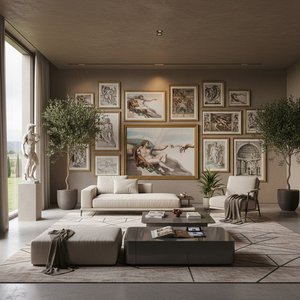
Michelangelo Buonarroti: 25 Remek-dela Renesansnog Genija za Vaš Dom | OriginalUniqueArt
Istražite 25 remek-dela Michelangela Buonarottija! Otkrijte priče iza Davida, Pietà i Sikstinske kapele. Reprodukcije slika vrhunskog kvaliteta za luksuzni dekor enterijera. Inspiracija & kupovina na OriginalUniqueArt.com
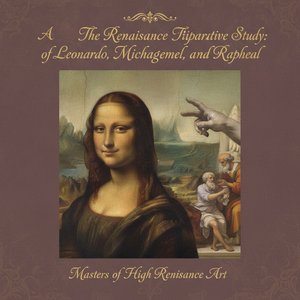
The Renaissance Trinity: A Comparative Study of Leonardo, Michelangelo, and Raphael
Explore the profound genius of the Renaissance Trinity. Delve into a comparative study of Leonardo da Vinci, Michelangelo, and Raphael, uncovering their unique contributions to art history, technique, and the enduring legacy of Italian High Renaissance mastery.

The Enduring Allure of the Nude: A Historical & Artistic Exploration of the Human Form
Explore the captivating history of nude art! Discover iconic paintings & artists from classical to modern eras. Uncover symbolism, techniques & find museum-quality reproductions at OriginalUniqueArt.
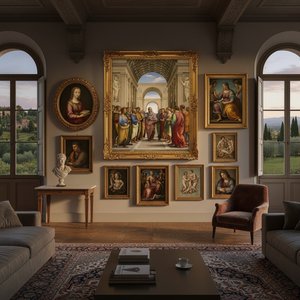
Rafaela Sanzio: 25 Remek-dela Renesansnog Majstora za Vaš Dom | OriginalUniqueArt
Uronite u svet Rafaela Sanzija! Otkrijte 25 remek-dela renesansnog umetnika, od Madona do fresaka Vatikana. Inspiracija za dekoraciju enterijera i kupovina reprodukcija slika visoke rezolucije na OriginalUniqueArt.com.
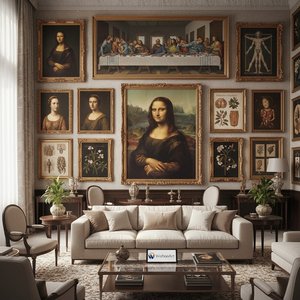
Leonardo da Vinci: 25 Remek-dela Genija za Vaš Dom | OriginalUniqueArt
Istražite 25 remek-dela Leonarda da Vince, od Mona Lize do Poslednje večere. Otkrijte priče iza slika renesanse i inspiraciju za dekoraciju enterijera. Kvalitetne reprodukcije na OriginalUniqueArt.com!




![Vaticanske stanice - Proterivanje Heliodora iz hrama (detalj) [02]](/media/artworks/images-thumb/3a/23/3a2308b63b60b5cb105575e135028d92.jpg)
