Рана ренесанса
Alba Madonna (Рафаел)
Рафаел (1483–1520) je napravio Alba Madonna. Pripada pokretu Рана ренесанса. Izrađeno je u Ulje na platnu.
- Ulje na platnu

 Pregledaj u prostoru

 Ručno oslikano uljanim bojama
 Pošalji
 Podeli
 Informativni list za štampu


 Preuzmi
 Slični predmeti
 Rendgenski snimak
 Automatska prezentacija
 Pitanja i odgovori

 Statistika
Alba Madonna, ukratko
- Naslov
- Alba Madonna
- Umetnik
- Рафаел (1483–1520)
- Mesto rođenja umetnika
- Урбино, Италија
- Tehnika
- Ulje na platnu
- Pokret
- Рана ренесанса
- Period
- Renesansa
- Tema
- мадона, дете, свети јован, ренесанса, поклоњост, спокој
Šta prikazuje Alba Madonna?
Identification of The Alba Madonna
The Alba Madonna, executed by Raphael, is a tondo oil on wood transferred to canvas. Created c. 1510, the work was commissioned by Paolo Giovio. The composition centers on the Virgin Mary, the infant Jesus, and Saint John the Baptist.
The subject matter explores themes of faith, innocence, and divine grace. The figures are arranged within a circular format, a style popular in Florentine painting. This specific grouping of the Madonna and Child with the young Baptist establishes a quiet, devotional atmosphere.
Composition and Visual Elements
The work utilizes a tondo, or round-format style, creating a circular composition. Within this frame, the figures are arranged in a broad, low pyramidal structure. This grouping is positioned toward the left of the round design, creating a balanced tension against the surrounding space. The arrangement follows a classical geometric logic, providing stability to the central figures.
The scene unfolds within an outdoor setting, characterized by a pastoral landscape with distant hills. The focus of the composition is the interaction between the children; specifically, the Christ Child's gesture of accepting the cross from the Baptist serves as the primary point of attention for all three figures. This movement directs the viewer's eye through the triangular arrangement of the group.
Technique, Materials and Support
Executed as a tondo, the work utilizes a circular format that dictates the arrangement of the figures within the space. The primary medium is oil, originally applied to a wood support that was later transferred to canvas. This transition from panel to textile is evident in the current physical state of the object, where the underlying canvas pattern remains visible beneath the paint layers.
The artist employs sfumato to achieve soft transitions between colors and tones, avoiding harsh outlines to create a sense of depth and realism. This is complemented by chiaroscuro, using the contrast between light and dark to establish three-dimensionality across the figures. The color palette is dominated by warm tones, specifically reds, browns, and blues, which define the drapery and the naturalistic setting.
History and Provenance of the Object
The painting's lineage connects the Italian Renaissance to the private collections of European nobility. It was held by the Spanish House of Alba, which provided the work its namesake. In 1820, the piece was sold to the diplomat Edmund Bourke in London. By 1836, it had entered the collection of Nicholas I of Russia, becoming a highlight of the Imperial Hermitage Museum in Saint Petersburg.
The twentieth century brought significant geopolitical shifts to the object's ownership. In 1931, the Soviet Union sold the work clandestinely. Andrew W. Mellon purchased the painting from the Soviet Union during this period. Following its acquisition, the work was eventually transferred to the National Gallery of Art in Washington, D.C., where it has been held since 1937.
During the Second World War, the painting was part of a group of over 100 pieces moved for safekeeping. These works were stored in the unfinished music room of the Biltmore House in Asheville, North Carolina. Once the war concluded, the painting was returned to the National Gallery of Art.
Documented Interpretations and Debates
The composition aligns with the iconography of the Madonna of Humility, a theme established by the Virgin Mary being seated directly on the ground rather than upon a throne or a sumptuous cushion. This placement emphasizes a sense of earthly modesty and maternal intimacy. The arrangement of the figures within the tondo creates a broad, low pyramid that dominates the circular space.
A profound theological layer is suggested by the interaction between the three figures. The Christ Child's gesture of accepting the cross from the Baptist serves as the focal point for all three subjects. This movement implies a shared foreknowledge of the Crucifixion, imbuing the serene, bucolic setting with the weight of Christ's future sacrifice.
Related Works by Raphael
Raphael’s exploration of the Madonna theme evolved through various compositions and formats. The Solly Madonna, created in 1502, represents an earlier stage of his development. By 1508, he produced the Madonna and Child (The Tempi Madonna). These works demonstrate his progression toward the High Renaissance style seen in his later Roman period.
The artist continued to refine his approach to the tondo and pyramidal structures in subsequent years. The Sistine Madonna, dated 1513–1514, and the Madonna della Seggiola, executed c. 1513–1514, reflect his mature command of form and emotional clarity. These pieces illustrate the technical shifts occurring within his workshop during the early sixteenth century.
Slike visoke rezolucije za Alba Madonna

Рафаел, Alba Madonna. Javno dobro.
Odgovori na pitanja o Alba Madonna
Kojom tehnikom je urađeno „Alba Madonna”, autor Рафаел?
Tehnika dela „Alba Madonna”, autor Рафаел je Ulje na platnu. Reprodukcije imaju za cilj da dočaraju izgled ove tehnike.
Koje su teme prikazane u delu „Alba Madonna”, autor Рафаел?
Teme prisutne u delu „Alba Madonna”, autor Рафаел obuhvataju мадона, дете, свети јован, ренесанса, поклоњост, спокој, породица, религиозно, što zajedno sažima suštinu ovog umetničkog dela.
Da li je "Alba Madonna" slobodan od autorskih prava?
Što se tiče autorskih prava, delo "Alba Madonna" je u javnom vlasništvu – autorska prava su istekla.
Kome se pripisuje delo "Alba Madonna"?
Delo "Alba Madonna" pripisuje se umetniku Рафаел.
Koji umetnički pravac obuhvata „Alba Madonna”, autor Рафаел?
„Alba Madonna”, autor Рафаел pripada pravcu Рана ренесанса. Ovaj pravac pruža stilski kontekst dela.
U kojoj fazi stvaralaštva umetnika Рафаел se nalazi delo "Alba Madonna"?
"Alba Madonna" predstavlja Зрели период umetnika Рафаел.
Da li je delo "Alba Madonna" autora Рафаел u javnom vlasništvu i zašto?
Status autorskih prava za delo "Alba Madonna" - u javnom vlasništvu – autorska prava su istekla - proizilazi iz godine smrti umetnika, 1520.
Gde se "Alba Madonna" nalazi u okviru opusa umetnika Рафаел?
„Alba Madonna“ deli sa ostalim delima umetnika Рафаел svoj Рана ренесанса stil i prepoznatljive teme: неоплатонски идеали, класична гармонија, хуманистичке вредности, религиозна поклоњост, заступништво цркве, римски уметнички трендови, рафаелова серија мадона, стил ране ренесансе.
Gde se "Alba Madonna" nalazi među uobičajenim motivima umetnika Рафаел?
"Alba Madonna" prikazuje мадона, дете, свети јован, ренесанса, поклоњост, спокој, породица, религиозно, dok su dokumentovane teme umetnika Рафаел zapravo неоплатонски идеали, класична гармонија, хуманистичке вредности, религиозна поклоњост, заступништво цркве, римски уметнички трендови, рафаелова серија мадона, стил ране ренесансе. Poređenje ova dva elementa pokazuje kako se ovo delo povezuje sa uobičajenim motivima ovog umetnika.
O umetniku, Рафаел

1483–1520, Италија
Рафаел
Рафаело: Легенда Изазване Светлом Рафаело Санцио да Урбино, познат свету као Рафаело, израстао је из изузетно плодне културне атмосфере. Рођен 1483. године у Урбину, малом али интелектуално живом граду-држави у централној Италији, његове прве године биле су испуњене окружењем које је ценило и умнешко вештине и хуманистичко образовање. Његов отац, Ђовани Санти, није био само сликар запослен код војводе Федерика да Монтефелтра – он је био човек дубоко ангажован у струјама ренесансног мишљења, песник који је хроничарио живот војводе и активно тражио иновативне уметничке идеје из целе Италије и шире.
Takođe i Рафаел
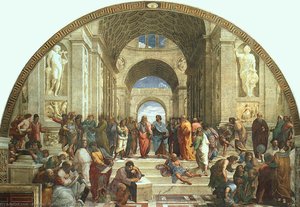 Атенска школа1511
 Систинска мадона1513
 Transfiguracija1520
 Venčanje Device Marije1504
Eseji o delu Alba Madonna
 Masterpieces of Light: The Top 25 Artworks by Duccio di BuoninsegnaJourney through the divine elegance of Duccio di Buoninsegna. Explore 25 iconic Sienese masterpieces, from the Maestà to the Rucellai Madon…
 Masterpieces of Perfection: The Top 25 Greatest Artworks by RaphaelJourney through the sublime beauty of the High Renaissance with our curated list of Raphael's top 25 masterpieces. From iconic Madonnas to …
 Italian High Renaissance paintersMasterpieces by Leonardo, Raphael, and Titian define the High Renaissance. Explore the full collection online at OriginalUniqueArt.com.