

 Pregledaj u prostoru
 Podeli
 Podeli
 Detalji
 Vodič
Vodič

 Preuzmi sliku
 Slični predmeti
 Rendgenski snimak
 Automatska prezentacija
 Statistika
Vita somnium breve
 Akril na platnu
- Umetnost za zidove
- Art Nouveau Modern
 1906
1906 163.0 x 143.0 cm
 Nacionalni muzej u Krakovu
 Pročitaj više
Giclee štampa / Umetnički otisak
Giclée štampa ili print na platnu muzejskog kvaliteta uz brzu izradu i raznovrsne opcije završne obrade. ( Naručite ručno oslikano reprodukciju Pređi na prodaju digitalnih slika)




P118B дин10

P118H дин10

P118W дин10

P438Z дин10

P508JH дин12

P508YH дин12

P805H дин10

P805Z дин10

P919BZ дин10

P919G дин10

P919XJ дин10

P959ZH дин10

P968JZ дин12

W106C дин8

W218G дин10

W218JH дин8

W218Y дин10

W307PJ дин10

W316G дин10

W316PJ дин8

W316Y дин10

W398PJ дин8

W4111J дин10

W500HY дин15

W500JH дин15

W692G дин12

W849H дин8

W940BG дин15

W953PJ дин8




Izaberite jednu od naših unapred definisanih veličina koje odgovaraju originalnim proporcijama umetničkog dela.

Unesite širinu i visinu koja vam je potrebna, kako bi se uklopili u vaš ram ili na vaš zid. Štampa se može samo iseći, nikada ne može biti veća od originalne slike, stoga format sa drugačijim proporcijama gubi deo slike. Poslaćemo vam digitalni prikaz radi potvrde pre nego što započnemo štampu. Slika prikazana na ovoj stranici ne pokazuje stvarni rez — to pokazuje samo digitalni prikaz.
Dostava širom sveta () za 2 nedelje umesto uobičajenih 4/5 nedelja. (24 октобар)

Besplatna ekspresna dostava širom sveta

Visokokvalitetno laneno platno

Sveobuhvatno osiguranje transporta

Garancija povraćaja carine i uvoznih dažbina

Garancija vernosti boja i autentičnosti pri reprodukciji

Politika povraćaja u roku od 100 dana (samo u slučaju nedostataka)

Garancija povrata 100% novca

Popust pri većoj količini
 Opcija sa staklom dostupna je samo za dimenzije manje od 110 cm

Vita somnium breve
Giclee štampa / Umetnički otisak
Veličina reprodukcije
-


Ukupna cena
дин 8263
Vita Somnium Breve: A Window Into Polish Symbolism
Józef Mehoffer’s “Vita Somnium Breve” (Life is a Short Dream), completed in 1906, stands as a cornerstone of Art Nouveau stained glass artistry and embodies the spirit of Young Poland – a movement dedicated to reviving Polish national identity after centuries of partitions. Created by Krakowski Zakład Witrażów i Mozaiki S.G. Żeleński, established in 1902, this monumental window is housed within the National Museum in Kraków and represents more than just decorative splendor; it’s a profound visual meditation on mortality and remembrance. ### Artistic Style and Technique: The Fluid Embrace of Art Nouveau Mehoffer's approach to stained glass aligns perfectly with the tenets of Art Nouveau – a style characterized by organic forms, flowing lines, and intricate floral motifs. Unlike the rigid geometric patterns prevalent in earlier styles, “Vita Somnium Breve” revels in curvilinear shapes that mimic natural elements like branches and leaves, creating an atmosphere of serene beauty. The artist skillfully employs a technique known as *pointillé*, where tiny dots of color are meticulously applied to build up tonal variations—a masterful method for achieving luminous depth and capturing the ethereal quality of light filtering through the glass panes. This painstaking process demanded considerable skill and patience from the glaziers, ensuring that every nuance of Mehoffer’s vision was faithfully reproduced. ### Symbolism Rooted in Polish Folklore and Remembrance The imagery depicted within the window is laden with symbolism deeply rooted in Polish folklore and Christian iconography. Dominating the composition are figures representing women – likely symbolizing motherhood and purity – cradling children, suggesting themes of lineage and safeguarding heritage. Surrounding them are stylized trees bearing blossoms, representing life’s cyclical nature and hinting at rebirth after death. The central element is a dove carrying an olive branch—a universally recognized symbol of peace and reconciliation, reflecting Poland's aspirations for stability and unity during the turbulent period following World War I. Furthermore, the window’s placement within the museum underscores its purpose as a memorial to Polish culture and history. ### Historical Context: Young Poland and Artistic Expression Amidst Uncertainty “Vita Somnium Breve” emerged from the fervent artistic milieu of Young Poland (Młoda Polska), a nationalist movement striving to revitalize Polish language, literature, and art after the Austro-Hungarian partition of Poland. Artists like Mehoffer sought to express national identity through innovative mediums—stained glass being particularly favored for its ability to convey solemn beauty and evoke contemplation. The window’s creation coincided with a time of significant political upheaval and cultural revival, mirroring the movement's determination to preserve Polish traditions while embracing modern artistic sensibilities. It serves as a testament to the enduring power of art to communicate profound ideas and emotions across generations. ### Emotional Impact: A Reflection of Fragility and Hope Ultimately, “Vita Somnium Breve” transcends mere decoration; it communicates an emotional resonance that speaks to themes of vulnerability and resilience. The delicate floral forms juxtaposed with the solemn figures evoke a sense of melancholy yet simultaneously convey optimism—a recognition of life’s transient beauty alongside an unwavering belief in enduring values. Viewing this magnificent stained glass window is akin to embarking on a journey into contemplation, prompting viewers to reflect upon mortality, remembrance, and the importance of safeguarding cultural heritage. It remains a poignant reminder that even amidst darkness, light – symbolized by the dove and the olive branch – persists, offering solace and inspiring hope for the future.Pitanja i odgovori
Gde mogu pronaći vodič za "Vita somnium breve"?
Stranica Vodič za delo „Vita somnium breve”, Józef Mehoffer nudi štampani informativni list u dve stranice: sam rad sa tabelom identifikacije, vremensku traku koja ga smešta u period života umetnika, druga dela istog umetnika, izmerenu paletu boja i citate spremne za kopiranje u četiri stila.
Kako je izgrađena koloristička kompozicija dela „Vita somnium breve”, Józef Mehoffer?
U delu "Vita somnium breve", Izjava kontrast je uparen sa Neskladna paleta boja harmonijom.
Koliko su intenzivne boje dela "Vita somnium breve"?
„Vita somnium breve”, Józef Mehoffer je zabeležen sa Suptilne boje zasićenosti i Uravnoteženo intenzitetom.
Biografija umetnika
A Life of Color and Glass
Józef Mehoffer arrived in the world in Ropczyce, Poland, in 1869, though his path to the easel was not immediate. Before he embraced the brush, he pursued legal studies, a direction that only shifted after a gift of paints revealed a different vocation. He sought formal training at the Academy of Fine Arts in Kraków under Władysław Łuszczkiewicz, later expanding his horizons through studies in Vienna and Paris at the Académie Colarossi. This period of wandering through Europe’s great art centers allowed him to absorb the diverse currents of his era.
His work became a bridge between the academic traditions of his teachers, such as Jan Matejko, and the emerging avant-garde. He moved with ease between easel painting and the monumental demands of decorative arts. Whether working on portraits, landscapes, or intricate book illustrations, Mehoffer sought a fusion of form and color. His style grew to include elements of Post- Impressionism and the Secession movement, often utilizing bold palettes and fluid lines that mirrored the organic spirit of Art Nouveau.
The Light of Fribourg
While his presence was felt throughout Poland, Mehoffer achieved significant recognition through his work in Switzerland. Between 1895 and 1936, he dedicated decades to a cycle of thirteen stained-glass compositions for the Cathedral of St. Nicholas in Fribourg. This undertaking required immense technical precision, as he treated the lead came not merely as a structural necessity but as an autonomous graphic line. He selected glass of varying thicknesses and textures, using silver stain and vitreous black to manipulate how light moved through the windows.
The success of these windows brought him international attention. At the 1900 Paris World's Fair, his window titled The Martyrs earned a gold medal. This period of his life saw him blending Polish folk motifs with the sophisticated aesthetics of European Art Nouveau. His ability to translate complex religious and symbolic themes into luminous glass remains a central part of his professional identity.
A Decorative Legacy
Mehoffer’s creative output was remarkably broad, refusing to be confined to a single medium. He was as much a designer of furniture, textiles, and posters as he was a painter of canvases. His hand could be found in the mosaics of the Armenian Cathedral in Lviv and the frescoes of Wawel Cathedral. In 1897, he helped found the society Sztuka, an organization that sought to assert the independence of Polish art from the influence of occupying powers.
In his later years, Mehoffer established a home and studio on Krupnicza Street in Kraków. This house, which he purchased in 1932, became a center for musical and literary gatherings, reflecting his role as a figure of the Polish intelligentsia. He lived through the profound shifts of the early twentieth century, continuing to work even during the hardships of the Second World War. When he passed away in Wadowice in 1946, he left behind a body of work that spanned the transition from nineteenth-century tradition to the modern decorative era.

Józef Mehoffer
1869 - 1946
Brzi pregled
- Artistic Movement Or Style:
- Young Poland
- Post-Impressionism
- Secession
- Art Nouveau
- Symbolism
- Artists Who Influenced This Artist:
- Jan Matejko
- Władysław Łuszczkiewicz
- Henri Matisse
- Full Name: Józef Mehoffer
- Nationality: Polish
- Notable Artworks:
- Vita somnium breve
- Three Kings
- The Farewell
- The Muse
- Medusa
- Place Pigalle in Paris
- Place Of Birth: Ropczyce, Poland
- Date Of Birth: 1869
- Date Of Death: 1946
Srodni članci
Jan Matejko: Historical Narrative & National Identity in 19th-Century Polish Painting
Explore the powerful historical paintings of Jan Matejko, Poland's national artist. Discover his iconic works & learn how he shaped Polish identity in the 19th century. High-quality reproductions available.
Art Nouveau: 10 Remek Dela Koja Su Definisala Pokret - Elegancija Za Vaš Dom
Otkrijte 10 remek dela Art Nouveau pokreta! Uronite u svet Alfonsa Muche, Gustava Klimta i drugih genijalaca. Istorija umetnosti, inspiracija za dekoraciju doma i reprodukcije vrhunskog kvaliteta na OriginalUniqueArt.com. Istražite celu kolekciju online!
Stanisław Wyspiański: Symbolism, National Identity & the Polish Secession
Explore the life & work of Stanisław Wyspiański, a pivotal figure in Polish Symbolism and the Young Poland movement. Discover his iconic paintings, dramas, and stained glass designs reflecting national identity & artistic innovation.
Luminous Masterpieces: The Captivating Beauty and Timeless Elegance of Stained Glass Artworks
Embark on a visual journey through the luminous world of stained glass art. Discover the exquisite craftsmanship, historical significance, and captivating beauty of masterworks from Art Nouveau to the Gothic era, curated for the discerning fine art enthusiast.
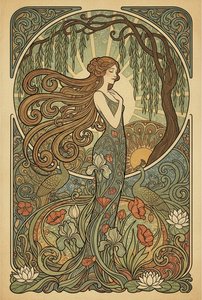
The Flowing Line & Flourishing Form: Exploring Art Nouveau's Aesthetic Legacy
Explore the captivating world of Art Nouveau! Discover its origins, key artists like Horta & Mucha, regional styles, innovative techniques, and lasting influence on architecture & design. A comprehensive guide for art enthusiasts.
