Introduction
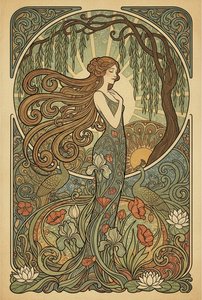
Imagine a world blossoming with organic forms, where flowing lines mimic nature’s grace and intricate details whisper stories of craftsmanship. This is the essence of Art Nouveau – a revolutionary art movement that swept across Europe and beyond from the 1890s to the First World War. More than just a style, it was a philosophy, a rejection of industrialization in favor of handmade beauty, inspired by the natural world and infused with a sense of dreamy idealism.
Born from the convergence of several artistic currents – the Arts and Crafts movement’s emphasis on skilled labor, Symbolism’s exploration of inner experience, and Japonisme’s fascination with Japanese aesthetics – Art Nouveau sought to create a ‘total work of art,’ blurring the boundaries between fine art, architecture, design, and even everyday objects. It was an era that celebrated curves over straight lines, ornamentation over minimalism, and the power of imagination.
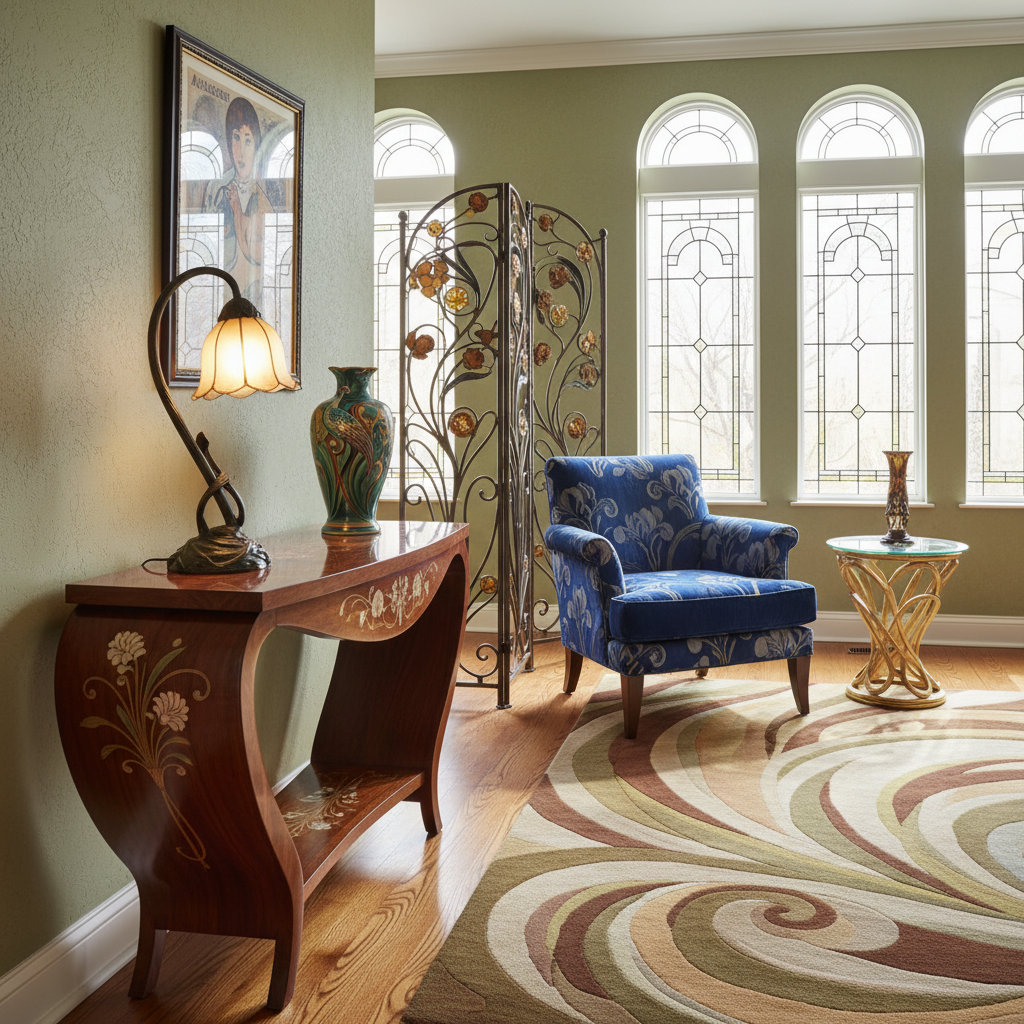
The artworks produced during this period weren’t merely decorative; they were statements – expressions of a new sensibility that valued individuality, sensuality, and a connection to the natural world. They adorned everything from posters and furniture to jewelry and buildings, transforming urban landscapes into havens of aesthetic delight.
But why do these masterpieces continue to captivate us today? Beyond their undeniable beauty, they offer a poignant reminder of a time when art was deeply integrated into life, when craftsmanship mattered, and when artists dared to dream of a more harmonious world. They speak to our innate desire for beauty, connection, and the enduring power of nature.
Join us as we embark on a journey through ten iconic artworks that defined Art Nouveau, each a testament to the movement’s unique vision and lasting legacy. Prepare to be transported to a world where art truly flourished – a world brimming with elegance, innovation, and timeless allure.
The kiss - Gustav Klimt
 The kiss - Gustav Klimt
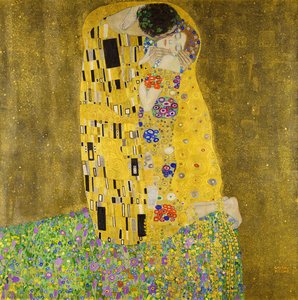
To stand before Gustav Klimt’s The Kiss is to be enveloped in a dream – a golden embrace that transcends time and speaks directly to the soul. Completed during his celebrated “Golden Phase,” this masterpiece isn't simply a depiction of love; it’s an evocation of longing, intimacy, and spiritual connection, rendered with breathtaking detail and shimmering opulence.
Why does The Kiss endure as one of the most iconic images in art history? It perfectly encapsulates the Art Nouveau movement's rejection of realism in favor of decorative beauty and symbolic meaning. Klimt’s innovative use of gold leaf, inspired by Byzantine mosaics, elevates the scene to an almost sacred realm, while the contrasting geometric patterns on the figures’ robes – masculine strength versus feminine grace – create a visual harmony that is both striking and deeply moving.
The painting's flattened perspective and dreamlike quality invite us into a world apart, where love exists as a pure, protected sanctuary. It’s a testament to Klimt’s genius and the power of Art Nouveau to transform everyday emotions into timeless works of art. At , we believe everyone deserves to experience this beauty firsthand. Our hand-painted reproductions faithfully capture the luminosity, texture, and emotional resonance of The Kiss , allowing you to bring a touch of golden magic into your own home – a reminder that even in our modern world, the pursuit of beauty remains eternally relevant.
Portrait of Adele Bloch-Bauer I - Gustav Klimt
 Portrait of Adele Bloch-Bauer I - Gustav Klimt
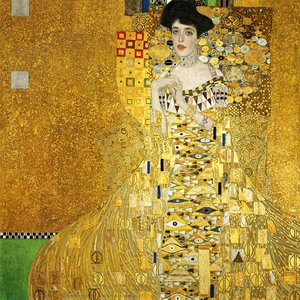
Imagine stepping into a world bathed in gold – a realm where beauty isn’t merely observed but *felt*. Gustav Klimt’s Portrait of Adele Bloch-Bauer I is precisely that experience. Completed in 1907, this masterpiece transcends the boundaries of portraiture, becoming an allegorical vision of feminine power and societal grace.
As a leading figure within Vienna’s Secession movement, Klimt rejected academic realism, instead embracing Art Nouveau's flowing lines, decorative patterns, and symbolic depth. This portrait exemplifies that rebellion – a shimmering testament to the era’s anxieties and aspirations. The extensive use of gold leaf isn’t simply opulent; it elevates Adele Bloch-Bauer to an almost Byzantine icon, imbuing her with timelessness and spiritual significance.
Look closely at the swirling patterns adorning her dress – they aren't arbitrary. Embedded within them are subtle eyes, hinting at awareness, protection, or perhaps a commentary on the societal gaze. The portrait captures not just a woman’s likeness but the essence of an era obsessed with beauty and sensuality.
At , we believe art should be more than decoration; it should evoke emotion and inspire contemplation. Our hand-painted reproductions faithfully capture the luminosity and intricate detail of Portrait of Adele Bloch-Bauer I , allowing you to bring a touch of Viennese elegance – and Klimt’s enduring legacy – into your own space. It's an invitation to pause, reflect, and connect with a masterpiece that continues to captivate generations.
Bildnis Fritza Riedler, 1906 - Österreichische Galerie, Vienna - Gustav Klimt
 Bildnis Fritza Riedler, 1906 - Österreichische Galerie, Vienna - Gustav Klimt
Step into a world of Viennese elegance – a realm where sophistication is veiled with an intriguing sense of distance. Gustav Klimt’s Bildnis Fritza Riedler , painted in 1906, isn't simply a portrait; it’s a glimpse into the opulent lives and complex emotions of early 20th-century society.
As a leading force within the Vienna Secession, Klimt rejected traditional realism, embracing Art Nouveau’s flowing lines and decorative beauty. This artwork embodies that rebellion – a stylized representation of Fritza Riedler, a prominent figure in Viennese high society, presented not as a candid likeness but as an almost iconic presence.
Notice the meticulous layering of gold leaf and oil paint, creating a shimmering texture that elevates the work beyond simple representation. The repeating eye-like motifs adorning the chair are particularly striking – hinting at surveillance, judgment, or perhaps an awareness of being observed. The woman’s aloof expression and flattened perspective contribute to a feeling of psychological complexity.
At , we believe art should resonate with your own space, evoking emotion and sparking contemplation. Our hand-painted reproductions faithfully capture the luminosity and intricate detail of Bildnis Fritza Riedler , allowing you to bring a touch of Viennese sophistication – and Klimt’s enduring legacy – into your home. It's an invitation to pause, reflect, and connect with a masterpiece that continues to captivate audiences today.
The Tree of Life - Gustav Klimt
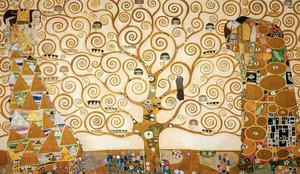 The Tree of Life - Gustav Klimt
To encounter Gustav Klimt’s The Tree of Life is to step into a world where art transcends mere decoration and becomes a profound meditation on existence itself. Painted in 1909, this masterpiece embodies the pinnacle of Art Nouveau and the Vienna Secession movement – a richly symbolic exploration of life, spirituality, and our harmonious connection with nature.
Klimt’s distinctive style is immediately captivating: flowing lines, decorative ornamentation, and an opulent use of gold leaf that imbues the artwork with an almost otherworldly quality. The central motif – a magnificent tree brimming with life – serves as a powerful symbol of growth, connection, and the cyclical nature of existence. Within its branches are nestled figures, representing souls intimately connected to the natural world.
This painting emerged during a period of artistic upheaval in Austria, where Klimt led a rebellion against conservative traditions, seeking to create a ‘total work of art.’ At , we believe that beauty should surround us. Our hand-painted reproductions faithfully capture the luminosity and intricate detail of The Tree of Life , allowing you to bring this timeless vision – and its enduring message of serenity and interconnectedness – into your own space.
Danae - Gustav Klimt
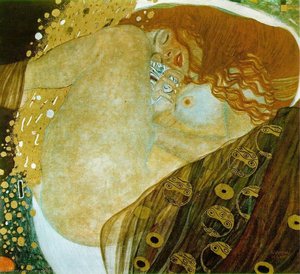 Danae - Gustav Klimt
To gaze upon Gustav Klimt’s Danae is to be drawn into a world of exquisite sensuality and quiet contemplation. Painted in 1908, during his celebrated “Golden Phase,” this masterpiece isn't merely a depiction of the mythological Danae; it’s an exploration of feminine power, desire, and the transformative nature of love.
As a leading figure within the Vienna Secession, Klimt rejected traditional academic styles in favor of decorative beauty and symbolic depth. Danae embodies this rebellion – a richly ornamented composition that invites us into an intimate realm of flowing lines, warm earthy tones, and ethereal grace.
The meticulous layering of gold leaf and paint creates a shimmering texture that elevates the artwork beyond simple representation. The woman’s relaxed posture and closed eyes convey a sense of inner peace, while the swirling patterns surrounding her suggest themes of fertility and subconscious longing. This is Art Nouveau at its most captivating – a harmonious blend of beauty, symbolism, and emotional resonance.
At , we believe that art should enrich your daily life. Our hand-painted reproductions faithfully capture the luminosity and intricate detail of Danae , allowing you to bring this timeless vision – and Klimt’s enduring legacy – into your own home. It's an invitation to pause, reflect, and connect with a masterpiece that continues to inspire generations.
Beethoven Frieze; The Arts, Choir of Angels, Embracing Couple - Gustav Klimt
 Beethoven Frieze; The Arts, Choir of Angels, Embracing Couple - Gustav Klimt
To stand before Gustav Klimt’s Beethoven Frieze is to be enveloped by a wave of emotion – a profound meditation on the power of art, life, and the human spirit. This captivating triptych, created during his celebrated “Golden Phase,” isn't merely a decorative artwork; it’s a symbolic journey that transcends time.
As a leading figure within the Vienna Secession, Klimt rejected traditional academic styles in favor of intricate patterns and flowing lines. The Beethoven Frieze embodies this rebellion – a harmonious blend of Symbolism and Art Nouveau that invites us into a world of ethereal grace.
The meticulous layering of gold leaf creates a shimmering texture, while the elongated figures and dreamlike atmosphere evoke a sense of solemnity and spiritual contemplation. This is Klimt at his most ambitious – a masterpiece that continues to inspire awe and wonder.
At , we believe art should enrich your daily life. Our hand-painted reproductions faithfully capture the luminosity and intricate detail of Beethoven Frieze , allowing you to bring this timeless vision – and Klimt’s enduring legacy – into your own space. It's an invitation to pause, reflect, and connect with a masterpiece that continues to resonate across generations.
Water Serpents II (Bewegtes Wasser sfondo) - Gustav Klimt
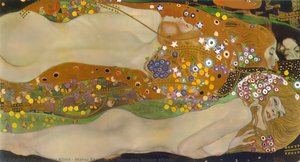 Water Serpents II (Bewegtes Wasser sfondo) - Gustav Klimt
Imagine sinking into a world of liquid gold – a realm where sensuality and nature intertwine with breathtaking grace. Gustav Klimt’s Water Serpents II (Bewegtes Wasser sfondo) isn't merely a painting; it’s an invitation to lose yourself in the dreamlike beauty of the natural world.
Created during his celebrated “Golden Phase,” this captivating artwork embodies the essence of Art Nouveau and Klimt’s unique fusion of Symbolism. The flowing lines, organic forms, and meticulous detailing create a sense of movement and harmony that is both mesmerizing and deeply evocative.
The reclining female figure seamlessly integrated into the lush landscape represents a profound connection between humanity and nature – a celebration of life, fertility, and the cycles of existence. The shimmering gold hues and soft, diffused lighting evoke a feeling of serenity and tranquility.
At , we believe art should enrich your daily life. Our hand-painted reproductions faithfully capture the luminosity and intricate detail of Water Serpents II , allowing you to bring this timeless vision – and Klimt’s enduring legacy – into your own space. It's an invitation to pause, reflect, and connect with a masterpiece that continues to inspire awe and wonder.
Music I - Gustav Klimt
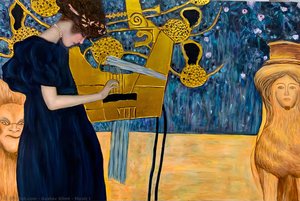 Music I - Gustav Klimt
Close your eyes and imagine a world where music isn’t just heard but *seen* – a realm of swirling harmonies, golden light, and ethereal beauty. Gustav Klimt’s Music I , created in 1895, is precisely that experience. This masterpiece embodies the essence of Art Nouveau and Klimt’s unique ability to blend figurative elements with abstract motifs.
As a pivotal work within his series exploring harmony and spirituality, Music I redefined beauty through its intricate composition and rich symbolism. The central figure playing the harp isn't merely depicted; she *is* music – an embodiment of grace and transcendence.
The flowing lines, organic forms, and meticulous detailing create a dreamlike atmosphere that invites us into a world of pure emotion. At , we believe art should enrich your daily life. Our hand-painted reproductions faithfully capture the luminosity and intricate detail of Music I , allowing you to bring this timeless vision – and Klimt’s enduring legacy – into your own space.
Poppy Field - Gustav Klimt
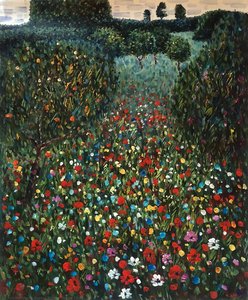 Poppy Field - Gustav Klimt
Imagine stepping into a sun-drenched meadow, alive with the vibrant energy of countless wildflowers. Gustav Klimt’s Poppy Field (1907) isn't merely a painting; it’s an invitation to lose yourself in nature’s radiant beauty.
Created during his golden phase, this masterpiece exemplifies Art Nouveau with its flowing lines and intricate details. Klimt transforms an everyday scene into an extraordinary celebration of color and light, redefining the landscape genre through a uniquely expressive lens.
The thick impasto technique brings the poppies to life, while the harmonious blend of reds, yellows, and blues evokes a sense of tranquility and wonder. At , we believe in making such timeless beauty accessible. Our reproductions capture the luminosity and texture of Poppy Field , allowing you to bring this captivating vision into your home – a sanctuary where art and nature intertwine.
Judith - Gustav Klimt
 Judith - Gustav Klimt
Imagine a gaze that holds both serenity and command – a portrait radiating power and grace. Gustav Klimt’s Judith (1901) isn't merely an image; it’s a symbol of female resilience, rendered in the opulent language of Art Nouveau.
This iconic masterpiece exemplifies Klimt’s signature style – flowing lines, intricate patterns, and a rich color palette that captivate the eye. The extensive use of gold leaf elevates the artwork beyond representation, transforming Judith into an almost divine figure.
At , we believe in bringing such timeless beauty into your home. Our reproductions capture the luminosity and detail of Judith , allowing you to experience the power and elegance of this iconic work firsthand – a statement piece that embodies both artistic innovation and enduring strength.
Conclusion
As the light fades on these ten masterpieces, we are left not with relics of a bygone era, but with living presences – echoes of human creativity that continue to resonate across time. These paintings aren’t simply beautiful objects; they are windows into worlds of emotion, symbols of enduring grace, and testaments to the power of artistic vision.
To truly experience Art Nouveau is to immerse oneself in its flowing lines, rich textures, and profound symbolism. It's a journey that awakens the senses and nourishes the soul. And it’s a journey we believe should extend beyond museum walls – into the spaces where we live, work, and dream.
At , we are honored to bring these iconic works closer to you, meticulously hand-painted by skilled artists who share our passion for preserving artistic heritage. We invite you to explore our full collection and discover the piece that speaks to your heart – a daily reminder of beauty, inspiration, and the enduring power of human creativity.