Pređi na štampu
 Pročitaj više







































 Za umetnička dela ili reprodukcije čija je bilo koja strana veća od 105 cm (približno 41 inč), okvir će biti isporučen u obliku rastavljenog seta za sklapanje. Ovaj metod osigurava bezbednu dostavu i sprečava oštećenja tokom transporta.


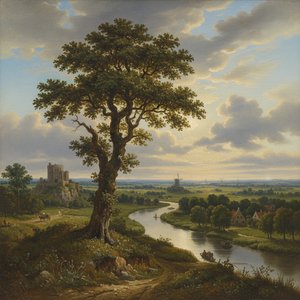
Jacob van Ruisdael’s “Wheat Fields”: A Symphony of Light and Landscape
“Wheat Fields,” painted circa 1670 by Jacob Jansz van Ruisdael, stands as arguably the most arresting depiction of Dutch pastoralism from the Golden Age. More than just a scenic vista, it's a masterful orchestration of atmospheric perspective and compositional dynamism—a painting that continues to resonate with viewers centuries later. Examining its intricacies reveals not only Van Ruisdael’s technical prowess but also his profound understanding of conveying emotion through visual language.A Masterclass in Atmospheric Perspective
Van Ruisdael's signature style is characterized by a deliberate flattening of depth, achieved through subtle gradations of color and tonal variation. The distant wheat field recedes into hazy blues and greens—a technique known as atmospheric perspective—creating an illusion of vastness and conveying the serenity of rural life. Unlike many contemporaries who prioritized detailed realism, Ruisdael prioritized capturing the essence of a landscape rather than meticulously recreating every blade of grass. This approach aligns perfectly with the prevailing philosophical currents of the time, where contemplation and reflection on nature held considerable sway. The artist skillfully uses light—particularly diffused sunlight filtering through clouds—to sculpt the forms of the field and its inhabitants, imbuing the scene with an ethereal quality.Compositional Drama: Figures Amidst Vastness
The inclusion of two figures—a man carrying a bag and a woman accompanied by a child—adds a crucial element of narrative complexity to the landscape. Their placement at the forefront draws the eye inward, anchoring the viewer’s gaze amidst the expansive expanse of wheat and sky. The figures aren't merely decorative additions; they serve as symbols of human presence within the natural world, prompting contemplation about our relationship with the environment. Furthermore, Van Ruisdael employs a dynamic diagonal line that bisects the canvas, guiding the eye across the scene and enhancing its visual impact. This compositional device contributes to the painting’s dramatic tension—the subtle interplay between light and shadow emphasizing the contours of the landscape and the figures alike.Symbolism Rooted in Dutch Identity
“Wheat Fields” embodies the spirit of the Dutch Golden Age, reflecting a fascination with idealized representations of national identity. The wheat field itself symbolizes fertility and prosperity—themes central to Dutch agricultural traditions and economic success during this period. The inclusion of livestock reinforces these associations, grounding the scene in tangible realities while simultaneously elevating it to a realm of symbolic significance. Van Ruisdael’s depiction of the sky—dominated by swirling clouds illuminated by sunlight—suggests both beauty and vulnerability—a motif that resonates with broader anxieties about the unpredictable forces of nature.Emotional Resonance: Tranquility and Reflection
Ultimately, “Wheat Fields” succeeds in evoking a profound sense of tranquility and contemplation. The muted palette—primarily blues, greens, and browns—creates an atmosphere of calm repose, inviting viewers to immerse themselves in the stillness of the countryside. Yet, beneath this surface serenity lies a subtle undercurrent of drama—the interplay of light and shadow hinting at hidden complexities. As Gavin Finney eloquently describes it, Ruisdael “picks the moment you’d want to press the shutter on a camera,” capturing not just what is seen but also what is felt—a testament to Van Ruisdael's ability to transform visual observation into emotionally resonant art.- Artist: Jacob Jansz van Ruisdael
- Date: Circa 1670
- Medium: Oil on Canvas
- Dimensions: 39 3/8 x 51 1/4 in. (100 x 130.2 cm)
Pitanja i odgovori
Kakvu atmosferu donosi „Wheat Fields”, autor Јакоб ван Ројсдал u enterijer?
„Wheat Fields”, autor Јакоб ван Ројсдал odiše Serene atmosferom i preporučuje se za Living Room. Raspoloženje je ono što umetničko delo unosi u prostor oko sebe.
Kako mogu da preuzmem sliku dela „Wheat Fields”, autor Јакоб ван Ројсдал?
Preuzimanje je dostupno za "Wheat Fields": na stranici Preuzimanje digitalnog prikaza ovog umetničkog dela možete preuzimanje digitalne slike visoke rezolucije.
Kolika je luminancija dela „Wheat Fields”, autor Јакоб ван Ројсдал?
Luminansa zabeležena za „Wheat Fields”, autor Јакоб ван Ројсдал iznosi Gentle Luminance.
 Pregledaj u prostoru
 Pošalji
 Podeli
 Detalji o delu
 Vodič
Vodič

 Preuzmi
 Slični predmeti
 Rendgenski snimak
 Automatska prezentacija
 Pitanja i odgovori
 Statistika